

A noted crime of the 1970s puts the spotlight on an extraordinary family.
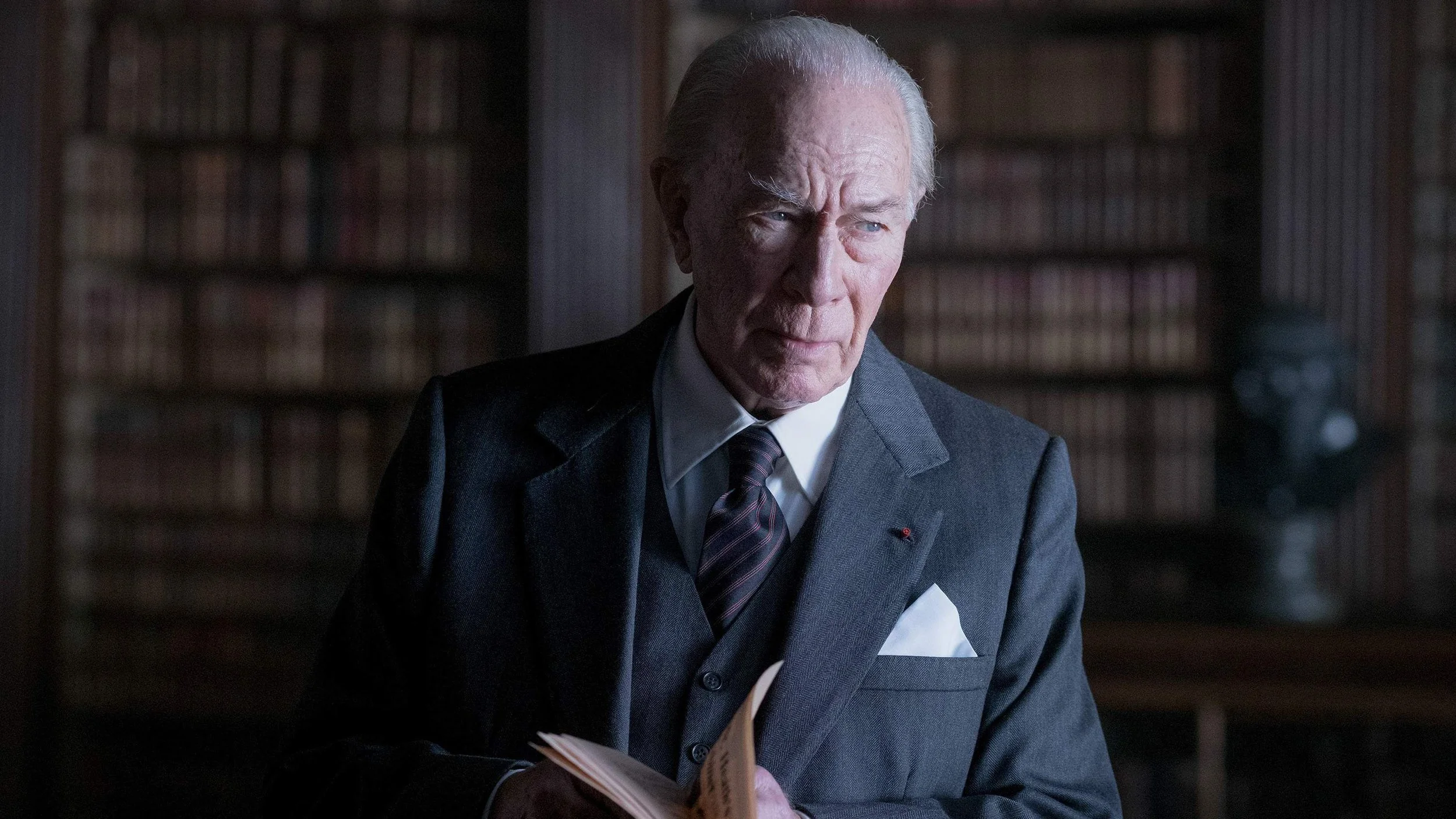
Christopher Plummer, aged 88
The real-life events portrayed in this new film drama from director Ridley Scott may have taken place as long ago as 1973 but, even so, urgency and a sense of danger might have been expected in the retelling. This is, after all, the story of a kidnapping involving a child held for ransom. The boy in question was the teenager John Paul Getty III (Charlie Plummer) who, while living in Rome, had been seized not because his parents (Michelle Williams and Andrew Buchan) were rich but because their grandfather, the John Paul Getty (Christopher Plummer), was the wealthiest man on the planet. Yet, as would soon emerge, the billionaire was the last man to be intimidated in this way, even if a refusal to pay up could lead to violent retaliation by the kidnappers which, famously, it did.
Scott's film offers a rare portrait of a man whose whole life-style and outlook were focused on wealth and the maintaining of it and, in doing so, it shows us a world so cut-off from normal human feelings that both Getty's son and grandson would find it a poisonous inheritance. Once the kidnapping has taken place (and it does, indeed, open the film even though some useful flashbacks clarifying the family history follow), it is only the mother, Gail, now divorced from her husband, who shows real concern for the boy's safety. She does, however, receive aid from Getty's trusted advisor Fletcher Chase (Mark Wahlberg) and, ironically, one of the kidnappers, Cinquanta (Romain Duris), shows more protective feelings for the hostage than do his Catalan companions in crime. Indeed, there is even a hint that Cinquanta is as much a prisoner of their world as Gail and her children are hemmed in by being members of the Getty family.
Inevitably, the central emphasis in David Scarpa's screenplay is on the kidnapping and its consequences. That the film favours a sense of historical reconstruction over edge-of-the-seat thrills keeps melodrama at bay and is no handicap during the film's first half. Thereafter, however, the feeling of being relatively laid back becomes something of a handicap: this is because 132 minutes is an over-generous running time and because some scenes in the second half smack of dramatisation, that element so often added to films based on fact in the false hope of making them even more compelling for the audience. The screenplay is workable rather than distinguished so that, good as they are, Williams and Wahlberg are working within limitations. In contrast the film's complex portrait of Getty himself stands out. Taking over the role from Kevin Spacey in circumstances known to all, that distinguished octogenarian Christopher Plummer makes this the one role in the film that has real depth. His performance is the best reason for seeing this flawed but interesting film.
MANSEL STIMPSON
Cast: Michelle Williams, Christopher Plummer, Mark Wahlberg, Romain Duris, Timothy Hutton, Andrew Buchan, Charlie Plummer, Charlie Slotwell, Marco Leonardi, Giuseppe Bonifiti, Stacy Martin, Adam Astill, Jonathan Aris.
Dir Ridley Scott, Pro Chris Clark, Quentin Curtis, Dan Friedkin, Ridley Scott and others, Screenplay David Scarpa, from the book by John Pearson, Ph Darius Wolski, Pro Des Arthur Max, Ed Claire Simpson, Music Daniel Pemberton, Costumes Janty Yates.
Imperative Entertainment/RedRum Films/Scott Free Productions/ TriStar Productions-Sony Pictures.
132 mins. USA. 2017. Rel: 5 January 2018. Cert. 15.