
A deeply persuasive portrait of life in Tehran as seen from a woman's angle.
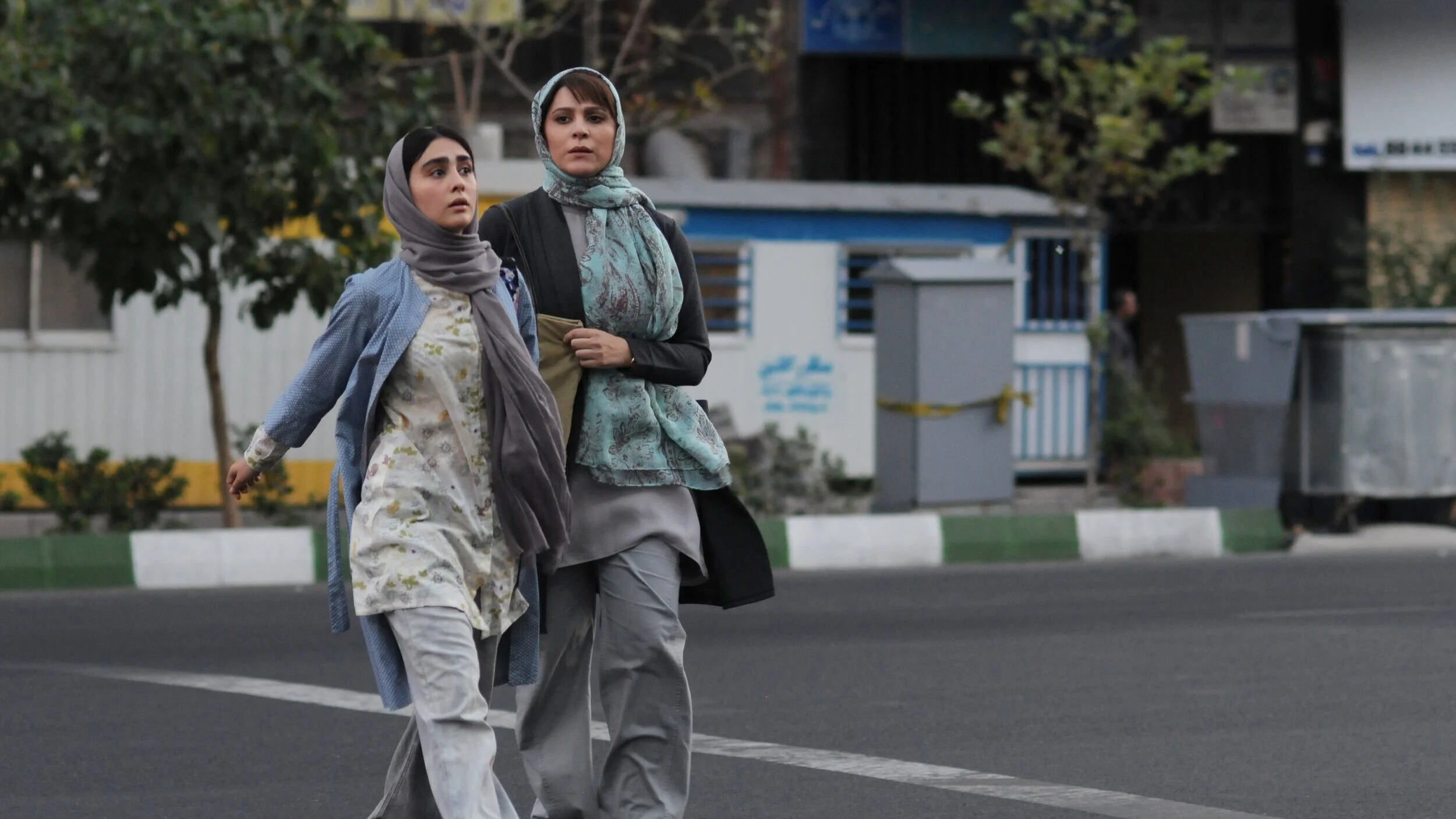
In recent years there have been many contemporary films depicting the plight of women living in various countries where the state remains staunchly patriarchal. Inversion, set in Tehran and written and directed by the award-winning Iranian filmmaker Behnam Behzadi, belongs to this category but it also possesses its own strong individuality. That is largely because of Behzadi's ability, aided by the superb colour photography of Bahram Badakhshani, to conjure up so vividly the sense of everyday life in Tehran. It's a hugely busy city that suffers from air pollution and, as we watch this film, we feel that we are part of it.
The heroine of Inversion is Niloofar (Sahar Dowlatshahi) the youngest of three siblings and the only one unmarried. Both her older brother Farhad (Ali Mosaffa) and her older sister Homa (Roya Javidnia) have children and, when their elderly mother (Shirin Yazdanbakhsh) becomes ill and is informed by the doctor that she needs better air only obtainable by moving out of Tehran, Niloofar's fate looks to be sealed. She may have her own tailoring business to carry on in the city and she may have encountered afresh a former admirer (Alireza Aghakhani) who is now firmly based there and who might want to marry her. Nevertheless, in the eyes of her siblings and their spouses, her status as a single female means that she must uproot herself and accompany her mother to a new life in the north. They do not consider sharing the responsibility and do not even choose to discuss the matter with Niloofar before taking steps intended to lead to this outcome. Only Niloofar's young niece, Saba (Setareh Hosseini), shows any real concern over the treatment of her aunt.
If the behaviour of the family is predictable, it nevertheless remains all too credible in its support of the film's thesis that women in Iran are being denied a voice. Furthermore, in a well-cast film, Sahar Dowlatshahi is immensely engaging as the put-upon heroine who may or may not find the strength to rebel (the actress playing the mother is another memorable presence). With such an incisive title, one does, perhaps, expect a sharper more detailed close to the film, but Inversion is certainly impressive. Above all else it triumphs in making the viewer feel that what we see of Tehran is utterly authentic: the atmosphere of the city pervades the whole film.
MANSEL STIMPSON
Cast: Sahar Dowlatshahi, Ali Mosaffa, Alireza Aghakhani, Roya Javidnia, Setareh Hosseini, Shirin Yazdanbakhsh, Setareh Pesyani, Toufan Mehrdadian, Motjaba Nam Nabat, Payam Yazdani.
Dir Behnam Behzadi, Pro Behnam Behzadi, Screenplay Behnam Behzadi, Ph Bahram Badakhshani, Set DesignBabak Karimi Tari, Ed Meysam Molaei, Music Sahar Sakhaei, Costumes Babak Karimi Tari.
Noori Pictures-New Wave Films.
84 mins. Iran. 2016. Rel: 19 May 2017. Cert. PG.