

A film so individual that it stands out from everything else.
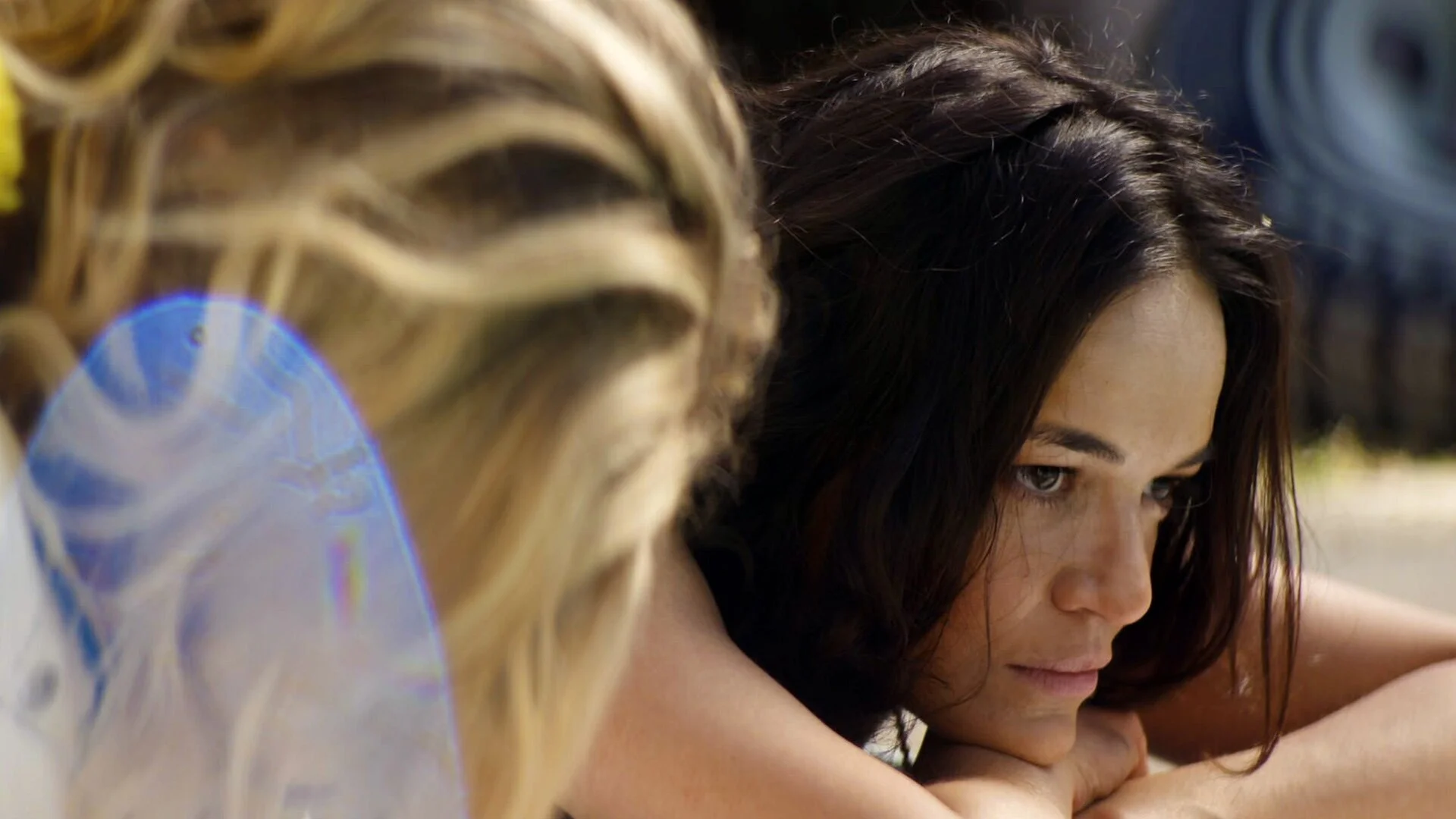
Michelle Rodriguez
The actress Amy Seimetz gives us here her second feature as writer and director and what she has come up with has all the makings of a film that could become a cult classic. She Dies Tomorrow will please some audiences more than others but it is wonderfully original in concept and likely to provoke much talk and discussion particularly among younger viewers who would normally never give death a second thought. It's bold and different and defies easy categorisation since it exists outside of any clearly defined film genre. Aptly enough it has been described as a work about existential dread and, while it is about contagion, it is a horror film without any horrifying visuals presented in a style that could be called minimalistic.
Descriptions of this film have quite accurately indicated that it shows one young woman, Amy (Kate Lyn Sheil), becoming convinced that out of the blue the next day will be her last and then discovering that friends and relatives although initially sceptical soon fall subject to the same belief themselves. The most central figures are Amy and her best friend Jane (Jane Adams) but before long the contamination spreads and takes over a whole range of subsidiary characters including two couples. That said it is worth noting that the first quarter of an hour passes before this theme is taken up. The initial scenes which are among the best in the film are centred on Amy alone as she experiences an emotional breakdown after a love affair has gone awry. Seimetz invites us to share what Amy is feeling by giving us what is in effect a mood piece carried out through a daring use of abstract images which with blue and red prominent are often painterly combined with a hypnotic repetition of religious music, a Lacrimosa, heard on a gramophone record which Amy plays again and again.
In theory, the early scenes are the most risky putting us inside Amy's head and offering hardly any dialogue but Seimetz creates an atmosphere that makes it work. Unexpectedly what comes over less well is the narrative in the second half of the film as we move between the various characters who have been introduced earlier. One interracial couple arouse our interest but are then underused and what we do get tends to feel disjointed. However, although the characters are relatively young, the situation in which they are caught up makes them ponder imminent death together with such issues as how one responds to mortality and what counts in life, questions that usually remain at arm's length until relatively late in life. Some have related the situation portrayed here to how people have been affected by the pandemic albeit that the film had been completed before it arrived. Whether or not one brings Covid-19 into it, She Dies Tomorrow resonates in its own right and is well acted. If, even so, I felt that the second half could have been stronger, the film's novelty value counts for much and its ability to cast a haunting spell over its audiences is not to be doubted.
MANSEL STIMPSON
Cast: Kate Amy Sheil, Jane Adams, Kentucky Audley, Katie Aselton, Chris Messina, Tunde Adebimpe, Jennifer Kim, Josh Lucas, Michelle Rodriguez, Olivia Taylor Dudley, Madison Calderon, Oden Mack.
Dir Amy Seimetz, Pro Amy Seimetz, Justin Benson, David Lawson Jnr and Aaron Moorhead, Screenplay Amy Seimetz, Ph Jay Keitel, Pro Des Ariel Vida, Ed Kate Brokaw, Music Mondo Boys.
Rustic Films-Blue Finch Film Releasing.
86 mins. USA. 2020. Rel: 28 August 2020. Available on Curzon Home Cinema and BFI Player. Cert. 15.