
Kristoffer Nyholm’s film offers a possible solution to the mystery of the disappearances on Flannan Isle.
Gerard
The real star of The Vanishing is the island’s lighthouse, a cylindrical masonry tower attached to the keeper’s house that was built in 1899 on Flannan, in the Western Isles of Scotland. In December 1900 a visiting ship noted that the lantern was unlit. Bad weather prevented a relief boat from reaching the island for eleven days. On arrival the relief crew found the lighthouse completely abandoned with no sign of the three keepers. Further investigation uncovered storm damage, a broken chest with its contents strewn about the rocks, iron railway lines wrenched free, and rocks and turf that had been uprooted, all obviously before the three men had disappeared.
Did a storm wash them out to sea? Did they have a fight and planned their demise? Were they abducted by kidnappers or picked off by some giant sea monster? These ideas have been suggested but the mystery has never been solved. In 1912 Wilfrid Wilson Gibson wrote a ballad called 'Flannan Isle', based on the incident; the story has been used in a Doctor Who series; Peter Maxwell Davies wrote his opera The Lighthouse about the disappearance; and the rock group Genesis composed a song about it. And now here is the film (originally titled Keepers) with a further possible answer.
Joe Bone and Celyn Jones’s screenplay has the three keepers finding a boat with a dead man and a wooden box washed up on the rocks. But the body is not dead and it ups and attacks Donald, the youngest of the three men, who retaliates by knocking him dead. They ultimately find something of value in the box, but then another boat arrives obviously looking for their missing crew member and the cargo. Fights eventually break out between the keepers and the intruders and subsequently also among the lighthouse keepers themselves, as one by one their fates are sealed.
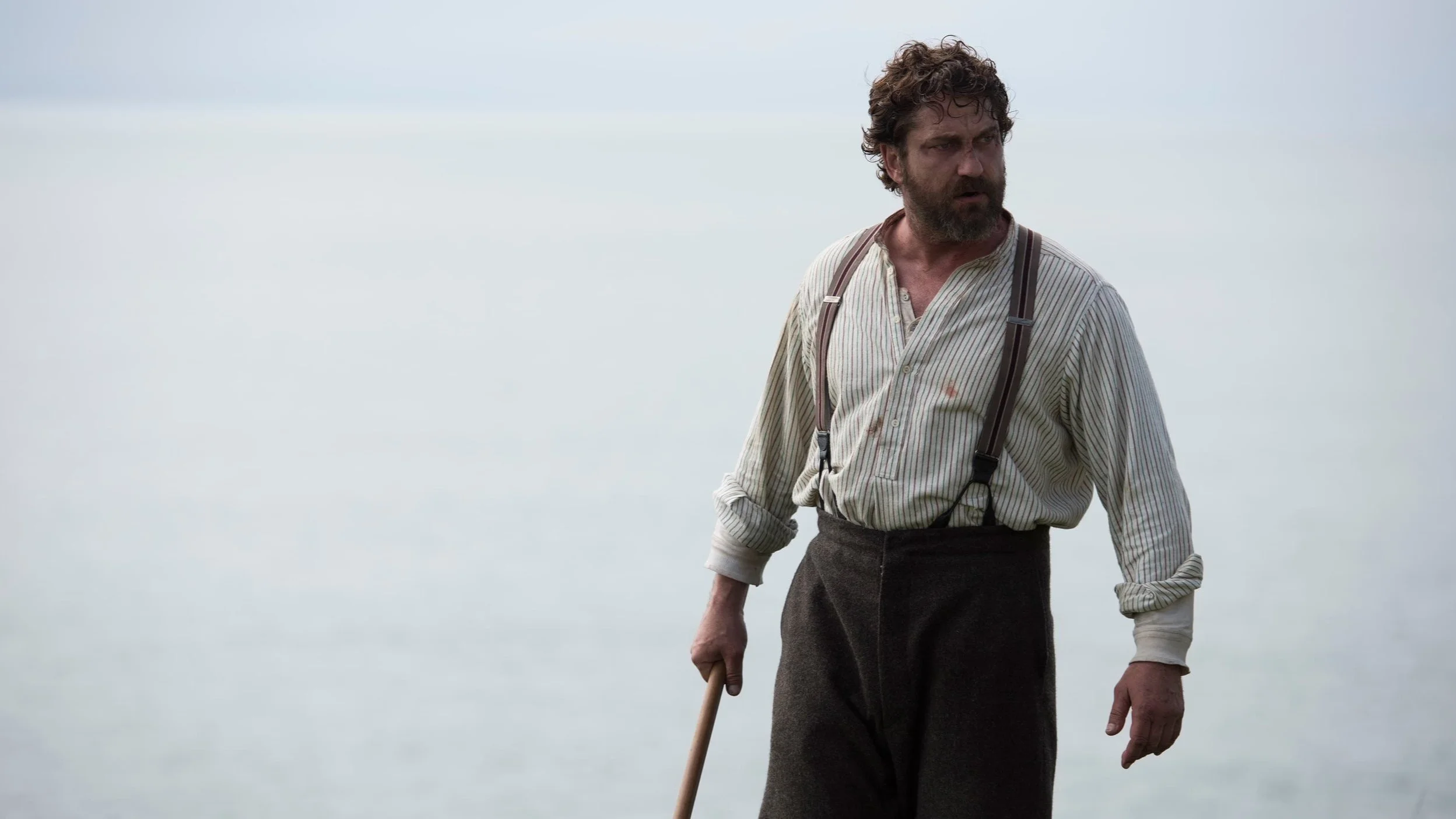
All this may not be true but it is a gripping yarn filmed with great tension by Nyholm and his cinematographer Jǿrgen Johansson. The three keepers are well delineated – Gerard Butler as James offers a strong character that seems destined for madness at any moment; Peter Mullan as Thomas, an old salt from wayback, has his own worries about his grief-filled past. And, while both men perhaps suffer from the loneliness of living a solitary existence that drives them to the brink, Connor Swindells as the innocent young Donald provides a contrast in both age and outlook. In the end we still don’t know the true facts but the film presents us with a cogently possible answer.
Original title: Keepers.
MICHAEL DARVELL
Cast: Gerard Butler, Peter Mullan, Connor Swindells, Ǿlafur Darri Ǿlafsson, Gary Lewis, Sǿren Malling, Ken Drury, Roderick Gilkison, Emma King, John Taylor.
Dir Kristoffer Nyholm, Pro Gerard Butler, Andy Evans, Maurice Fadida, Sean Marley, Ade Shannon and Alan Siegel, Screenplay Joe Bone and Celyn Jones, Ph Jǿrgen Johansson, Pro Des Jacqueline Abrahams, Ed Morten Hǿjbjerg, Music Benjamin Wallfisch, Costumes Pam Downe.
Mad as Birds/G-BASE/Kodak Pictures-Lionsgate.
107 mins. UK. 2018. Rel: 15 March 2019. Cert. 15.