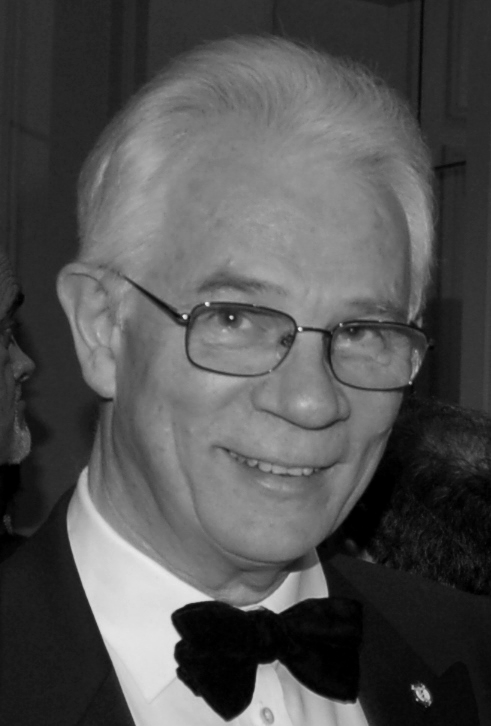
(28 June 1930 - 9 August 2015)

Film director and sometime producer Jack Gold mainly worked in television, although during the course of his 40-year career he was responsible for some outstanding films for both the cinema and TV. He joined BBC Radio in 1954 as a studio manager, then moved into television as a film editor, working on the Tonight programme. His first directorial work was on the TV series Call the Gun Expert (1964) which investigated historical incidents involving firearms. He then directed My Father Knew Lloyd George, co-written by and starring Alan Bennett. Jim Allen’s The Lump (1967) was a BBC Wednesday Play that exposed exploitation in the building trade. Gold’s first cinema features The Bofors Gun (1968) and The Reckoning (1970) were both important British productions, the first dealing with a soldier (David Warner) coming up against the wrath of an Irish psychopath, played by Nicol Williamson, who also starred in The Reckoning as a man returning to Liverpool to see his dying father. Both films deal powerfully with themes of class, racism and religion. Gold continued to direct substantial projects for television such as Arturo Ui (Williamson again), The Naked Civil Servant with John Hurt as Quentin Crisp, Charlie Muffin with David Hemmings, Little Lord Fauntleroy with Alec Guinness, The Merchant of Venice, with Warren Mitchell as Shylock, Macbeth (Williamson again), Graham Greene’s The Tenth Man with Anthony Hopkins, Thomas Hardy’s The Return of the Native with Catherine Zeta-Jones, Into the Blue and Goodbye, Mr Tom, both with John Thaw, about whom Gold made a TV documentary. He also directed an episode of Inspector Morse and four of the Kavanagh QC series, again with Thaw. For the cinema Gold’s CV includes the film of Peter Nichols’ play The National Health, Who? and Conflict, both with Trevor Howard, Man Friday with Peter O’Toole, Aces High with Malcolm McDowell and The Medusa Touch with Richard Burton. His last cinema film was Der Fall Lucona (1993), made in Germany with Franco Nero and David Suchet. Gold had a long and successful career, covering all kinds of subjects from comedy to drama, Shakespeare and Brecht to Noël Coward and P G Wodehouse. His work was often award-winning, providing regular proof that he was indeed a director of great substance.
MICHAEL DARVELL