
PETER WATKINS
(29 October 1935 – 30 October 2025)
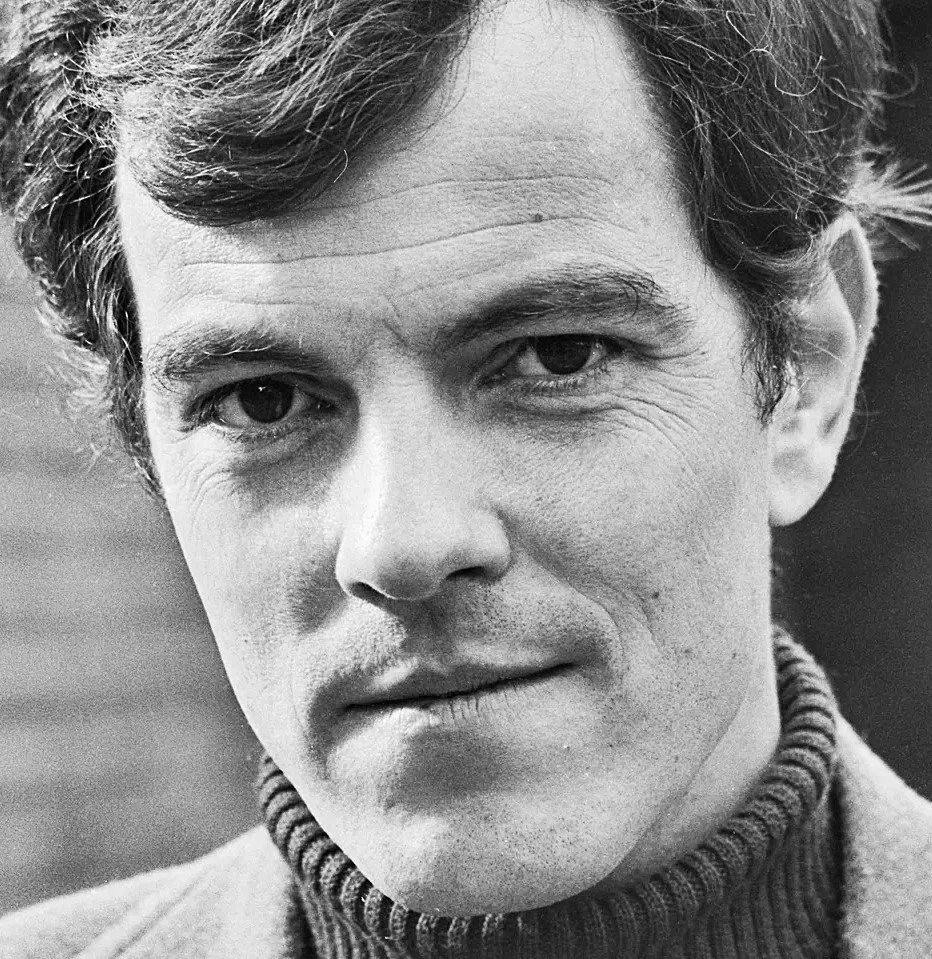
Peter Watkins, who died a day after his 90th birthday, was a director and documentarian and generally accepted as a pioneer of the docudrama and mockumentary genres. He was a radical pacifist concerned with the strength of the mass media and the effect it had on the general public. He made only thirteen feature films and five shorts, all on different subjects but generally keeping an air of realism and truth about them. Every film he made had a certain political stance, be it in a historical subject such as the battle of Culloden, or the time of La Commune, or a biography of the painter Edvard Munch, or the International Peace Games in The Gladiators, or National Guard soldiers in Punishment Park. Watkins was never on the sidelines of political thought but placed himself and his work in the centre of the action, be it true or imaginary.
Peter Watkins was born in Norbiton, Kingston upon Thames, to Ralph Watkins, a bank clerk, and his wife Peggy, a family that kept on the move. After National Service he trained as an actor at Rada but began his career as an assistant producer in an advertising agency before beginning to make amateur films in the 1950s. He made various shorts and commercials before becoming an assistant editor and director of documentaries at the BBC who commissioned him to make two features. The first was Culloden (1964), showing the Jacobite uprising of 1745, filmed in a ‘you were there’ style of drama documentary. He then made The War Game for the BBC’s Wednesday Play slot. It depicted the effects following a nuclear war and was so realistic that the BBC cancelled the screening. It was eventually shown in cinemas and I remember queueing to see it at the National Film Theatre. It won an Academy Award, amongst many other gongs, but it took another twenty years before the BBC would show it for home viewing.
Watkins’ theatrical feature Privilege (1967) starred the singer Paul Jones as a pop star used by the State to draw the population away from politics. It was controversial in that the Rank Organisation refused to screen it in their cinemas, while the distributors eventually withdrew it completely. It was eventually released on DVD with two of Watkins’ shorts. In 1969 Watkins filmed The Gladiators, about a future in which the United Nations and other countries stage the International Peace Games as a way of restoring law and order. It was filmed in Sweden but dismissed as being boring and it was never shown there again. Watkins then made Punishment Park (1971) in which British and German film crews follow National Guard soldiers and police in a pursuit of a counterculture group across a desert. It was a mixture of real events in a fictional film and was not well received at the time. Watkins’ biographical drama Edvard Munch (1974) on the Norwegian Expressionist painter was better regarded despite criticism of the director’s use of amateur actors. However, it still won a Bafta.
Watkins continued making films on and off until his last feature in 2000, La Commune (Paris, 1871), about a revolutionary government seizing power in Paris, after the defeat of Napoleon. In spite of its considerable length (220 minutes), it appears to have been one of Watkins’ most successful projects, well-liked by critics and a triumph at the LA Film Critics Association Awards. For much of his life Peter Watkins was a nomadic figure living in Sweden, Canada, Lithuania and France, where he died. His first marriage, to Françoise Letourneur, in 1962, ended in divorce. His second wife was the film and sound editor Vida Urbonavicius, with whom he had two sons, Patrick and Gerard.
MICHAEL DARVELL