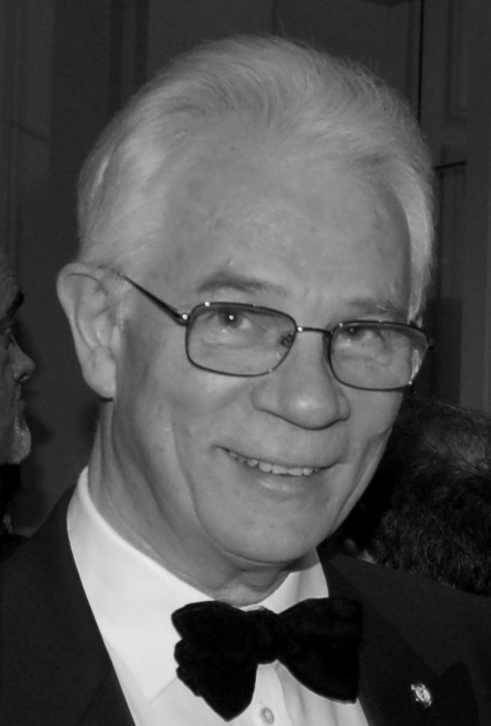
(29 September 1932 - 11 May 2025)
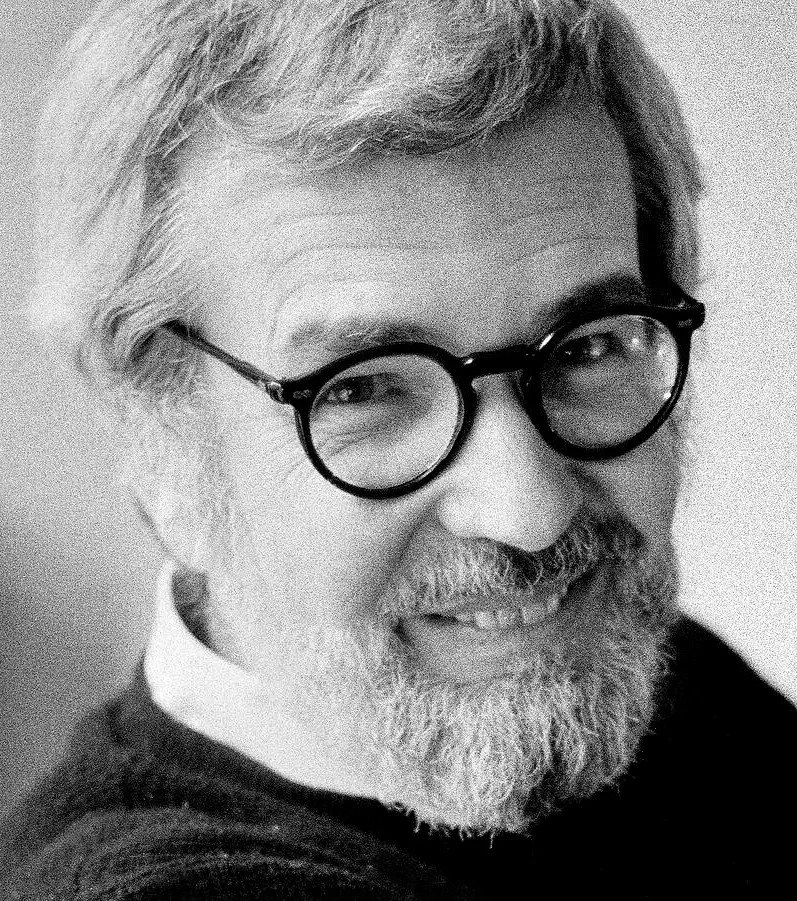
The American film director and screenwriter Robert Benton was a maverick as far as Hollywood was concerned. He didn’t make many films – just seventeen in the various capacities of writer, director or executive producer. He wrote thirteen screenplays, directed eleven and produced just two of them. He was really an independent filmmaker working within the industry but quite obviously made only the features that he really wanted to make. He started at the top because the first screenplay he wrote was both an instant critical and popular success. After Bonnie and Clyde in 1967 there was no other way but up, and up he went in what was a very positive career.
Robert Douglass Benton was born in Dallas, Texas, to Ellery Douglass Benton, a telephone company worker and his wife Dorothy. From the University of Texas, he graduated in 1953 with a BA in fine arts. After two years national service in the US army, he moved to New York to study for a master’s degree in art history at Columbia University but left mid-term and joined the staff of Esquire magazine. For a time, Benton was art director at Esquire where he also met his future writing partner, David Newman. He also met his future wife, Sallie Rendig, an artist who illustrated Benton’s children’s book Little Brother No More. They were married from 1964 until her death in 2023. They had one son, John.
Benton and Newman began writing books together and then produced the libretto for a spoof musical in 1966 called It’s a Bird... It’s a Plane... It’s Superman. It had music by Charles Strouse, but, although it received good notices the box-office fared badly. Leaving the theatre behind, Benton and Newman wrote their first screenplay, Bonnie and Clyde, which appealed to the director Arthur Penn and the actor-producer Warren Beatty and so 1967 became the year of the New Hollywood era. The film was audacious in that it presented the famous bank-robbing couple as heroes, despite all the sex and violence. There was more blood spilt in the notorious final scene than had ever been shown before in a major studio production. The slow-motion ending with flying bodies was a mixture of balletic movement and grand opera. It did wonders for the careers of Beatty and his co-stars Faye Dunaway, Gene Hackman, Estelle Parsons and Michael J. Pollard. It garnered nine Oscar nominations but only won for Estelle Parsons’ supporting actress turn and for Burnett Guffey’s brilliant cinematography.
Joseph L. Mankiewicz directed the next Benton-Newman screenplay, There Was a Crooked Man, a Western with Kirk Douglas and Henry Fonda in a tale of robbery, punishment, jail and violence. It was moderately well received but not an enormous hit. Next came What’s Up Doc?, a nod to the heydays of screwball comedy of the 1930s. Peter Bogdanovich directed Barbra Streisand and Ryan O’Neal in what was a refreshingly mad piece of nonsense. Buck Henry also contributed to the script. The writing trio won the Writers’ Guild of America’s best screen comedy award. After that it was time for Benton to direct his first film. With Newman he came up with Bad Company, a sort of black Western set in the American Civil War with two draft-dodgers looking for their fortune out West. In Jeff Bridges and Barry Brown, it had two strong leads and the screenplay was quirky enough to make its mark After that The Late Show starred Art Carney as a private detective on the hunt for his partner’s killer. A traditional genre story spiked with black humour, it co-starred Lily Tomlin, Bill Macy and Joanna Cassidy. The screenplay was Oscar-nominated and the film itself gave rise to a brief TV series called Eye to Eye.
Richard Donner directed the first of the latter-day Superman movies in 1978. Apart from Benton and Newman, the screenplay was co-written by Newman’s wife Leslie and Mario Puzo. Then Robert Benton wrote and directed Kramer vs. Kramer, a drama based on the novel by Avery Corman about divorce and its impact on a couple’s son. With Dustin Hoffman and Meryl Streep, the film was a hit with nine Oscar nominations, winning for Hoffman, Streep, the producer Stanley R. Jaffe and two for Benton for his script and his direction. He continued to do excellent work, taking the cinema to different heights in the psychological thriller Still of the Night (1982) with Roy Scheider and Meryl Streep; Places in the Heart (1984), a Depression-set drama with Sally Field, Ed Harris and John Malkovich, which won Benton a best screenplay Oscar; and the comedy Nadine with Jeff Bridges and Kim Basinger (1987).
Benton directed Tom Stoppard’s screenplay for Billy Bathgate (1991), based on E.L. Doctorow’s novel about an Irish-American teenager in the Bronx (Loren Dean) who gets involved with the mobster Dutch Schultz (Dustin Hoffman), but the film did not do well. Nobody’s Fool (1994) starred Paul Newman as an angry old curmudgeon doing odd jobs in the building industry in a mixture of comedy and drama that was both appealing and humane. The film won an Oscar for its writing. Four years later Paul Newman returned for Twilight, a film noir about a private eye tracking down a runaway girl. However, with a terrific cast including Susan Sarandon, Gene Hackman, Reese Witherspoon, Stockard Channing, Liev Schreiber, James Garner and M. Emmet Walsh, it failed to make the grade and lost its outlay.
Benton made three more films after 2000, beginning with The Human Stain, from Nicholas Meyer’s screenplay (from Philip Roth’s novel) about a New England writer battling cancer. Although it starred Anthony Hopkins, Nicole Kidman, Gary Sinise and Ed Harris, most reviewers found it hard to credit, although it did well at the box-office. Benton was the writer (with Richard Russo) and executive producer on The Ice Harvest, about a couple of conmen in Kansas planning to steal a couple of million dollars from their mobster boss. John Cusack and Billy Bob Thornton starred in what was a quirky black comedy that received a mixed reception. Feast of Love (2007) was Benton’s last directorial effort, a portrait of various couples, gay and straight, in Portland, Oregon. The writer Charles Baxter adapted his own novel with Allison Burnett. The cast included Morgan Freeman, Greg Kinnear, Radha Mitchell and Selma Blair, but it was a muted end to Benton’s career that had been so full of promise. Hollywood needs more writers and directors who seem to know what they are doing... Hollywood needs more people like Robert Benton.
MICHAEL DARVELL