
ROBERT DUVALL
(5 January 1931 – 15 February 2026)
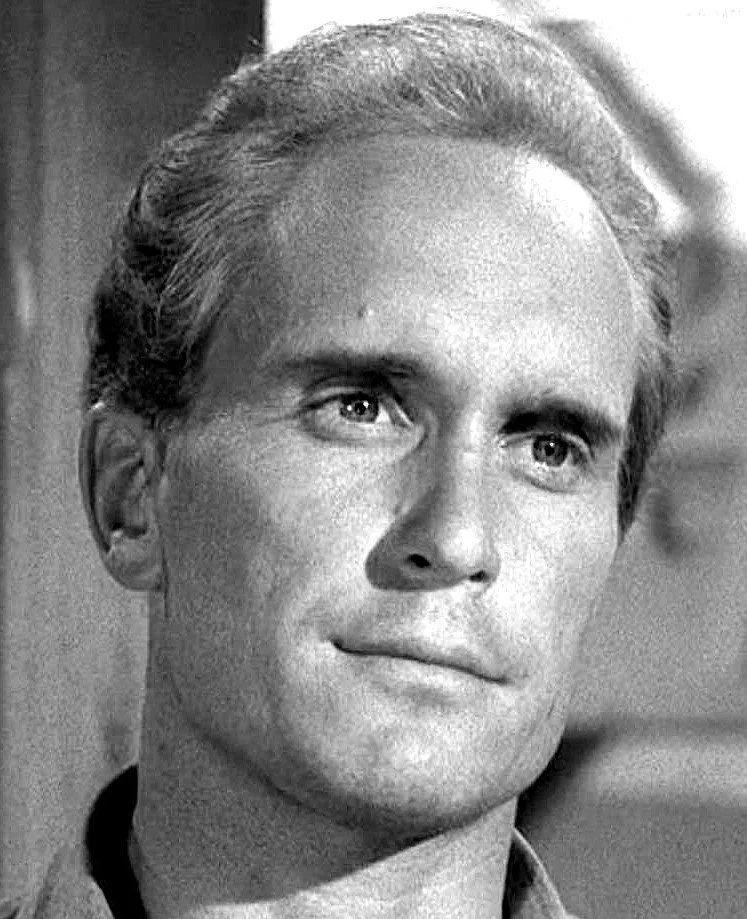
The American actor Robert Duvall, who has died at the age of 95, enjoyed a seventy-year career. Whether it was his luck or judgement or a diligent casting director, it is amazing how many good and even great American films he appeared in.
Robert Selden Duvall was born in San Diego, California, to mother Mildred, an amateur actress, and US Navy Rear Admiral William Duvall. His childhood was spent in Annapolis, Maryland, near his father’s naval academy and, after school, in Severna Park and the Principia in St Louis. Despite his father’s wishes that he should follow a naval career, Robert was only interest in acting. He joined the army after the Korean war, was stationed at Camp Gordon in Georgia but never qualified as a fighting soldier... instead, when not working for the Manhattan Post Office, he started acting at an amateur theatre in Augusta. In the winter of 1955 he studied under Sanford Meisner in New York with fellow students Gene Hackman and James Caan who, along with Dustin Hoffman, remained life-long friends.
In 1952 Duvall began working at the Gateway Playhouse in Bellport, Long Island, and appeared in plays by William Inge, Arthur Miller and Agatha Christie and eventually got to play Stanley Kowalski in A Streetcar Named Desire. Duvall’s film debut came in 1962 when he played Boo Radley, the strange, possibly backward young man so pivotal to the plot of Robert Mulligan’s To Kill a Mocking Bird, with Gregory Peck as the lawyer Atticus Finch. Duvall played a cab driver in Bullitt, the famous chase movie with Steve McQueen and then Francis Ford Coppola cast him in a starring role (as a highway patrolman) in The Rain People, with Shirley Knight and James Caan. In Robert Altman’s M*A*S*H, he was the incompetent, highly-strung Major Frank Burns, and then he landed the title role in George Lucas’s sci-fi classic THX 1138, which Coppola produced. Coppola then cast him as Tom Hagen, the consigliere in The Godfather, for which he was nominated for an Oscar, a part he repeated in The Godfather Part II. Coppola also used Duvall (uncredited) in The Conversation, with his old friend Gene Hackman. The big one from Coppola was Apocalypse Now with Duvall as the manic Lt Col Bill Kilgore and his flying squadron of helicopters hitting the ground in Vietnam, probably the highlight of Duvall’s career. Indeed, Kilgore’s statement, “I love the smell of napalm in the morning” has become one of the most famous lines in cinema history.
For the last-named, he was again nominated for an Oscar, a recognition he also received for The Great Santini (1979), The Apostle (1997, which he also wrote and directed), A Civil Action (1998) with John Travolta, and The Judge (2014) with Robert Downey Jr. He actually won the golden statuette for Bruce Beresford’s Tender Mercies (1983) as the alcoholic Country and Western singer Mac Sledge for which he did his own singing. He was also the film’s co-producer. In 1977 Duvall had made a documentary called We’re Not the Jet Set, about a Nebraskan rodeo family, and later on he co-produced A Family Thing (1996), a Southern Gothic comedy in which he starred opposite James Earl Jones. For Angelo My Love (1983) about the New York City Romani people, he was both writer and producer-director. On Assassination Tango he served as the star, executive producer, writer and director, which he made with his wife Luciana Pedraza because of their abiding interest in tango. He went on making films until 2022 when he played a historian of the occult in Scott Cooper’s The Pale Blue Eye, with Christian Bale, Harry Melling and Gillian Anderson.
The actor was married four times. His first wife was Barbara Benjamin, a former television announcer and dancer, and they were married from 1964 to 1975. Then he married Gail Youngs from 1982 to 1986 and later the dancer Sharon Brophy from 1991 to 1995. His fourth wife was Luciana Pedraza, granddaughter of the aviation pioneer Susana Ferrari Billinghurst. He had no children.
MICHAEL DARVELL