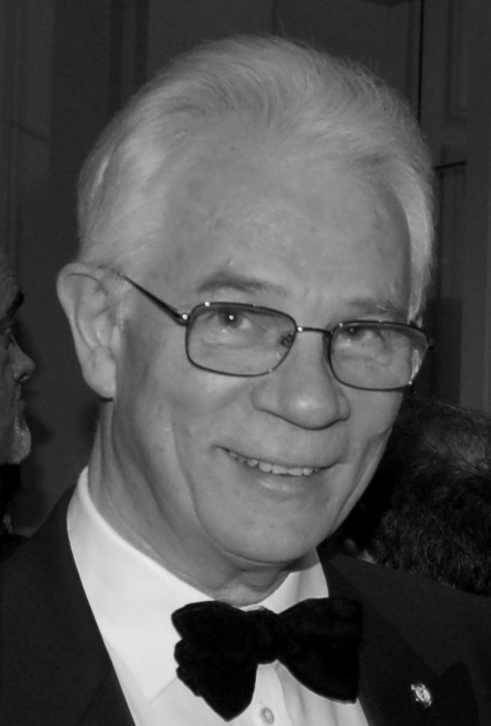
TOM STOPPARD
(3 July 1937 – 29 November 2025)
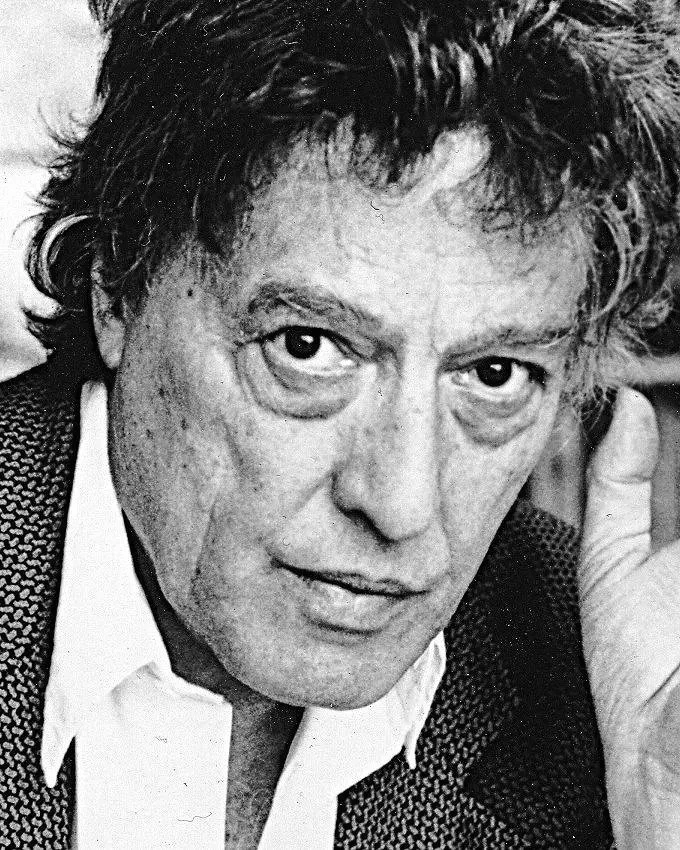
Although best-known as a playwright, Tom Stoppard also contributed work for the cinema, television and radio and adapted other writers’ works for the media. He made his first mark on theatre in 1966 in his rewriting of Shakespeare’s Hamlet in which the leading players were Rosencrantz and Guildenstern. They were relatively unimportant characters in the Bard’s script but Stoppard managed to bring them back to life. Stoppard’s love of language – particularly English – was apparent even then and he went on to mine further nuggets of gold with The Real Inspector Hound, Jumpers, Travesties, Night and Day, The Real Thing and his masterwork Arcadia among many others. For the cinema and television, he worked with Rainer Werner Fassbinder, adapted the novels of Graham Greene, John Le Carré, Robert Harris and Deborah Moggach and was one of the writers on Terry Gilliam’s Brazil. He had an enormous success in 1998 with Shakespeare in Love, co-authored with Marc Norman, which won an Academy Award. On TV he wrote The Boundary with Clive Exton, adapted Three Men in a Boat by Jerome K. Jerome, Poodle Springs by Raymond Chandler and Robert B. Parker, and Ford Madox Ford’s Parade’s End.
Tom Stoppard was born Tomas Straussler in Zlin, Czechoslovakia, the present-day Czech Republic, to Eugen Straussler, a doctor with the Bata shoe company, and his wife Martha Beckova. In 1939 the family fled to Singapore where Bata had a factory. Then Tomas, his brother Petr and their mother left for British India while the father stayed in Singapore and eventually died, having been drowned in a ship bombed by the Japanese when Tom was four. In Darjeeling the two brothers went to a multi-racial American school and became known as Tom and Peter. Their mother married a British Army major, Kenneth Stoppard, who adopted the two boys and the new family moved to Nottingham.
Tom felt like an outsider, although he believed that his upbringing made him an ‘honorary Englishman’ but, like many foreigners, he understood and was fascinated by the English language. Although born Czech, Stoppard spoke mainly English from an early age and for most of his life. He delighted in English and wanted to become a writer. He left school at 17 and became a journalist on the Western Daily Press in Bristol and then joined the Bristol Evening World where he was a feature writer, humourist and second-string theatre critic.
He began writing plays for radio and in 1960 produced his first stage play, Enter a Free Man. A Ford Foundation grant saw him writing plays which produced Rosencrantz and Guildenstern Are Dead which subsequently opened at the Old Vic in London, staged by the National Theatre. Then came Jumpers (1972), about a philosopher caught up in a murder mystery, while Travesties (1974) brought Lenin, James Joyce and Tristan Tzara together in Zurich during World War I. Stoppard was certainly the most original playwright of his time and he made no concessions to his audiences as he wrote about what interested him. The Real Thing (1982) was about different types of honesty, a subject that brought the New York production seven Tony nominations, winning five. In Arcadia (1993) Stoppard compared modern academics with the members of a country house in the 19th century including Lord Byron! It won an Olivier Award for the National Theatre production. Every Stoppard play was an event of great standing and for a long time he remained Britain’s best and most original writer for the stage.
Stoppard made his mark, too, in the cinema, yet nobody could have predicted the success of Shakespeare in Love. He also contributed to Indiana Jones and the Last Crusade in 1989 and Star Wars III: Revenge of the Sith, and worked on Tim Burton’s Sleepy Hollow for which he was uncredited. He wrote Fassbinder’s Despair starring Dirk Bogarde, and The Human Factor from Graham Greene’s novel with Nicol Williamson. He did the screenplay for John Le Carré’s The Russia House which starred Sean Connery and Michelle Pfeiffer, and wrote the film of Robert Harris’s Enigma. He did the first draft of Spielberg’s Empire of the Sun by J.G. Ballard in 1987 and in 1991 wrote the screenplay of E.L. Doctorow’s Billy Bathgate, about an Irish-American teenager in the Bronx. In 2012 Stoppard also adapted Tolstoy’s Anna Karenina for Joe Wright’s film with Keira Knightley. His last film work was on Tulip Fever (2014) from Deborah Moggach’s novel about a convent girl in the 17th-century Dutch Republic, with Alicia Vikander.
Tom Stoppard was first married to the nurse Josie Ingle from 1965 to 1972. From 1972 he was married to the doctor Miriam Stern but they parted when he began a relationship with the actress Felicity Kendal in 1992. He also had a relationship with the actress Sinead Cusack, and in 2013 he married the television producer Sabrina Guinness. He had two sons from each of his first two marriages, Oliver, Barnaby, the actor Ed Stoppard and Will Stoppard.
MICHAEL DARVELL