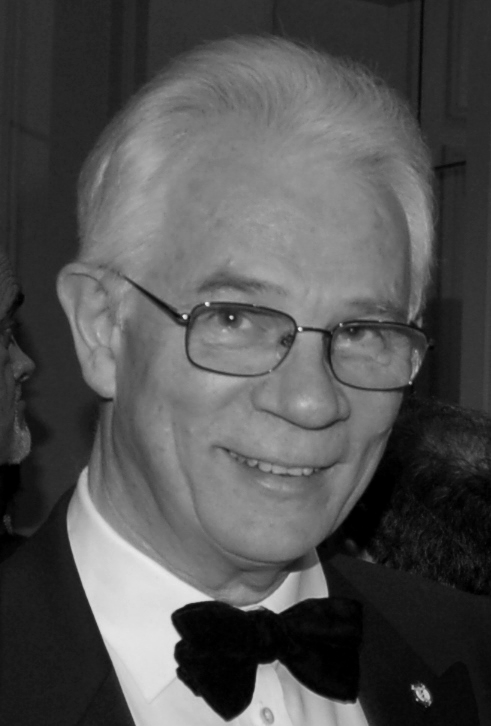
(14 March 1941 – 12 August 2022)

If the German director, producer and screenwriter Wolfgang Petersen, who has died aged 81 from pancreatic cancer, is remembered for any single film, it will be for his astonishing World War II epic Das Boot. It is an almost documentary study of life in a German submarine during the Battle of the Atlantic. In 1982 it was not a commercial success but it was well received by the critics and earned no less than six Academy Award nominations, winning two for Petersen as best director and for best adapted screenplay. It also garnered a Bafta nomination and another from the Directors Guild of America. The US Rotten Tomatoes review website gave it an astonishing 98 per cent aggregate ranking, based on the reviews of the most notable film critics around the world.
Petersen worked a lot in German television and on German films before becoming a mainstay in American movies and the producer of outstanding blockbusters. Most of his films include action of one sort or another and he proved to be an excellent stylist in the action field. He was born in Emden, Germany, the son of a naval officer which gave Peterson his lifelong interest in the sea. His initial interest in films came with his use of an 8mm camera while he was at school in Hamburg. He first began directing plays at the Ernst Deutsch Teater in Hamburg before enrolling at Berlin’s Film and Television Academy from 1966.
He directed his first television play, Mies Bouhuys' Stadt auf Steizen, in 1965 and continued to work on TV until 1978, occasionally also writing his own screenplays. He also wrote and directed several German films from 1968 until 1974 when he made his first cinema feature, One or the Other of Us, a psychological thriller about a university professor being blackmailed. It starred Klaus Schwarzkopf and Jürgen Prochnow, the latter who was to play the U-boat captain in Das Boot.
His first English language film, The NeverEnding Story (1984), was written and directed by Petersen, based on the novel by Michael Ende about a boy who finds a magical book telling how to stop a dark force from destroying the world. It became a popular film with some stunning visual effects. However, his science fiction action film Enemy Mine starred Dennis Quaid and Louis Gossett Jr playing a human and an alien soldier was less successful. Filming in Budapest and Iceland began with director Richard Loncraine but following creative differences Petersen took over. Enemy Mine received a mixed reception and the print was cut by fifteen minutes for UK distribution.
Petersen wrote, produced and directed Shattered (1991), a psychological thriller with Tom Berenger, Greta Scacchi and Bob Hoskins, which recouped a mere half of its budget of $22 million. With In the Line of Fire in 1993 the tables were turned as this story of an ex-CIA man seeking to kill the President was a box-office winner with Clint Eastwood and John Malkovich and it gained three Oscar nominations. Success again served Petersen’s Outbreak (1995) about an Ebola virus pandemic starring Dustin Hoffman, Rene Russo, Morgan Freeman and Kevin Spacey, thus securing Petersen’s reputation as a good commercial director.
The pattern of success continued with Harrison Ford in Air Force One (1997), George Clooney and Mark Wahlberg in The Perfect Storm (2000) with Petersen returning to the sea again, Brad Pitt et al in Troy (2004), although Poseidon (2006), the third screen adaptation of Paul Gallico’s 1969 novel The Poseidon Adventure (and another sea-faring exploit for the director), was a disaster. Petersen’s last film was his first to be made back in Germany since the days of Das Boot. It was Vier gegen die Bank (Four Against the Bank), a comedy crime drama made in 2016.
Wolfgang Petersen was married to the actress Ursula Sieg, but they later divorced. They have a son, Daniel. Then he married his assistant director and script supervisor Maria-Antoinette Borgel and they moved to the US in 1986, where he acquired American citizenship.
MICHAEL DARVELL