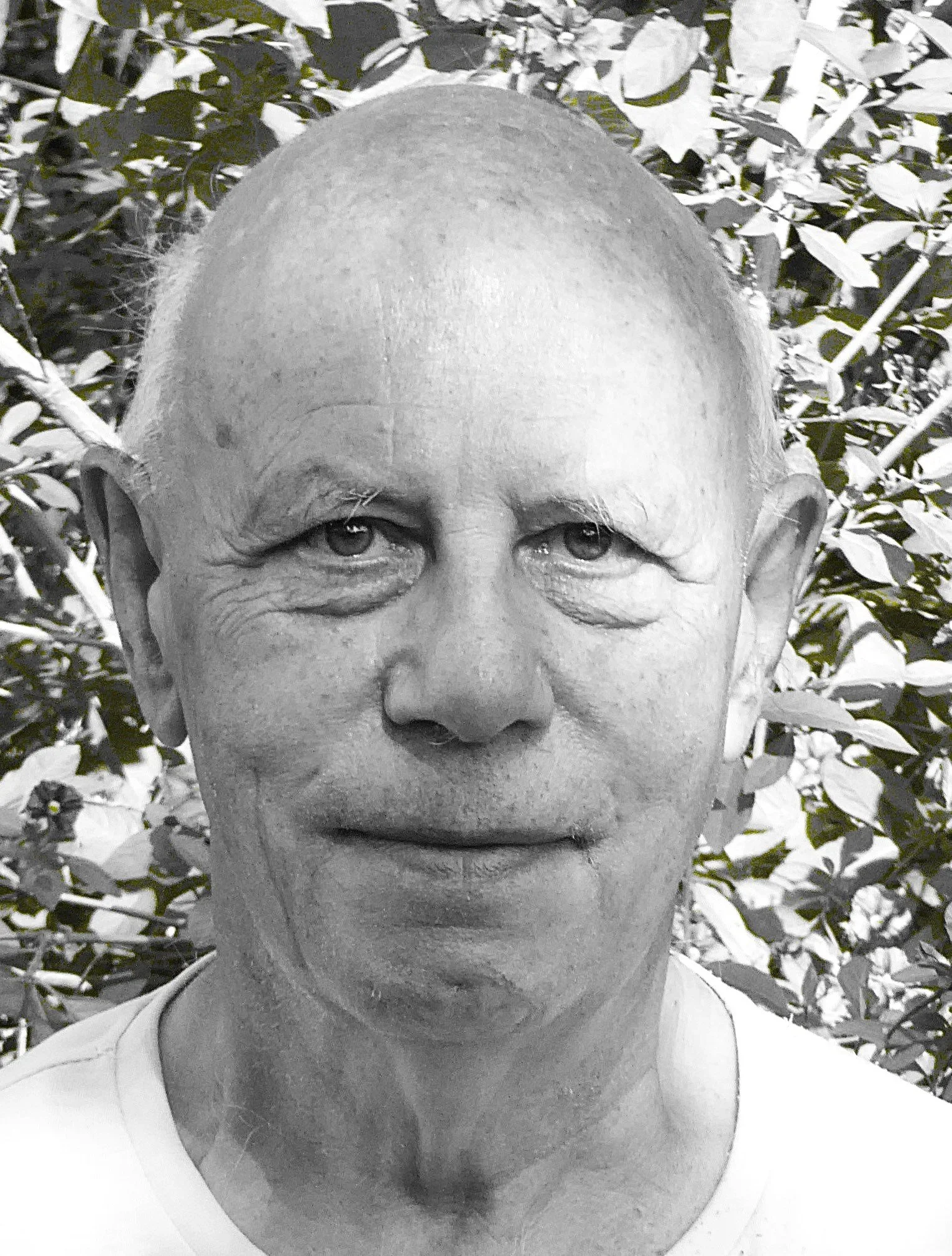

Miro Remo’s unique, hybrid documentary examines the rural lives of a pair of eccentric twins.
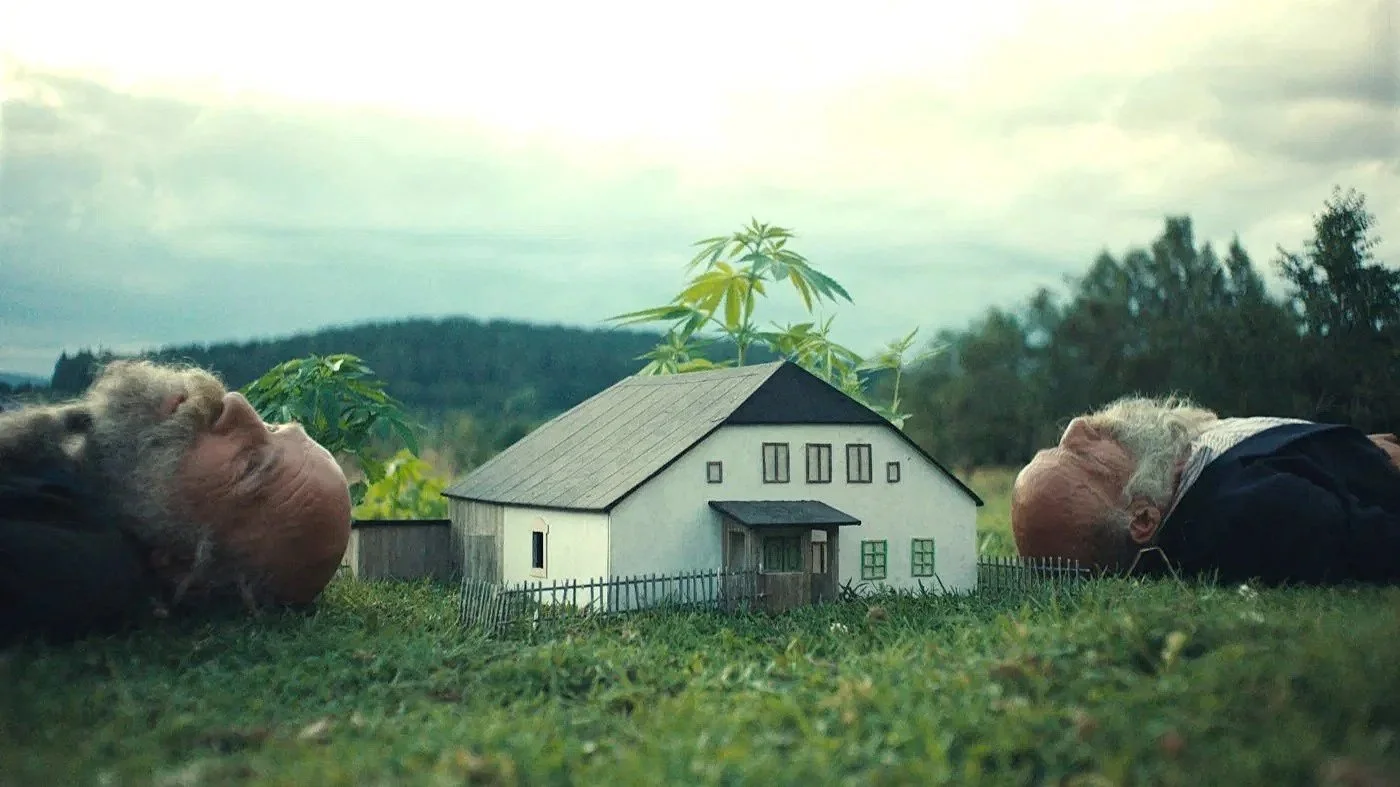
Image courtesy of Tributary.
by MANSEL STIMPSON
This is the first film to be released in the UK by a new distributor, Tributary, and this co-production between the Czech Republic and the Slovak Republic is a bold choice. It has admittedly won fifteen awards but that has been on home ground (they include three Czech Lions for best documentary, best photography and best editing respectively and, while the other two were attained in international competitions, one of them was awarded in Slovakia and the other in the celebrated Karlovy Vary Film Festival). Similarly, the filmmaker, Miro Remo, is not a name in the UK although this Slovakian documentarian is well established in his own part of the world having made four previous feature films as well as shorts and TV movies. Furthermore, if all of this suggests that Better Go Mad in the Wild may well be a hard sell here, it has to be acknowledged that there are also additional reasons why its appeal might go unrecognised. Nevertheless, it is a very well-made film and consequently the awards that it has won come as no surprise.
Only two people are seen on screen here, the twin brothers František Klišík and Ondřej Klišík who have lived throughout their lives in the rural area known both as the Bohemian Forest and as Śumava. It was there that Miro Remo filmed them over five years capturing the nature of their reclusive lives, the personality of each of them and the bond which they share and which has been central to their lives. Approaching the age of sixty, they had long settled into an isolated life in the family farmhouse and shared a disdain for society despite the fact that they have very different temperaments. František, always called Franta by his brother, has a creative nature that leads him to write poems and even to devote much time in seeking to create a contraption with wings which will enable him to fly, this being a fantasy maintained over twenty years in the belief that to take off in this way would lead him to find hope. Meanwhile Ondřej, or Ondra as Franta calls him, is ready to see life as futile and simply to ignore the world. There had been a time when he had built a wall inside the house to divide it into two distinct parts so that he could more readily bring women there for sex, but he acknowledges that he had never found a woman to love and at his age he no longer expects that to happen. Franta often complains of Ondra drinking too much but, if both men indulge, they are also living out their lives on their own terms and have a dog and a cat around as well as farm animals.
In Remo's film we learn early on of how Franta had years ago lost an arm in a sawmill accident and we do see footage from the past when both brothers received awards. These were in recognition of contributions they had made in the non-violent underground resistance movement that was part of the 1989 Velvet Revolution which defeated Communist rule and brought in a parliamentary democracy. That past personal history can be linked to the brothers now being seen as supporters of Ukraine and, in expressing their own love of life, they curse Putin for being akin to Hitler. However, that brief look back into the earlier lives of Franta and Ondra stands alone save for a comment that they didn't do well at school but became keen readers.
In practice this makes Better Go Mad in the Wild a chronicle of an exceedingly uneventful existence and ironically when some extra drama does occur in the form of an incident with a bull we do not see the key moment. This means that Remo faces the extra challenge of making a feature-length film in which little happens and which contains nothing equivalent to a story arc. That may require the viewer to make an adjustment, but there is compensation for what is missing in that what we do see has its own richness. This is certainly a film about two eccentrics, but it is also a detailed study of the special relationship of twins while in addition it becomes a work about aging as the shadow of death comes closer. A further advantage lies in the fact that the eccentricity on display always rings true: perhaps because of the long period over which it was filmed, Franta and Ondra appear entirely genuine throughout and never give the impression of playing up to the camera.
The film undoubtedly gains from the fact that the contrasted viewpoints of the brothers so often put them at odds. Franta tells Ondra “I love you, but you're not the easiest person to love” while Ondra, acknowledging that he quite lacks Franta’s belief in himself as an artist, declares: “I know that I'm a bastard. I think I'm nasty sometimes but have nothing to prove to the world”. Later on comes the comment "I've never shown more tolerance to anyone than I have to you" and it is telling when, near the close, an exasperated Ondra calls out “Leave me alone” he then amends it to “Leave me alone for two hours”. The more we are aware of their conflicts, the more telling it is that the film conveys so deeply how central to both of them their connection is.
Admittedly the film carries the risk that some viewers may find the eccentricity on display irksome (“Joy to all conscious human beings including stone” is a characteristic early remark). Furthermore, Remo might seem to be making matters worse when he incorporates details as odd as anything the brothers say or do. One such is the introduction of a round mirror into several scenes both indoors and out, but seeing the brothers observe themselves in this way adds to the sense that they are becoming old without indulging in any sentimentalism about it. Remo is being even more provocative when he includes a number of outsider comments on the brothers which appear to be mouthed by animals. But, very much against the odds, underplaying these scenes removes the danger of their becoming irritatingly fey and affected and they do not distract at all. In other respects, Remo’s film more straightforwardly displays its quality: the superbly photographed images show a real eye for effective compositions and sound is imaginatively used throughout, not least musically whether that be Adam Matej’s original music score or extracts from various sections of Smetana’s Má vlast.
In many respects Better Go Mad in the Wild might be thought of as a one-off. But in point of fact it does bring to mind another documentary about two reclusive people living together: 1975’s Grey Gardens in which the Maysles brothers studied a mother and daughter related to Jackie Kennedy Onassis. That film would in time become something of a cult classic and so too might this film. This new work may be a piece which will provoke mixed reactions but for the adventurous filmgoer it is well worth seeking out now.
Original title: Raději zesílit v divočině.
Featuring Frantisek Klišík, Ondřej Klišík.
Dir Miro Remo, Pro Miro Remo, Tomáš Hrubý and Paula Janoušková Kubečková, Screenplay Aleš Palán and Miro Remo from the book by Aleš Palán, Ph Dušan Husár and Miro Remo, Pro Des Tomáš Hauser Ed Šimon Hájek and Maté Csuport, Music Adam Matej.
Arsy-Versy/Nutprodukce/Czech Television Studio-Tributary.
84 mins. Slovakia/Czech Republic. 2025. UK Rel: 11 September 2026. Cert. 15.