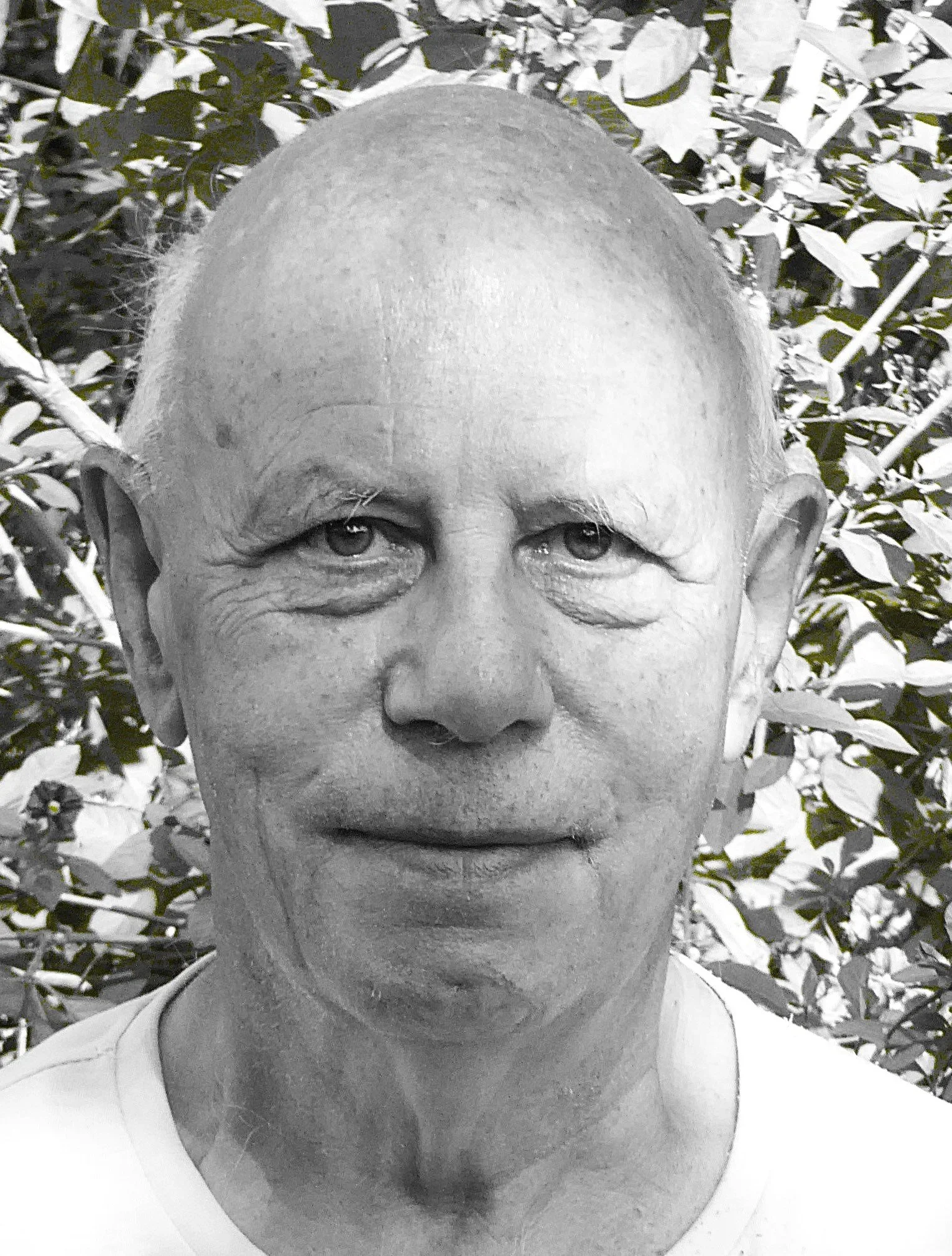

An unexpected sequel to the 2011 documentary Two Years at Sea finds Ben Rivers pursuing his own very original style of filmmaking.

Image courtesy of New Wave Films.
Back in May 2012, I saw a film by Ben Rivers entitled Two Years at Sea and found it difficult to understand to whom it could appeal. It was a documentary study of a loner named Jake Williams who had opted to live a solitary life in a forest but it lacked a commentary while also denying Williams any opportunity to voice his own thoughts. Such an approach made it difficult to understand anything about this man. Consequently, the lack of any information illuminating either his motivation or the extent to which he had become satisfied with his way of life caused me to regard it as a failure despite it having won a major prize at the Venice Film Festival (I was not alone in my view however since Philip French in The Observer was equally dismissive).
Bogancloch, the latest offering by Rivers as director, photographer and editor, is a follow-up to Two Years at Sea again featuring Williams and this time, while viewing it as a work of distinctly specialised appeal, I found it more to my taste. I do indeed think that the new piece is a better film, but my reaction is also down to knowing this time what to expect for this is very much a sequel in the same style as the original. Once again there is no commentary and no statement to make it clear exactly where the film is set. In fact, Williams lives in the Clashindarroch Forest in Aberdeenshire, Scotland and Bogancloch is the name of his home there but the film never tells us this despite this information being something that most audiences would like to have. As before Rivers has chosen to photograph the piece using 16mm. anamorphic. It caused the earlier film to feature wide screen images that were often grainy and off-putting to those who welcome black-and-white photography on the wide screen but like it to be of pristine quality
In Two Years at Sea, one was aware of the compositional quality that Rivers brought to his images but that only made the graininess the more irritating. That sometimes happens again in Bogancloch but here the quality of the pictures is for the most part much superior and that enables one to find real satisfaction in the way that they are composed. If that in itself makes Bogancloch a superior work so too does the fact that the emphasis is rather different now. In the earlier feature one wanted to know something of the life of Williams in order to understand the man and it helped not at all that Rivers was so uninformative as when he inserted photographs of a young woman connected with the man’s past but without revealing her role in his life. This time we are much less preoccupied with the earlier life of Williams and that aspect is greatly sidelined being represented only by the music on old tapes of his and by single shots inserted at intervals which are in colour and indicative of past travels abroad (the most clearly identifiable one comes from Dubai). That just one or two coloured shots seen are of Bogancloch and of Williams in his forest home is evidence that Rivers still likes to go his own way even when there is no clear logic behind it. That tendency surfaces again when for no obvious reason we see a couple of shots in this Highland region in which other distant figures are passing through. Also unexpected and presented without comment on its context or on the nearness of the location to Bogancloch is a scene in which Williams speaks to a school class about the solar system, the students being eager to disperse the moment the bell rings.
The other gain here over the earlier film is that the central focus has become less the character of Jake Williams than his chosen lifestyle. Taking its time and relishing the atmosphere of the area in which Williams has settled, Bogancloch is a film about opting out and seemingly relishing the existence chosen. At times Williams both whistles and sings and when he does so he opts for positive songs, one being the perennial ‘Blue Skies’ and the other the lesser known 1929 number ‘Singing in the Bathtub’. Song is also featured in another way in a scene distinct from the rest. Here Williams appears to join in but it essentially features a choir singing a text by Hamish Henderson entitled ‘The Flyting o’ Life and Daith’. These words heard as set to music consider the nature of the world asserting first "Says death, the world is mine" but ultimately allowing the alternative possibility to win out (“Says life, the world is mine”).
This episode with the choir has a poetic quality which makes it memorable while in contrast when winter comes and snow falls it is the silence that is eloquent. This leads on to a very individual concluding scene in which Williams lights a fire under an outdoor bath and is then seen in it as the camera tracks back and up. The film’s running time at 86 minutes is not excessive but the nature of the enterprise is close enough to avant-garde cinema to prevent Bogancloch having a wide appeal. Nevertheless, in contrast to Two Years at Sea, I can understand why those who are drawn to an off-beat offering like this will get something out of it.
MANSEL STIMPSON
Featuring Jake Williams.
Dir Ben Rivers, Pro John Archer and Sarah Neely, Ph Ben Rivers, Ed Ben Rivers.
Urth Productions/ Hopscotch Films/Flaneur Films/Akkeri Films/Screen Scotland-New Wave Films.
86 mins. UK/Germany/Iceland/France. 2024. UK Rel: 30 May 2025. Cert. U.