
Folktales

Heidi Ewing and Rachel Grady’s impressively filmed documentary follows various inmates at a folk school in Arctic Norway.
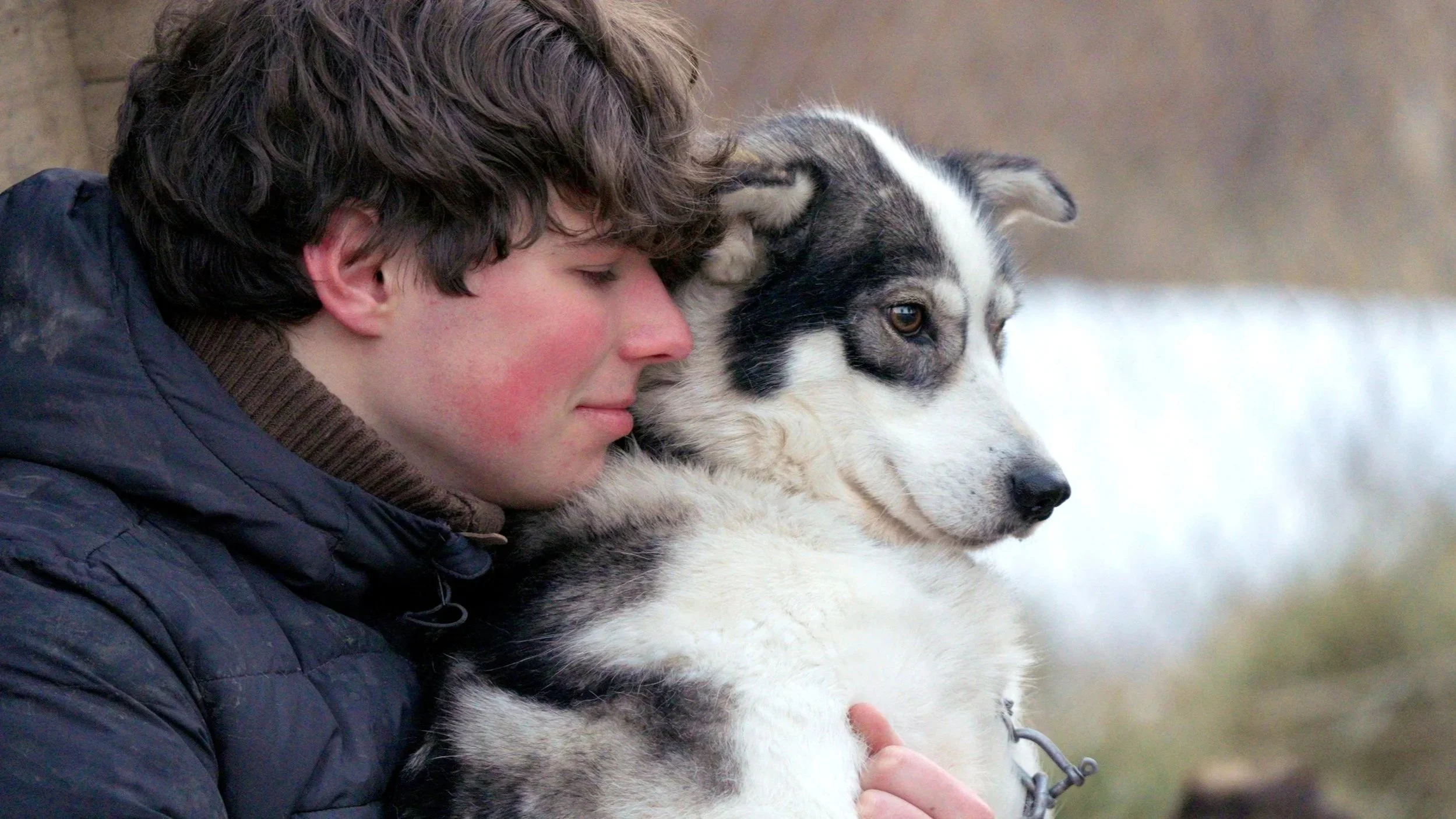
Image courtesy of Dogwoof Releasing.
How much viewers will appreciate this documentary depends very much on what they hope to find in it. The work of two directors, Heidi Ewing and Rachel Grady, Folktales, a co-production between the USA and Norway, is set some three hundred miles north of the Arctic Circle and it is centred on a Norwegian folk high school known as Pasvik. It appears that such establishments originated in the 1840s and now function as places where youngsters in their late teens can go for what is almost a variation on what we now think of as a gap year. The big difference is that those who enlist do so to become part of an establishment running a programme lasting nine months that is calculated to encourage self-reliance and independence. Cut off from modern life, they form a group which, duly supervised by teachers, is fully involved in looking after the Siberian huskies whose presence is such a prominent feature of life at Pasvik. The raison d’être behind this is the belief that being close to dogs creates a bond which can unlock people and encourage a concern that is valuable for being outgoing.
Impressively filmed in widescreen, Folktales has a location which lends itself to beautiful images. That will appeal to many, but even more potent an attraction here are the many images of the huskies. Dog lovers may ask for nothing more. But the fact is that this film is centred on a special kind of high school rooted in its Norwegian setting and the making of this documentary provided the opportunity to look at it in depth. That the film fails to do so is disappointing. A single passing reference to the 19th century origin of these schools is all we learn of their history and nothing emerges of how they are run or what it costs to enrol. The film shows us two devoted teachers, Thor-Atle Svortevik and Iselin Brevold, but we see hardly anything of others concerned in the running of the establishment. Furthermore, while the role played by the sled dogs is discussed in detail and is illustrated both by scenes of them involved in mushing and in scenes depicting the rapport between them and the students, other activities are only glimpsed (scenes of sewing and knitting lead on at one point to dancing and language instruction but to what extent classes are chosen or compulsory does not emerge). Look up Pasvik on the Internet and you will learn there that it contains six living houses and that as a liberal folk high school it takes no religious stance but embraces diversity including sexual orientation and political beliefs. Despite lasting 106 minutes Folktales fails to give you anything like a full detailed view of the school.
In another respect too the film somewhat falls short although less drastically. The format adopted by the filmmakers is to pick three students out of those who enrol there in this particular year and to concentrate on their individual progress as they adjust and respond to what Pasvik has to offer. The first one we meet is Hege. Each is known in the film only by their first name but in Hege's case we do have short scenes of her with her family before she sets out for the school and on her eventual return. She is Norwegian as is Björn Tore who is next up, but the third person chosen, Romain, comes from the Netherlands. All three are quite engaging but we never meet the families of Björn Tore or Romain and there is a sense of the film not wanting to go too deeply into their lives. In each case one particular feature is noted. We learn that Romain, eighteen, is a high school dropout and that Björn Tore, nineteen, finds friendships difficult and thinks that people may regard him as annoying. More dramatically we are told early on that Hege, also nineteen, has just lost her father, but the film’s approach is confirmed by the fact that it is only an hour later that we get a few more details about his death and that is not then followed up further. In choosing these three individuals, the film does seem to imply that Pasvik is likely to be sought out by youngsters facing particular issues or problems as they approach adulthood but how typical that is or isn't we never know.
If the three featured youngsters are acceptable company but are not given the opportunity to engage us in depth, exactly the same applies to the two teachers. Their sincerity comes across but we never get any background story about their history and about what drew them to devote themselves to Pasvik. Its shortcomings do not mean that Folktales is a failure although it does also contain an extra feature which feels imposed. The Norwegian setting becomes an excuse to add a running thread to the piece in the form of references from Norse mythology regarding Odin the king of the gods and the notion of a tree of life with three Norns or fates at the foot of it. Introduced by way of comments from a female voice-over, this element recurs at intervals and soon takes the form of stylised images. A further feature but one of a very different kind is to be found in the fact that, because Pasvik welcomes youngsters of various nationalities, the greater part of the film is in English. By the film’s close it is certainly possible to feel that Hege, Björn Tore and Romain have each gained from their time at Pasvik but the film does not end without a further shot of the huskies and it is their role in the film that leaves a lasting impression.
MANSEL STIMPSON
Featuring Hege, Björn Tore, Romain, Thor-Atle Svortevik, Iselin Brevold and the huskies including Billy and Sautro.
Dir Heidi Ewing and Rachel Grady, Pro Heidi Ewing and Rachel Grady, Ph Lars Elend Tubaas Øymo and Tor Edvin Ellassen, Ed Nathan Punwar, Music T. Griffin.
Fifth Season/Impact Partners/Fuglene/Artemis Rising Foundation/Loki Films/Topic Studios-Dogwoof Releasing.
106 mins. USA/Norway. 2025. US Rel: 25 July 2025. UK Rel: 5 December 2025. Cert. 12A.
