
Fukushima: A Nuclear Nightmare

Testimony from the present day reminds us of how in 2011 Japan came close to nuclear annihilation.
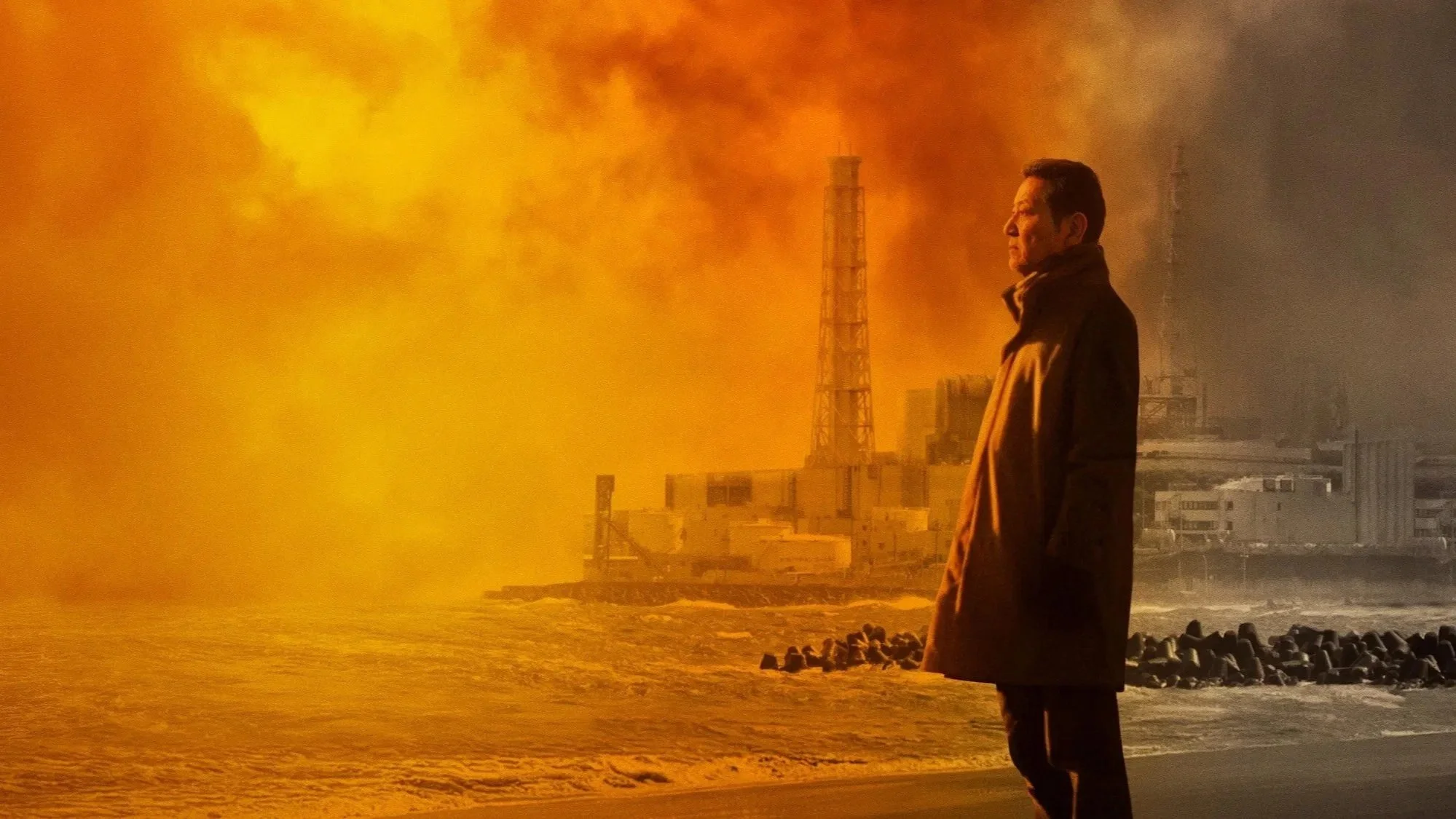
Image courtesy of Dogwoof Releasing.
by MANSEL STIMPSON
It is doubtless not by chance that this very able documentary reaches us at a time when global reliance on nuclear energy is on the increase in so many countries. There are even plans for that in Japan despite the fact that the shadow of what happened there in March 2011 at the Fukushima Daiichi nuclear plant must surely remain potent. It was the occasion when an earthquake unleashed a tsunami which in in turn affected the plant. Its impact was such that a giant wave disabled the cooling systems of three reactors and thus led to a series of hydrogen explosions. Radiation levels rose and with the risk of a radiation leak following it was all too apparent that the situation was one which threatened the very future of Japan.
This film by James Jones sets out to remind us afresh of those nine days in 2011 when the outcome at Fukushima remained in the balance. There is an extraordinary amount of footage taken at the time and which now features prominently in this film and duly comes up in chronological order. But, before proceeding on that basis, the piece briefly touches on earlier history going back to the dropping of the atom bomb on Hiroshima in 1945 while also showing how by 1955 Japan was prepared to welcome an ‘Atoms for Peace’ exhibition initiated by America to advocate the positive aspects of atomic energy. This documentary also includes brief extracts from films that appeared subsequently and which were designed to reassure Japanese citizens that nuclear plants were safe. We see too reports from 1967 relating to the construction work at Fukushima by the Tokyo Electric Power Company (TEPCO). Despite later occurrences such as the explosion of a nuclear reactor in Chernobyl in 1986, the disaster that struck in Northeastern Japan in 2011 came as a shock and would reveal lax safety precautions and inadequate oversight as contributing factors.
The period footage is a key element here but so too are the detailed comments obtained for the film from a range of people who in one way or another were involved in Fukushima's nightmare experience and now recall their part in it. A key figure in this respect is Ikuo Izawa who was at that time the supervisor of the control room but we also hear from one of the engineers involved Katsuaki Hirano. Carl Pilliterri, an American who worked in servicing electrical generating stations and was present in Fukushima on 11th March 2011, appears too as does his fellow American, Martin Fackler, a journalist who entered the plant and wrote notable articles reporting on the disaster. Also, from the USA we have Dr. Charles A. Casto who is an authority on nuclear safety and was sent out to Japan as leader of a team of experts to help handle the crisis.
Other speakers bringing a different perspective to bear include the following: Manabu Terata who was the special advisor to Naoto Kan who was Japan's Prime Minister at the time; Akira Kawano who was TEPCO’s senior manager; Wakana Yokoyama who recalls being evacuated at the age of twelve from a school three miles away and Toyohiko Tomioka of the Tokyo Fire Department which made a key contribution by applying enough water to cool the plant. The way in which these recollections are combined with images from 2011 is very adroitly done and credit for this should doubtless be shared between Jones as director, his co-director Megumi Iman and the editor Rupert Houseman. It is also advantageous that the events which unfolded day by day are clearly communicated while Uno Helmersson’s music score contributes by never becoming over assertive. It may be that to assist with the flow of the film some shots seen here are links inserted rather than actual material from that time but, if so, it is discreetly done and the authenticity of the piece is such that it never falls back on featuring reconstructions.
The concluding scenes in the film do extend to the aftermath and comment on the way in which TEPCO had been responsible for holding back a tsunami risk report that should have been acted on. It also becomes clear that even those who agreed to stay on at the plant knowing full well that they were putting their lives at risk came to emphasise the failure and felt guilt for what happened. Here, however, the film is at pains to challenge any such personal feelings of that kind which they have now viewing them instead as heroes. In terms of its visual impact Fukushima: A Nuclear Nightmare is most memorable for stunning shots relating to the earthquake and the tsunami. However, despite the existence of many other films on the subject, its importance lies in its first-hand account by those who were present. Its leading contributor Ikuo Izawa regards it as “a small record of what really happened" but it is surely a valuable one.
Featuring Ikuo Izawa, Carl Pilliterri, Martin Fackler, Manabu Terata, Katsutaka Idogawa, Katsuaki Hirano, Akira Kawano, Toyohiko Tomioka, Charles A. Casto, Wakana Yokoyama; and the voices of Akie Kotabe, Dai Tabuchi, Meg Kubota and Togo Igawa.
Dir James Jones with Megumi Iman, Pro Megumi Iman, Ph Jean-Louis Schuller, Ed Rupert Houseman, Music Uno Helmersson.
Blast Films/Dogwoof/HBO Documentary Films-Dogwoof Releasing.
90 mins. UK. 2026. UK Rel: 20 February 2026. No Cert.
