
Six former inmates share their experience behind bars at London’s once preeminent female-only prison.
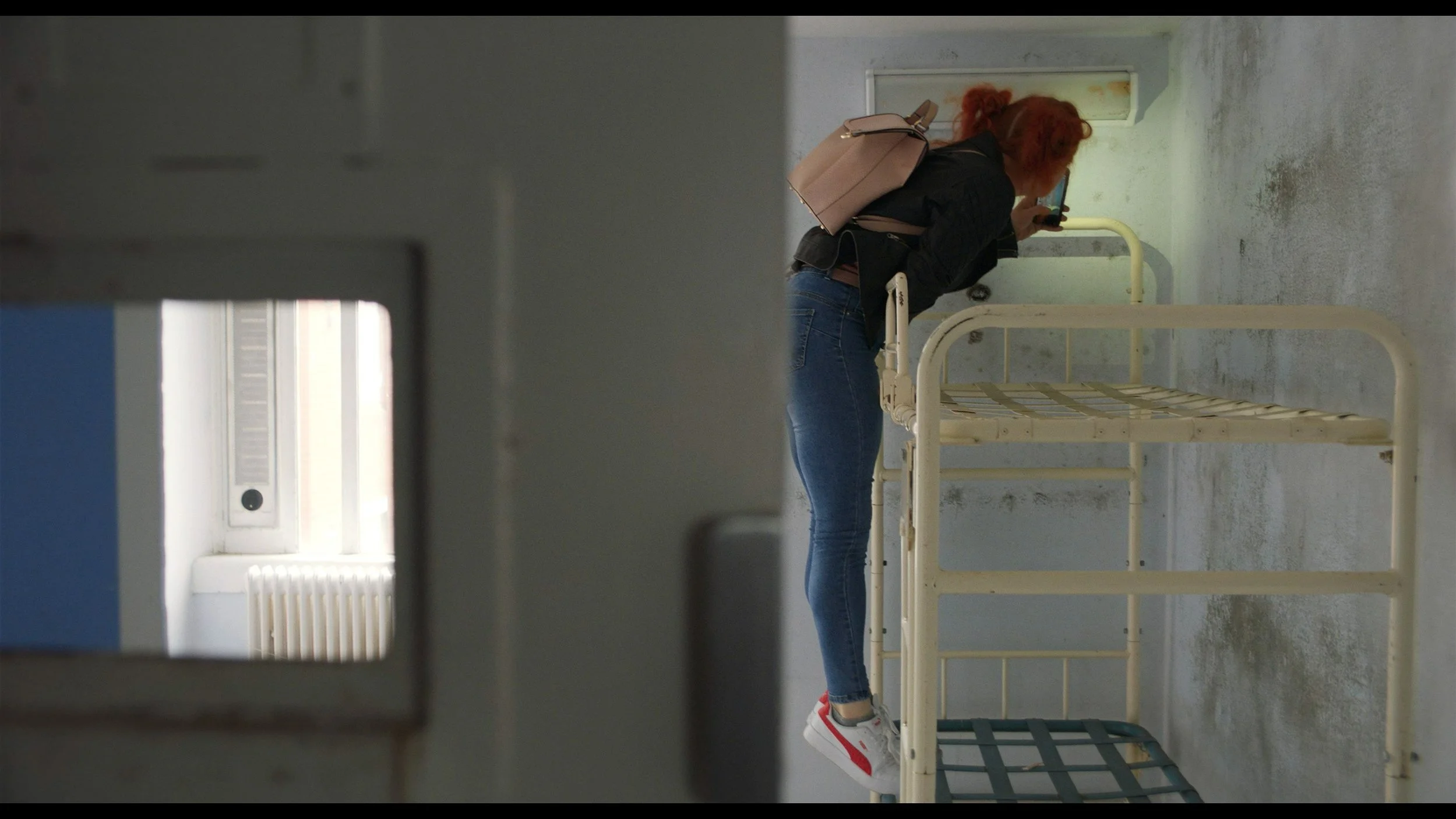
Image courtesy of Power Play Productions.
This is the film that won the Audience Award as best documentary at the 2024 London Film Festival, that being a clear indication that there is an audience keen to find a film which in essence consists of women talking. That appeal is here put in the service of a work which offers a social critique buttressed by the belief that women are powerful if they find their voice. The film’s female emphasis also extends to the identity of most of those involved in its making: they include Sophie Compton and Daisy-May Hudson who are not only co-directors but also share the writing credit with Stella Heath Keir who in addition is the film’s editor. As for the photography that is by Sarah Cunningham and last – but certainly by no means least – one notes the statement at the outset which describes this film as being a co-creation with its participants, all of whom are women.
The title refers to London's Holloway prison which opened in 1852 and then early in the 20th century became a place for women prisoners only. It closed in 2016 and filming took place there in 2021 ahead of its actual demolition but while the empty building was still standing, a potent reminder of what it had been. Six of the eight women featured are ex-inmates who were willing to be seen on camera as they returned to Holloway to be part of a special women's circle taking place there and lasting for five days. The other two present are Lorraine Maher who was the workshop facilitator and Maria Takaendisa a leading trauma therapist. We sit in on what was said during these daily sessions and the film does not move away from the Holloway setting. Indeed, much of the time we are direct observers of the exchanges taking part in the room where the circle meet, but there is variety too to the extent that from time to time we have voice-over comments from individuals accompanied by shots of the now derelict building showing the corridors and sometimes the very cells that they had known when imprisoned there.
Although the project may seem simple and straightforward – the film opens with effective footage about arriving back at Holloway, continues with what emerges during the therapy sessions and ends with comments on the experience by individual participants – Holloway proves to be a work of several layers. Hearing the sometimes-contrasted views of those who had been incarcerated there we feel that we are being invited to consider how bad the system was. That is so even if those who remember the abuse they suffered or witnessed can also in some cases regard it as a place of safety compared to the unsavoury life which they had experienced outside of it. While it could be a place leading to self-destruction, it was nevertheless for some where they started out on what became a journey of recovery. Indeed, one of the women expresses regret that the place was set for demolition albeit that that view was largely down to its historical associations (Holloway was where many of the suffragettes were imprisoned).
But, if this film is about female imprisonment and the conditions that went with it, it is also a study of therapy, the approach adopted and a look at the benefits that can result even if its emotional cost is also apparent at times. Furthermore, there is a third thread in that as the talk opens up more freely Holloway becomes a film in which we learn about the upbringing of the participants. Their stories are different and yet there is a common core: whether it be due to neglect, abuse, alcohol or drugs there is a strong sense that these are individuals who hardly had a chance to escape the circumstances that put them in Holloway. One senses that the therapist has this in mind from the start and is hoping to convince those who do not yet fully believe it that the guilt and shame they have felt is not theirs to bear. It's a viewpoint which brings up the question of what criminal imprisonment is really for and what its moral purpose is, especially when so many inmates can be seen as being themselves victims of society.
Holloway will be regarded by many as well worthwhile for the way in which it focuses on these issues. I can endorse that view although as a critic I would point out that previous documentaries dealing with comparable issues did so even more memorably. When it comes to the theme of therapy and its potential in rehabilitating prison inmates, the American feature The Work (2017) had a depth which was exceptional and is not matched here. And, when it comes to a work focused on women, the talk in the 2023 Estonian film Steam Sauna Sisterhood not only portrayed the sauna as a place where women could share their confidences in a decidedly therapeutic manner but brought home the individual stories that emerged with a greater intensity. But, if these comparisons to some extent put Holloway in the shade, its good intentions are beyond doubt and when it concludes with fuller written information about the six key participants they only add to the impression that we have already formed that these former inmates have indeed made good. To what extent their time in Holloway helped or hindered that process is what viewers will be discussing after the film is over.
MANSEL STIMPSON
Featuring Aliyah Ali, Lady Unchained, Sarah Cassidy, Mandy Ogunmokun, Tamar Mujanay, Gerrah Selby, Lorraine Maher, Maria Takaendisa.
Dir Sophie Compton and Daisy May-Hudson, Pro Sarah Compton, Alice Hughes, Polly Creed and Tarquin Ramsay, Screenplay Sophie Compton, Daisy-May Hudson and Stella Heath Keir, Ph Sarah Cunningham, Ed Stella Heath Keir, Music Adam Janota Bzowski.
Power Play Productions/Beehive Films/Murmuration Productions/OL64-Power Play Productions.
86 mins. UK. 2024. UK Rel: 20 June 2025. Cert. 12A.