
It Was Just an Accident

Jafar Panahi’s Oscar contender and Palme d’Or winner is another swingeing critique of the Iranian regime.
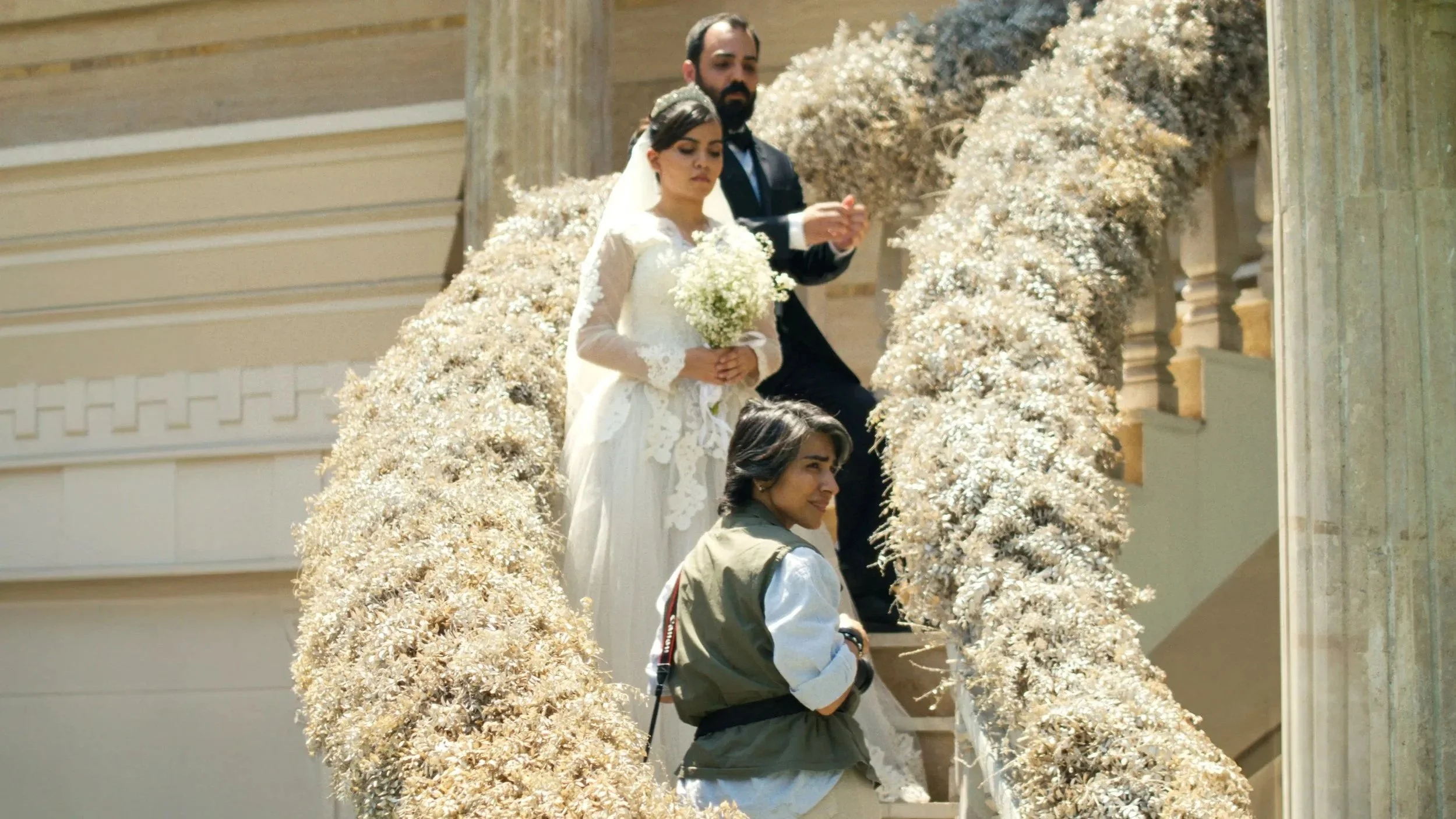
Image courtesy of Mubi.
The bravery of the Iranian director Jafar Panahi is such that one wants to acclaim every film of his as he continues to defy the regime that has for years attempted to stop him from filming and has twice imprisoned him. It Was Just an Accident is his latest work and his eleventh full feature and it won him the Palme d’Or at the 2025 Cannes Film Festival. His very first, The White Balloon (1995) was a deserved hit, I liked his 2006 offering Offside and best of all in that phase of his career was The Circle (2000). But all of his work since 2011 when he made the defiantly titled This Is Not a Film has involved secret shooting due to the restrictions imposed on him by the authorities. His courage in not giving up means that we now have six films made in these extreme conditions and I feel that some have been overpraised out of sympathy and admiration for the filmmaker. Two of the more recent ones 3 Faces (2018) and No Bears (2022) certainly contain quality work but, when it comes to the acclaimed It Was Just an Accident, I can't see that the film itself merits the exceptionally high praise that it is receiving.
In many ways this latest piece seems to be directly comparable with 2024’s The Seed of the Sacred Fig which was made by Panahi's compatriot Mohammad Rasoulof whose view of the regime is very much in line with Panahi’s own. That film was totally persuasive in its first half depicting the impact of recent events on a family living in Tehran, but thereafter it misguidedly took on a tone that became increasingly fictional and melodramatic. Without attaining the exceptionally high standard of the best parts of Rousoulof’s film, Panahi offers us here a work which nevertheless grips the viewer for at least half of its length and then loses its conviction.
It is the case as many critics have pointed out that It Was Just an Accident has a much stronger plot line than many of his works which have often been somewhat minimalist in character. We are certainly held by the central situation. This is one that develops when an assistant mechanic, Vahid (Vahid Mobasseri) encounters a man (Ebrahim Azizi) whose car has broken down and who then recognises him as the state official who had tortured him after he had been arrested by the authorities. Although Vahid had undergone this experience blindfolded his torturer had been one-legged and the sound that he had made when moving had itself been imprinted on Vahid’s memory to the extent that he had come to refer this man as ‘Peg Leg’. It is the stranger’s prosthetic leg that leads to Vahid instinctively identifying his prosecutor now. So strong is this sense that he follows him and then attacks him, after which he drives out to a spot in the desert where he plans to bury him alive. However, the man denies having been his persecutor and claims that he lost his leg far more recently. He is so emphatic about this that Vahid puts his plan on hold. With his suspect now drugged and placed in a box in the trunk of his vehicle, Vahid seeks out others who suffered in exactly the same way hoping that they will confirm his initial impression that this man is indeed the torturer.
In taking these steps Vahid speaks first to a friend (Georges Hashemzadeh) who advises him to talk to Shiva (Maryam Afshari), now a wedding photographer, and in time two other former prisoners also become involved. One is Hamid (Mohamad Ali Elyasmehr) and the other is Golrokh (Hadis Pakbaten). The latter is due to marry the next day and is being photographed by Shiva along with the groom, Ali (Majid Panahi), who also now gets caught up in this quest. Although most of the film is seen from Vahid’s viewpoint, the film has actually opened with a sequence in which we see the suspected man at the wheel of his own car accompanied by his pregnant wife (Afssaneh Najmabadi) and their young daughter (Delmaz Najafi). It is striking that this scene is sympathetically shot - the child is genuinely endearing - and there is no sense here that her father is a villainous figure. Consequently this adds to our uncertainty when Vahid claims to identify him. Apparently Ebrahim Azizi playing the suspect is the only professional actor involved but all the cast are persuasive and Jafar Panahi’s direction is very assured.
Some critics have gone so far as to suggest that this film can be thought of as a thriller but, despite the drama in the situation, the tone is not that of a genre piece. The use of mainly non-professional players, the realism that comes from excluding a music score and the echoes of other Iranian films (that opening episode in the car echoes Panahi’s mentor Abbas Kiarostami as well as Pahani’s own earlier work) all contribute to the sense of this being a realistic drama. Indeed, it becomes apparent that the aim here is to render this an angry denunciation of the regime and its atrocities and in addition to consider whether its victims should seek personal vengeance. Injustice has obviously been perpetrated but should revenge ever involve behaving in ways that bring to mind those of the oppressor?
The characters at the heart of the tale show a range of views on this issue and expressing them should make for an involving moral drama. But the fact is that the last third of the film – some of it set back in the desert again – loses any sense of reality. Oddly enough this is pinpointed by a reference in the dialogue to Samuel Beckett’s play Waiting for Godot which stands out as something most unlikely to be mentioned in this context. In these last scenes there is a strong sense of theatrics, of players speaking lines rather than the drama seeming real. Earlier there have been occasional touches of humour which seem less than appropriate to the situation and that too contributes to the film losing its grip.
The last climactic scenes in It Was Just an Accident do suggest that the stance which Vahid will eventually take is one that Jafar Panahi himself wishes to endorse but by this stage the piece has come to feel wholly artificial. Furthermore, there is a final scene, admired by some, in which sound plays a key role. However, this means that the film ends on a note which the viewer has to interpret and which to my mind is too open to be an effective conclusion. Given the way in which the last third plays out, I can't see Panahi's latest as being anywhere near the masterpiece that many see in it. But, if the artist is not at his best here, it remains the case that the man is still to be admired as firmly and as deeply as ever.
Original title: Un simple accident.
MANSEL STIMPSON
Cast: Vahid Mobasseri, Maryam Afshari, Ebrahim Azizi, Hadis Pakbaten, Mohamad Ali Elyasmehr, Majid Panahi, Georges Hashemzadeh, Delmaz Najafi, Afssaneh Najmabadi, Liana Azizifay, Omid Reza.
Dir Jafar Panahi, Pro Jafar Panahi and Philippe Martin, Screenplay Jafar Panahi, Ph Amin Jafari, Art Dir Leila Naghdi, Ed Amir Etminan, Costumes Leila Naghdi.
Jafar Panahi Productions/Les Films Pelléas/Bidibul Productions/Pio & Co/Arte France Cinéma-Mubi.
104 mins. Iran/France/Luxembourg. 2025. US Rel: 15 October 2025. UK Rel: 5 December 2025. Cert. 12A.
