
Lesvia

Tzeli Hadjidimitriou’s debut documentary casts an affectionate light on the world’s most renowned lesbian haven.
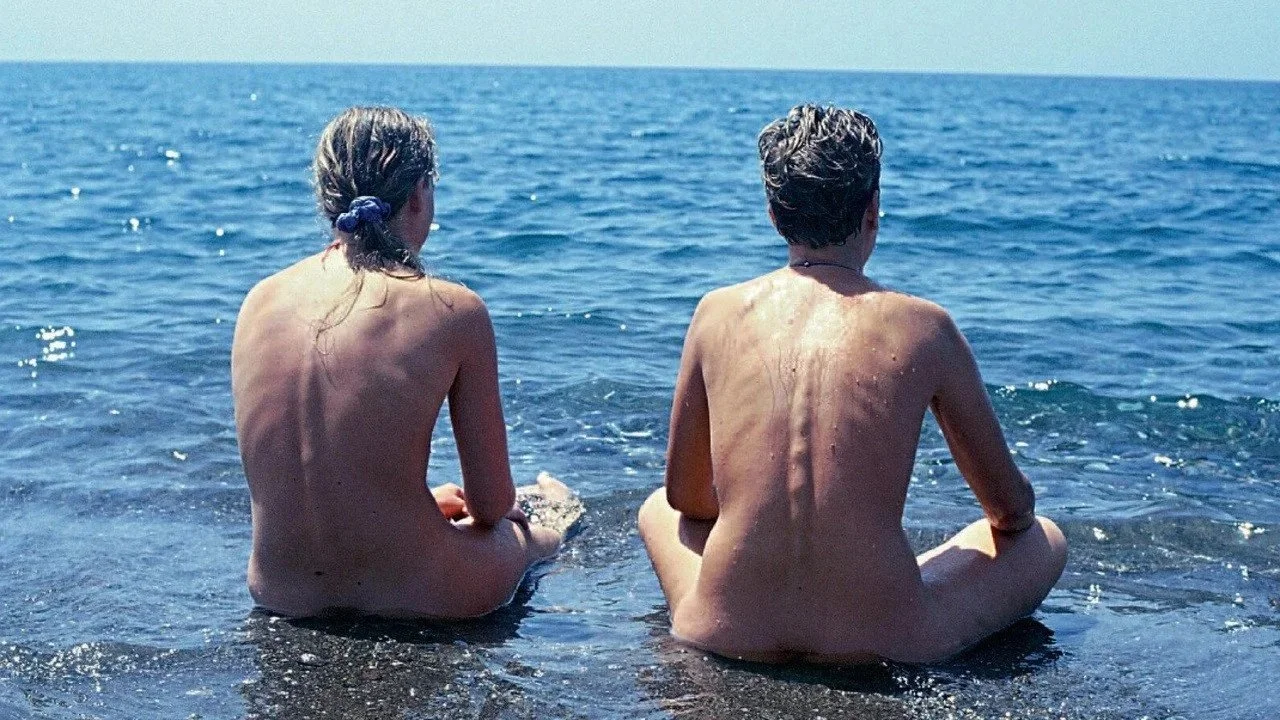
Image courtesy of Peccadillo Pictures.
by MANSEL STIMPSON
Less than a month ago when reviewing the disappointing romantic drama A Year in London, I was bemoaning the fact that lesbian viewers have in recent times found themselves relatively short of good films depicting their lives. Although it is a documentary and not a drama, Lesvia has come along to fill that gap very engagingly. It is a film by Tzeli Hadjidimitriou who was born in a small village on the Greek island of Lesbos. Not far away were the twin villages of Eresos and Skala Eresou located on the Aegean Sea. In the last fifty years or so they have become famed as a place visited by lesbians. Tzeli herself tells us in voice-over at the start of her film that she first visited there in 1980 when she was eighteen-years-old and that this place not only helped to shape her lesbian identity but has continued to mean a great deal to her ever since. Being a filmmaker and a photographer, she has now made this film which affectionately traces the history of Eresos as a lesbian tourist destination.
In the course of the film there are several written quotes from the 7th century poet Sappho famed for writing about romantic relationships between women. The poet was born in Eresos and it was Sappho's reputation which drew lesbians to this destination but when Tzeli arrived for the first time she brought her own tent and, while there was an established nudist beach, there were then no hotels for these visitors. But this would come in the form of Hotel Sappho and the 1980s also saw the opening of bars. We hear not just from Tzeli but from lesbian visitors from many countries who went there seeking a spot where they could freely establish sisterhood in a way that was often far less possible in any open way back home. Initially a number of those heard reminiscing do so as off-screen voices, but as the film proceeds more and more of them speak in person.
In many ways these memories of that period paint an idyllic picture. Eresos provided sun and sea and opportunities for sex (one comment suggests that it may have been less ideal as a spot for lesbian couples). It thrived in the 1980s, a time noted for the spread of lesbian feminism, and acted as a kind of lesbian diaspora. It enabled lesbians from all over Europe and beyond to learn more about each other and what it meant to be lesbian in other countries. Furthermore, it was somewhere which encouraged all lesbians to love their bodies whatever they looked like.
Although Lesvia is made by somebody who wants to celebrate what Eresos came to represent, the film is not one in which the portrait is always painted in glowing colours. We hear from locals including some who disapproved of lesbians outright or who disdained them as self-sufficient tourists who spent money only in their own establishments. On the other hand, it is also acknowledged that with lesbian tourism increasing by the 1990s some of these visitors would act in inconsiderate ways and be disrespectful of their impact on the inhabitants. Furthermore, there were tensions for years over the fact that lesbians wanted exclusive use of their part of the long beach (they demanded their own turf, but the villagers felt that this encroached on what belonged to them). There was concern too when for the first time a lesbian café opened in the main square of the village. Even so, seen in retrospect, this was a golden age for lesbian visitors.
In the early days the locals could be naive about lesbians – some even expressed surprise that some of them had, in contrast to these foreign visitors, actually been born and bred on Lesbos. There was a phase too when responses to these tourists often tended to be somewhat hostile in a general way but nevertheless led to acceptance - and indeed to approval - in individual cases where friendships grew up between inhabitants and visitors. In time some of those coming to the island proved to be wealthy people who bought property there and saturation would more often bring acceptance rather than the reverse. However, after 2010 or so, whether or not influenced by improved conditions in their own countries and by changes in the modern world, there was a falling away in numbers as the age of internet connections and mobile phones seemed to reduce that need for a sense of community that had drawn them there previously.
Tzeli herself kept up her connection with Eresos but was aware of changes that in her eyes were disappointing. Several of the once loved lesbian establishments closed or became less exclusive. This was in part a pattern that applied widely at that time as LGBTQ people found themselves living more openly and becoming less keen to seek out special places like Eresos. But happily, Lesvia is able to end on a genuinely positive note. It seems that a younger generation of lesbians have now been drawn there and new places for them have opened. Some come for the summer season and some now stay all year round but, even though discrimination may still exist, when this film was made in 2024 Tzeli could report that something of the old spirit had returned. It could be seen in the way in which people there look out for each other while the locals continue to welcome the way in which so many lesbians take to the many cats and dogs that abound and look after them. Above all, the older lesbians on the island now find that the youngsters who visit want to know more about them and about their past experiences in Eresos. Talking together in this way they share the history of the place and making this film can surely be seen as an extension of that. The result is an unpretentious documentary aimed primarily at lesbians and one which is likely to find an audience who will be only too pleased to share something of the experience of Eresos by seeing it so fondly represented on screen.
Featuring Tzeli Hadjidimitriou (as narrator) and visitors to and inhabitants of Eresos.
Dir Tzeli Hadjidimitriou, Pro Tzeli Hadjidimitriou, Rea Apostolides and Yuri Averof, Screenplay Tzeli Hadjidimitriou, Ph Tzeli Hadjidimitriou, Ed Iva Radivojevic, Panagiotis Gakis and Tzeli Hadjidimitriou, Music Nassos Sopilis and Stefanis Konstantinidis.
Anemon Dimiourgias Productions/Anemon Productions/ERT/Greek Film Centre (GFC)/2/35-Peccadillo Pictures.
78 mins. Greece. 2024. UK Rel: 3 August 2026. No Cert.
