
Lollipop

Fresh out of prison, a single mother struggles to gain access to her children in Daisy May-Hudson’s London-set social drama.
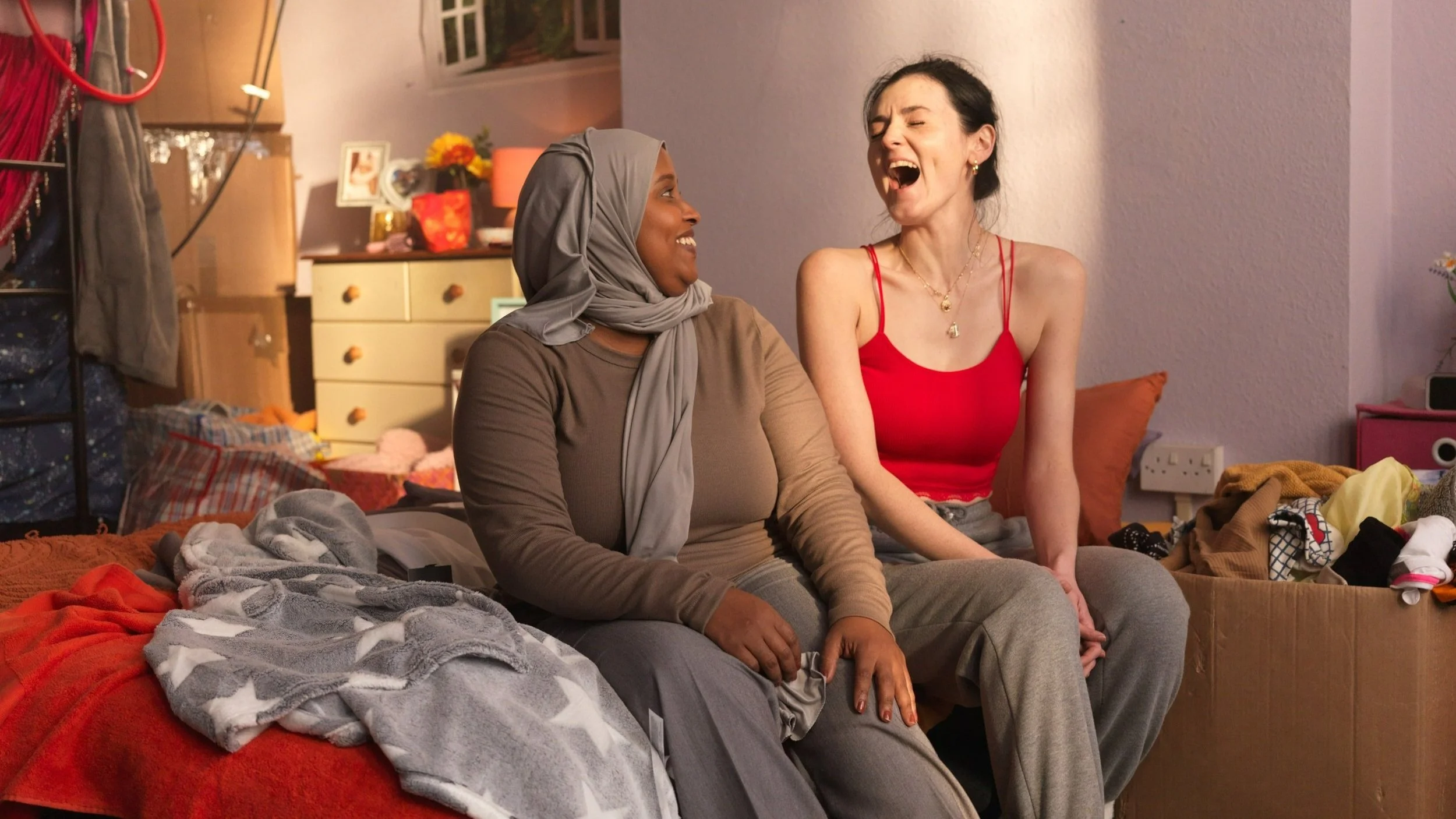
Image courtesy of Metfilm Distribution.
Lollipop is the second feature film to be directed by Daisy May-Hudson but its predecessor, 2015’s Half Way, was a documentary and this is a drama for which Hudson has herself written the screenplay. However, the two works have a closer connection than that might suggest because the earlier piece was concerned with real-life homelessness as it affected Hudson, her mother and her sister in 2013 and Lollipop draws on that experience. It elaborates it into a study of a single mother, Molly Brown, who, homeless after a spell in prison, finds herself in danger of losing her two young children who look set to be kept in foster homes.
What Hudson gives us is very close to the working class socially conscious dramas that have been made by Ken Loach. In this instance the focus is on the system which puts such stress on mothers who, like Molly, may have real love for their kids – Molly has a daughter, Ava, aged eleven, and a son, Leo who is five – but who find themselves in a catch-22 situation. Having just come out of jail, Molly is living in a tent and has no home to offer her children because in seeking help from social housing she cannot get accommodation big enough for anyone other than herself because the children are not so placed as to be included in the application. But it is also the case that the authorities functioning in the interests of the children would not return them to their mother – which is what Molly's children want – unless and until she has suitable accommodation to house them.
We learn that it will take six months before the care proceedings will lead to a determination and in showing the emotional strains on Molly and the two children Lollipop comes across as a social critique of the way in which the system functions. For Hudson, this is clearly heartfelt and the bureaucratic procedures portrayed here have been carefully researched making this the film’s central issue. That being so, I was sorry to find that for me Lollipop was very much in the shadow of such achievements as Ken Loach’s I, Daniel Blake (2016) and Sorry We Missed You (2019). If I was much less involved here that was certainly not due to any failing by the leading players. Posy Sterling is a very convincing central presence as Molly and is well contrasted with Idil Ahmed who plays Molly's best friend since childhood, Amina, now a single mother looking after her young daughter, Mya. It is also the case that the casting director has come up with three child players who give admirably convincing performances: Aliyah Abdi (Mya), Tegan-Mia Stanley Rhoads (Ava) and Luke Howitt (Leo). The other most significant character is Molly's mother, Sylvie, and again the actress, TerriAnn Cousins, is well chosen.
Nevertheless, while all the social problems feel rooted in reality, for me Lollipop lacks the sense of involving depth and authenticity that one finds in the characters that inhabit Loach's best work and in a film such as Rocks (2019). In large part this may be the result of a screenplay that too often leaves us asking questions. Molly’s emergence from prison makes for a strong opening to the story but we never learn why she had been sent there, nor do we learn anything about who fathered her two children or any details of what is later referred to as Molly having had an abusive relationship with Ava's father. As for Sylvie, we see that she drinks too much and that her failure to be able to look after Ava and Leo while Molly was in jail had led to the social services becoming involved. But, if that is clear-cut, a mention of her having had problems akin to Molly's own is limited to that statement and when at one stage she looks after Mya and we find Molly more in harmony with her mother than ever before it suggests an unlikely recovery from her addiction to drink. It may be that the appeal of telling a story in which save for young Leo all the characters are women encouraged Hudson to avoid showing us the men. However, they are largely missing from the talk we hear as well and that cuts down on any back story which would encourage one to identify more with the characters.
As the writer here Hudson takes the decision not to seek easy sympathy by making Molly too perfect and to show her acting in ways that include not only understandable emotional outbursts but unwise actions that are believable enough in the circumstances but which will prejudice her chances of getting her children back. Molly's main folly is to run off with her two children when they are in the care of a social worker and here one is left wondering how she has any money to support them. The contrast between the very apparent stress found in Molly and the optimism of her friend Amina who has her own problems certainly builds up the film’s self-evident wish to emphasise the value of female friendship. However, it also leads in the film’s second-half to a largely irrelevant sub-plot about a large deposit not being returned to Amina by a former landlord.
Many of these points may sound to be mere carping or quibbles, but they all contributed to my finding it difficult to engage with these characters and with their story as much as I wished to and it did so in spite of the sincerity of all concerned and the relevance of the film’s social comment. Even the use of moments of song and dance, doubtless meant to express the spirit of these people regardless of their circumstances, seemed consciously set up. However, I am genuinely pleased to add that I have seen other reviews which indicate that my reservations may well not be shared by other viewers.
MANSEL STIMPSON
Cast: Posy Sterling, Idil Ahmed, TerriAnn Cousins, Aliyah Abdi, Tegan-Mia Stanley Rhoads, Luke Howitt, Johanna Allitt, Andrea Lowe, Mandy Ogunmokun, Brenda Birungi, Sherma Polidore-Perrins.
Dir Daisy-May Hudson, Pro Cecilia Frugiuele and Olivier Kaempfer, Screenplay Daisy-May Hudson, Ph Jaime Ackroyd, Pro Des Dale Oliver Slater, Ed Lee Mckarkiel, Music James William Blades, Costumes Misty Dee Griffiths.
Parkville Pictures/BBC Film/BFI-Metfilm Distribution.
100 mins. UK. 2023. UK Rel: 13 June 2025. Cert. 15.
