

A documentary twenty years in the making, Victoria Mapplebeck’s essay on motherhood and womanhood is quite a unique thing.
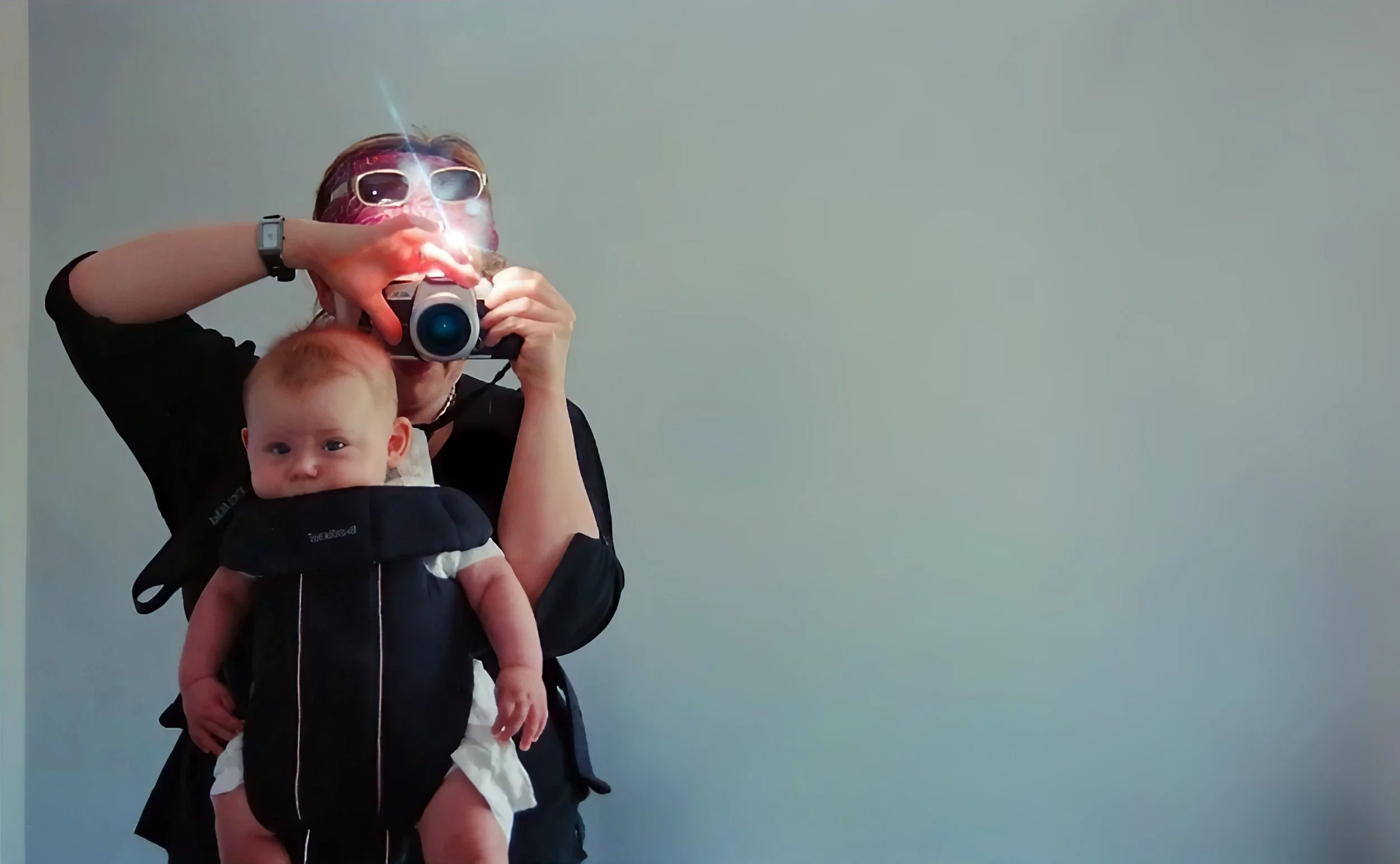
Image courtesy of Tull Stories.
I have no doubt at all about the appeal inherent in Victoria Mapplebeck's Motherboard. It is an extraordinary venture which has taken twenty years or so to come to completion. The time taken reflects the fact that mainly using smart phones Mapplebeck has chosen to chart the life of her son, Jim, from his birth onwards and covering most of his first two decades. That she should choose to film him grew out of the fact that when Jim was born, she had had experience of filming for television but found herself starting a new life. She was thirty-eight years old and broke and now found herself having to find her way as a single mother (Jim’s father whom she had known very briefly took no interest in his son and left England to live in Spain). Young Jim now became central to her life and her previous work encouraged her to film him regularly as he grew up. Many parents today do indeed take video footage of their offspring, but to have the commitment and the talent to do that consistently and then to shape it into a feature film is something quite special.
Victoria Mapplebeck’s skills equipped her to bring this off (she is credited as director, producer, photographer, co-editor and writer) but equally crucial to the quality of Motherboard is the fact that she and Jim seem so natural and at ease in front of the camera and are willing to share their lives with us so honestly. This is never a film which gives the impression of these two seeking to play down or censor their less happy moments. Consequently, the film is commendably forthright in treating such issues as Victoria being diagnosed with cancer or Jim in his adolescent years going through a phase when he took drugs causing Victoria to fear that he might become an addict.
It is, of course, the truthfulness of this account that will draw audiences to Motherboard because so many will be able to identify with it through the way in which it echoes their own lives as parents or children. Most mothers will recognise both the joys and the tensions to be seen here and, if the film reflects the general experience of motherhood, those who have themselves been single mothers will also appreciate seeing their own circumstances reflected. Jim's decision at the age of thirteen that he wishes to meet his father however sad that may prove to be gives the film a further thread albeit that the centre of it lies in the bond that exists between mother and child as the youngster grows into becoming an adult.
Both Victoria and Jim come across as engaging individuals and especially in its first half the film is very adept at capturing the way in which time passes often at a seemingly fast pace. Victoria Mapplebeck proves to be a very skilled filmmaker and ensures that the often quick editing (for which she shares the credit with Oli Bauer) reflects the passing years most tellingly. Seeing people age on screen is a rare thing and was most memorably encountered in Richard Linklater’s exceptional drama Boyhood which he chose to film over a period of years. There is no doubt that witnessing authentic change and growth has a fascination all its own because it links so directly with our own experience of growing older. Quite properly Victoria and Jim are absolutely central here as they age but there are also subsidiary elements. Victoria's own mother, who goes unnamed in the film, comes across as someone very much involved and ready to help. More briefly there is a late appearance by Victoria’s father, John, who in a pre-echo of what Jim's father would do had walked away. John, however, having contacted Victoria proves to be a man who is now ready to admit that he had been a poor husband and does not hold back in praising his daughter.
With a running length of only 87 minutes, it might seem that Motherhood is well judged in that respect, but I'm not sure. It is not that it feels too long as such but, as a portrait of two lives which reflects their change and growth over a continuous period, its presentation in chronological order is crucial to its appeal. That being so, I found the introduction of flashbacks, which happens increasingly in the second half, disruptive of the flow in a significant way. It could, of course, be argued that these moments represent Victoria's memories which are dear to her, but all the same I felt that as handled they did not fit in with the essential character of the piece. It's also the case that the film’s second half is more made up of bits and pieces whereas earlier Victoria's cancer treatment and the unfolding drama of whether or not Jim will meet his father provide detailed developing threads. In the circumstances I ended up feeling that the film’s second half was less effective than its first. Nevertheless, Motherboard is an extraordinary venture not easy to bring off and, even if I regard it as less than wholly successful, I want to stress again that I would expect those who see it to draw parallels and to find it a very rewarding experience. One extra detail worth mentioning is revealed in the film’s end credits. Given that the bond between mother and son is so strongly rendered here, one might have been left wondering if that led to Jim being personally involved over what found its way into the film. The credits answer that by revealing him to have been a creative consultant.
MANSEL STIMPSON
Featuring Victoria Mapplebeck, Jim Mapplebeck, John Mapplebeck.
Dir Victoria Mapplebeck, Pro Victoria Mapplebeck, Screenplay Victoria Mapplebeck, Ph Oli Bauer and Victoria Mapplebeck, Ed Oli Bauer and Victoria Mapplebeck, Music Jamie Perera.
First Person Stories-Tull Stories.
87 mins. UK. 2024. UK Rel: 15 August 2025. Cert. 15.