
Primavera

In 18th century Venice, Vivaldi mentors a twenty-year-old orphan in Damiano Michieletto’s persuasive and moving historical drama.
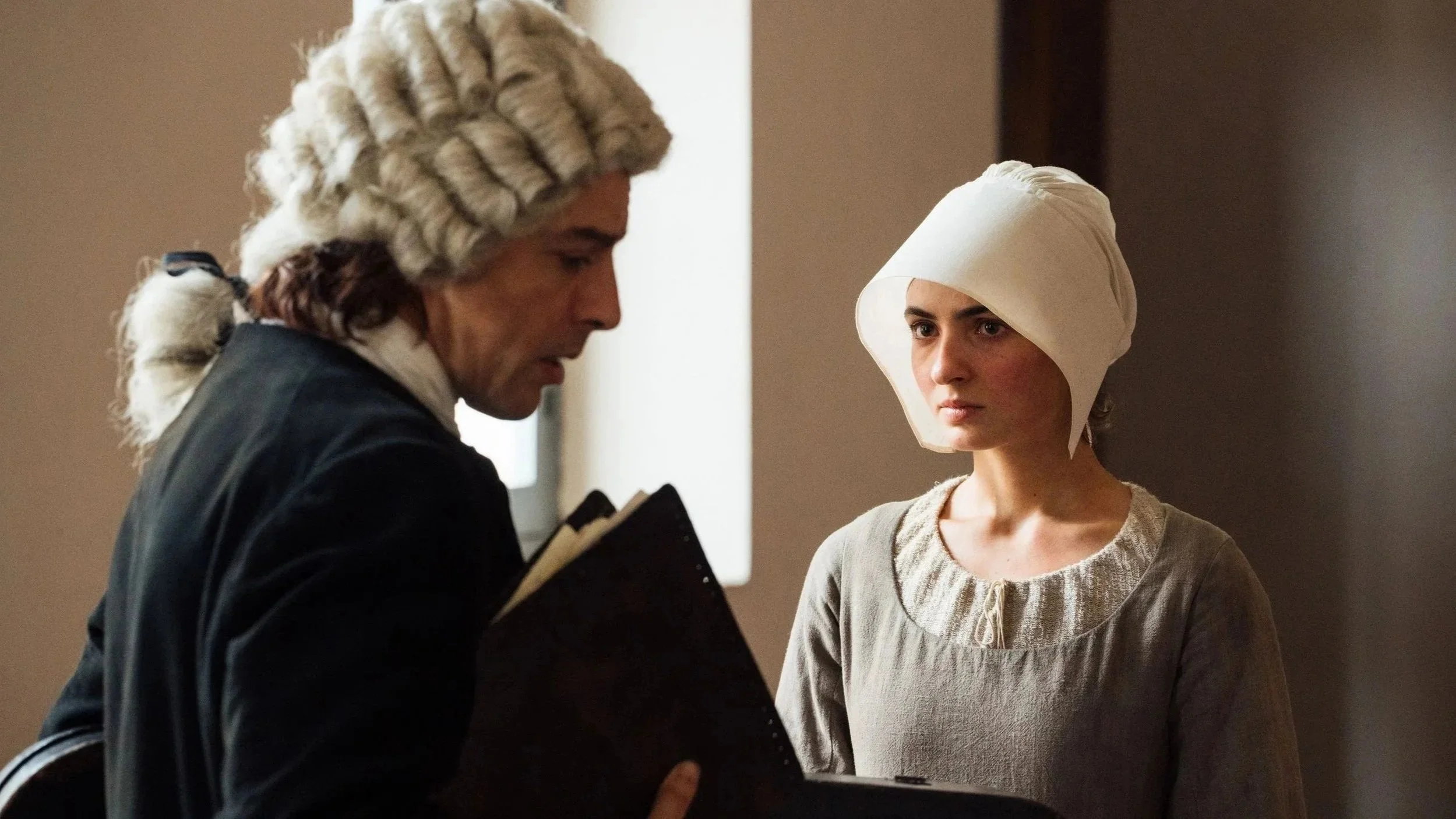
Image courtesy of Curzon Film Distributors.
by MANSEL STIMPSON
The fame of William Shakespeare is such that many on setting out to see Hamnetwill have supposed that Paul Mescal’s Shakespeare would be the central figure in it. In the event, of course, they discovered that the true centre of Chloé Zhao’s film is his wife played so magnificently by Jessie Buckley. A comparable misapprehension may arise regarding this fine new period drama Primavera in which the composer Antonio Vivaldi (Michele Riondino) is featured. He and his music do indeed play a large part here since the film portrays life in the early 18th century at the Ospedale della Pietà in Venice where Vivaldi spent many years of his life. Nevertheless, there is no doubt whatever that the central figure in this adaptation of Tizianio Scarpa’s novel Stabet Mater is not Vivaldi. Instead, it is one of the orphans who played the violin there and who was talented enough to take a leading role in the girls' orchestra established at this orphanage. This is Cecilia played quite splendidly by an actress unknown to me, Tecla Insolia.
This foundling hospital had been established way back in the 14th century but it took on extra fame in the 17th and 18th centuries when it became noted for its all-female orchestra. The musicians would play unseen behind a screen but the fame of these musicians grew to such an extent that their achievement outshone rivals in other establishments and led to the orchestra being regarded as one of the finest in the world. This history is so striking that it has been taken up as the setting for a number of novels and not just the one credited as central to this film by Damiano Michieletto. He is a noted Italian who has established an international career as a stage director specialising in opera and until now his more limited film work had been linked to that same art form. But with Primavera he moves with a great success into another sphere, this being a piece which, despite the musical elements involved, comes across as a period drama in its own right.
Indeed, the success of Primavera is directly related to the fact that it plays powerfully on two distinct levels. It is, of course, in part a work steeped in the musical world of the early 18th century since it concentrates on the way in which the best musicians among the inmates of the Orphanage della Pietà developed their musical skills so remarkably. Vivaldi is a natural part of this since he was twice employed there for substantial periods during which he trained and instructed these young players. Scarpa’s story now brought to the screen focuses on 16-year-old Cecilia as a young musician who is picked out by Vivaldi to become the orchestra's first violinist. Thus, her dedication to her music has a strong role to play here. Nevertheless, the key focus of the film is the extent to which women were kept in place and suffered from lives of suppression. Cecilia’s story may be a fictional one, but it undoubtedly reflects the tone of the age and, although Primavera is set around three hundred years ago, it invites viewers to ponder the extent to which elements of that attitude still subsist today.
Although Damiano Michieletto was himself born in Venice, his film gives us only glimpses of the city since Primavera is very much a portrait of the enclosed life of these young musicians. The way in which the orphanage is run may bring out the way in which their talents were developed but, fairly or not, the film also portrays the exploitative and mercenary nature of this establishment. Donations were always being sought and part of the money came from those prepared to pay in exchange for these girls being recognised as eventual marriage partners. Thus it is that Cecilia herself is in due course expected to marry a soldier, Sanfermo (Stefano Accorsi), who, being able to afford it, has been marked out as her fiancé. But, even if such arranged marriages might prove attractive in other respects, it was a recognised fact that once one of the girls became a wife she would never again be able to perform for the public, that being something quite unsuitable for a married woman. The prioress (Fabrizia Sacchi) is for the most part a stern character, but it is the governor of the orphanage (Andrea Pennacchi) who has the power and he is absolutely resolute that this profitable system should always be fully maintained. We do get to know something of the other musicians, among them a rival violinist, Laura (Hildegard De Stefano) and an organist who is also a singer, Caterina (Rebecca Antonaci). Nevertheless, Cecilia is the key figure and the one most truly passionate about her art, someone who would do anything not to give it up. Consequently, when Sanfermo returns from the war and seeks to claim his fiancée a crisis point is reached.
When it comes to the film’s end credits, we do get to hear part of the first section of The Four Seasons which is named for spring and which Vivaldi composed about this time. Nevertheless, Primavera seems an odd title being suggestive of a bright and hopeful work. In being true to the spirit of this patriarchal time the film is admittedly spirited in that it centres on Cecilia’s defiant attempt to resist the fate arranged for her but Michieletto’s impactful drama makes us deeply aware of the cruelties to women that were part and parcel of life in the early 18th century. With excellent production values, Primavera functions as a work rich in its music and in its period recreation, but it is equally successful in telling a persuasive and moving story which reflects its historical setting. That is its key component because it still carries a charge for today and for a world in which all too often women are still used and imposed upon and thus denied the freedom to live as they would choose.
Cast: Tecla Insolia, Michele Riondino, Fabrizia Sacchi, Andrea Pennacchi, Miko Jarry, Stefano Accorsi, Valentina Bellè, Hildegard De Stefano, Gabrielle Benedetti, Giovanni Crozza-Signoris, Rebecca Antonaci, Chiara Sacco.
Dir Damiano Michieletto, Pro Nicola Giuliano, Francesca Cima, Carlotta Calori and Viola Prestieri, Screenplay Ludovica Rampoldi, from a story by her and Damiano Michieletto and from the novel Stabet Mater by Tiziano Scarpa, Ph Daria D’Antonio, Pro Des Gaspare De Pascali, Ed Walter Fasano, Music Fabio Massimo Capogrosso, Costumes Maria Rita Barbera and Gaia Calderone.
Warner Brothers Pictures/Indigo Film/Moana Films/Diaphana Distribution-Curzon Film Distributors.
111 mins. Italy/France. 2025. UK Rel: 24 April 2026. Cert. 15.
