
Rhino

As the black rhinos of Kenya face extinction, Tom Martienssen’s visually arresting documentary offers a glimmer of hope.
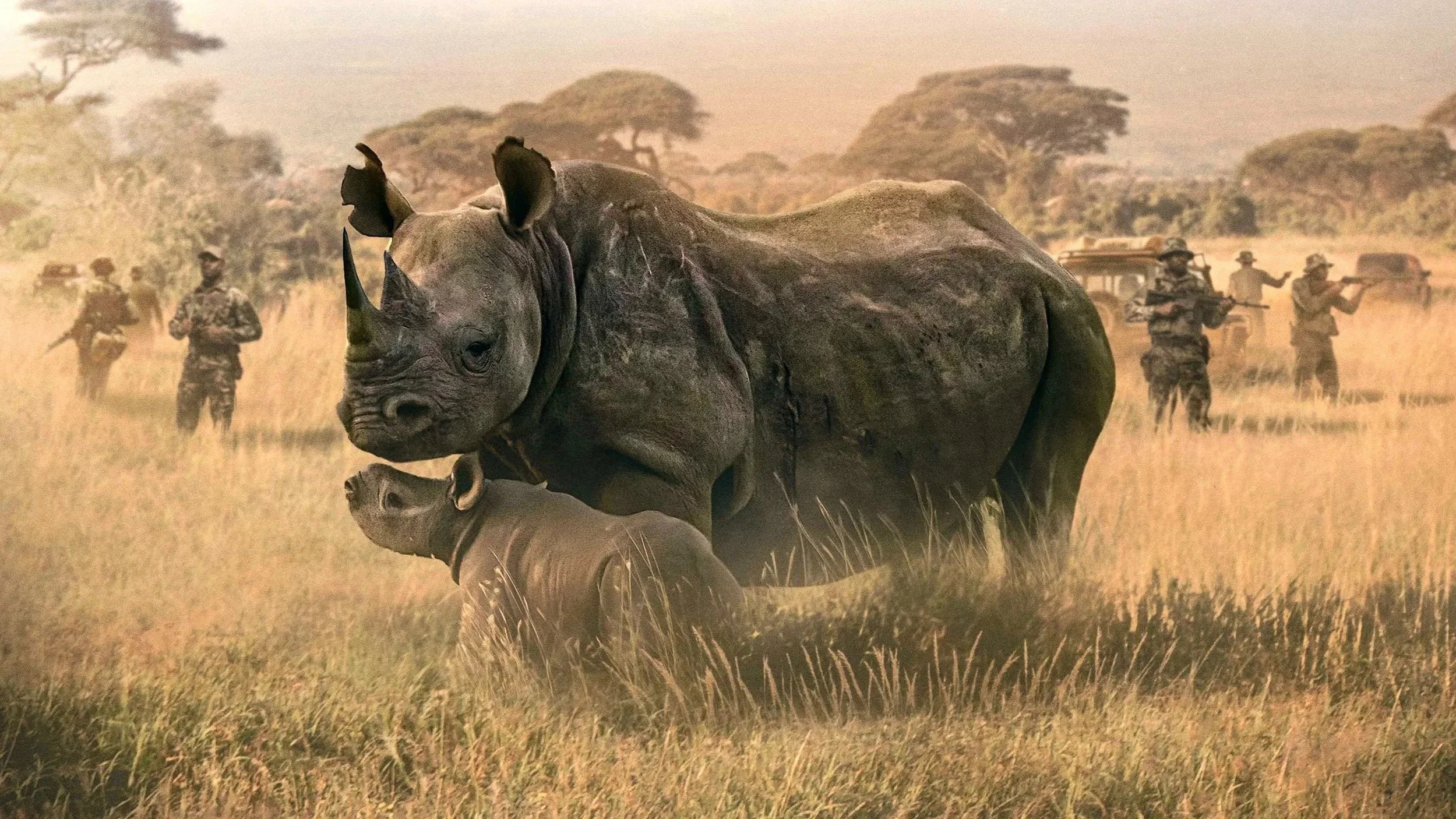
Image courtesy of Kaleidoscope Entertainment.
Tailor-made for the big screen, this film celebrates the black rhinos of Kenya and the rangers who devote their daily lives to protecting them. Rhino is very much the work of Tom Martienssen since it was made for his company Dustoff Films and, in addition to directing it, he co-wrote it with Cassandra Roberts and is the photographer here making fine use of the Kenyan location. It is also the case that following on from a successful career in television, Rhino marks Martienssen's first cinema feature.
At the outset we are introduced to the ranger who is centre screen. He is Ramson Kiloku, a Maasai whose work is very much part of a family tradition that he has inherited. What we are told of the situation of rhinos today in this part of the world mainly comes from him, although there is also an informative voice-over narration spoken by Tom Hardy. The focus here is on the country’s wildlife conservancies at Borana and Lewa although we soon learn that conditions in Borana are declining and that part of the work in which Kiloku will be involved involves transporting rhinos out of that area into another conservancy some hundred miles away at Loisaba. But the basic work is to protect the rhinos despite the fact that they are dangerous to handlers. The fact is that they need space and the areas available to them are limited. It is part of their nature too that they will kill each other to establish their territory and that they will fight over females.
The approach that Martienssen takes is engagingly unassuming and this fits admirably with the straightforward rendering of the commentary by Tom Hardy. This film offers a view of the rhinos and of the life now lived by the rangers and by other locals like the elderly Teresia Maiyani who is the last resident of her community remaining. Early on we have seen Kiloku tracking down a rhino and its female calf in need of aid and a further duty is to feed them in areas where they cannot readily find food. Not least at night the rangers are on the lookout for poachers since the value of the rhino horns means that the threat of the rhinos becoming extinguished (98% of them in Kenya were killed in the 1970s) is still a major issue today.
If the Kenyan landscape gives a grandeur to the film, its view of Kiloku’s daily life including shots of him at home with his wife and young son is aptly handled in a way that is simple and direct. Both the presence of cattle-stealing bandits in the area, which sometimes leads to violence, and the hazard to life presented by long periods of drought are presented here as part of everyday life. Meanwhile, we see more of what the work of the rangers entails with an interesting contrast arising when, as the plan to move some twenty or so rhinos is developed, we see the collaboration between Kiloku himself with his lifetime of knowledge and Rita Kulamu whose background is quite different since she is university-educated and eager to learn from experience.
Taking on a film of this kind carries its own risks since one is dependent on the turn of events and in this case on the weather since the planned transfer of rhinos to Loisaba cannot go ahead while the drought, which is seemingly unrelenting, continues. About halfway through, Rhino switches from being a general portrait of what goes on and starts to concentrate on this special event. But then the weather refuses to change and, although the transportation will eventually take place, it is subject to a long postponement. This in effect also becomes a challenge for the filmmaker because what is being built up and seems to be shaping the film is for the time being halted. Consequently, Rhino loses the sense of impetus which would usefully have provided a contrast with the laid-back nature of the earlier scenes and, when they drought does indeed end (this after four years!), the move is made but somehow lacks the dramatic force that one might have anticipated.
The weather is certainly to blame, but one feels that the setback should have encouraged Martienssen to find some way of making this delay add to the tension of the enterprise whereas the second half of the film as handled here merely contains bits and pieces which fill in until the drought ends. They are acceptable scenes in themselves but don't serve well the shaping of the film which starts to seem rather drawn out although the running time is no more than 82 minutes. This is a limitation, but it's only fair to say that viewers with a special interest in the attempts to preserve rhinos in Kenya are unlikely to take this to heart. They will undoubtedly applaud a film which is so appreciative of what is being done by the likes of Ramson Kiloku and Rita Kulamu and reports on it through visuals which make the most of the wide screen.
MANSEL STIMPSON
Featuring Ramson Kiloku, Rita Kulamu, Teresia Maiyani, Alfred Pasaka, William Kiupe.
Dir Tom Martienssen, Pro Tom Martienssen, James May and Cassandra Roberts, Screenplay Tom Martienssen with Cassandra Roberts, Ph Tom Martienssen, Ed Cassandra Roberts, Music Hoarfrost.
Dustoff Films-Kaleidoscope Entertainment.
82 mins. UK. 2025. UK Rel: 28 November 2025. Cert. 12A.