State of Statelessness

Impressions of the Tibetan diaspora are displayed in an anthology of four pieces told from the inside.
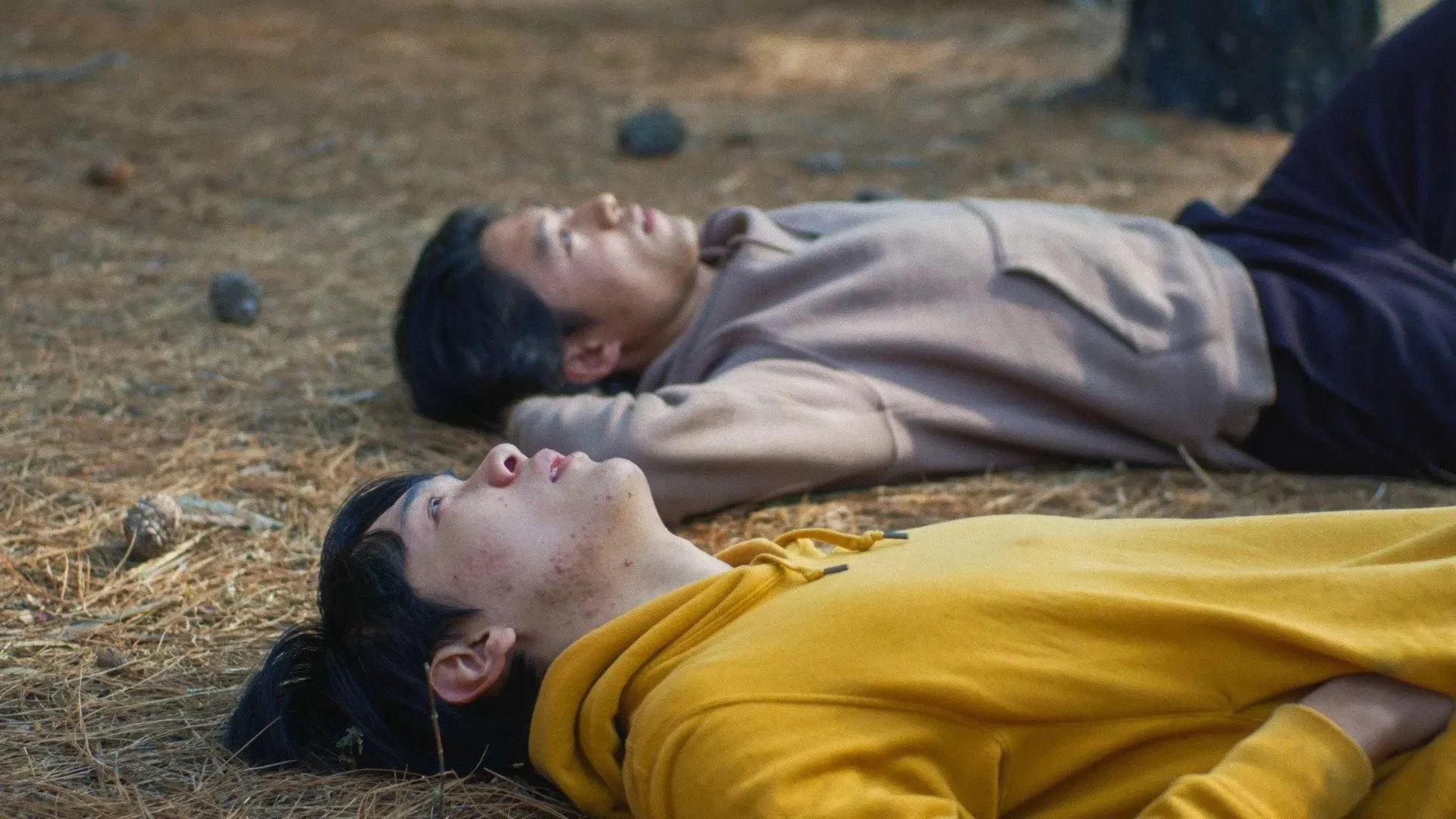
Image courtesy of Day for Night.
by MANSEL STIMPSON
Tibetans living away from their own country who are able to see this film will undoubtedly welcome the opportunity to do so. Although the Tibetan film industry has made more of a mark in the 21st century with the emergence of what is called the New Tibetan Cinema, it is still rare for such works to be released in the UK despite films by the late Tibetan director Pema Tseden having been seen, here including the distinguished 2019 drama Balloon. Now we have this new anthology film bearing the overall title State of Statelessness which was set up by the Drung Tibetan Filmmakers’ Collective with Tenzin Tseten Choklay and Yodon Thonden as its producers. It consists of four distinct contributions each with a different director. Calling it State of Statelessness immediately pinpoints the theme shared by all four sections in that the aim of the collective on this occasion was to treat the theme of the Tibetan diaspora and to widen the perspective on it by having separate directors for each segment all of whom were themselves working outside Tibet. Thus, the setting of the first piece is Vietnam while India features subsequently and in addition one will also finds characters who although Tibetan have chosen to live in America and in France.
By portraying the lives of Tibetan exiles whose inheritance remains important to them, this portmanteau feature is also a welcome opportunity for those unfamiliar with Tibetan culture to see a work made by filmmakers with an inside knowledge of the experiences they are portraying - and it is also one with a cast mainly made up of Tibetan players speaking their own language (this is, of course, a subtitled film). The opening piece, Where the River Ends, is the shortest of the four but also the most satisfying and it is set in Vietnam’s Ho Chi Minh City beside the Mekong river. It is here that we find a Tibetan and his wife bringing up their young daughter. Father and child reach their home by ferry and we hear Tenzin answering his daughter's questions. They lead to talk of the river’s origin in Tibet and from that into reflections on life itself. This episode is portrayed in a mode rare in cinema today, but its very simplicity and directness and the faces of the people seen put me in mind of the work of the great Indian director Satyajit Ray. In its modest, old-fashioned way this is very satisfying.
The other three pieces are more ambitious but less sure-footed. Bardo: In-Between takes us to India and is a family tale that begins when a Tibetan man well established there loses his wife. Their younger daughter, Yangchen, is still living with them but her sister, Bhuti, has already left to live in France and Yangchen’s husband has travelled over to check out the possibility of he and his wife moving there too. However, the death of the mother brings Bhuti back on a visit. From then on, the focus is very much on the sisters. At first there is tension when the father listens to an astrologer who declares that Yangchen unlike Bhuti should not be allowed to attend their mother’s cremation. But, as that day comes nearer, a stronger drama is revealed and becomes central. However, it is not directly concerned with issues of being stateless and in this context that limits its power.
The two remaining works are both specifically set in Dharamshala. First, we have A Little Cloud which is fine as far as it goes but fails to delve very deeply. Central here is Sonam who is a thangka artist who paints scrolls and is ready to regard this as a good place to be an exile. However, his wife, Kesang, would prefer to move elsewhere. The other main character is a friend of Sonam from his school days, a man who did indeed leave but is now after thirteen years back in Dharamshala on a trip. He has been invited to dinner by Sanam but it is an evening that does not live up to expectations. This lends itself to a good character study, but this segment of the film never really comes to grips with things (a reference to Kesang having had a daughter but not wanting another child is never developed and the marriage appears to be a very uneasy one but without that being taken further either).
The last tale, At the End the Rain Stops, starts in Wisconsin but soon finds its central character, Tenzin, travelling to Dharamshala where his late father owned a house and where his ashes are to be scattered. The house there is to be sold and Tenzin is helped in clearing it by Norbu whose mother was close to the family. There is some local colour here and Tibetan culture and religious issues are touched on from time to time throughout the anthology, but none of this goes very deep. As for this last segment, it throws up questions about the father's past and one expects this to build to a climax but, despite being rather longer in the telling than feels necessary, the narrative here ends inconclusively.
It is self-evident that all those contributing to State of Statelessness did so out of a desire to show others something of what it means to be Tibetan and how that continues to be significant one way or another to those whose lives have taken them away from Tibet. Consequently, one would like to be able to applaud this production and one can indeed so do so in so far as its intentions are concerned. It is certainly not without value, yet by and large the film does tend to be underwhelming despite the material covering unfamiliar and interesting ground. In theory the second, third and fourth pieces by being more ambitious should have created the strongest insights. But by not fully rising to that challenge they leave us with a film in which the less ambitious Where the River Ends is the section which strikes the right chord.
Cast: Tenzin Choegyal, Kalsang Dolma, Tenzin Phuntsok, Tenzin Pema, Tenzin Tseten, Tenor Charlo, Thupten Dhargay, Lê Phuong Linh, Oanh Kiểu, Penpa Tsering, Lobsang Yantso, Tenzin Chokey Ginguld.
Where the River Ends
Dir Tsering Tashi Gyalthang, Screenplay Tsering Tashi Gyalthang, Ph Ray Laver, Pro Des Kelly Hoàng, Ed Tsering Tashi Gyalthang, Music Tenzin Choegyal and Jampa Tsering.
Bardo: In Between
Dir Sonam Tseten, Pro Sonam Tseten, Screenplay Tenzin Kalden and Sonam Tseten from a story by Sonam Tseten, Ph Tenzin Kalden, Art Dir Tenzin Tsewang, Ed Tenzin Kalden and Sonam Tseten.
A Little Cloud
Dir Tenzing Sonam and Ritu Sarin, Pro Ritu Sarim and White Crane Films, Screenplay Tenzing Sonam, Ph Anand Bansal, Ed Tenzing Sonam, Music Michael Montes.
At the End the Rain Stops
Dir Tenzin Tsetan Choklay, Pro Tenzin Tsetan Choklay and Sonam Tseten, Screenplay Tenzin Tsetan Choklay, Ph Tenzin Kalden, Pro Des Tenzin Tsewang, Ed Tenzin Tsetan Choklay, Music James Forest and Yehezkel Raz.
Drung Films-Day For Night.
106 mins. India/USA/Vietnam. 2024. UK Rel: 16 January 2026. Cert. 12A.