Testimony

Aoife Kelleher’s heartfelt, impactful documentary takes a comprehensive look at Ireland’s greatest scandal.
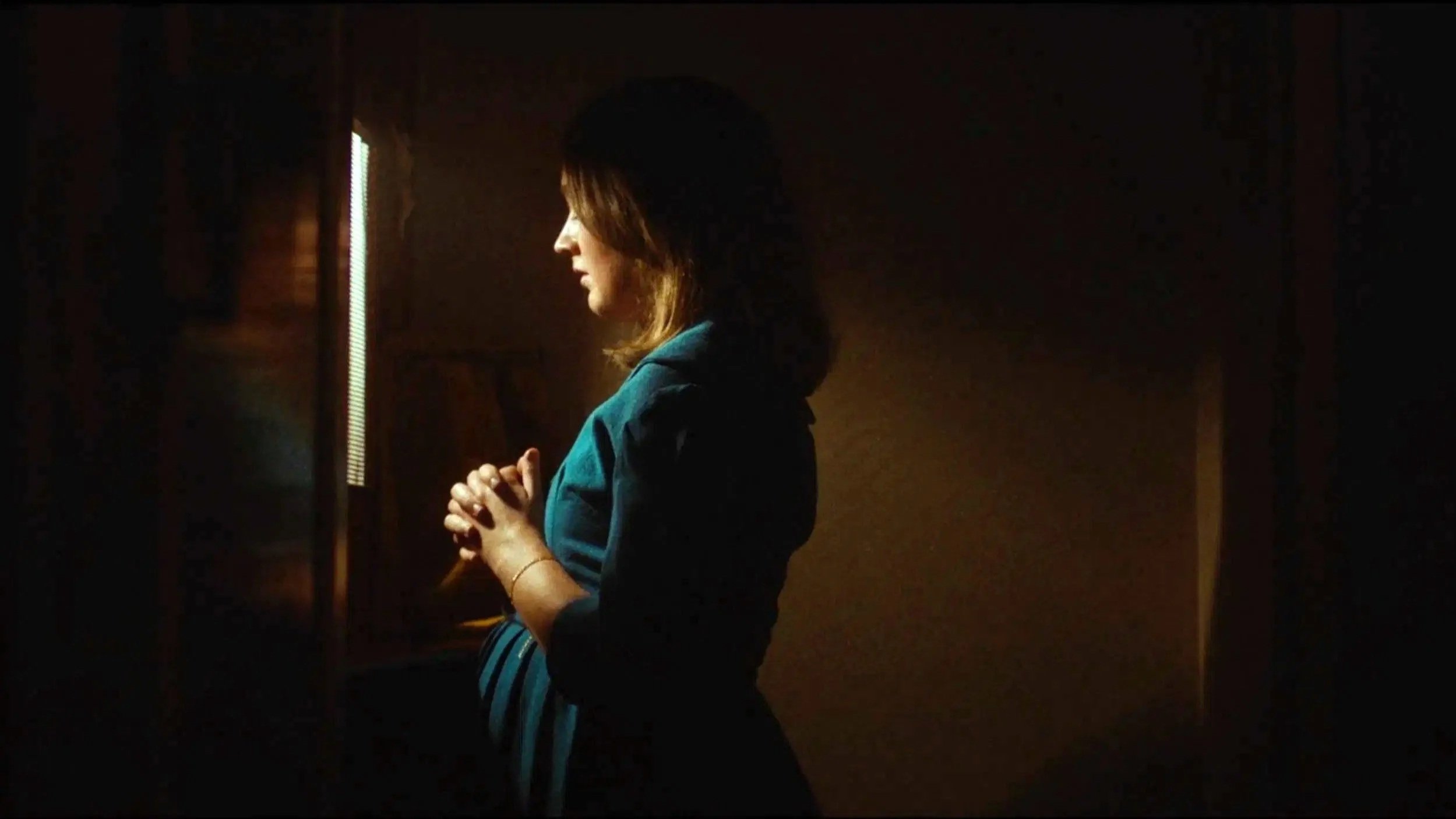
Image courtesy of Miracle/Underground/Rocliffe.
The UK release of this film comes just days after it won the award for best documentary feature at London's Irish Film Festival. The power of the piece lies in its material which has already featured in a number of films for this is a work which takes a further look at the horrendous treatment of unmarried mothers and their babies which took place in Ireland between 1922 and 1996. The infamous Magdalene Laundries which had originated in the 18th century were Catholic institutions in which the fallen women who were inmates were harshly treated and exploited as became apparent after unmarked graves were discovered in 1993. Linked with the Laundries were mother and baby homes and for all the earlier revelations it was a key moment when, in 2017, a commission was set up to investigate the site of a former home in Tuam where infant remains had been discovered suggesting that almost 800 children had died in that home between 1925 and 1961. There was also a significant related concern in that the treatment of these unwed mothers also led to adoptions being arranged of which many were enforced against the wishes of the mother.
Aoife Kelleher’s Testimony approaches this history largely through the work of the advocacy group Justice For Magdalenes while incorporating many interviews with women who as mothers survived this experience as well as including some who had been born in these homes. What they can tell us directly from their own experience is history that should not be forgotten and this in itself gives the film value, but it is also a record of a continuing struggle to get full acknowledgement and compensation. Much has been achieved yet full transparency is still delayed or impeded and Testimony is evidence of a long struggle for justice which even now is incomplete. Viewers in England may be reminded of a more recent issue, the exposé of the British Post Office over the wrongful prosecution of sub-postmasters which, triumphant as it was, did not result in all the victims receiving fully adequate and quick compensation.
For some viewers it may well be that seeing Testimony will make them fully aware of the facts that it covers for the very first time although at least three dramatic films have drawn on the subject matter: The Magdalene Sisters (2002), Philomena (2013) and Small Things Like These (2024). Nevertheless, however effective a well-acted drama touching on these events can be, it is arguable that there is extra value in hearing direct from people whose lives were so significantly affected. Indeed, that was proven just two years ago when Margo Harkin’s wonderful documentary Stolen appeared and it is perhaps surprising that this second documentary on the same subject should follow now (at least two women, Catriona Crowe and Catherine Corliss, appear in both films).
However, both of these documentaries are clearly heartfelt and, whether or not one regards it as a matter of personal taste, I have to declare that for me Stolen is the more memorable and more deeply affecting work. A major reason for this preference on my part lies in the fact that Aoife Kelleher chooses to incorporate much footage in the form of reconstructions. It is not a case of featuring recreations that involve invented dialogue but, when a survivor is telling us of what happened to her, it is quite often the case that shots illustrating it are intercut into the images of the woman speaking direct to camera. Some may find that this adds to the impact but, since one knows that the supposed younger image of the person speaking is not real, I regard it as a distraction. I see it too as a failure to realise that respecting the words spoken to the full and concentrating on the face of the person speaking them is infinitely more involving. Similarly, adding music or sounds on to these reconstructions – as when we are shown an image of locked doors and hear drums accompanying it – only serves to make us aware of the attempted heightened dramatisation. The more straightforward approach adopted by Margo Harkin brings us closer to those giving their testimonies and feels more personal in every way.
That said, Testimony may very well now be more accessible than Stolen and Kelleher’s film undoubtedly has impact as it brings in a wide range of contributors. They naturally include many women who were directly affected (among them is Philomena Lee who was portrayed in the film Philomena by Judi Dench) but there are also so many key figures from Justice For Magdalenes including founder members Claire McGettrick and the late Mari Steed. Another member of it is the author and professor James Smith who features prominently as does the human rights lawyer Maeve O'Rourke who speaks of how she was drawn into becoming part of this group. Other legal figures contributing include the lawyer Rod Baker and the London barrister Raymond Hill. Consequently, despite the film’s overlap with Stolen, there is much here that approaches the material from a different angle and, although my own preference is for the earlier work, it is undoubtedly the case that Testimony leaves a powerful impression and will be found a rewarding watch by those who seek it out.
MANSEL STIMPSON
Featuring Maeve O’Rourke, James Smith, Mari Steed, Claire McGettrick, Elizabeth Coppin, Mary Harney, Angela Fahy, Madeleine Marvier, Rod Baker, Raymond Hill, Gabrielle O’Gorman, Catriona Crowe, Katherine O’Connell, Carmel Cantwell, Philomena Lee, Catherine Corliss, Frank Brehany, Mary Coughlan, and the voice of Imelda Staunton as narrator.
Dir Aoife Kelleher Pro Rachel Lysaght and Farah Abushwesha, Screenplay Aoife Kelleher and Rachel Lysaght, Ph Eleanor Bowman and Michael Lavelle, Ed Emer Reynolds, Music Tom Hodge.
Rocliffe Productions/Underground Films/ BFI/Screen Ireland/RTÉ-Miracle/Underground/Rocliffe.
105 mins. UK/Ireland. 2025. UK Rel: 21 November 2025. Cert. 12A.