
The Other Way Around

The Cannes winner celebrates the breakup of a Spanish actor and filmmaker in Jonás Trueba’s somewhat unusual marital comedy-drama.
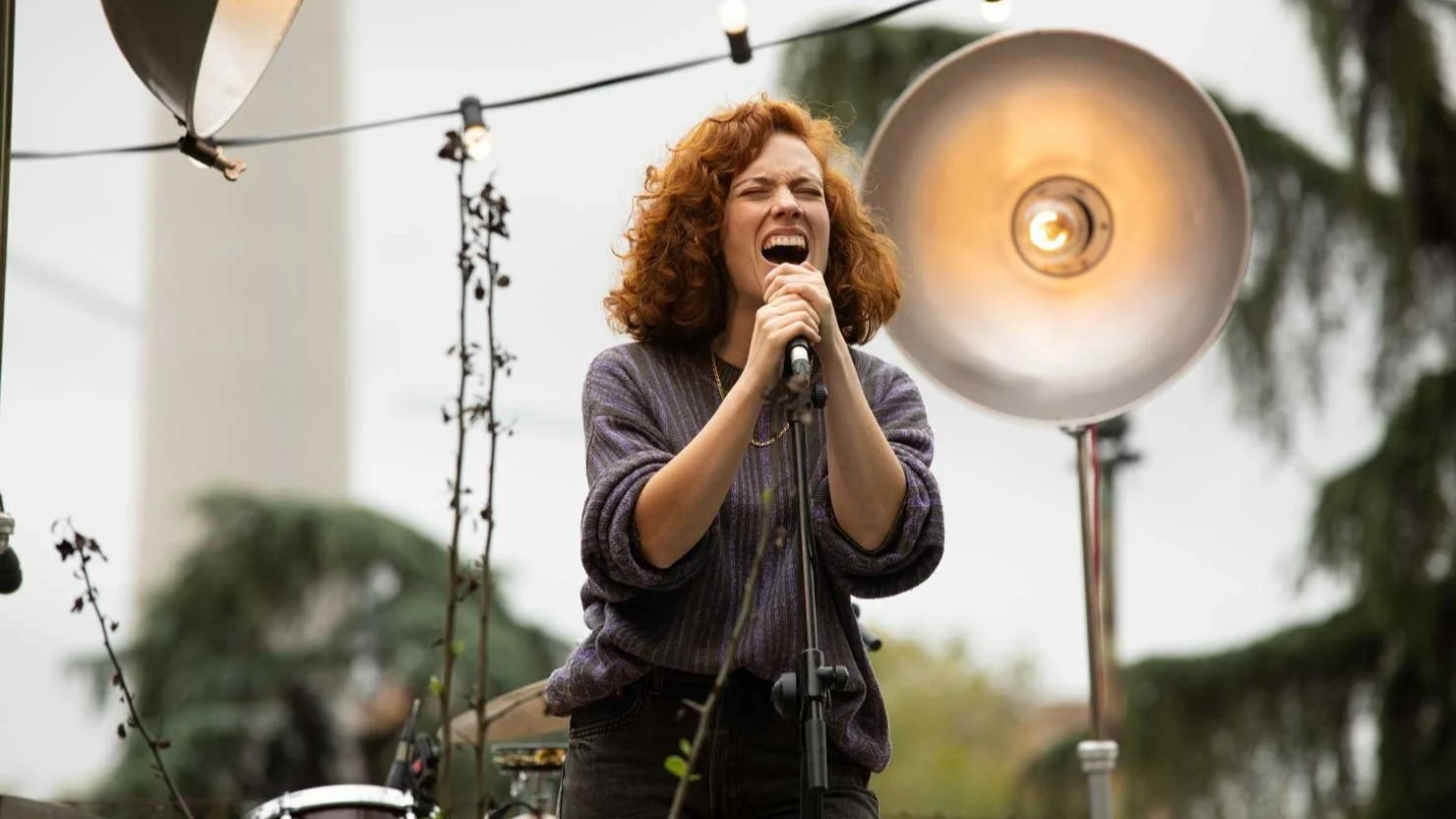
Itsaso Arana
Photo by Lisbeth Salas, Courtesy of Los Ilusos Films.
This film by Jonás Trueba which is set in Spain won an award at the 2024 Cannes Film Festival but I find it very difficult to understand why. It appears that Trueba, who shares the writing credit with the film’s two leading players, was inspired to make it by a viewpoint long maintained by his father, the director Fernando Trueba. It is the belief that, whereas the marriage union is regularly seen as an occasion to be celebrated, the same notion should apply when a separation occurs. The film sees Fernando Trueba on screen playing a father known for expressing this very idea and The Other Way Around shows how this man's daughter, Ale (Itsaso Arana), and her partner Alex (Vito Sanz), decide to put it into practice when after fourteen years together they come to the conclusion that their relationship is no longer working and that it would be sensible to split up.
This work is a very knowing piece which is set in the world of cinema and presents Ale herself as a filmmaker and Alex as an actor. Indeed, when Ale's father discusses his idea that a separation calls for a celebration, he suggests that it would be a great idea for a film. It is certainly a novel suggestion but, when it comes to making it the basis of a film, one can only consider it a starting point, something which needs to be cleverly elaborated if it is to yield an effective comedy. Its development could then involve a touch or more of underlying emotion according to taste.
But in the event The Other Way Around is a film that runs only a few minutes short of two hours but gives no sign at all of knowing how to make something of this concept. The very first scene finds Ale and Alex talking in bed about the desirability of breaking up and holding a separation party. The next morning, they talk of inviting friends along and then ask themselves if they are really serious about all this. It seems that they are and what follows features repetitive scenes as they tell relatives and friends and invite them to the party. Those invited even include their landlord and a plumber but, save when on one occasion their familiar spiel is spoken by the two of them simultaneously, little is done to make it amusing unless of course the very idea of such a celebration can be considered hilarious in itself. As for any sense of audience involvement on an emotional level, the fact that we know nothing of the couple’s past and of what has led to this crisis in their lives means that it is difficult to care about Ale and Alex. This is unfortunate because it limits one's interest in the film and also because it lets down Itsaso Arana and Vito Sanz who have I understand played together before and who certainly display a natural ease when acting with each other.
As though Jonás Trueba is himself aware of the limited appeal of this work, his screenplay throws in an additional concept. Had this given extra weight to the film it would have been fine, but unfortunately it doesn't. What we discover is that the movie being made by Ale and now nearing completion is the very work that we are viewing: shots that we have already seen of her and Alex are part and parcel of the film that Ale is editing. This notion is certainly an oddity but its presence neither enhances the comedy such as it is nor adds any dramatic weight. Nor does this play with the film’s format result in anything that has value in its own right.
However, the fact that the two central characters are both involved in cinema does allow for scenes in which their dialogue refers to films that do indeed exist. Talk of classic comedies even leads to the incorporation of a brief soundtrack excerpt from The Philadelphia Story and a pack of tarot cards consulted is linked to the films of Ingmar Bergman. Late on old images from a time when Ale and Alex visited Paris show the tomb of François Truffaut in the cemetery in Montmartre. Somewhat in the manner of Godard, books are also mentioned including Søren Kierkegaard’s Repetition which comes up to give a would-be philosophical touch to the proceedings. However, it mainly functions as an attempt to persuade viewers that the film’s own repetitions are meaningful and that there is weight in the film’s assertion (also repeated over and over) that repetitive love contains a reassuring sense of safety about it. More modestly the film does also include a disagreement between Ale and Alex regarding the merits of the Blake Edwards movie 10 which fits in quite neatly, but by the time that friends of the couple are given a preview of Ale’s film and invited to criticise it the scene misfires. Because what they see is so related to The Other Way Around itself it might have been splendidly tongue-in-cheek to include adverse comments about it. But in the event to hear it dismissed as too long only serves to reinforce one's own reaction to Trueba's film.
But for the fact that both Sanz and Arana share the writing credit (possibly on the grounds that they were encouraged to improvise dialogue) one would have seen this as a work in which the lead actors deserved better material. The Other Way Around gains something from their presence, features an interesting use of existing music (Heifetz’s engaging arrangement of Schumann’s ‘Vogel als Prophet’ from his Waldszenen is heard more than once) and includes some unusual visual compositions that are genuinely distinctive. Yet, when considered as a whole, the film strikes me as a project that as it stands was never worth undertaking in the first place. The Cannes award together with one from the Online Film Critics Society provide evidence that there is room for strong disagreement here, but I can only reiterate that the source of any appeal in this film totally escapes me.
MANSEL STIMPSON
Cast: Vito Sanz, Itsaso Arana, Fernando Trueba, Valeria Alonso, Andrés Gertrúdix, Francesco Carril, Naiara Carmona, Pedro Lozano, Jon Viar, Miguel A. Trudu, Isabelle Stoffel, Lucía Perlado, Simon Pritchard.
Dir Jonás Trueba, Pro Javier Lefuente and Jonás Trueba, Screenplay Jonás Trueba, Itsaso Arana and Vito Sanz, Ph Santiago Racaj, Art Dir Miguel Ángel Rebollo, Ed Marta Velasco, Music Iman Amar, Ana Valladares and Guillermo Briales, Costumes Laura Renau.
Los Ilusos Films/Les Films du Worso/Arte France Cinema-AX1 Films.
114 mins. Spain/France. 2024. UK Rel: 11 July 2025. Cert. 12A.
