
What Does That Nature Say to You

A young poet is vetted by his potential future in-laws in Hong Sangsoo’s reflective and haunting Korean comedy-drama.
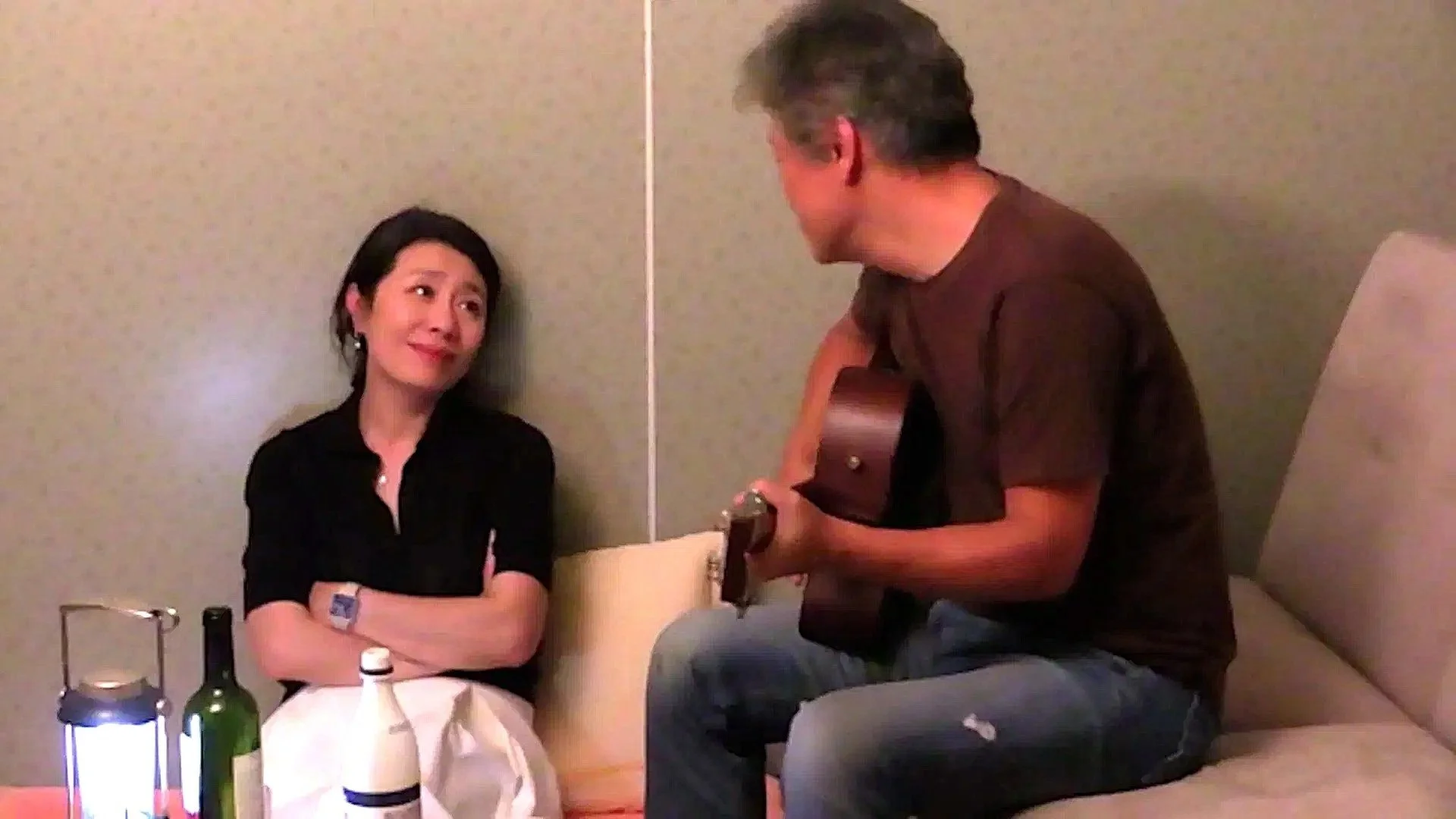
Image courtesy of ICA Cinema.
Hong Sangsoo was born in Seoul in 1960 and has long been established as a prolific filmmaker whose work frequently wins awards at international film festivals. Even so, it is no great surprise that his films have rarely obtained a release in the UK because Hong’s very individual style of filmmaking if not exactly avant-garde does mean that his offerings are of specialised appeal far removed from the mainstream. Indeed, in every sense the films that he makes are very much his and this latest piece (apparently his thirty-third feature) finds him credited as writer, director, producer, editor, composer and photographer. Certain features including a fondness for long-held static shots appear to recur regularly yet my own limited experience of his work underlined the fact that his methods can yield very different results. When I saw Nobody's Daughter Haewon (2013) I found it difficult to feel anything much for the characters and could not decide what he was trying to put across. But, in contrast to that, his 2020 feature The Woman Who Ran struck me as masterly, not least in its portrayal of female characters and in the way that it encouraged its audience to draw their own conclusions from what it showed about the lives of three contrasted women.
In the circumstances I came to this latest piece uncertain what I might think of it. In the event it lacked for me the powerful grip of The Woman Who Ran but nevertheless held me fascinated. Once again talk plays a huge part in the piece while the acting is totally naturalistic and persuasive. However, this time around the time taken is much longer than in The Woman Who Ran (108 minutes as opposed to 77) and the tale told spread out over eight chapters is one that requires patience. Here Hong seems to be relying on the belief that people are of themselves inherently interesting. That is to say that, while we can believe in his characters, there is no attempt to build them up in an arresting manner or to elaborate on their backgrounds other than in passing remarks. Nor does Hong put them in any highly dramatic situation which will rivet the attention of the audience. Instead of that Hong in his writing capacity and working closely with his cast of five (all but one regular collaborators) is content to put before us wholly believable characters and to invite us to speculate about them.
In point of fact the situation in which the five find themselves is one which has often been at the heart of other movies of a far more conventional kind. Dongwha (Ha Seongguk) is a man in his mid-thirties who has driven his girlfriend of three years, Junhee (Kang Soyi), from Seoul to Yeoju where her parents whom he has never met have their home. The intention is that he should simply see the place but on arrival Junhee’s father, Oryeong (Kwon Haehyo), sees their car and asks them in. Once this invitation has been made, they are encouraged to stay on so Dongwha finds himself introduced to Junhee’s older sister Neunghee (Park Miso) and is encouraged to remain there for dinner which will be cooked by Junhee's mother, Sunhee (Cho Yunhee), when she arrives back home. Consequently, the film which takes place during a period of just under twenty-four hours becomes a portrayal of a potential son-in-law facing the trial of meeting and being assessed by his prospective in-laws. In point of fact Junhee is ready to declare that she is in love with Dongwha, but the idea of marrying is something in the air rather than being definite.
The first half of the film having once shown the morning arrival lets us see Junhee’s father showing off his grand self-designed country house and the hillside behind it and being entirely amenable to his daughter's boyfriend. Subsequently, the father will stay in but he encourages both of his daughters to lunch out with Dongwha and to show him some of the local sites including the Sinreuk temple. The talk which ensues between these three causes us to realise that Dongwha is estranged from his successful father, Attorney Ha, who appears on television and, while it may sound fine to want to be independent, it becomes clear that Dongwha writes poetry and would like to make that central to his life but is only getting by financially by making videos at wedding parties in Seoul. Throughout these scenes very little happens but the talk is always lifelike and one feels encouraged to enter into one’s own conjectures about these people. One could indeed ask if the polite conversations between Dongwha and Oryeong are as sincere as they seem and there is a sense that Dongwha is putting on the image that befits his idea of what a poet should be (he even talks of cultivating a recent moustache to see if it looks right).
In its second half the film becomes more pointed with the dinner party something of a set-piece as it leads to a crisis point when Dongwha loses control after drinking too much. It so happens that Junhee’s mother is herself a poet and earlier in the meal that has led to poetry being discussed and to Dongwha reciting a poem of his own. We can tell from this that, whether or not he realises it, Dongeha’s poetic abilities are feeble so we come to see What Does That Nature Say to You as a film about a man who lacks the talent needed to succeed in his aims. It becomes apparent that Oryeong and Sunhee realise this too (indeed we are free to ponder the possibility that, despite him denying it, Oryeong’s offering of alcohol was a deliberate ploy to test Dongwha). But, if we can conclude that Junhee’s parents would not in the event see him is an appropriate son-in-law, whether or not Junhee herself will want to marry him is an open question.
On occasion Hong does move the camera but it is the static shots that stand out while the whole approach, observational in character yet stylised technically, mark the film as a work that is distinctively his. The players know exactly what is required of them and, if the film’s reflective mode appeals, you may well find this a haunting work. Some in contrast would undoubtedly regard it as boring, a piece in which too much is said and too little happens. I would disagree with that view but it is certainly apt that the venue screening this film in London is the ICA where it is being premiered as part of their Off-Circuit programme.
Original title: Get jayeoni nege mworago hani.
MANSEL STIMPSON
Cast: Kwon Haehyo, Ha Seongguk, Kang Soyi, Park Miso, Cho Yunhee.
Dir Hong Sangsoo, Pro Hong Sangsoo, Screenplay Hong Sangsoo, Ph Hong Sangsoo, Ed Hong Sangsoo, Music Hong Sangsoo.
Jeonwonsa Film Co.-ICA Cinema.
108 mins. South Korea. 2025. UK Rel: 23 July 2025. No Cert.
