
Where Dragons Live

In her ill-judged documentary, Suzanne Raes explores a distinctly upper-class family and its memories of a whimsical life.
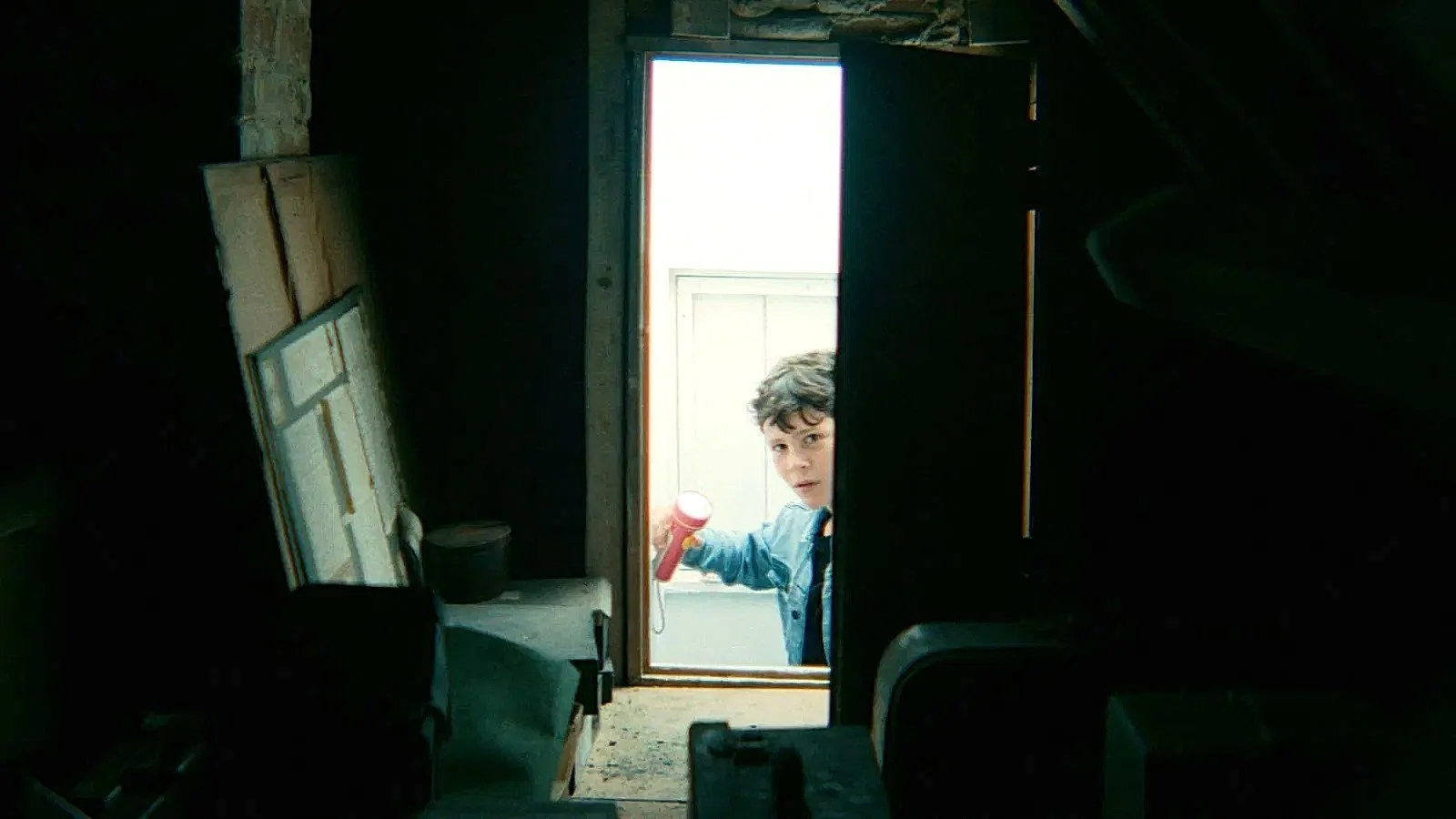
Image courtesy of Verve Pictures.
In October of 2021, Blue Dolphin Films released in the UK a wonderful documentary entitled Romantic Road about an elderly London lawyer and his wife driving around India in a 1936 Rolls-Royce. On paper it might have seemed that these upper-class figures would be relics of a colonial era and thus bound to be off-putting to modern viewers. But in the event, these two proved to be liberal in outlook and immensely sympathetic and engaging figures and audiences took them to their hearts. This film came to mind when viewing this new work by Suzanne Raes but it did so, alas, because this new documentary about members of the Impey family has precisely the opposite effect and fails to engage one in any meaningful way.
Cumnor Place, a huge house in Oxfordshire, was the home of Oliver Impey who lived from 1936 to 2005 and of his wife Jane, who continued there until her death in 2021. Where Dragons Live was filmed at the house shortly after her death when, with the building falling into decay and issues of inheritance tax arising, it became clear that the property would have to be sold. The film starts with the couple’s youngest child, Harriet, arriving very much aware that the house is full of chaotic clutter which has accumulated over the years and that a clean out will be essential. She is soon joined by Lawrence, the middle of her three brothers who brings with him his young son Orlando, and by Matthew the youngest of the brothers. Another representative of the younger generation also present is Frances whose father, Edward, is the oldest of the siblings.
We hear Harriet before we see her and she is telling us in voice-over that she has always been afraid of things. By evoking childhood fears, including the idea of monsters under the bed, she gives the impression that the film is consciously aiming to connect with its audience by stressing this link which Harriet shares with many who, unlike her, did not have a privileged childhood. More broadly it could be argued that viewers will find common ground here due to the fact that many of them have had to confront a parent’s death and have experienced the emotion of needing to dispose of many of the deceased’s old belongings knowing that in practical terms one only has room to keep a few of them.
Where Dragons Live is the creation of Suzanne Raes and her approach is one that adds to the sense that one is observing everything at a distance. We may start with Harriet and her reflections on her parents and on her upbringing as linked here to old photographs and family slides and to objects discovered in the house but before long we are cutting back-and-forth between the siblings far too much for us to engage with any of them in depth. The sons appear to have been pushed by parents who were relentless in expecting academic success whereas the one daughter felt that she was denied their opportunities. But all of this emerges in bits and pieces and that sense is exasperated by the way in which the film chooses to makes such huge play on the theme of dragons. The father, Oliver Impey, was distinguished in science (as was his wife) but also in art and in the latter sphere developed a fascination with dragons as they feature in Norse and Chinese designs. They would often be shown on postcards from abroad that he sent home to his children. However, Raes chooses to make this a central feature through constant elaboration of it. The dragon becomes a symbol of all that frightens people and is also referenced in ways that include many a text. Consequently, we get mentions of St. George, of Harry Potter and hear more than one extract from the ancient epic poem Beowulf.
There is a good story about how and why Oliver was buried in a particular spot but we get very limited information about either the lives of the siblings or regarding the Impey family history although these might have drawn us in more. Instead, it is just details here and there about the character and outlook of Oliver and Jane with praise for the way in which they taught their children to look and to be observant alongside the odd hint that what was happening to their children was not for them a prime concern. But then it is back to the focus on dragons. We are told that Hannah like her father has a dragon fetish and the amiable Michael Flanders number ‘The Hippopotamus Song’ emerges in a childhood flashback with new lyrics in which "mud" is replaced by "blood". But stronger criticism of Oliver and Jane emerges only late on in the film when it is suggested that for Lawrence it was his mother who was the dragon, although it was not her but dad who sometimes called himself a dragon. Furthermore, it is only at this stage in the film that it is mentioned that all of the children were afraid of their mother.
But then, just when the film seems to be opening up more as to the dark side of Oliver and Jane, a letter from Jane to her husband is read out and from this we learn how wonderful she felt him to be and how appreciative she was of all that he had taught her. Of course, the impact of parents on children and the conflicting sides that can co-exist in a father or mother are issues well worth exploring. But good art needs to structure material meaningfully rather than to throw out seeming contradictions and to leave it at that. As handled here there is minimal rapport established between the viewer and the people on screen. For me the absence of these elements made Where Dragons Live an empty experience despite its good photography and thoughtful music score. At the close Harriet exits and a door viewed from inside the house closes. It would make an effective last shot but for the fact that here it is followed by further images of the empty exterior and after that by a final image which finds Raes unable to resist presenting one more view of an individual walking about inside and wearing a dragon's head!
MANSEL STIMPSON
Featuring Harriet Impey, Lawrence Impey, Matthew Impey, Edward Impey, Orlando Impey, Frances Impey, Elizabeth Impey, Evelyn Fitski, Quentin Fitski.
Dir Suzanne Raes, Pro Ilja Roomans, Screenplay Suzanne Raes, Ph Victor Horstink, Ed David Arthur, Music Alex Simu.
Docmakers/Bombito Productions/NTR-Verve Pictures.
82 mins. Netherlands/UK. 2024. UK Rel: 2 May 2025. Cert. PG.