Change of Habit: Writer/Director Nat Boltt Talks ‘Holy Days’
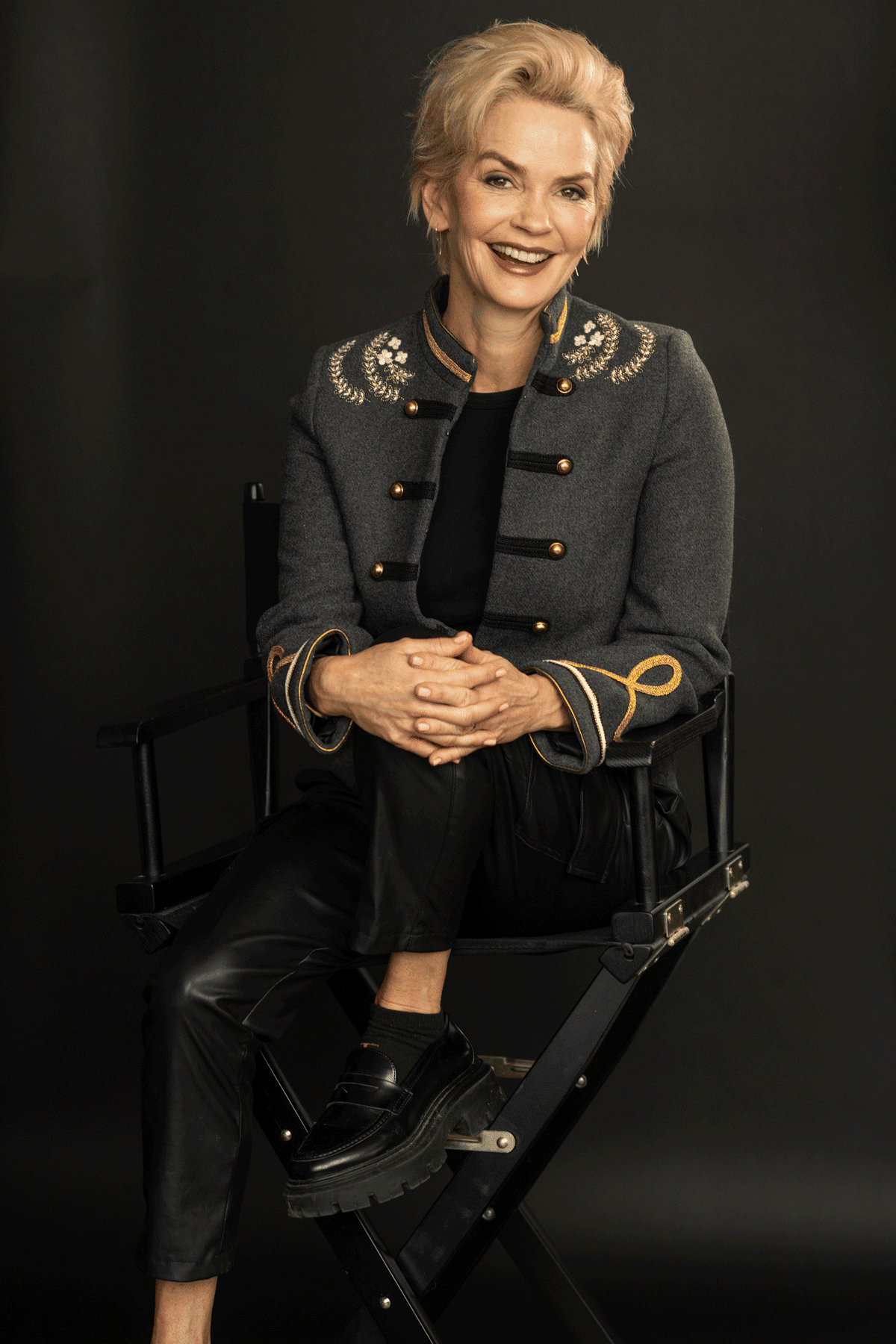
Nat Boltt
Courtesy of Lightbulb Film Distribution
by CHAD KENNERK
Passion projects are often synonymous with a long journey. For filmmaker Nat Boltt, the road to her feature directorial debut began after her 2012 short film The Silk, based on a short story by acclaimed New Zealand author Joy Cowley. With the author’s blessing, Boltt set about adapting Cowley’s novel Holy Days for the screen — a journey that would ultimately bring together three extraordinary actresses for one very unconventional road trip.
Boltt’s debut feature is a warm, heartfelt comedy about a young boy who finds refuge at a run-down convent, where he forms a close bond with three elderly nuns, played by screen legends Judy Davis, Miriam Margolyes and Jacki Weaver. When the convent faces closure, the unlikely quartet hits the road in a desperate bid to save their home.
An alumna of the Warner Brothers Directing Workshop, Boltt is no stranger to either side of the camera. As an actor, she starred for seven seasons as the manipulative Penelope Blossom on the series Riverdale, and her credits include films such as District 9 and 24 Hours to Live. As Holy Days arrives in UK and Irish cinemas from Lightbulb Film Distribution on 14 August, Boltt shares the power and hope of the film that began more than a decade ago.
In conversation with Actor/Writer/Director Nat Boltt
Film Review (FR): What have you taken away from this ride?
Nat Boltt (NB): Apparently it's like childbirth, where you forget all the pain, but I didn't forget the pain of childbirth, and I am probably just blanking on some of the trauma of the film. There were so many steps, so many rewrites, so many ups and downs, so many ‘yes, we're a goes’, ‘no, we're not’, and the green light game. Fighting the good fight. This is not a Hollywood movie. It's female, led by three brilliant women who have been honoured by every big award under the sun, and yet it was still difficult to get financed.
I was always fighting that real brutal attitude of the film world, the Hollywood sort of model, but succeeded nonetheless with lots of support from some of the amazing cultural supports, which would be the New Zealand Film Commission, Telefilm, the people and government organisations that will come on board to support a film when the Hollywood model does not play ball. Without them, I couldn't have made it. The puzzling together of those pieces is long-winded. Then finding the best cast that can bring these roles to life is also difficult.
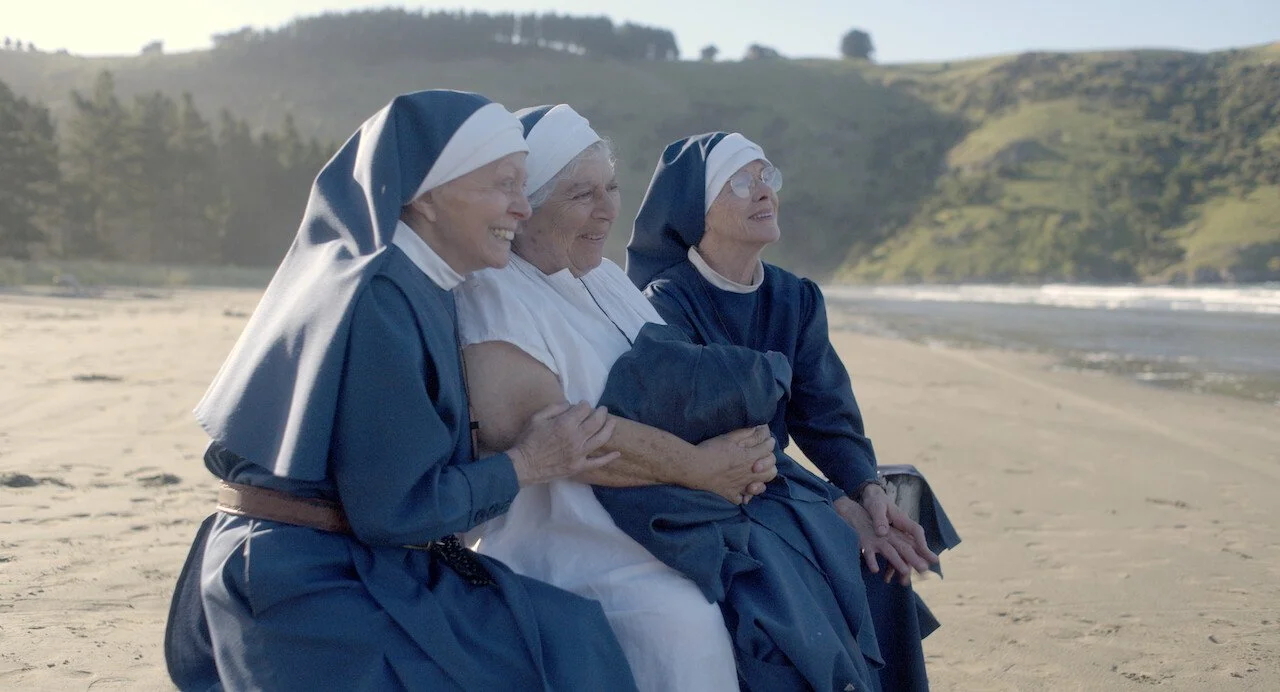
(FR): You gathered a powerhouse trio of ladies to bring the story to life. How did you assemble your cast, and what was that collaboration like?
(NB): The key thing is that they've got a love of the script, so it's working and reworking the script. That was my dragging the boulder up the hill every time you get a new set of notes from a new set of people, knowing which ones will make the film better and which ones will damage it, until you finally have a script that you're happy to send out. Then getting past the gatekeepers, agents and managers, to go, ‘This may not be the big money film for your client, but it will be the best role that they've been offered in I don't know how long’, because these are killer roles.
It's got all the potential of becoming that beloved film that makes it around the world in theatres and then becomes a classic in a cult sense or a road trip sense, which is everything that's happening for Holy Days, but you don't know that at the beginning. Most agents will only talk to you if the film is fully financed, but the financing only comes if you've got the faces and the names that make the financiers feel like they're not taking too much of a risk. That was the game we played for many years until one day we went, ‘Nat, get on a plane. It's happening. Go to New Zealand.’
(FR): You've directed many times before, but it does seem like something of a long game with a first feature in terms of ensuring that all the right people and all the right pieces fall into place.
(NB): It's huge, and at some point you can't turn back. We had times when this film was greenlit, and then suddenly an investor decides they're pulling out for some crazy reason, and then the film is no longer greenlit. You kind of go, ‘Well, if this is the end, it means I've put 11 years of my life into nothing.’ My heart goes out to filmmakers who have had that happen. You sweat and toil for no money by yourself, wondering if it's worth it, and I hate to say it, but in the majority of cases, it doesn't make it to the screen.
I have very successful TV episodic director friends, and pretty much everyone I've spoken to, their dream is still to do their feature. We're all kind of dancing around between, ‘I've made my feature. Now I would like to be more of an episodic director so that I can keep some kind of ball rolling’, so we can stay in this world of storytelling, but it's never easy.
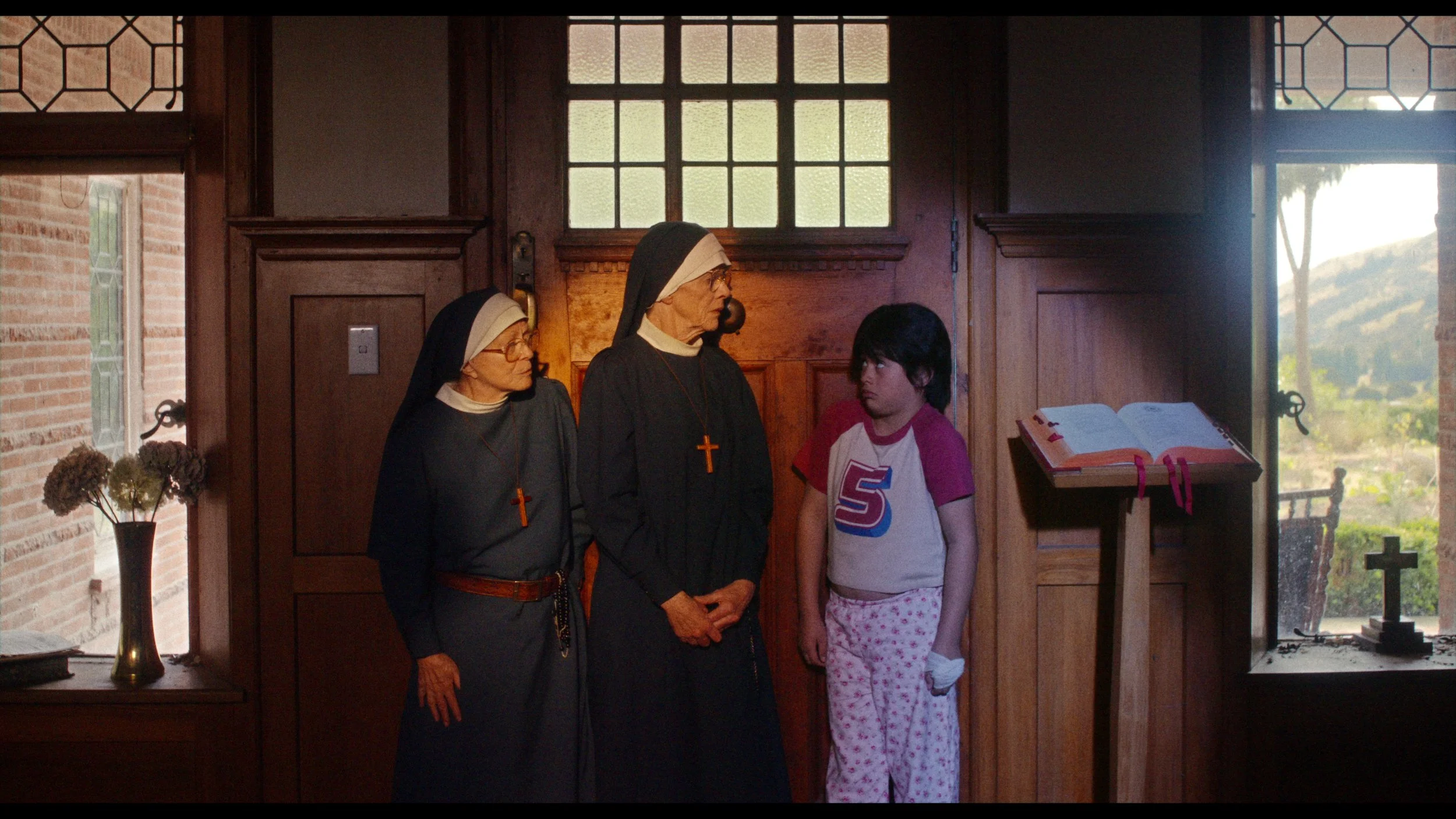
(FR): In working with Joy to find the essence of the book, what did you arrive at and how did you set about transforming it for film?
(NB): Joy is an incredible woman. She's a national icon in New Zealand. I am lucky enough to work with her and call her my friend. We became sort of family, and her book is a beautiful, gentle story with these exact characters who go on the road to show a little boy snow for the first time, which I love. It's a beautiful story. When you distil it into a film, like any book that becomes a film, you have to find not only your essence, but you also have to find the real pacing that drives it along and the adversity that gets it there. Joy, at some point, actually said to me, “Stop being so faithful to the book and make it your own.” That's magic. That's gold, because usually it's the other way around.
When I started working on Holy Days with the producers and this wonderful script editor that we eventually found, they understood my sense of humour, and my sense of humour is to put in more humour. I found a lot more humour to drive the story, and then the adversity – what the snow eventually becomes, from the little boy’s snow globe to the actual world of snow, and how dangerous that can be. Then tackling big problems that I was thinking about at the time. My son was my muse for this film and for taking it on. My son was tackling questions like, ‘What happens when you die?’ and ‘How do you let people go?’ and ‘Can we die together?’ and ‘Why not?’ How do you comfort anyone, let alone a child, when they have lost their greatest love and their biggest anchor in their life?
I wanted to create a film that somehow brings comfort, and I know that it has, because I've had people wait for me after theatrical screenings in floods of tears, wanting to say how this was exactly what happened to them as a child when they lost a parent. That's the biggest reason I wanted to make this, because Joy understands life and death. She had a near-death experience, so she was the perfect person to work with me on this. [My goal was] to make it not bleak and not dark and not devastating, to try and bring the playfulness into it that I have with the child's perspective and the playfulness of the nuns who are, in the case of Miriam and Jacki's characters, like big kids and great friends for him. It’s a Little Miss Sunshine-type story of ragtag friends on the road, but they tackle tough stuff and have fun as well. We've had reviews from people who think it's simplistic, but people have said similar things about Taika Waititi's films. It takes real effort to make something feel that easy.
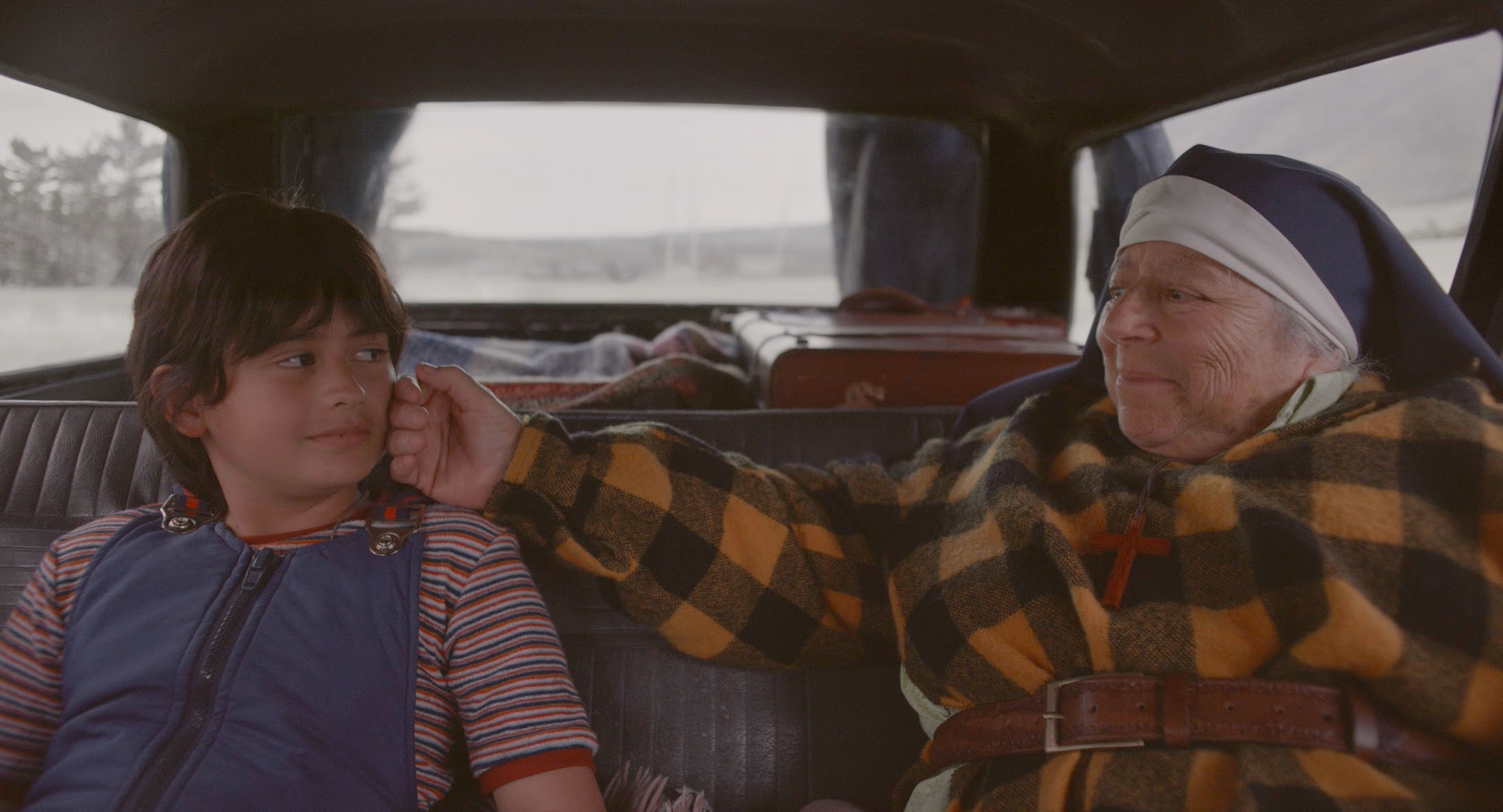
(FR): This is a film of moments. There are all these tender moments of humanity that you don't get or earn without everything that came before.
(NB): The moment with Sister Luke in the back of the car with Brian – that is also kudos to Miriam’s acting ability, that she could play that role of going in and out of dementia. Show me who else can do that, and show me another film where that has worked, where it hasn't been odd or twee. I can only think of Judi Dench. She played it beautifully.
That final scene with Judy Davis and Elijah's character Brian, I actually wrote that two days before, because the ending of the film didn't feel right anymore. Judy and I had been having these talks about death and what happens when we die, and a play that she'd seen. That was something she was going through personally with friends. I thought, ‘I have to do another ending,’ and so all of the things over a decade of script development got thrown out the window, and I wrote a new scene two days before.
I mean, you saw it, the magic between Judy, an icon of the stage and screen with decades of age difference between her and Elijah, who's just appearing on the screen. They just have magic in that moment. It's wonderful to see how he absorbed everything she knew, just by being with her in a scene. And she picked up on his sweetness and his innocence. This is the magic of cinema, and it looks easy, but it doesn't just happen every day.
(FR): I don't think you write that scene without the 12 years before that. It's the whole process, and it feels like the culmination of that journey on and off the screen. As well as the idea of that next journey that we all will ultimately take.
(NB): I really hope, and as I say, have had feedback and inklings from people that this is a film that you can show people who are struggling with either the end of their life or a serious illness or kids, rather than telling them, ‘They've gone to a better place.’ What is a better place than me? ‘They're with God now.’ What does that even mean? It doesn't make me feel better.
I had the incredible experience of having a friend who was in hospice. He was at the end of life, and I asked him if I could show him Holy Days; it was honestly the best thing that could have happened for me, and he felt comfort. I watched him laugh and cry through this film, and his family was there as well, laughing and crying. We all held hands and watched this film. I felt like I'd done something, you know? This was before it came out in theatres, and I actually said to my husband afterwards, “If nobody else watches this film and if everybody hates it, I feel like I'm okay. I feel like I did something useful with my life.”
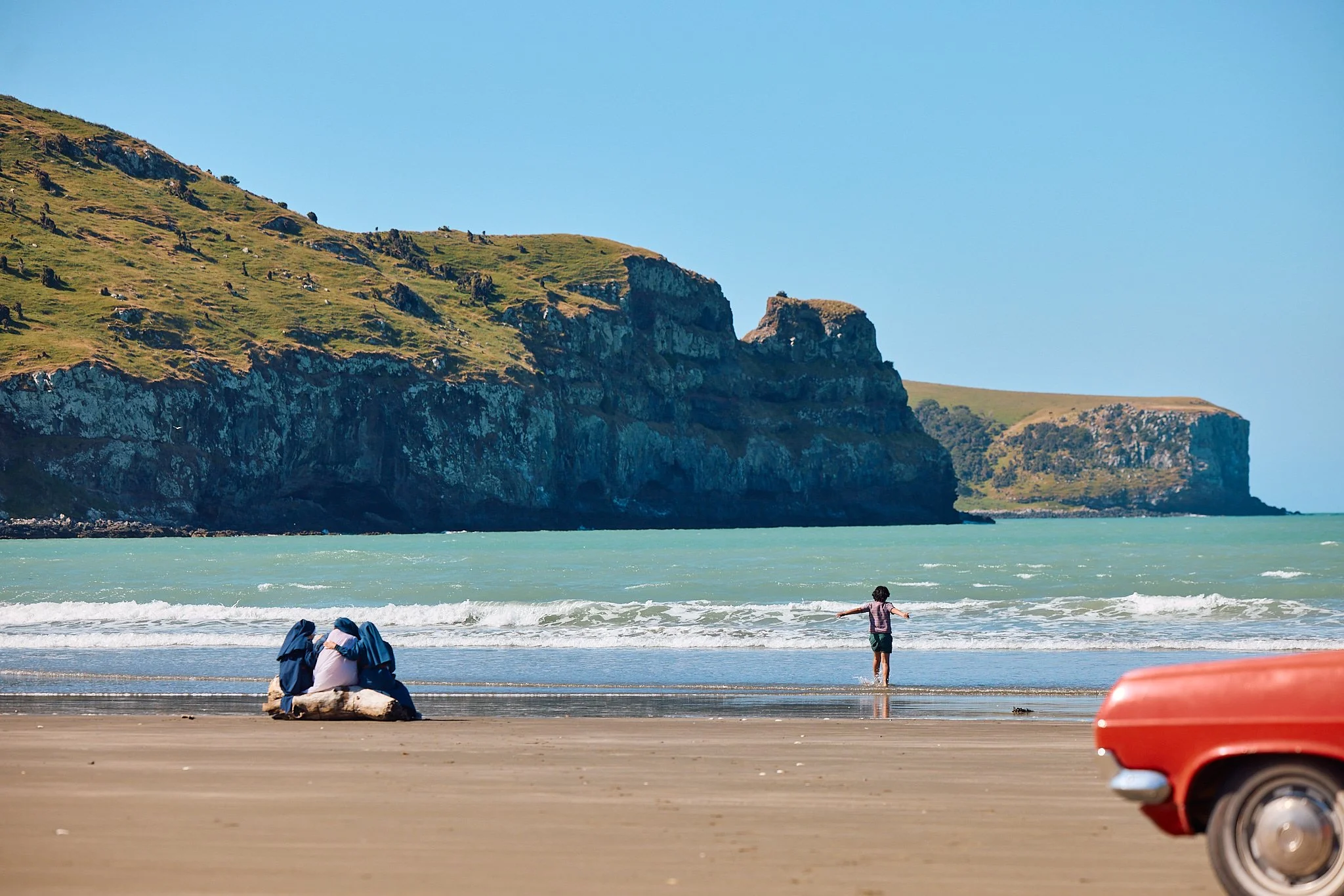
(FR): Talking about the magic of cinema, I've also heard you say the phrase "the womb of cinema”, which I love because it does feel like this dark, often sacred, place that we get to go and connect together and connect to a piece of art or entertainment.
(NB): One hundred per cent, thank you. I grew up in Johannesburg, which I always jokingly refer to as the murder capital of the world, although it often is that. As a kid, I was surrounded by this concrete jungle of mayhem. Going into the cinema really was that warm, safe escape. I was a kid with a massive imagination and incredibly sensitive, as most creatives are. It was like going to another planet. That's how I felt about film, and I grew up on some of the best films.
I’m biased, but I always reference Stand By Me or the Indiana Jones films or The Dark Crystal and The Muppets. The craziness and wonder of committing to these non-human characters who are almost more human. I could watch Miss Piggy till the day I die, and her kind of madness is in my film. Silly is such good medicine. Like Kermit singing, ‘Why are there so many songs about rainbows?’ It's heartbreaking. What's on the other side? Those were my formative years. My brain was forming around the magic and hope of ‘anything is possible’. I believe that even in this crazy world that we're living in – I'm in Canada right now and everything's on fire – we have to believe that anything is possible, because you have to manifest what you want to see in your life.
Right now, we've got a lot of grey and confrontation and conflict. I just don't believe that's my world. My world is in this film, and I show it to you so that you can see my world and start to think more colourful, more hopeful, with more beautiful manifestations. My next film is The Beautiful Apocalypse. Why does the apocalypse have to be grey? What if it's beautiful? What if it's the better thing? I invite people to do the same on a daily basis. Find the things that you want to look at that make you feel better. Don't just hope, but go out and actually find your people, find the things that you want to do that bring better things. That's how we shift it. We have to. What's the alternative?
(FR): Audiences are feeling that shift when they leave this film.
(NB): We are actually going back into cinemas. I am a fan of, obviously, this type of storytelling, which is positive and violence-free. On the other hand, I appreciate every filmmaker. Look at how Gen Z audiences are streaming back into theaters with Backrooms. Whatever it is that brings you in, I think it's the inventiveness and the flight of imagination that is bringing us back into cinemas and also getting us away from the stress of social media and our phones. Gen Z audiences are being quite clear about that.
My son is Gen Z, and he puts his phone on my desk and goes, “I don't want to see it anymore.” I think this is the shift that we are all feeling on a cellular level, which is, ‘it's enough’. Which I love. Let's go back to community. Let's get into cinemas, into the warm womb of cinema, and watch things with our friends and talk about them in-person. I think we've been drinking from the fire hose of social media and constant messaging. We're starting to feel how it's enough, and it needs to be reduced. We tasted it, and it needs to now be slowly switched off.
(FR): Amen.
Holy Days opens in UK cinemas on 14 August and is available on digital in the US.
NAT BOLTT was nominated for five 2026 Leo Awards for her directorial debut Holy Days, winning Best Feature and Best Direction. Holy Days was selected for the Toronto International Film Festival's 50th anniversary and highlighted at TIFF as one of 2025's Most Anticipated Films. The film premiered at the Santa Barbara Film Festival, where it caused a small riot by selling out and turning crowds away on Super Bowl Sunday. An alumna of the Warner Brothers Directing Workshop, Boltt directed episodes of The Dressing Room (starring Eric McCormack) and the global hit series, Riverdale, which she also starred on for seven seasons as Penelope Blossom, the manipulative mother of Cheryl Blossom (Madelaine Petsch). The multilingual Boltt has enjoyed a successful international acting career with credits that include District 9, Inspector George Gently, 24 Hours to Live, and Happy. She is a prolific writer with a strong voice and versatile range from comedy to horror, and has a social media following in the millions (IG: @natboltt). She is outspoken about protecting the environment and regularly visits Borneo and Sumatra to raise awareness about the plight of the orangutan.