
Courtesy of Warner Bros. Entertainment
by CHAD KENNERK
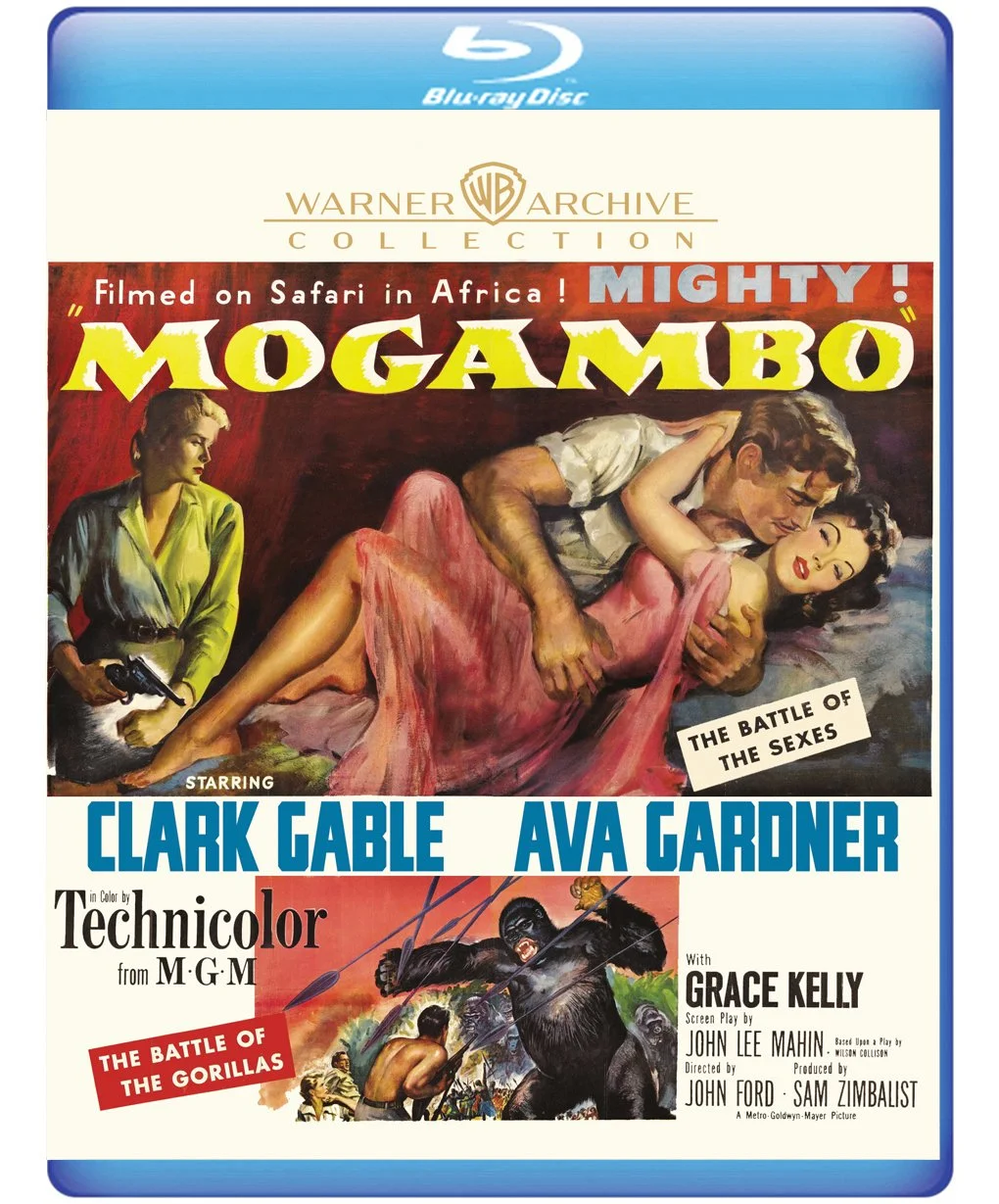
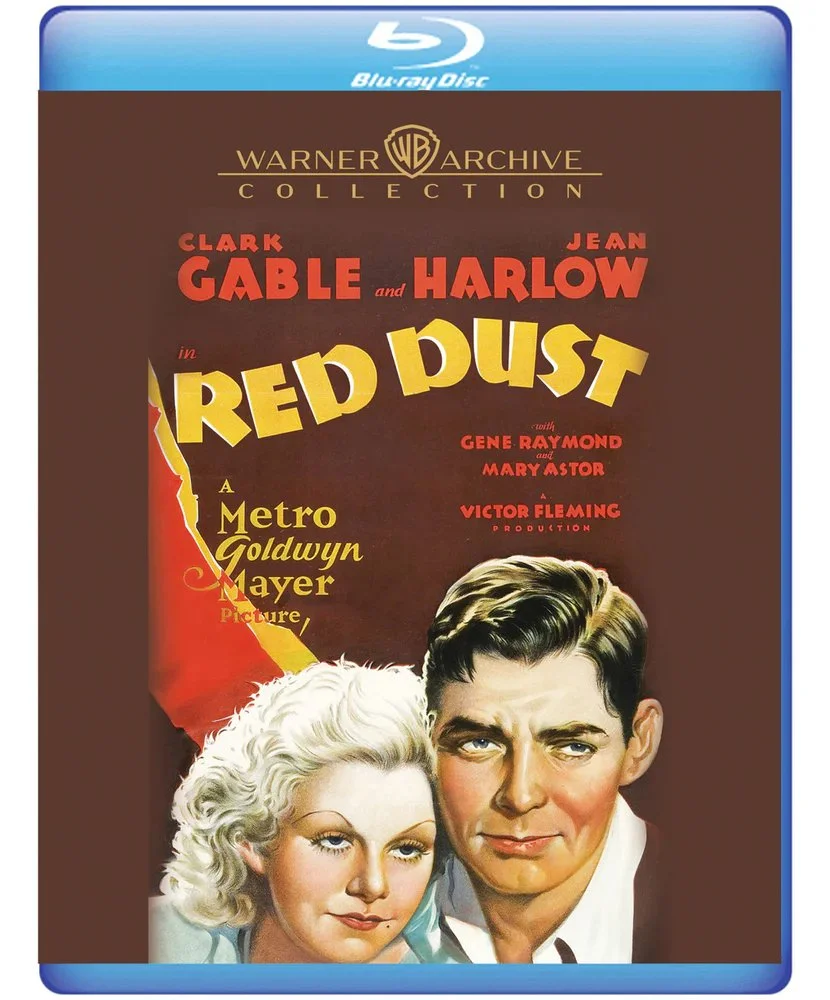
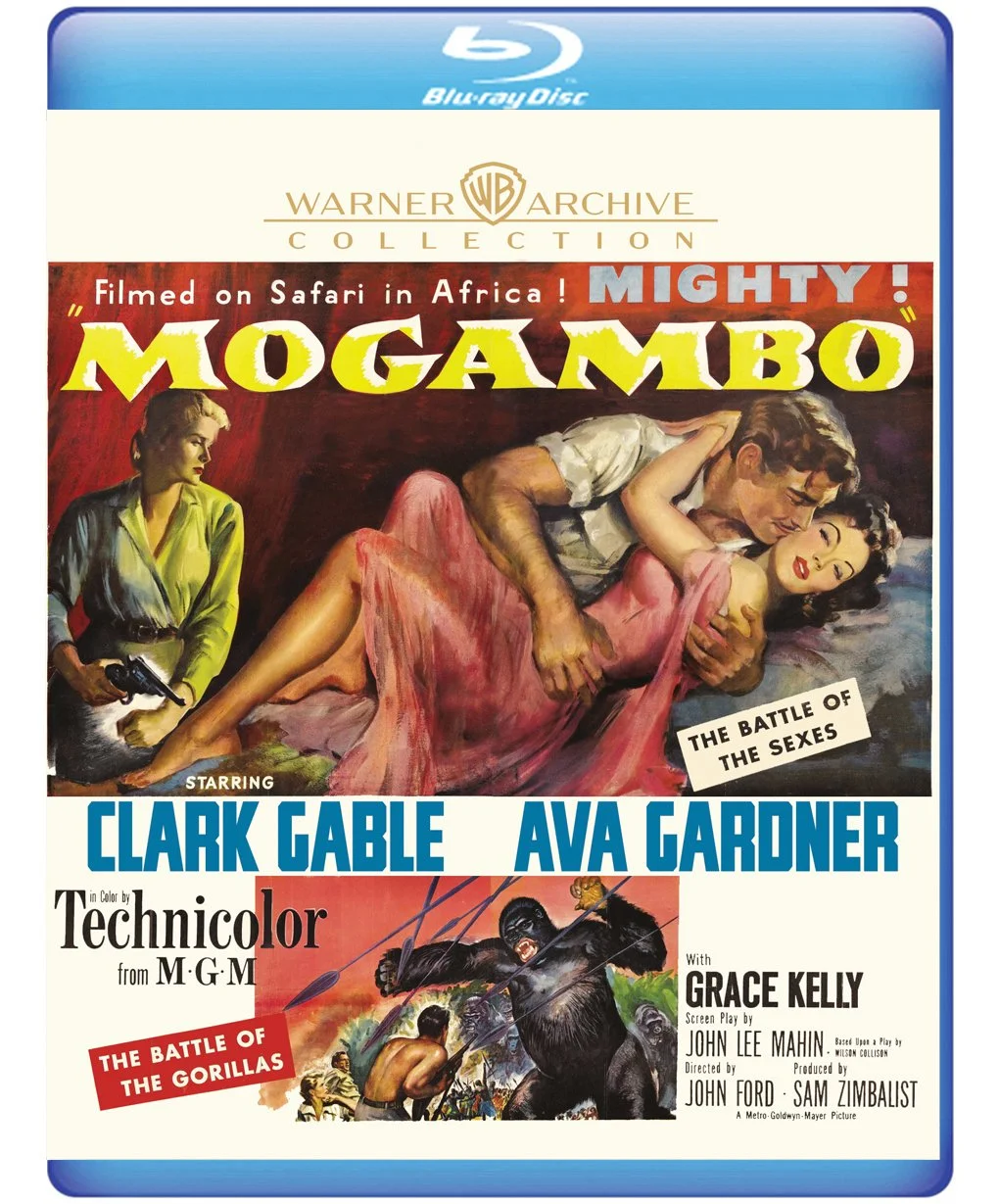
Hollywood is no stranger to remakes; even in the Golden Age, there were new takes on recycled stories. In the early 50s, MGM saw such success with colour remakes of films shot on location, such as King Solomon's Mines and Quo Vadis. Mogambo followed suit as an ambitious remake of the 1932 Clark Gable classic Red Dust. Both Red Dust and Mogambo are now available in gorgeous high-definition Blu-ray releases from the Warner Archive Collection — and they make an excellent double feature.
Based on the 1928 play of the same name by Wilson Collison, Red Dust was the second of six movies Gable and Jean Harlow made together. The Pre-Code film is fondly remembered for Harlow taking a bath in a rain barrel, a scene also referenced in the 1933 Harlow film Bombshell, where the set was replicated. Legend has it that while filming the infamous Red Dust scene, a topless Harlow stood up in the barrel and proclaimed, "Here's one for the boys in the lab!" Ava Gardner, who took on Harlow’s role for the remake, recalled in her autobiography Ava: My Story, “I still remember sneaking into the theatre balcony in Smithfield, Virginia in 1932 and swooning as my hero Clark Gable tried to decide between Jean Harlow and Mary Astor in Red Dust.”
Clark Gable wasn’t the first actor to reprise a role for a remake — Lon Chaney (Sr) did a silent and a sound version of The Unholy Three, as did Garbo with Love in 1927 and Anna Karenina in 1935 — but Gable had the longest stretch between the two, with twenty-one years between 1932’s Red Dust and 1953’s Mogambo. John Lee Mahin, who had written the screenplay Red Dust, rewrote the story for producer Sam Zimbalist and director John Ford. Where Red Dust was set on a rubber plantation in French Indochina (present-day Vietnam) and filmed on Culver City sound stages, the remake set its sights on location work in Africa. The African shoot was gruelling, with extreme temperatures reaching 110 to 130 degrees and rain that turned everything into hazardous mud. Three crew members were killed when a truck overturned, including twenty-six-year-old British assistant director John Hancock.
Irascible director John Ford — who apparently took on the project because he’d never been to that part of Africa — commanded a company of some 500 people in a tented camp in Tanganyika. MGM spared no expense in ensuring the production had everything it might need on location (including an X-ray machine). Cast and crew were outfitted with weaponry due to the ongoing Mau Mau rebellion in nearby Kenya. Exposed film stock was packaged in dry ice and flown out on the handmade eighteen-hundred-yard air strip built in the middle of the jungle in five days. The film’s expense account notes five thousand African francs for “gratuities to witch doctors for favourable omens.”
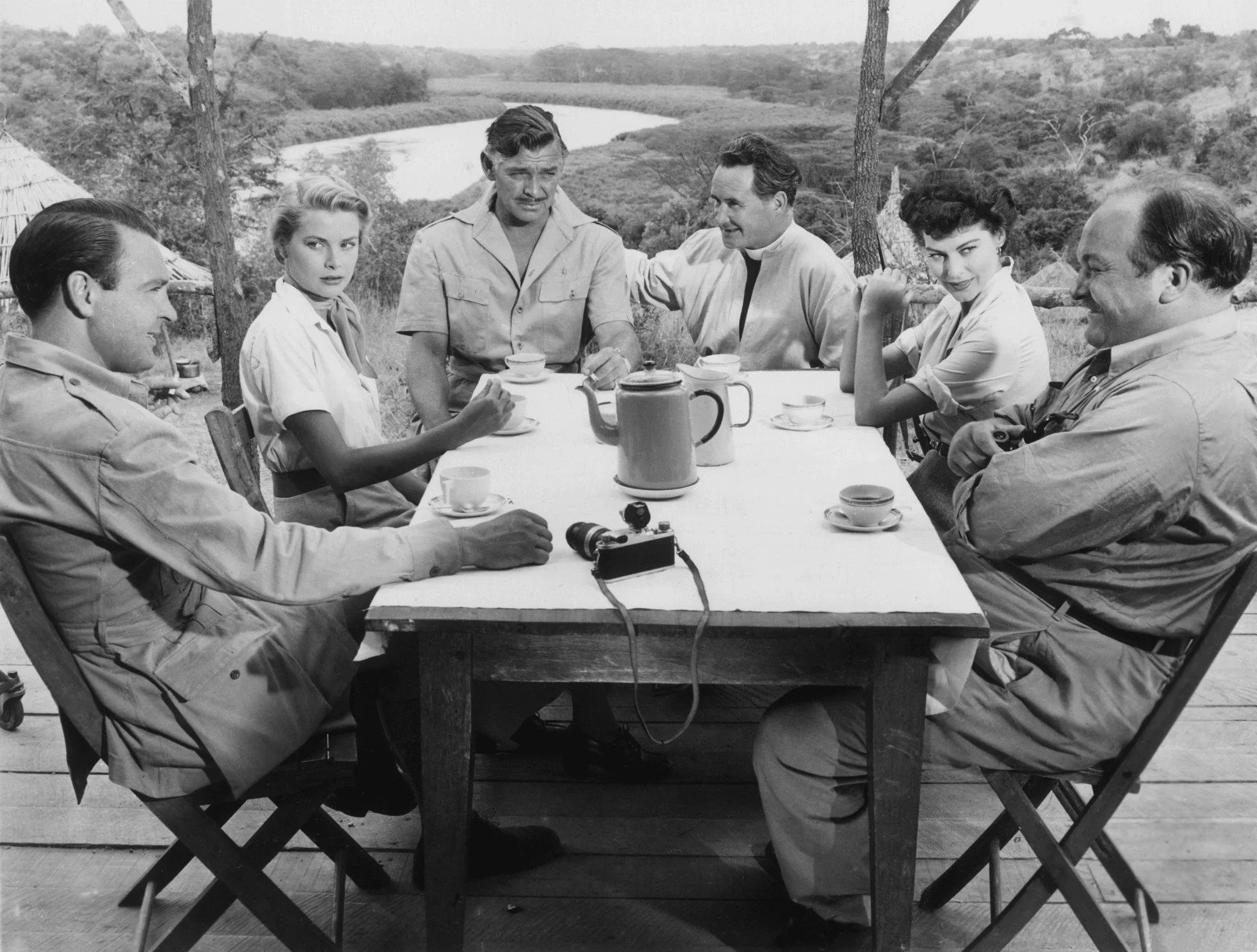
Scenes with animals were unpredictable, but perhaps no one was as unpredictable as Ford, who made it clear that he wanted Maureen O’Hara over Ava Gardner (who was joined on the shoot by her third husband, Frank Sinatra.) After a rocky start, Gardner’s forthright and feisty personality soon won Ford over, and the two developed a rapport, with Gardner recalling, “He could also be the meanest man on earth, thoroughly evil, but by the time the picture ended, I adored him.” Ford echoed the sentiment, calling Gardner “a real trouper. She was unhappy over Sinatra, but she worked her ass off just the same. I loved her.” As Gardner later recalled, “Thank God, everyone in the cast got along famously, because filming in Africa was not exactly an experience I’d want to repeat.” Mogambo ultimately rejuvenated Gable’s career, helped cement Grace Kelly’s star, gave Gardner one of her best roles, and kept Ford bankable after the failure of The Sun Shines Bright.
Both Gardner and co-star Donald Sinden devote chapters of their autobiographies to Mogambo. Sinden’s A Touch of the Memoirs is particularly illuminating, recalling a host of amusing anecdotes. Ealing rearranged the shooting schedule of The Cruel Sea so that Sinden could report promptly in Nairobi following an urgent telegram from MGM. As it turned out, they wouldn’t start filming for another two weeks, but Ford wanted them to all have suntans prior to the start of shooting. Sinden also notes that the moment where Gardner falls backward into a muddy pool with a baby elephant was unplanned. Ever the opportunist, Ford allowed it all to roll out on camera. Gardner and Sinden both note Gable’s professionalism, with Sinden citing Gable’s technical knowhow. The filming of the spear-throwing scene was achieved by pulling the spears out with a fine piano wire and reversing the footage. That meant Gable would need to react in reverse to each spear ‘hit’. Gable merely asked which order the spears were to be removed and did the scene in one take.
Location shoots were supplemented by studio work later on at MGM-British Studios in Borehamwood, where much of the indoor scenes were shot. As cameraman Freddie Young noted in his autobiography, Seventy Light Years: A Life in the Movies, “it turned out they hadn’t done much work out there, and most of the film was shot in the studio with location footage used as back projection. Fortunately, the head gardener was a clever horticulturist, and he transformed the set into a jungle with exotic trees.” Young continued, “Ford was masterly; he knew exactly what he wanted; he never hummed or hawed over the set-up.”
The combination of Ford’s rigorous direction, the extreme African locale, and the charisma of the cast resulted in a film that was a hit for MGM and one that looks stunning in high definition today. Mogambo was meticulously restored from 4K scans of the original Technicolor camera negatives for this Warner Archive Collection Blu-ray. For those familiar with the 2004 DVD, it’s a massive upgrade. Special features include the vintage TravelTalks short Land of the Ugly Duckling, in which narrator James FitzPatrick takes viewers to Norway to highlight children’s author Hans Christian Andersen. Just Ducky is a similarly duck-themed 1953 short with Jerry protecting a duckling from the hungry Tom.
Mogambo is available on Blu-ray 24 February from Warner Archive Collection.
Order your copy from Movie Zyng
WARNER ARCHIVE COLLECTION offers thousands of film and TV series direct from Warner’s studio vault. With a particular emphasis on high-quality restorations and remasters on Blu-ray disc, Warner Archive Collection brings rare and hard-to-find classic motion pictures and television series to home video. Often appearing for the first time on Blu-ray, titles are chosen each month from the unparalleled library of Warner Bros. Entertainment, which spans more than 100 years of cinema history.
MOVIE ZYNG offers more than 37,000 in‑stock titles, carefully curated to make discovery easy, intuitive, and genuinely enjoyable. Instead of endless search results, Movie Zyng has organised their catalogue into thoughtful collections by genre, era, studio, filmmaker, format, and fan interest. Movie Zyng is designed to help you discover films you’ve never seen, rediscover favourites and build a collection. Remember the video store? That sense of discovery, excitement, and connection has largely disappeared from modern online shopping — and that’s exactly what Movie Zyng aims to bring back. Start your collection today!