Pan’s Labyrinth: Celebrating 20 Years of Guillermo del Toro’s Dark Fairy Tale
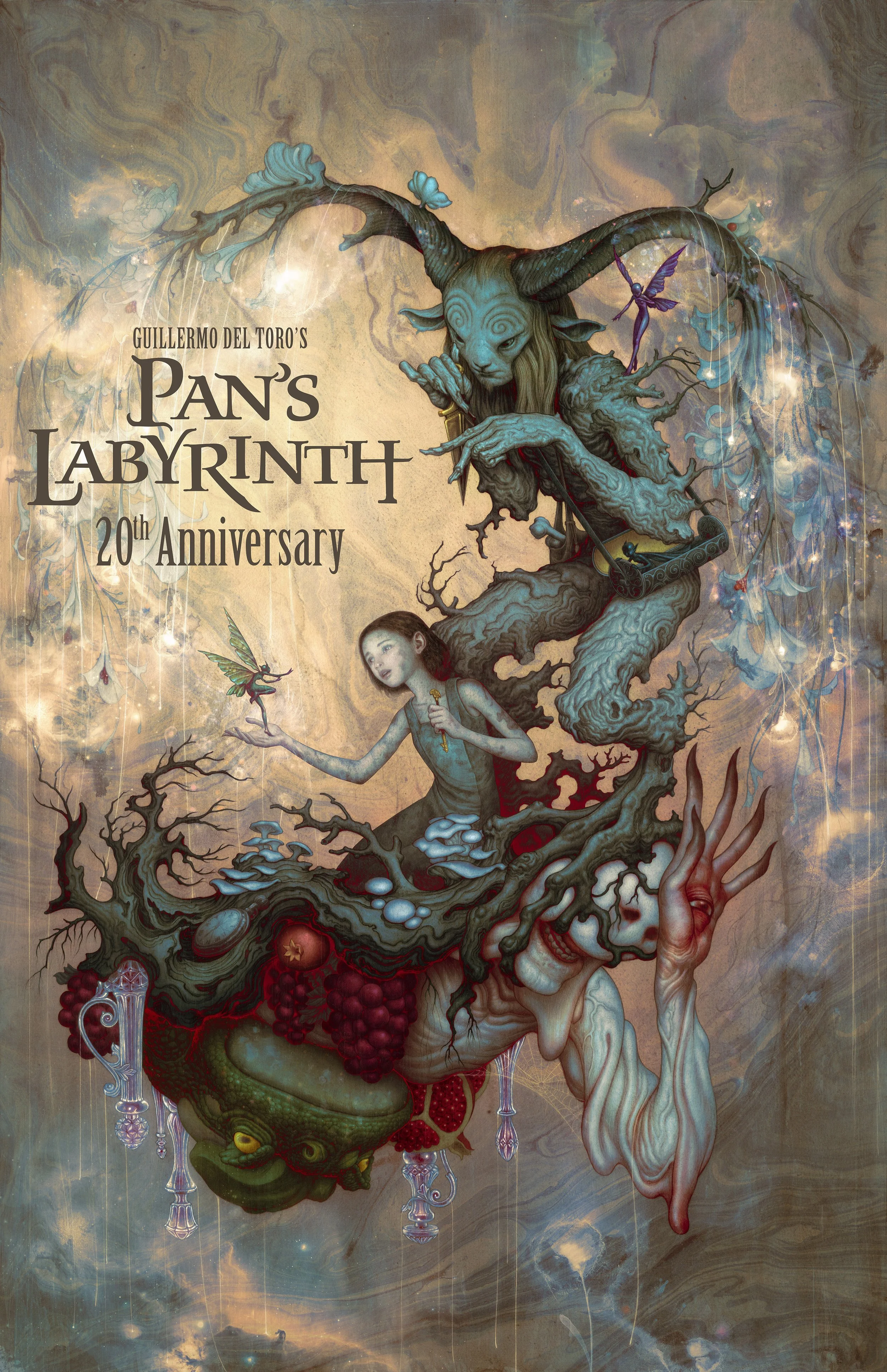
Key Art by James Jean, Courtesy of Cineverse
by CHAD KENNERK
Released in 2006, Guillermo del Toro’s seminal masterpiece Pan’s Labyrinth has become an essential piece of modern cinema. Through evocative images and a haunting score, del Toro and his collaborators captured a timeless and hopeful message on the futility of fascism and the power of belief.
Set in 1944 against the aftermath of the Spanish Civil War, del Toro’s Oscar-winning triumph follows young Ofelia (Ivana Baquero) as she discovers a mysterious labyrinth and encounters a cryptic Faun (Doug Jones), who leads her down the rabbit hole into a world of wonder and danger amid the horrors of everyday life. Filled with remarkable practical creature effects, intricate production design and visionary cinematography, the acclaimed fantasy is ripe for rediscovery.
Now, Pan’s Labyrinth returns to cinemas for its 20th anniversary in a new 4K presentation, with 3D and HDR versions personally overseen by del Toro. As audiences are immersed in del Toro’s singular world, Film Review speaks with actors Ivana Baquero and Doug Jones (who also brought the nightmare-inducing Pale Man to life) and Oscar-winning cinematographer Guillermo Navarro about the making of a modern classic and its enduring legacy. Cineverse presents the 4K restoration of Pan’s Labyrinth in US cinemas on 9 October, followed by StudioCanal’s release in UK cinemas on 30 October.
In conversation with Actors Ivana Baquero, Doug Jones, and Cinematographer Guillermo Navarro
Film Review (FR): Coming back together to celebrate the 20th anniversary must feel like a family reunion. What has this journey been like for you so far?
Ivana Baquero (IB): Yeah, it feels like the good old days, truly. It feels like a second chance at experiencing Pan's Labyrinth again with everybody. Although I'm particularly grateful because when the movie came out, I was 11 years old, and I always felt like I wasn't able to fully experience the love and all the touring that we did because I was so young. Now, I'm able to experience it in a different way as an adult and really cherish every single moment and understand the depth of it in a different way. So it's a lovely second chance at sharing the movie with the world again. It truly is a very unique treat that I never thought I'd get to experience again.
Doug Jones (DJ): Yeah, same, same. I've been an actor for 40 years, and I've never seen a movie come back 20 years later for a theatrical release, ever. That just proves how special this film is and what a piece of art it is that has a long shelf life and still resonates to this day with all of its themes and triumphs.
Courtesy of Cineverse / Fathom Entertainment
(FR): Guillermo loves to give homework. When both of you were preparing for these roles, what did he give you to read and watch?
(IB): He definitely prepped us; for me in particular, there was a lot of rehearsal, and he wanted to make sure that I understood that time and place and history in Spain. So there was a lot of actual homework in terms of the Civil War in Spain, and then he also wanted me to have a very clear background on Ofelia. So we worked a lot on character development and her background, and then he also gave me a lot of inspiration so that I would understand his vision and the world that we were building. He sent me movies like Grave of the Fireflies, and comic books. There was a lot of prep involved, but I didn't really see it as homework. I actually had real homework because I was still going to school. The Pan’s Labyrinth work was playtime for me.
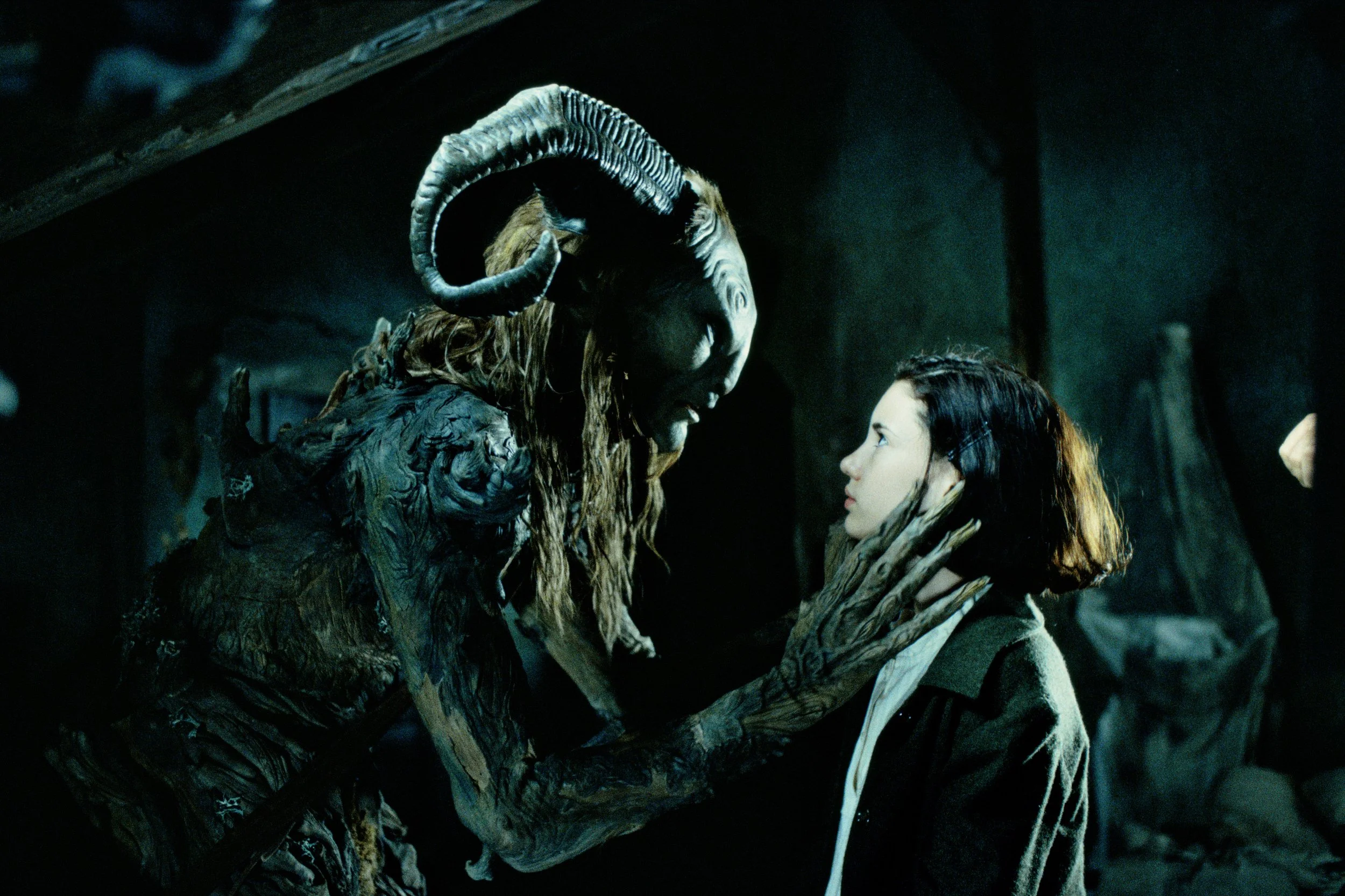
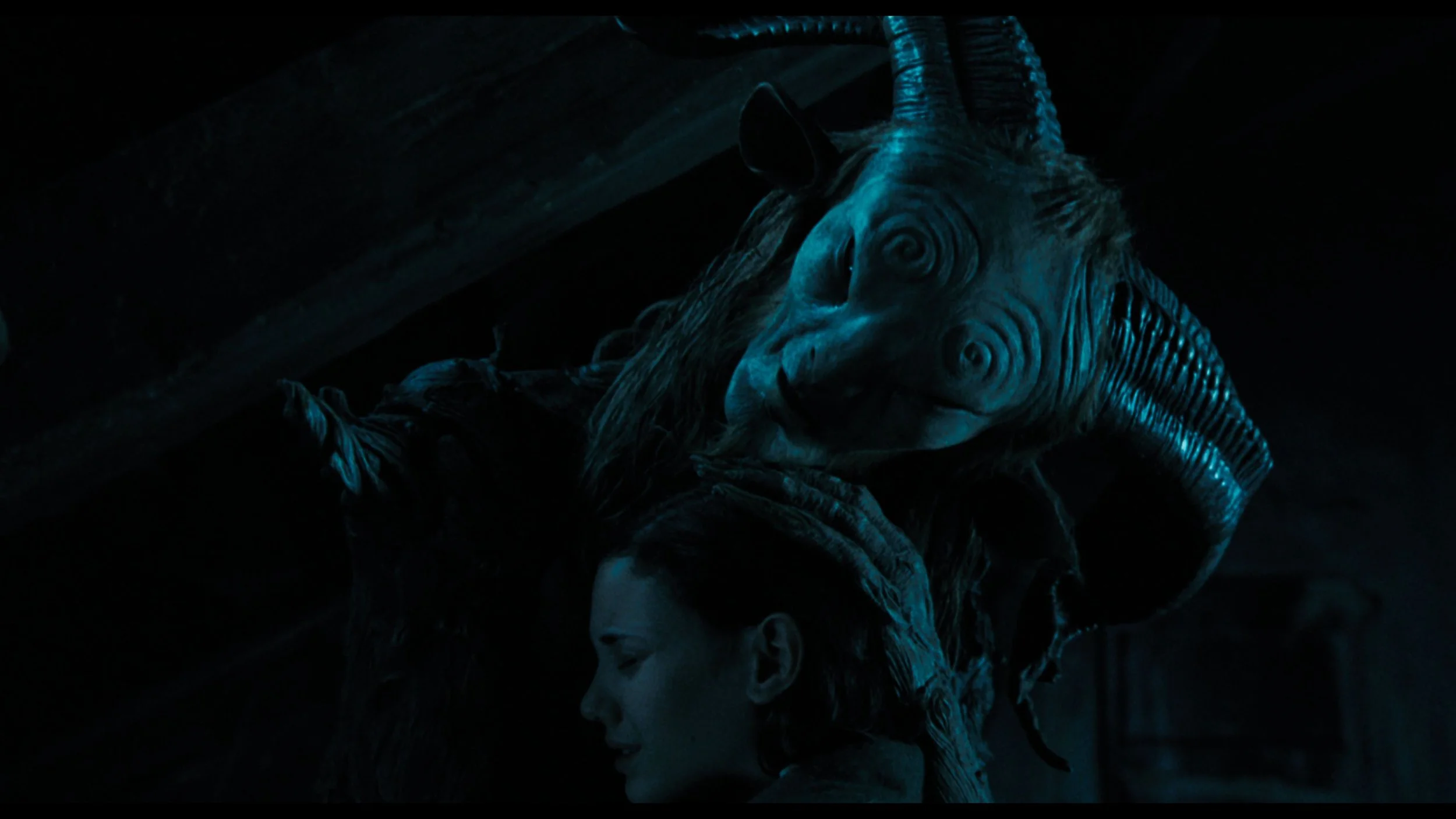
(DJ): Ivana got a lot more from del Toro pre-movie than I did. I played the Faun and the Pale Man, so each had their own direction from him, but to prepare for the Faun – aside from memorising Spanish dialogue, which I don't speak and was the toughest thing I've ever done – was that Guillermo said, "Dougie, I want you to study the hind quarter of barn animals.” So I had to look at a cow's ass or a goat and figure out how their hooves meet the ground, how they take steps, how they shift their weight, and how they shake off flies. He wanted me to work that into my physicality. Also, the Faun was a trickster who ultimately had little Ofelia's best intentions in mind, but he wanted me to look at the legendary god Pan and see how he behaved himself?
Also the Faun was going to be ageing backwards; that's another note that was very important. Every time you see the Faun in the movie, he's getting younger and more and more fluid, because the more little Ofelia believes and comes back to us, the more life comes back to the Underworld. That was represented in the Faun character getting younger and more supple as it went on.
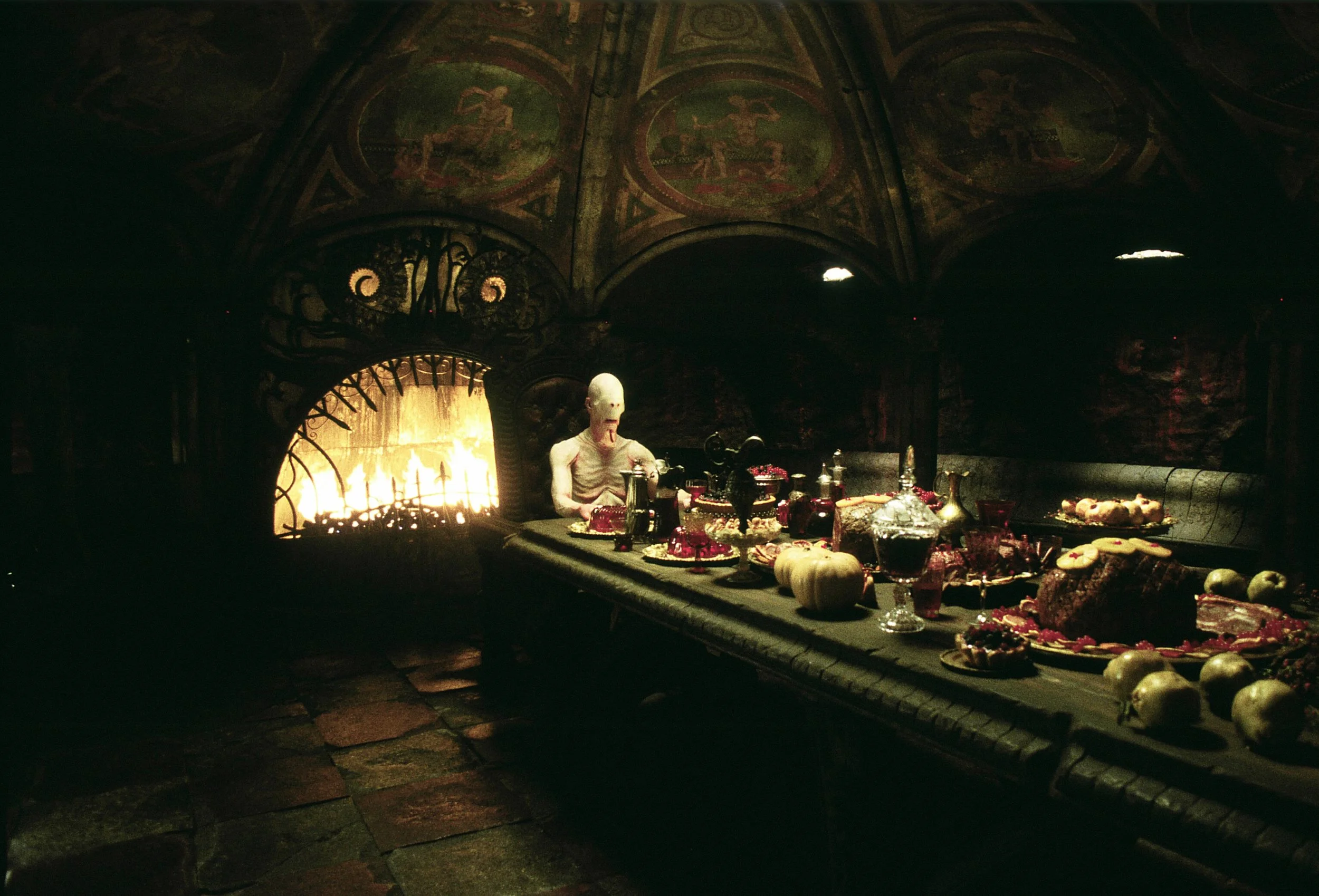
The Pale Man was another funny little bit. He told me, “You eat children; you're hungry. That's all you know. When you wake up, you're hungry.” When I was chasing her, he said he wanted me to be disjointed and gangly as I ran down a hallway after her. Rehearsal number one: when we got to that scene, I came gangling down the hall. Limbs flailing, and he goes, "No, Dougie”, as though he forgot this conversation completely, “No, give me more of a George Romero zombie.” That's different, isn't it? So I stiffened up and got more stiff and was slower, and the chase became actually way more terrifying because of that. I'm really glad that he redirected me.
Courtesy of Cineverse / Fathom Entertainment
(FR): What was your working relationship like during filming?
(IB): We didn't speak to each other [laughs]. For me, it was a treat to work with Doug in every kind of way. For one, as an 11-year-old, it's already terrifying enough to work opposite these creatures, which, by the way, there was very little CGI involved. What you see is what you got on set, despite a couple of little things, but it was intimidating. Doug was also wearing stilts for the Faun, so he was even taller. But it was the fact that his personality would come through the creatures. Doug's the most amazing person and workmate, so it made the experience very, very lovely and very smooth for me. He learned all the dialogue in Spanish phonetically, so that he could deliver a performance that I could then react to, and that was also a treat. I remember having the best time, and I remember loving my quality time with Doug, because I'd be able to speak in English with him off-camera. I was going to the American school back then, and it was my chance to speak to somebody in English. So I had a lovely experience.
(DJ): Ivana was my chance to speak in English on set too, so thank you for that. She speaks better English to this day than I ever could hope to. It was lovely. I'd worked with child actors before in America, but there I was in Spain meeting this young lady who was 11 and going on 40. She had such maturity about her and was not even remotely self-absorbed or egotistical. She was a very humble child who understood the work environment and that we had a job to do, and she buckled down and did it and committed. She became Ofelia on camera. When action was called, magic happened. She channelled something that I've never seen a child channel in my life ever before. We hobnobbed between takes, laughed and joked around. I also invited her to come to watch the makeup process. That was something that was important to me so that she could see that the guy underneath is just a golden retriever. That once all the piles of rubber go on, I'm just playing a character. I'm still in here. I still love you. Don’t be scared at all.
Courtesy of Cineverse / Fathom Entertainment
Ivana, the 20th anniversary screening at Cannes was like a bookend for you. What was it like to be back where the film premiered, seeing it on the big screen?
(IB): It's very unique. I never thought I'd be able to re-experience a movie like this again 20 years later. It’s really special. Rewatching it at Cannes brought back a lot of emotion and a lot of memories. We were there with Guillermo [del Toro], and it was very interesting to see him getting emotional watching the movie and revisiting all those moments. I think now that it's coming out in 4K and 3D and we're able to share it again with the world, it’s a very sweet opportunity to feel that love again. In a different way, because now I'm an adult and when I was doing the promotion originally, I was only 11-years-old so I don't think I was as aware of many things. It's truly the gift that keeps on giving.
(DJ): I am excited about the big screen experience happening all over again. To see a wide release with a 4K facelift and in 3D for the first time, it'll be a new experience for people who have seen it before, and it'll be a movie that can compete with modern-day movies for new audience members that have never seen it before. I'm glad it's having a chance for that to be reimagined in 3D. The themes of the movie still resonate today, and we're going to find that with our audience.
Film Review (FR): Guillermo, do you think that the budgetary limitations on Pan's Labyrinth helped to ignite your imagination?
Guillermo Navarro (GN): Yes, but it was not the first time that I worked with limitations. Remember that we come from Mexico. We know how to work with little. That triggers creativity and imagination for sure.
(FR): As you were discovering that visual language, were there any surprises or moments of inspiration that shaped the storytelling of this film?
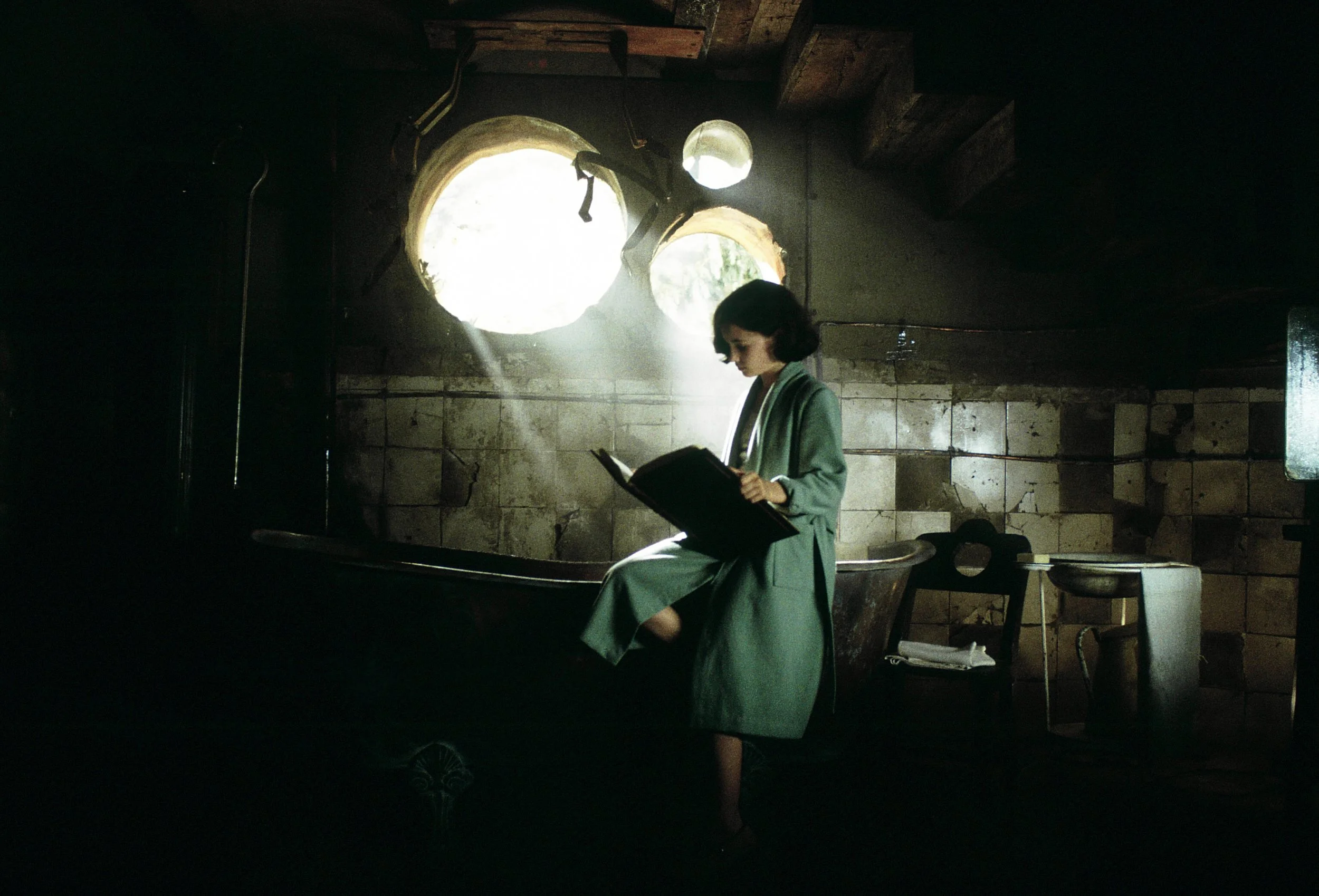
(GN): Basically it was keeping the fantasy world and the real world going in a very fluid way. That required a lot of ideas and solutions that we were able to go through from one to the other. And then reacting to situations like the attack on the compound when [Ofelia] is taking the baby and the captain is chasing her. We were not allowed to use any explosives. It was a very hot summer, and there were fires everywhere. All that you see: it's artificial. All that you see are explosions that I do with very big lights and dimmers, creating the illusion of an explosion, hitting smoke and dirt. Not a single explosive was used. That also comes from that ability of knowing what [would work] and reacting from having very little to work with.
(FR): And you shot a lot of day-for-night, which works so well.
(GN): Yeah, a lot of day-for-night because of that as well.
Courtesy of Cineverse / Fathom Entertainment
(FR): Did your early work in documentaries inform your narrative work?
(GN): No, the documentaries are a completely different experience. The fictional world is where you can actually contribute and create a language. In documentaries, you are actually registering reality, and reality is always taking the lead. You're not controlling it; you're carried with it. I did wildlife shows. I did some political shows, things like that. But your driving force is what is in front of you.
(FR): What was it like for you to see all of the pieces come together so beautifully on the big screen?
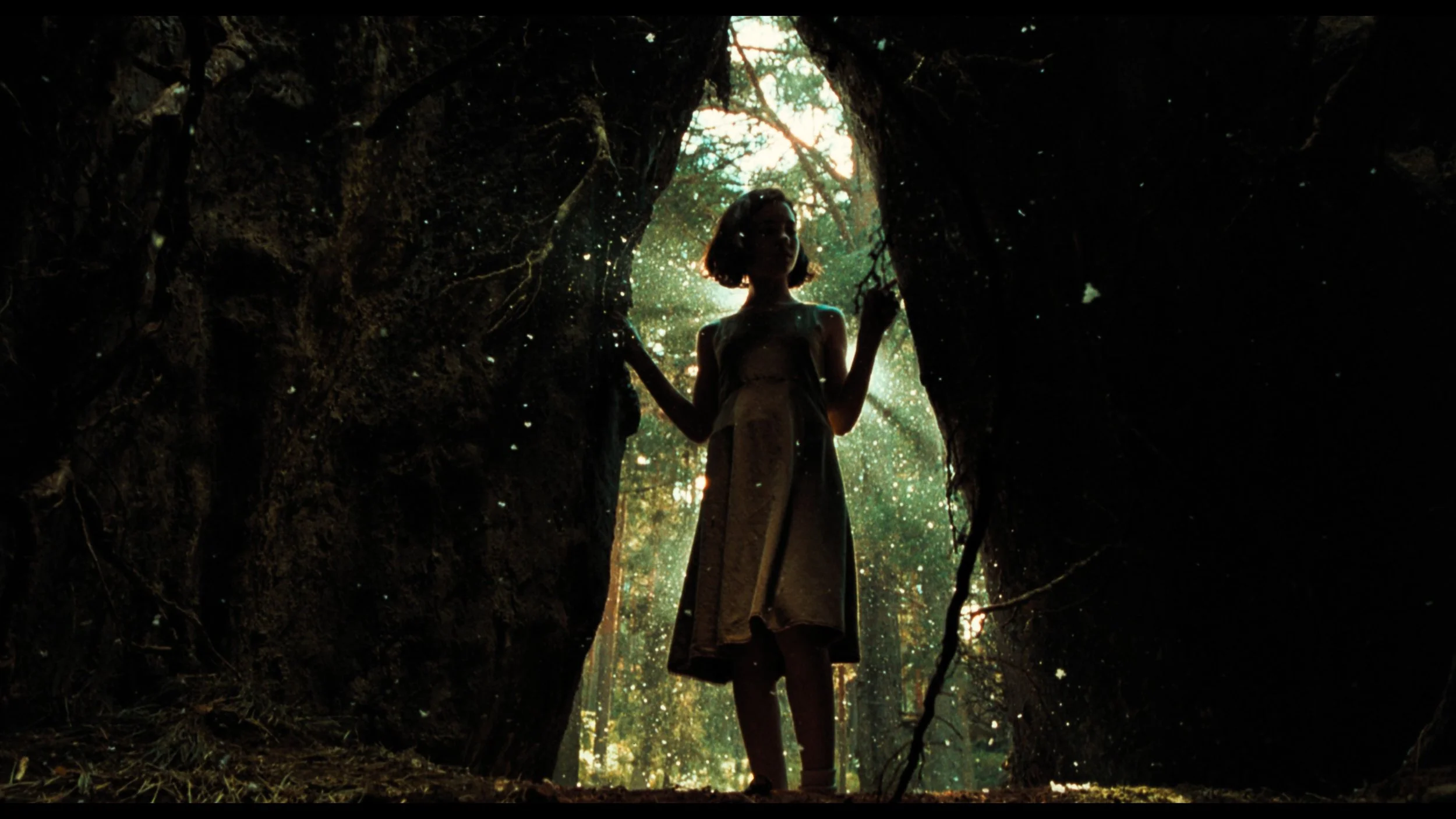
(GN): I still cry with it. It was so amazing how all the pieces came together with so little that we had on our hands, but we had great imagination, creativity, and a very strong story to tell. Very relevant twenty years after, by the way.
Courtesy of Cineverse / Fathom Entertainment
(FR): Reflecting back on your Oscar experience. What does it mean to be a part of a generation of filmmakers who broke barriers?
(GN): I was against very big movies. The cinematography world depends very much on budget. You need resources to do good work. I had very, very big movies to contend with. I don't remember what Pan's Labyrinth’s budget was, but it was less than $10 million, $8 million, or something like that. I was against $100 million movies, so that was also very, very rewarding. As long as it goes through the lens, it’s there. You're able to create whatever your imagination allows you [to do] as long as you have a camera and a lens. That's such a basic principle. It made the difference.
IVANA BAQUERO is an internationally known actress who can be seen as a series regular in the Lionsgate/Starz series Spartacus: House of Ashur. In May 2025, she starred in the Netflix feature A Widow’s Game, which was the #1 feature in 61 countries. Her other recent credits include the dark comedy Black Friday opposite Bruce Campbell, the Netflix Spanish-language series High Seas and the pilot L.A.tinas for HBO. She is best known for her breakout role in Guillermo del Toro’s Oscar-winning fantasy Pan’s Labyrinth, for which she won the Goya (Spanish Oscar) for Best New Actress. Baquero was nominated for Best Actress at the 2017 Sophia Awards for the Portuguese-language film Gelo and was awarded the Silver Biznaga for Best Actress at the Málaga Film Festival for the Spanish film Sister of Mine. She appeared opposite Eddie Marsan in the feature Hostage Radio produced by Jaume Collet-Serra. On television, Baquero starred opposite Austin Butler in the MTV series The Shannara Chronicles, which was executive produced by Jon Favreau.
DOUG JONES is famous for his work under prosthetics in iconic feature film roles such as The Shape of Water, Pan's Labyrinth, Hocus Pocus, Hellboy, Fantastic Four: Rise of the Silver Surfer, Hellboy II: The Golden Army, Crimson Peak and many others. He was Saru in five seasons of the Paramount+ series Star Trek: Discovery, a role for which he won the 2019 Saturn Award. He was also a fan favourite as The Baron on six seasons of the FX cult hit What We Do in the Shadows. Jones was the recipient of the Make-up Artists and Hair Stylists Guild’s very first Chair award in 2022. He was a series regular on three seasons of TNT’s Steven Spielberg-produced sci-fi series Falling Skies and recurred on del Toro’s FX series The Strain. A versatile character actor, Jones has performed in guest star roles on shows including Arrow, The Flash, Teen Wolf, Z-Nation, The Neighbors, Criminal Minds, C.S.I. and NBC’s horror anthology Fear Itself. A veteran of more than 100 commercials, Jones was ‘Mac Tonight’, the moon-headed piano player in the long-running 1990’s McDonald’s campaign. Additionally, he starred as the leader of the Gentlemen in Hush, an Emmy-winning episode of Buffy the Vampire Slayer.
GUILLERMO NAVARRO is an Academy Award-winning cinematographer and director famed for his work with filmmakers including Guillermo del Toro, Robert Rodriguez, Jon Favreau, Shawn Levy, Bill Condon and many more. Hailing from Mexico, Navarro worked extensively in local productions through the 1980s, going on to serve as director of photography for del Toro’s landmark feature debut, Cronos, in 1992. They subsequently partnered for The Devil’s Backbone, Hellboy, Pan’s Labyrinth, Hellboy II: The Golden Army and Pacific Rim, with Navarro winning the Oscar for his work on Pan’s Labyrinth. His cinematography credits also include Desperado, From Dusk Till Dawn, The Long Kiss Goodnight, Jackie Brown, Stuart Little, Spy Kids, Zathura: A Space Adventure, Night at the Museum and the sequel Night at the Museum: Secret of the Tomb, I Am Number Four, The Twilight Saga: Breaking Dawn-Parts 1 and 2 and Dolittle, among other projects. His television credits as a director and cinematographer include Narcos, Limitless, Sleepy Hollow, Preacher, Luke Cage, Cocaine Godmother, Guillermo del Toro’s Cabinet of Curiosities, Them and Godfather of Harlem, among others.