Sing You Sinners │ Universal Vault Series
Courtesy of Universal Pictures Home Entertainment
by CHAD KENNERK
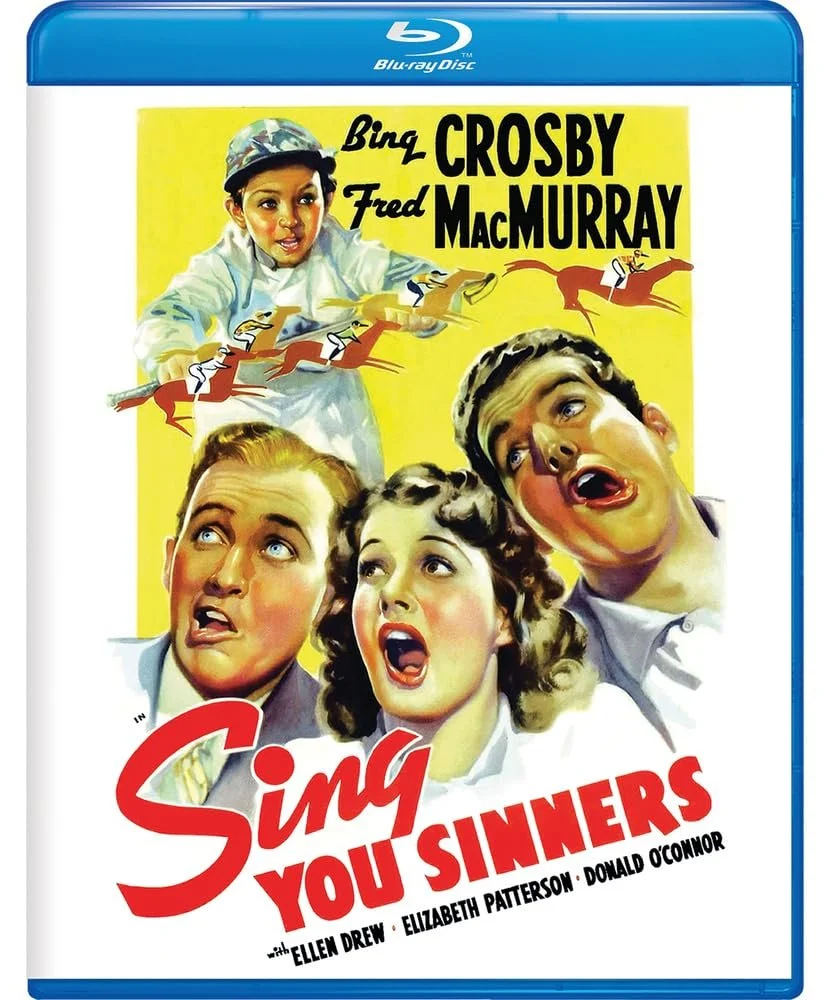
Universal’s Vault Series made a welcome return, bringing a series of early Bing Crosby vehicles to Blu-ray, including Double or Nothing and Wesley Ruggles’ 1938 musical comedy Sing You Sinners. Set in Depression-era America where money is scarce and luck is fickle, three brothers (Bing Crosby, Fred MacMurray, and Donald O'Connor) of a working-class family sing for their supper. Sing You Sinners proved a turning point for Bing Crosby. As with many of his early Paramount films, Crosby is essentially playing a version of himself. Here he further cements the easygoing, affable persona that would define his screen career. For the first (and one of the only times), Bing doesn’t actually get the girl. The crooner commented at the time, “And believe me, that’s a relief. I’ve made enough love scenes in the past five or six years. And I haven’t got a one in Sing You Sinners. Whoopee! What a break!”
Director Wesley Ruggles (younger brother of Charlie Ruggles) was already an established filmmaker by the time he united with Crosby. Having begun his career as a Keystone Kop under Mack Sennett in 1914, he later assisted Charlie Chaplin on his last six films at Essanay. Ruggles made some 50 films as director before earning acclaim on 1931’s Cimarron, the first Western to win a Best Picture Oscar. Fourteen feature films by Ruggles had screenplays by writer Claude Binyon, including the 1933 Crosby vehicle College Humor. When Ruggles and Binyon were looking for an idea for the next film to star their Toluca Lake neighbour, Binyon suggested a story that showed off Bing as he might be found at home and at the racetrack. Originally called The Unholy Beebes, the title was changed for fear that the public wouldn’t be able to pronounce it.
Don Ameche and Mickey Rooney were initially slated for the roles of the elder and younger Beebe brothers, but Ameche left early and MGM pulled Rooney from the project weeks before shooting. Ruggles told assistant director Arthur Jacobson, “Find me another Mickey Rooney and we’ll start the picture.” Jacobson happened to attend a benefit performance for the Motion Picture Relief Fund, where a 12-year-old Donald O’Connor was performing in his family vaudeville troop. When asked if he could ride a horse, the young performer replied confidently, “No, but I’ll learn.” Within days he had memorised the script, and Ruggles advised Paramount to sign him.
O’Connor later said of working with Crosby in his screen debut, “I would see him on the screen in between shows, and, like everybody else, I always thought he was a friend of mine.” O’Connor later recalled Crosby’s patience during filming, remembering how the star calmly reassured him while he struggled with his lines during an emotional scene. “It's a long scene, and Bing is in front leading me on the horse, and he's pumping me and at the same time reassuring me not to be worried. We get right down to the end, and I blow my lines. So we turn the horse around, all the way back, and it was a cold day at Santa Anita, and we have to start again with all the crying and everything. I blow the line again. We must have done that forty times. And Bing never complained, not once. I told him, ‘I'm so sorry; my mind just can't get this.’ He said, ‘Don't worry about it, kid; you'll get it, we have no place to go.’ We had a lot of fun on that movie. He treated me like a pal.”
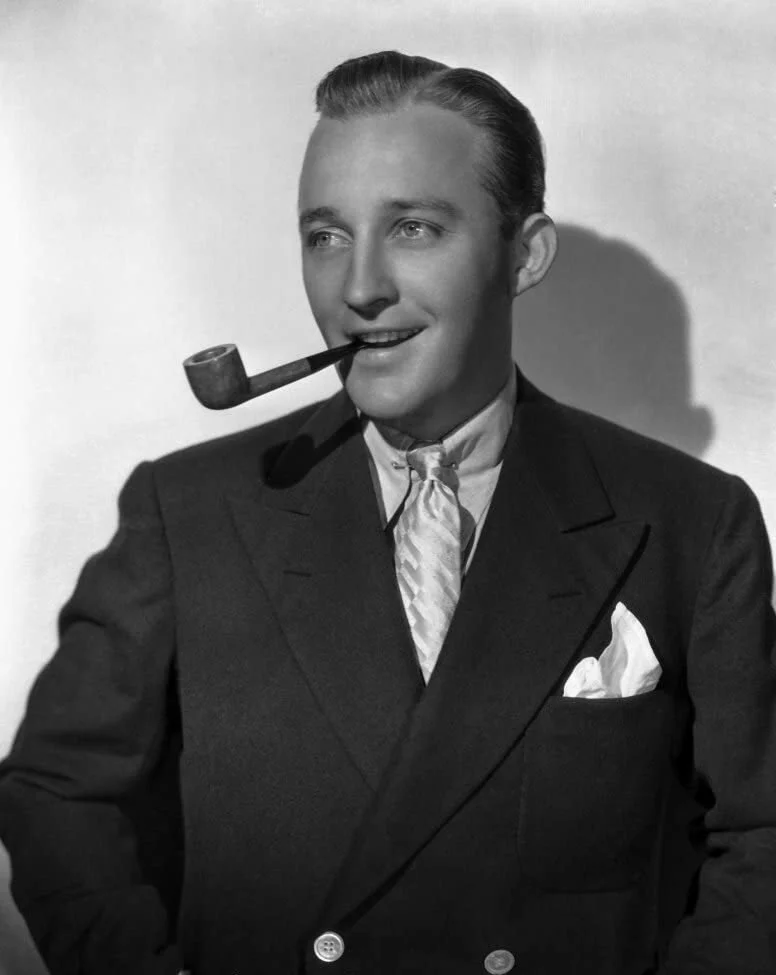
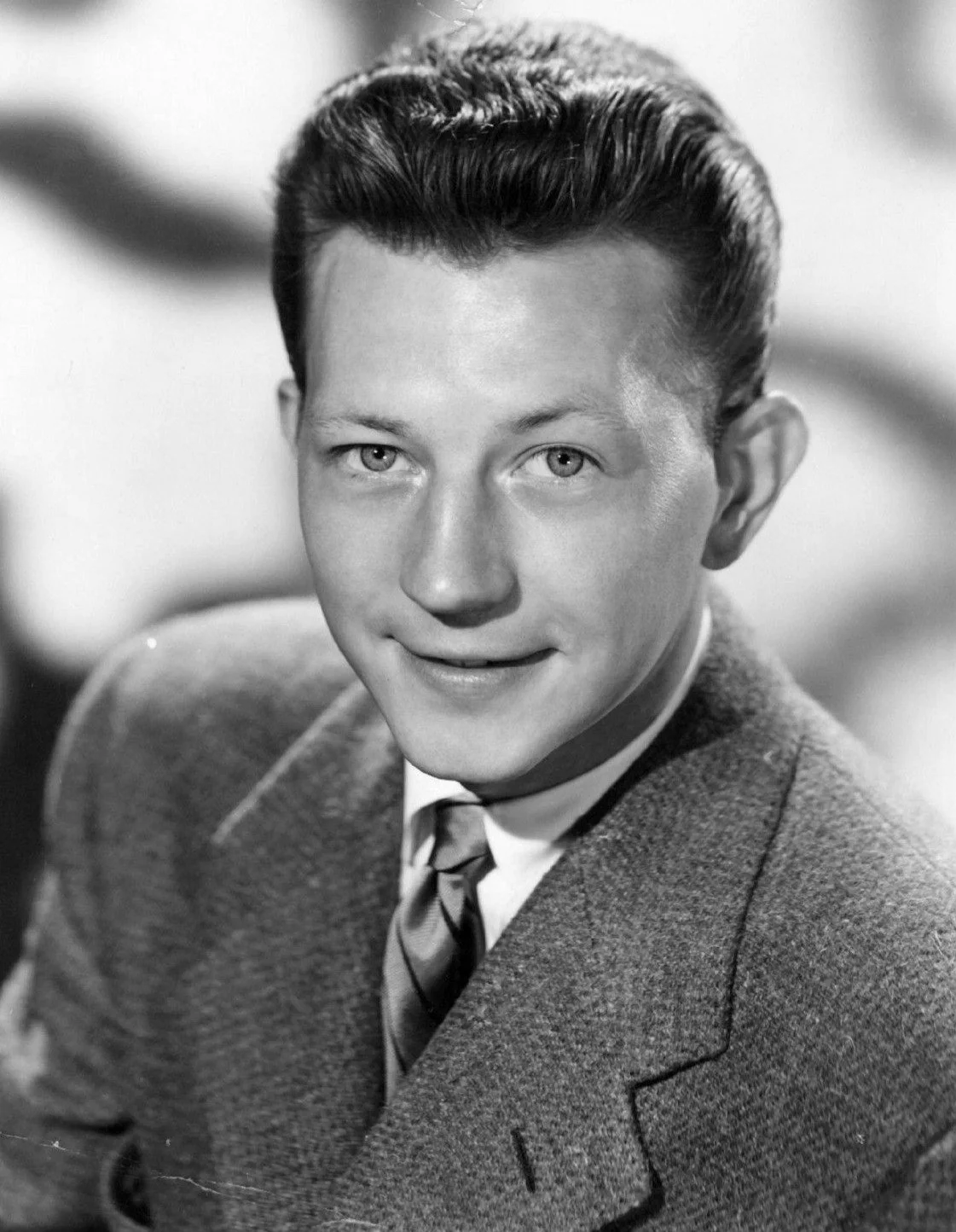
The pair developed a mutual respect, with Crosby once saying of O’Connor, “He could sing, dance, do comedy, do anything, thoroughly accomplished, thoroughly grounded in every aspect of show business because of his many years in vaudeville.” O’Connor also highlighted the carefully crafted screen persona that Crosby was perfecting in the 30s. “Bing was one of the finest natural actors who ever lived. To do that is a hell of an acting job. He studied that. The other person who was very close to that was Spencer Tracy, but Spencer was more dramatic than Bing. Bing was softer. Much softer. Came at you through the back door.”
The film also features the debut of Ellen Drew, who had made dozens of uncredited appearances under the name Terry Ray before Paramount cast and renamed her. She reportedly fainted when Jacobson and Crosby announced she got the job. A Paramount executive later learned from Ruggles how O’Connor and Drew were found and gave Jacobson the role of head of talent. The always delightful Elizabeth Patterson, later beloved by television audiences as Mrs Trumbull on I Love Lucy, appears as Mother Beebe. Patterson was cast in her first film in 1926 at the age of 51. She went on to have a prolific screen career in over 100 films. It’s also important to highlight Paul White, the young actor who appears as the stable boy. White made over two dozen films near the end of the 1930s and early 1940s, but like his Black contemporaries, he was limited to roles with overt racial stereotypes.
The racetrack sequences give the film much of its flavour, and those scenes were shot at the Pomona Fairgrounds and Santa Anita, with Crosby’s six-year-old horse Ligaroti appearing unbilled in the climactic race as ‘Uncle Gus’. While the horse was owned by Bing, Lagaroti professionally raced — and lost — against the infamous Seabiscuit. The film has a unique premiere at the Del Mar racetrack. After the final race of the day (ironically, Bing’s horse came in last; Clark Gable’s was among the winners), a screen was erected on the track for the screening. Though the drive-in originated in New Jersey in 1933, they were virtually unheard of at this point, and the evening was hailed as “Hollywood’s most novel preview". Crosby hosted the festivities, which included a live radio broadcast after the film and a stage appearance with Bob Hope performing routines the pair had done years earlier at New York’s Capitol Theatre. Their reteam helped spark the idea of getting them together into a picture, thanks to Paramount Chief of Production (and Del Mar board member) William Lebaron.
The film resonated with Depression-era audiences and was later recognised by the National Board of Review in 1938 alongside titles like Snow White and the Seven Dwarfs, Michael Powell’s The Edge of the World, and the British drama The Citadel, which won best film. Musically, Johnny Burke and Jimmy Monaco contributed several songs that became big hits, including 'I've Got a Pocketful of Dreams’. The Universal Vault Series release preserves the charm of the late-1930s production, providing a significant quality upgrade from the 2016 DVD release, itself a reissue from earlier releases in The Bing Crosby Collection and Bing Crosby: The Silver Screen Collection. Vault Series releases are traditionally absent of special features, and that’s the case here, but the film itself is no small fry. Classic Hollywood and Crosby fans have a pocketful of dreams to enjoy with Universal’s new Blu-ray edition.
Sing You Sinners is available on Blu-ray 17 February from the Universal Vault Series.
Order your copy from Movie Zyng
UNIVERSAL VAULT SERIES features rare, hard-to-find movies from the Universal archives. The Blu-ray series showcases some of the best talent in Hollywood history, unlocking the vault for all-time classics across genres such as comedy, horror, western, and sci-fi.
MOVIE ZYNG offers more than 37,000 in‑stock titles, carefully curated to make discovery easy, intuitive, and genuinely enjoyable. Instead of endless search results, Movie Zyng has organised their catalogue into thoughtful collections by genre, era, studio, filmmaker, format, and fan interest. Movie Zyng is designed to help you discover films you’ve never seen, rediscover favourites and build a collection. Remember the video store? That sense of discovery, excitement, and connection has largely disappeared from modern online shopping — and that’s exactly what Movie Zyng aims to bring back. Start your collection today!