
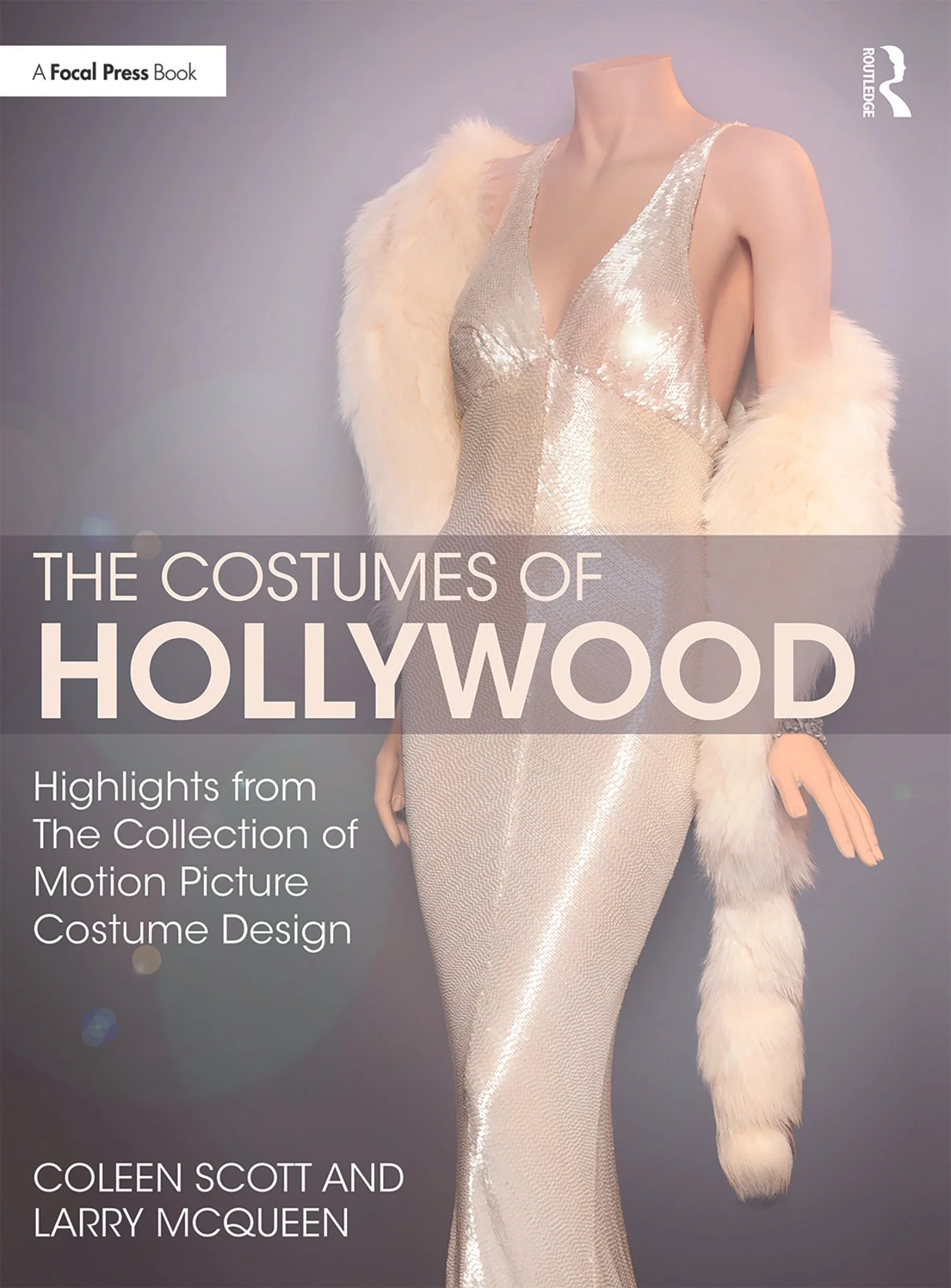
Images courtesy of Routledge.
by CHAD KENNERK
From beaded gowns to battle-worn leather, costume design has long been one of cinema’s most evocative storytelling tools. There’s nothing like the visceral connection of a costume or prop to connect us with our favourite characters and memories of experiencing a film. They’re an integral part of the journey of the character and the stories we remember being swept away by.
The Collection of Motion Picture Costume Design is one of the world’s largest and most meticulously curated private archives of film costumes, founded in 1989 by respected Hollywood costume historians, archivists, and consultants Larry McQueen and Bill Thomas. What began with a single shared acquisition of Greta Garbo’s gown from Queen Christina (1933) has, over thirty-five years, grown into a 650-something-piece collection spanning iconic titles from 1916’s Intolerance to 2015’s The Danish Girl. McQueen’s mission has always been about a reverence for that history and the often-unsung designers and craftspeople who brought cinema’s most memorable looks to the screen.
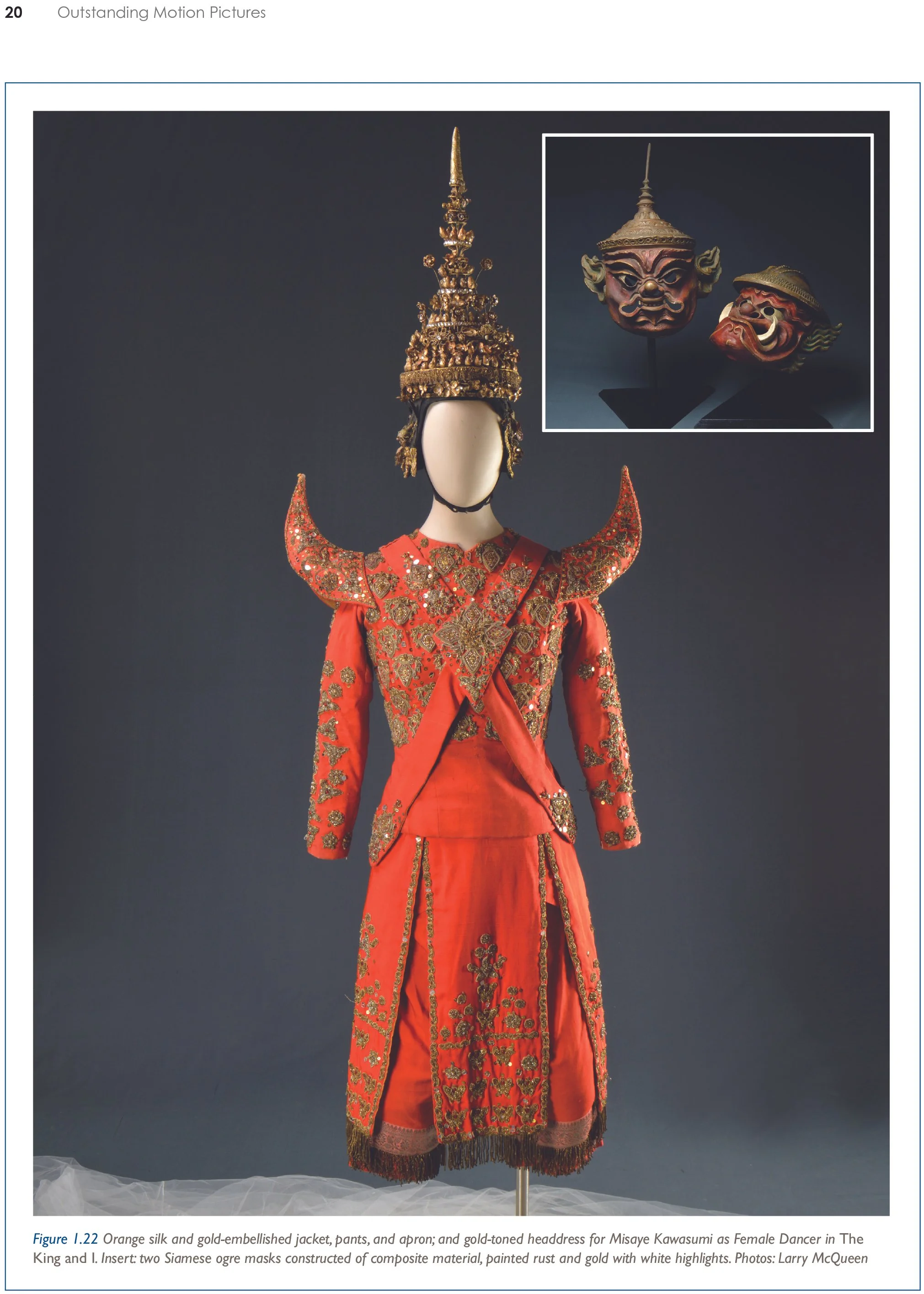
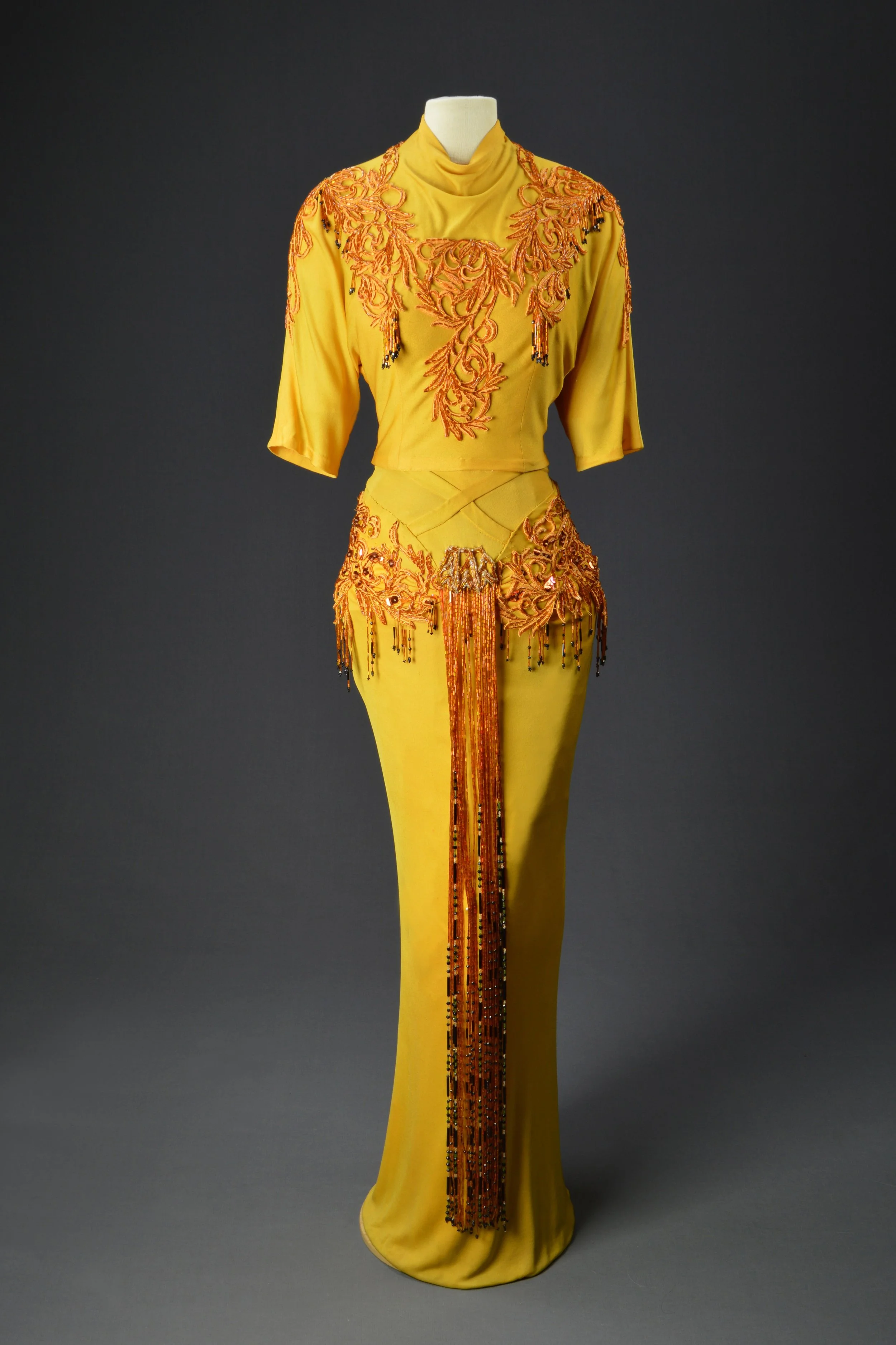
In The Costumes of Hollywood - Highlights from The Collection of Motion Picture Costume Design, a new book available now from Routledge, readers are invited into the history, artistry and preservation of screen-worn fashion that spans nearly a century. The text is a visual and narrative archive presenting full-page colour photos of the garments themselves — many of which have never been published — along with looks into interior construction, restoration and their complex journey from screen to storage. Joining McQueen on the journey through his collection is co-author Coleen Scott, a costume designer, historian and educator. The two connected during a virtual Costume Society of America event during the pandemic. A casual conversation about costumes quickly grew into a collaboration and commitment to preserving the story of the collection in print.
In conversation with The Costumes of Hollywood authors Larry McQueen and Coleen Scott.
Film Review (FR): Larry, how would you summarise the essence of the collection as a whole?
Larry McQueen (LM): I hope what the collection is about is the dedication and determination that it took to acquire it all. It happened over a period of many years. The purpose of the collection and what it was about changed as the years went by as we got more and more things. We realised what those things meant and what those things could mean, so the essence has certainly changed. A long time ago, we decided that we wanted not only to create a collection that had star names — because star names were important if you wanted anybody to ever show them, and we always intended that these things would be shared in exhibition — but we also wanted to bring forward the talented people that created and designed these things, because there's so much thought process behind them that is often ignored or not recognised by the public. We wanted to give those designers and craftspeople some credit for what they had done.
Coleen Scott (CS): I do think that the role of the costume designer is central to what the essence is grasping. The essence of this collection is the costume designer and the costume designer's work. That's why in this collection, there are some things that are really well-known roles and really well-known actors, and there are some things that are just amazing construction and design from a lesser-known role, but still a significant work of art.
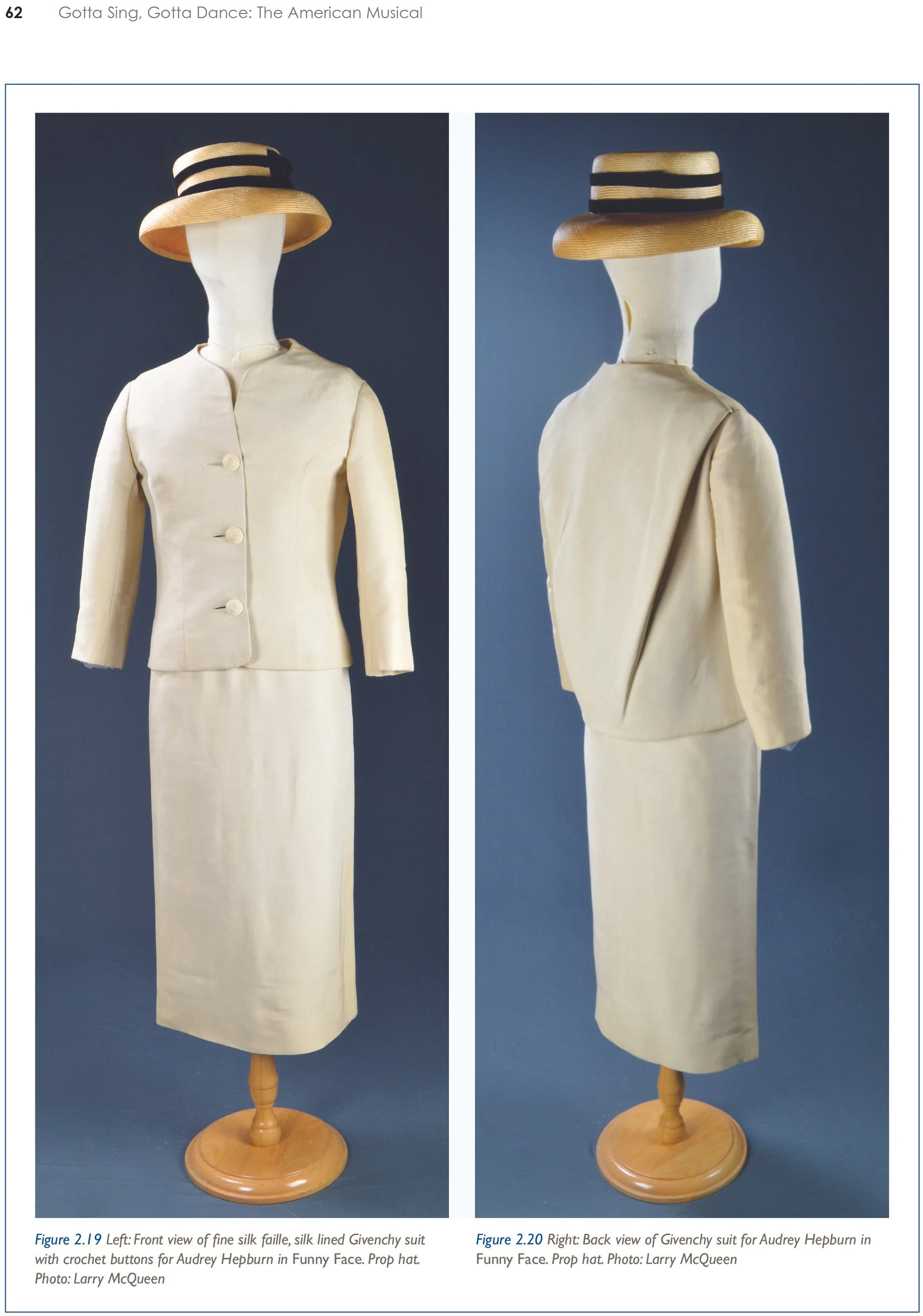
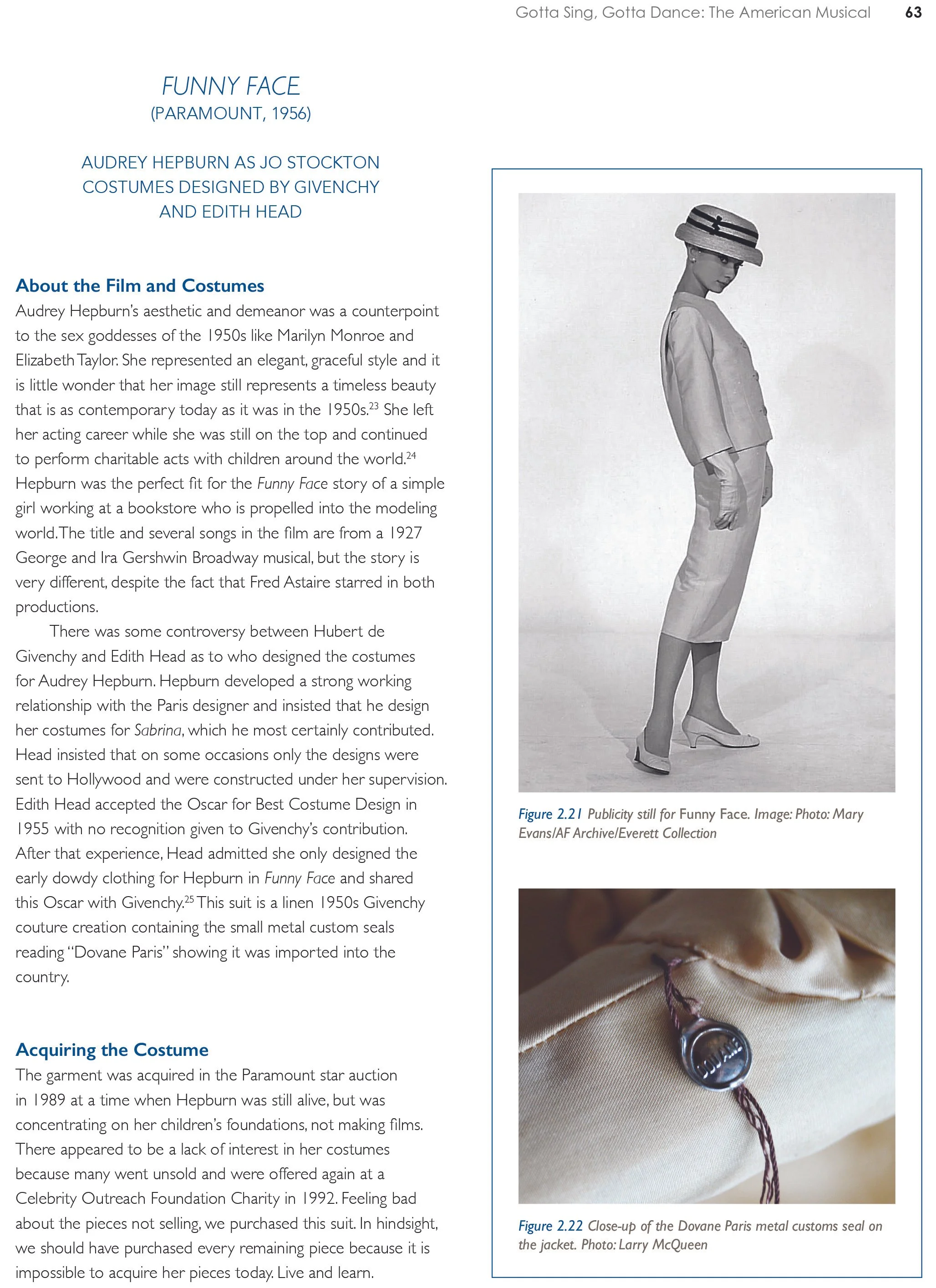
(FR): How did you approach your collaboration together and the visual journey of creating this text
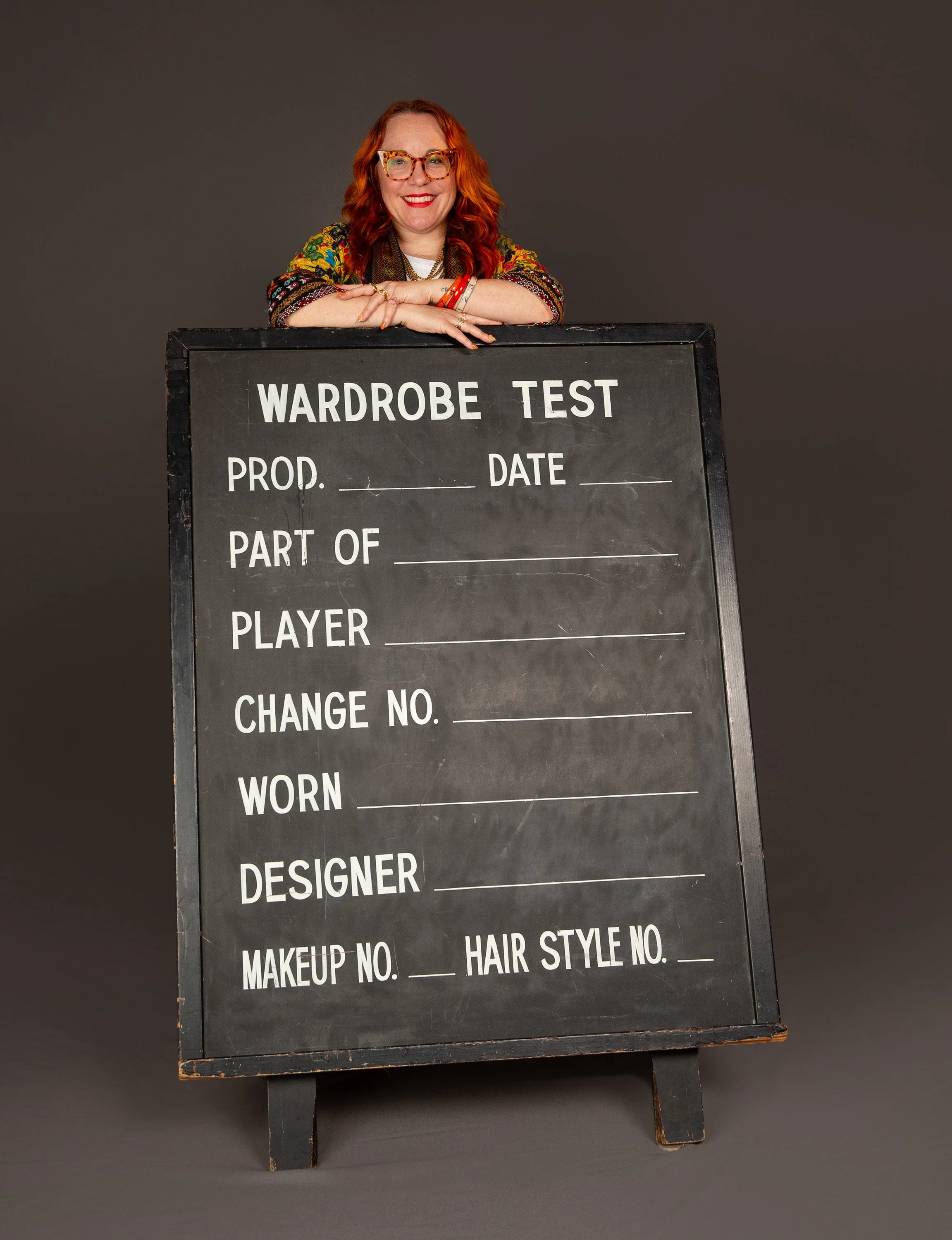
(CS): We hung out for a while before I gently talked Larry into making a book; it was mostly because I was really interested in what he had and was shocked by this collection that I hadn't heard of. I wanted to talk to him more, because I'm a costume designer. Approaching the book visually was partially about Larry and Bill's ideas for how parts of the collection could be exhibited; it’s like their dream exhibitions. That's how we started thinking about it, because chronologically it didn't seem interesting enough. It didn't quite make sense. It made more sense to group them into these exhibitions and then make those chronological.
(LM): I have to admit: when this whole thing started and she suggested the idea of a book, we didn't know each other at all. We just started talking about costumes. The concept was a little bit scary. Is this person actually going to show up and do the work that's needed? And I'm sure she felt the same thing about me. Was I going to come up with the information and the photos and everything that was needed for this book? One thing I truly want to say about Coleen is that she is fearless and she's confident. She lives a very big lifestyle. She was a burlesque performer, she's a costume designer and she's a costume teacher for a college. She has done it.
I came from the Bible Belt, the Midwest, in an environment where you weren't really supposed to have vanity or any sort of self-expression. You were supposed to blend into the woodwork and be a good boy. I discovered theatre, and I think that was probably my way of escaping into another world that was make-believe, where you could be whatever you wanted to be. You didn't have to follow the rules and regulations of society around you. That's the thing that Coleen and I had in common: we’re both theatre nerds, and in discussing that, I think that's where a lot of the trust came in. I truly am appreciative of her for convincing me that I did have a story to tell, that I should be proud of it.
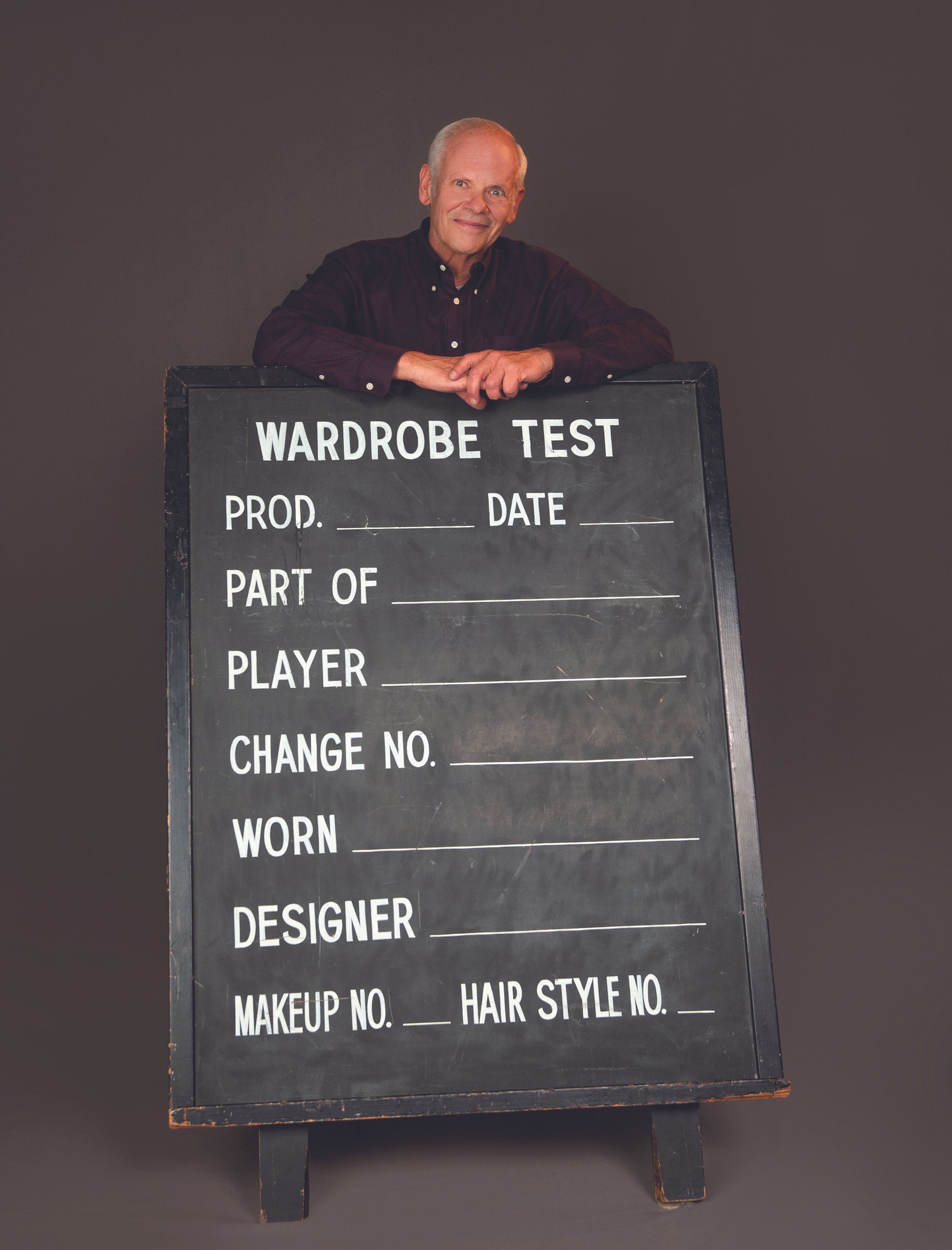
(FR): Larry, you've done such an amazing job of cataloguing all of the details behind the provenance and history of these pieces.
(LM): It was strange putting together a collection, because you never know what's going to come up. We didn’t start off with a very clear idea of what we wanted to collect and what it was going to look like and what it was going to mean. Pieces would come up, and it was like, ‘Okay, can we incorporate that into a story?’ Our whole purpose was to show the pieces on exhibition. It was like, ‘Well, this could work in that category, and this could work in that category.’ It kind of developed for the five years that Bill and I worked together, and then the remaining 30 years that I’ve been doing it. I would like to say that there was a very big thought process behind it, but there wasn't, because I'd learned a long time ago that you can covet a piece and wish a piece would come up for sale, and it's like, ‘I need that piece because that's going to be the star of this section.’ Those pieces may not even exist.
There isn't huge financial backing behind this. A lot of it is picking the pieces that come available to you that you can afford and seeing how they fit into the storyline that you're trying to tell. We didn't even know what the entire storyline was going to be, but we were doing it as it came along, and I think taking that sort of objective approach took some of the pressure off having to have it all. I don't have to have everything. I don't have to tell the best story in the world, or as good a story as somebody else: all I have to do is tell my story. And that's what I hope we did.
As far as the pieces that came in and how they came in, most of them were purchased at auction or from private collectors. One of our goals from the beginning was that we wanted to create an air of respectability about being a collector, because it certainly was not respected in the early days. In the later years, when someone would contact me because they wanted me to have [a piece], either because they knew I would spend the time and money to restore it, or because they wanted it to go into a good home. That was a big win for me when I realised that I was starting to gain some respect for what I was trying to do.
(FR): There are 650-ish pieces in the collection. Initially, when you were talking about putting the book together, you narrowed it down to 300 or so. How did you get down to the final amount in the book, and what were a few that didn't make the final cut?
(LM): I think there came a point when we were doing the book where I kind of realised, ‘Okay, it's not going to be an encyclopaedic essay on everything that was in the collection.’ It just wasn't that type of book. The number of pages, and with the amount of text we had, it was limited. It was painful to go through those cuts. Coleen, because she was so well versed on the structure of books, knew how we had to structure it and that helped with the things that were cut. It wasn't just me — she even resented having to cut things that she wanted in the book, but they just didn't fit.
(CS): To squeeze as many costumes as possible into this book, [we realised that] we are only going to get one page of text and one page featuring each costume, since that was the biggest goal. We didn't want to do microscopic pictures. The point was a full feature image, because something that's special about the book is the actual costume pictures, not just a film still. Those are smaller in the book because it's just proof that they were worn in a scene more than anything.
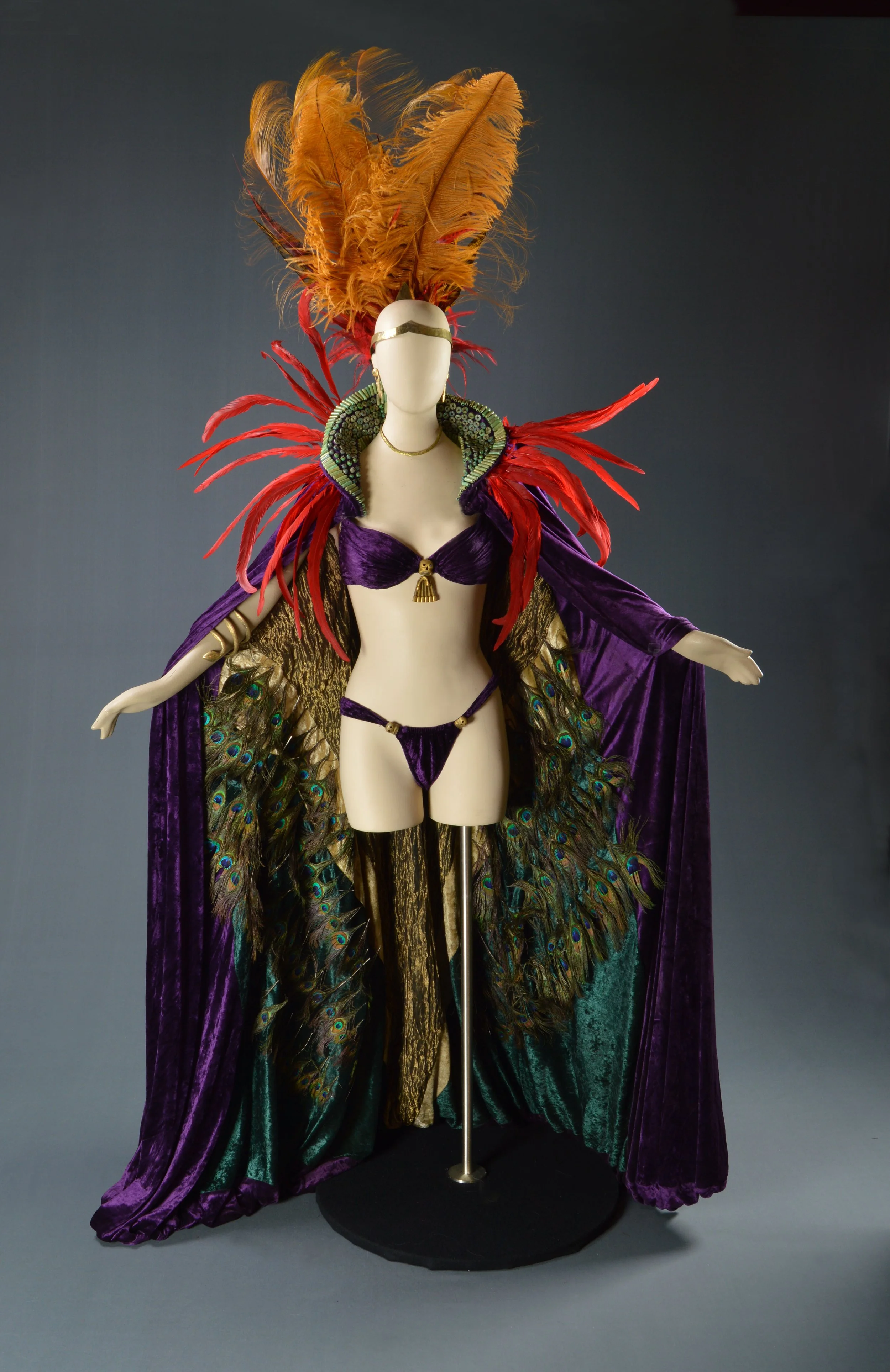
We cut Jessica Lange in King Kong. We cut From Dusk Till Dawn (Salma Hayek). That was a hard one because it's an amazing costume. They're all amazing. Jessica Lange’s costume is a fully beaded gown. This is just from one chapter. What we were able to do, in some cases, was move certain things to chapter six, Inside Out, to make room in some of the other chapters to include other costumes. Some of that stuff got moved to six to balance it out.
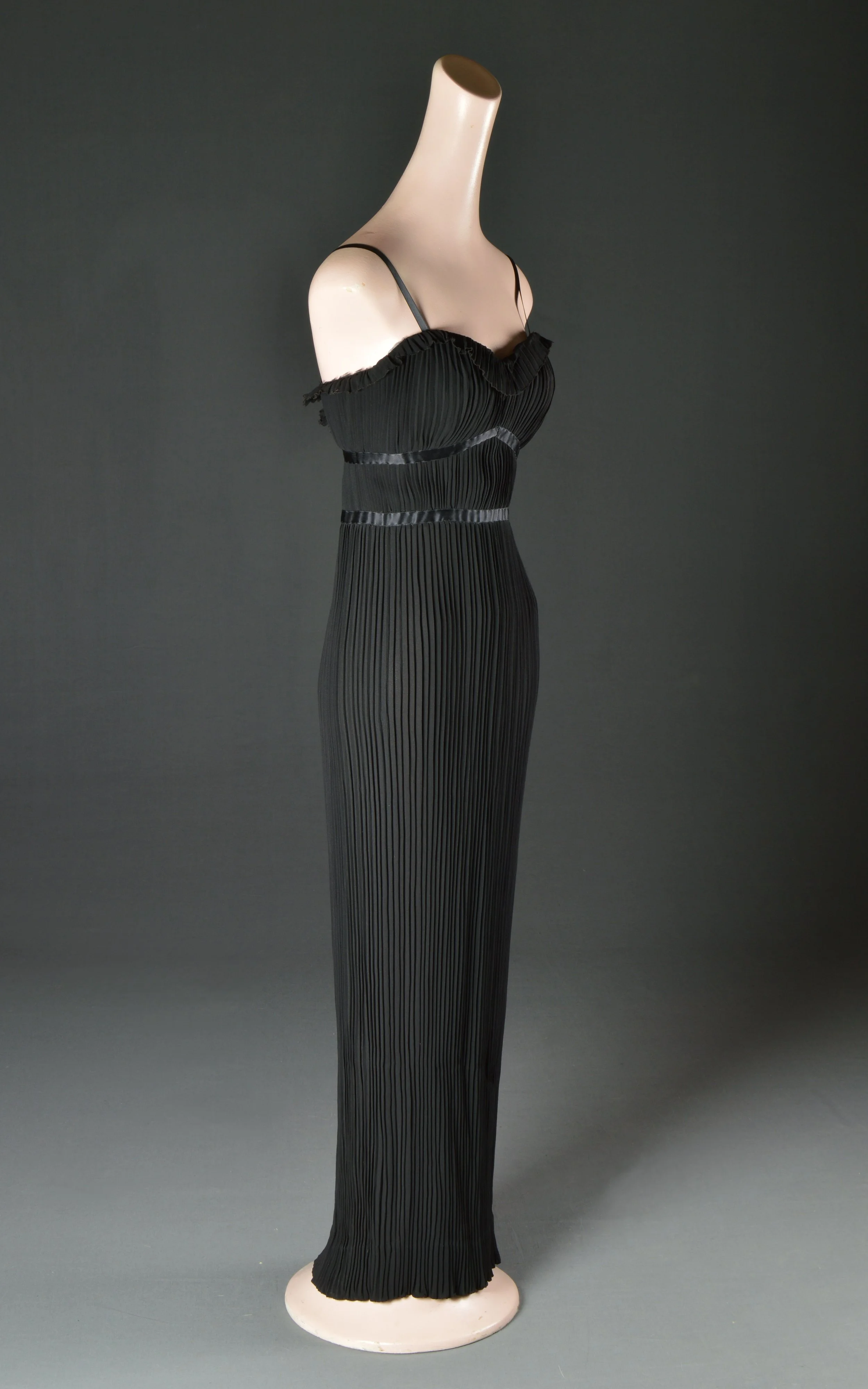
When the production editor was formatting it, they came to us, and they were like, “The editor says there's a blank page here. Do you just want to put something there?” We had two of those opportunities, and that's when we squeezed in Super Mario and Sunset Boulevard. Those were the two we squeezed in at the end that had already been cut. There are about 50 that we were going to try to do before we had to make the final cut.
(LM): I think it got to the point where I started to realise it isn't so much about fully representing the collection; it was about what was going to make the best readable, comprehensive and entertaining book. That's why we cut what we did.
(CS): And also a thorough selection that’s representative of early to more current film and different styles of film. There's as much variety shown as possible, because there's such a variety in this collection. I think it at least gives the reader a good idea of that.
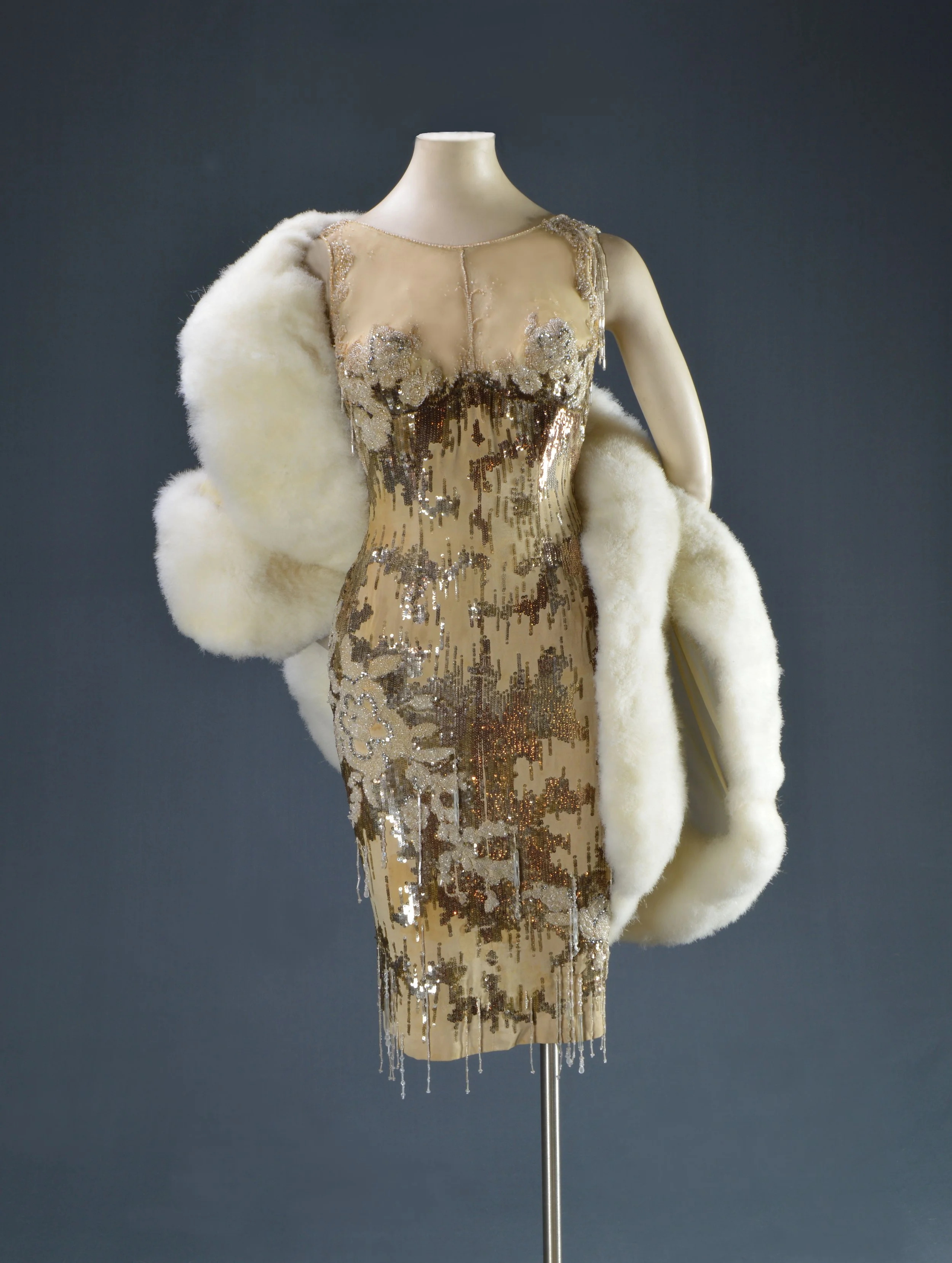
(FR): Film costumes are often different in design from real clothing; they're designed to look a certain way and perform a certain way. One great example is how weights were utilised in the Some Like it Hot dress. There's a pocket in the back that helped it hang a certain way.

(LM): In the vintage years, studios had costume houses with top-notch designers and craftspeople. A lot of times they were brought from Europe because of the war; they got a lot of talent from that. They had wonderful seamstresses and wonderful designers. They would make their own shoes, their own hats. At the time, the studios were big money-making things, so they had an awful lot of money to pay for this sort of stuff. And because they wanted to treat the stars like they were royalty, they spent a lot of money on these clothes.
In the beginning it was black and white, so they would do tests to see what colours photographed the best in black and white. Then when colour came in, they had a whole new problem of what colours photograph well, because in the processing [of the film], the colours changed. They had to make all of this up and learn all this as they went along. So there was an awful lot that went into the costume design. A lot of time Hollywood is criticised for not sticking to the period when it comes to period films. There were certainly some designers, more than others, that tried to adhere to the correct silhouette. But there was always an element of the time that the film was made, because they wanted to make them relatable to the people in the audience.
In some of the more vintage costumes, a lot of the inner structure that made those pieces do what they do, as far as holding the body in or making something flare out in a certain way, was built onto the inside of the costume itself, which is somewhat more like a stage technique. These things were designed to do exactly what they did in the film, because for a costume designer, the worst thing you can do is shut down a production because of a malfunctioning costume. It just costs too much money, and so it was designed to perform perfectly every time.
(CS): Especially related to period costumes, there are some inaccuracies, but they are also shopping for fabrics and creating fabrics in the time the film was produced, not in the 1400s. Clearly, there are going to be some discrepancies there. Colour was a huge consideration. As far as creating silhouettes, the difference between somebody in 1900 walking down the street during the day and somebody in a film, especially a musical, is that the silhouette isn't necessarily created the same way. Like Larry was saying, understructures are built into the garment, and that's a very theatrical practice.
Thinking about musicals, period pictures and movement, there's a huge difference there in how those things are constructed, because they're meant for big dance numbers. There wasn't stretch fabric in a lot of these time periods, but there were things like that added into the costumes to make them more mobile for dance. That's a good example. There were also a lot of the costume designers who had a theatre background. Theatre techniques of false closures, where something looks like it's laced up, but it's not really. For ease of movement or getting in and out of a costume. Some of those conventions are also used in some of these pieces.
(FR): How do the design and the designer’s choices illuminate character? Perhaps in some of the pieces in the collection.
(CS): That’s the job of a costume designer; all of those considerations that you have to make as a designer about time and place, season, social status, economic status, and relationship to the other characters, as well as the overall colour palette and your concept for the screen picture. How do those things fit together? Those are just some of the major considerations you have to make. All of that goes into capturing the essence of character. Larry probably has a couple favourites that he purchased because of the character versus it being a nice Edith Head costume. All of those things that contribute to making and building a character are then put into an environment, and you hope that the design and production teams talk to each other and everything relates.
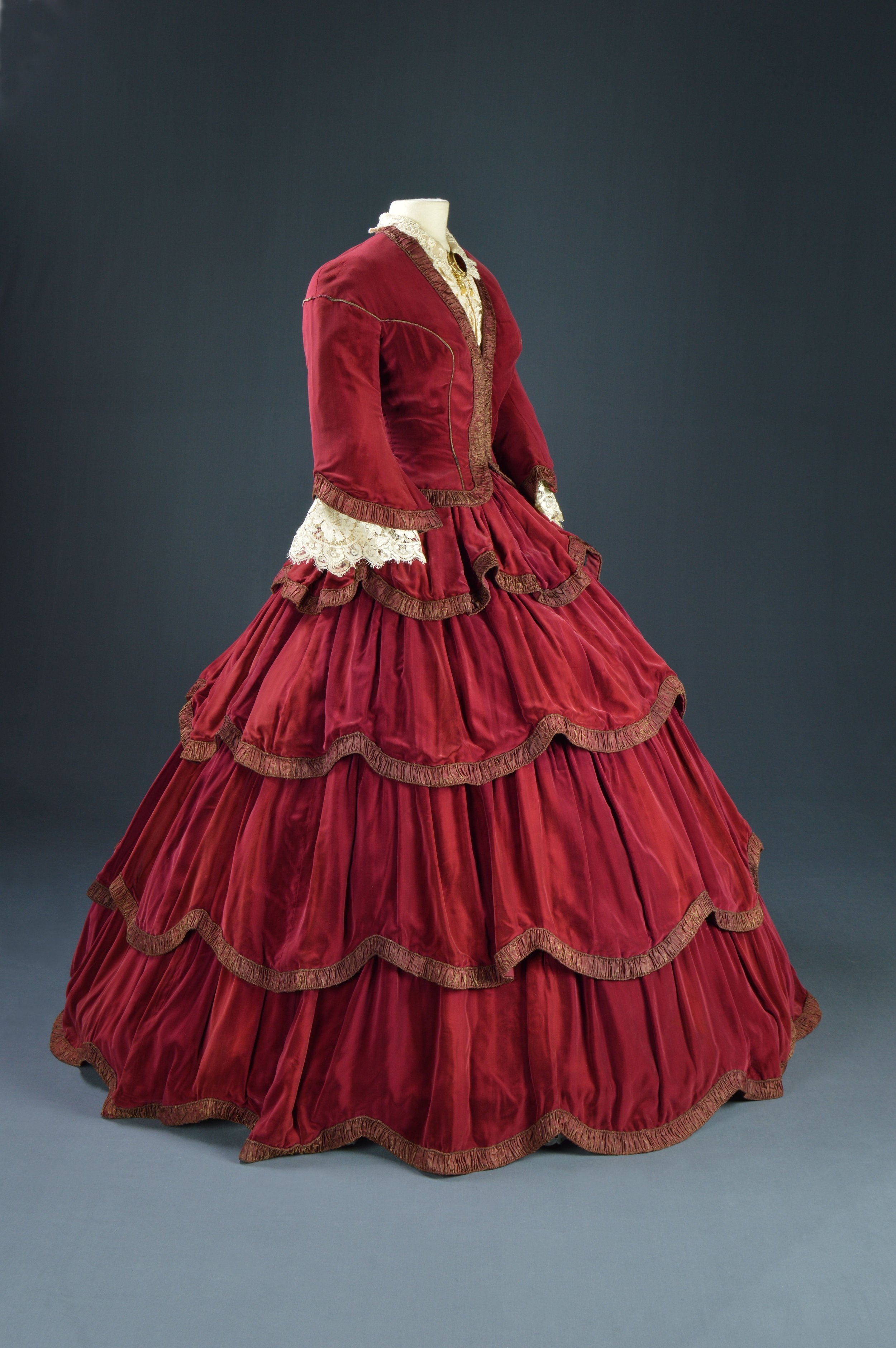
(LM): One of them, which we've discussed and shown in exhibition, is the Olivia de Havilland [costume] from The Heiress. The costumes change throughout the film. It's something that audiences don't normally think about, but when you start to look at it, you realise that the style the character is wearing at the very beginning is totally different as the character changes throughout the film. It helps that the character has a very specific arc in her development in the film and that they're very distant and different.
In the beginning, they're simple and perhaps a little bit overwhelming to this small little character. She looks like a doll that's wearing her mother's clothes. As the film progresses, they change. They go through a bitter phase. Then they go through a phase where she's now a woman in charge of her own life. Those are the things that really excite me in films, when the costume does play a big part of it, and so many actors have said, ‘I had done research, and I knew the lines, but I never really knew who my character was until I put on the clothes.’ If a costume designer is a good costume designer, that's what's going to happen.
(FR): The Marlene Dietrich Angel dress is a great example of a piece that could be and has been restored. It went from being unshowable to something that can appear in exhibition.
(LM): Some of these costumes, even the Dietrich, are approaching a hundred years old. They were held in a studio environment. A lot of these things were hanging on wooden hangers for forty or fifty years. They would use them and reuse them over and over again. Very seldom would they put a star in something another star had worn, even though that did happen once in a while. Usually it was for the people in the background, so they didn't have to spend money on the background, but they could keep that opulent look.
The Dietrich gown was a piece that we saw when Diana Vreeland did an exhibition at The Met. I think that was the first book that I had ever seen that actually had pictures of surviving Hollywood costumes. That [gown] was photographed in the book, and so I always knew about it. Bill and I both wanted the piece, and it was in a Paramount auction that we had been hired to research and set up. So we knew it was coming up, and we wanted it very badly. It made that auction very difficult, because there were hundreds of pieces that were absolutely incredible, but we wanted this piece, and we knew this piece was going to cost a lot of money. It ended up costing $20,000, which was a lot of money for us.


In our research, we realised that it had been worn over and over again in multiple films. They would cut the sleeves off of it, and they would cut the stole in half and wrap it around someone's head as a turban, and then put the sleeves back on and reconfigure the collar line. This is a solidly beaded gown, so it was not necessarily easy to do. When they were doing bad restorations, they would take glue and put it on the fabric and then just push the beads back together again, so there would be a huge clump of these beads held together. Sometimes they would use large paillettes, which are like gigantic sequins, to fill in the gaps of all the things that were missing.
When we got it, we realised there was no way it could ever be dressed on a mannequin because of the weight of it. Beaded gowns are usually beaded onto a chiffon backing. They take one of the heaviest, roughest items — bead sequins and rhinestones — and place them on one of the most delicate, which is chiffon. That was so it wouldn't add bulk and it would cling to the body. But over a period of years, that chiffon started to go, and we realised that this could never be worn again on a form because the chiffon wouldn't hold it. It would completely fall apart. Basically, we were left with an expensive box of unshowable beads.
I contacted various different conservators and wrote to people to see what to do. Some people said, “Leave it as it is, because that's the history of the piece.” But the piece was so expensive and so important in film, especially for Marlene Dietrich, that I wanted to have it restored. Luckily, I found the company who had the original beads and sequins, because they had assisted in making the dress in the first place. They had all of these beads, which is unusual — to find a cache of the same beads. I started a project with them, and it went on for five years. It had to be done four inches at a time, and you would have to take out any bad areas that had been badly done, and you'd have to recreate them. We were very lucky, because the dress is a series of paisley patterns that repeat themselves over and over again. So you could always repeat a pattern — because it was the same paisley pattern as that one that was missing — and completely reconstruct it with the beads, the pearls, the rhinestones. That piece is very special to me. Not that I have favourite pieces, but I do, and sometimes it's because of the journey it took, either to get them or to take care of them.
(FR): Speaking of journeys, sometimes you're able to gather pieces back together that were separated because they were put into different areas of the costume department. When you're not able to do that, because it either doesn't exist or you don't know where it is, you’ve recreated jewellery and accent pieces so that you can still share the designer's original vision in an exhibition.
(LM): The interesting thing about film costumes is, a lot of times when they would go back into the storage room, they would often separate them. The pants would go to the pants department. The coat would go to the coat apartment. So everything was split up, especially on the men. That made it really difficult to put together a man's costume. It had to be pretty special to have stayed together, or it was pure luck. We had some of both.
On the women's pieces, the bodice would go to the bodices and the skirt would go to the skirts. Sometimes they were one piece, which is probably why more women's pieces exist than the men's pieces do. Our whole purpose was to show these pieces in exhibitions, so we wanted them to retain that same magic and to have that same effect. We tried to buy pieces that were as complete as possible, but there were times when you would just buy a jacket.
I remember we bought a jacket that was Clark Gable, and we had hoped it was going to be Gone With the Wind. It ended up being Honky Tonk. We had the jacket, and it was like, ‘Those pants have to be out there somewhere.’ I'm still waiting for those pants to come back. I have found vintage pants that match them, but they are not the [screen worn] pants. Sometimes you never really know whether or not something's going to come back together again.
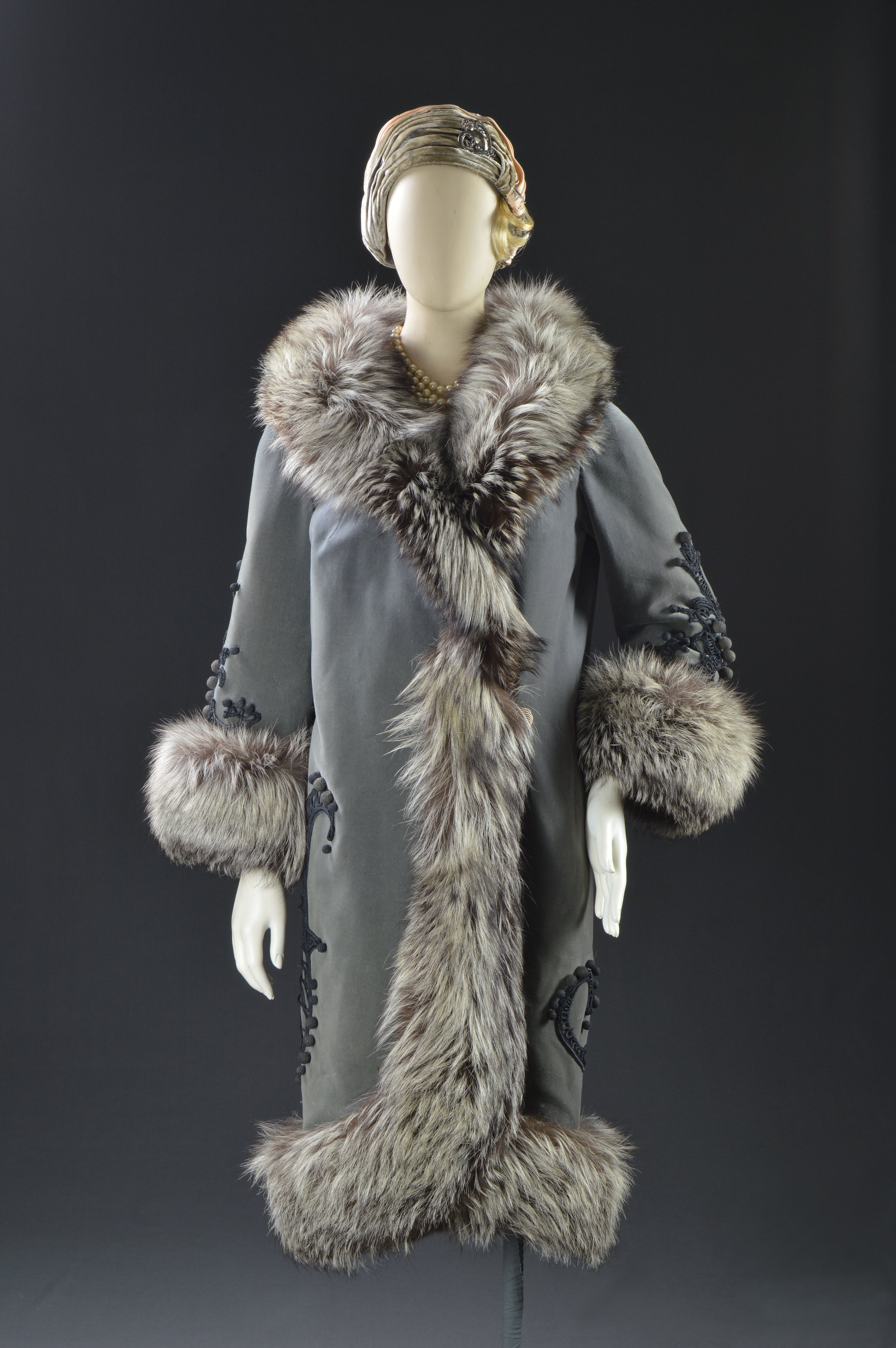
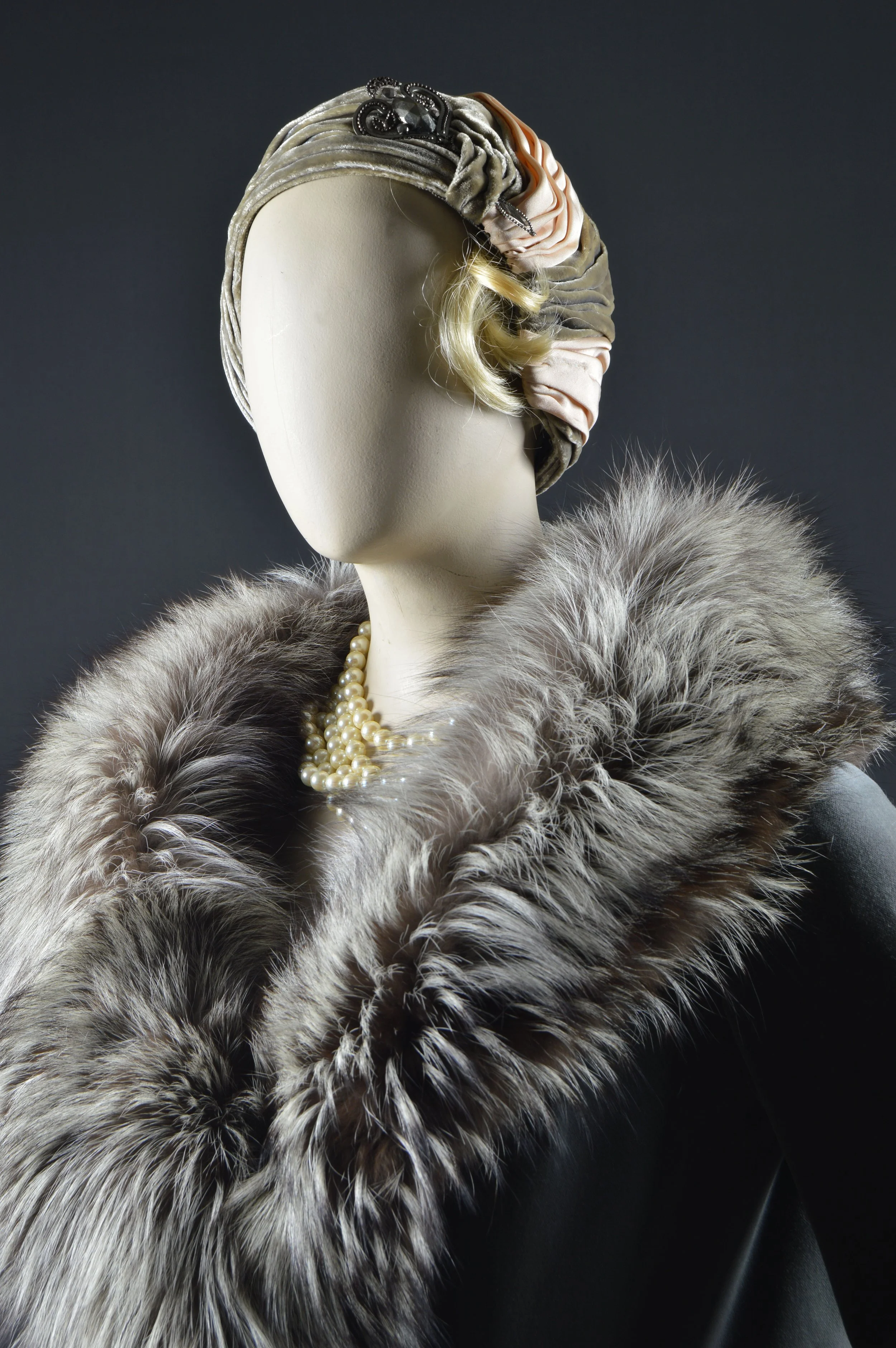
I have a Mia Farrow costume from The Great Gatsby, and it's a beautiful travelling coat. It's a grey velvet and has these black embroidered dragon motifs all over it. The coat can be seen by itself, but she was wearing a turban with the coat. Years later, that turban came up in an auction, and I thought, ‘Oh, I'll get it. It's a turban. Who's going to want a turban?’ Well, the turban ended up costing more than the dress did, which is usually the case when these pieces come up; they always go for more than the original.
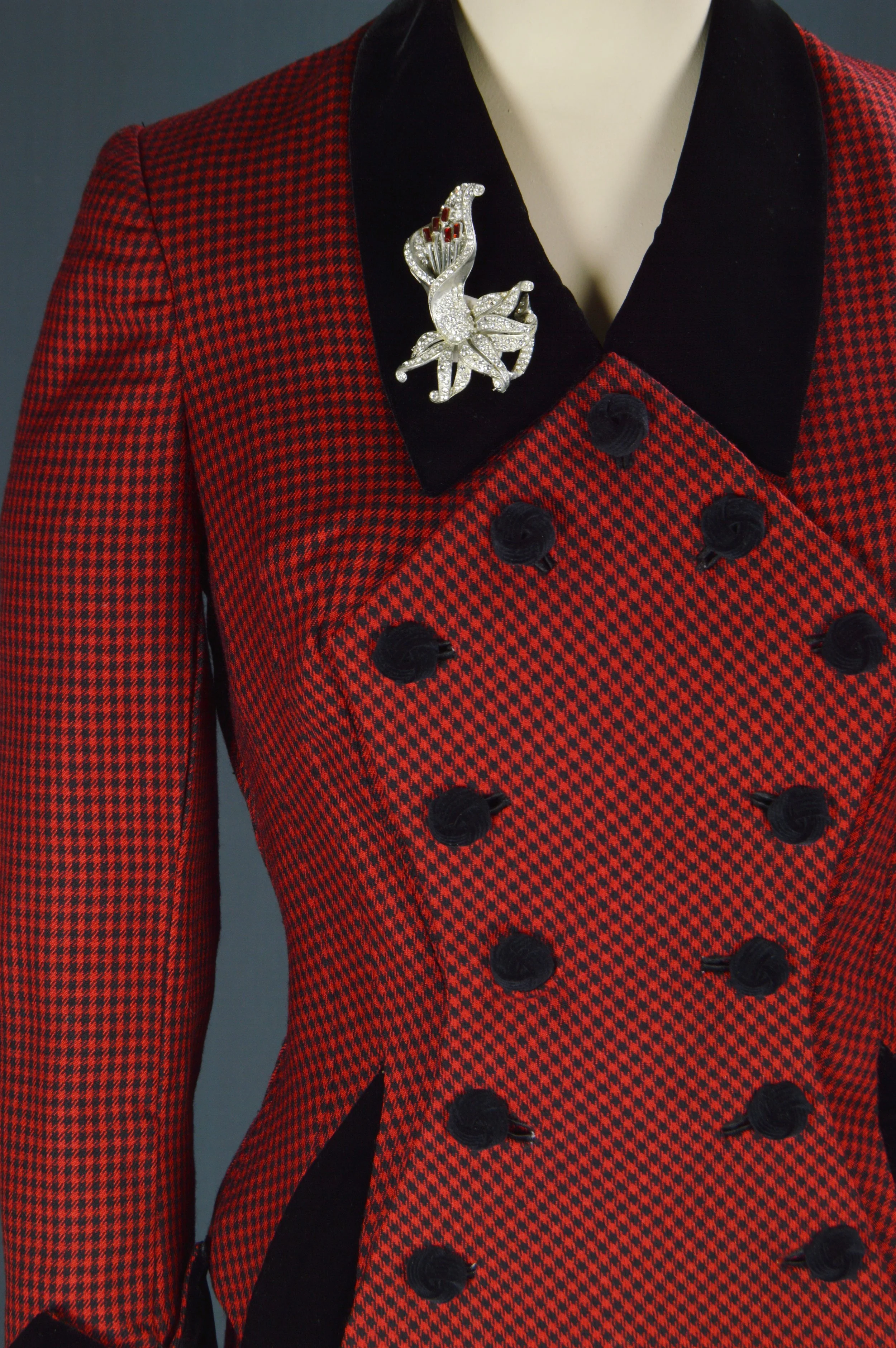
I have a Madonna suit from Evita. It's a simple 40s suit, but she's wearing this huge brooch with it. I thought maybe I could find something that was vintage that looked like that. I found the [actual] brooch, and it was with an investment company in London that had bought a lot of the pieces from Madonna for investment reasons. I guess they were going to keep them and sit on them for a few years and then sell them at a profit. I contacted them and said, “You wouldn't happen to be interested in selling the brooch?” And they said, “Oh, yeah.” They gave me this price, and it was like, “Okay, thank you very much, I can't do that.” And they went, “Well, wait a minute, we can negotiate.” So we did negotiate, and I did pay a lot less than that, but almost as much as the suit itself. Sometimes when you reunite something, it gets very expensive.
(CS): There’s also the Nina Foch costume from The Ten Commandments. The dress and the necklace were reunited.
(LM): A lot of pieces come separately and I don't know if it's willing things to come or probably just pure luck or being at the right place at the right time, but a lot of pieces have come up that complete a piece or make it better and more dramatic than it was. Those excite me. They scare me, and they also excite me.
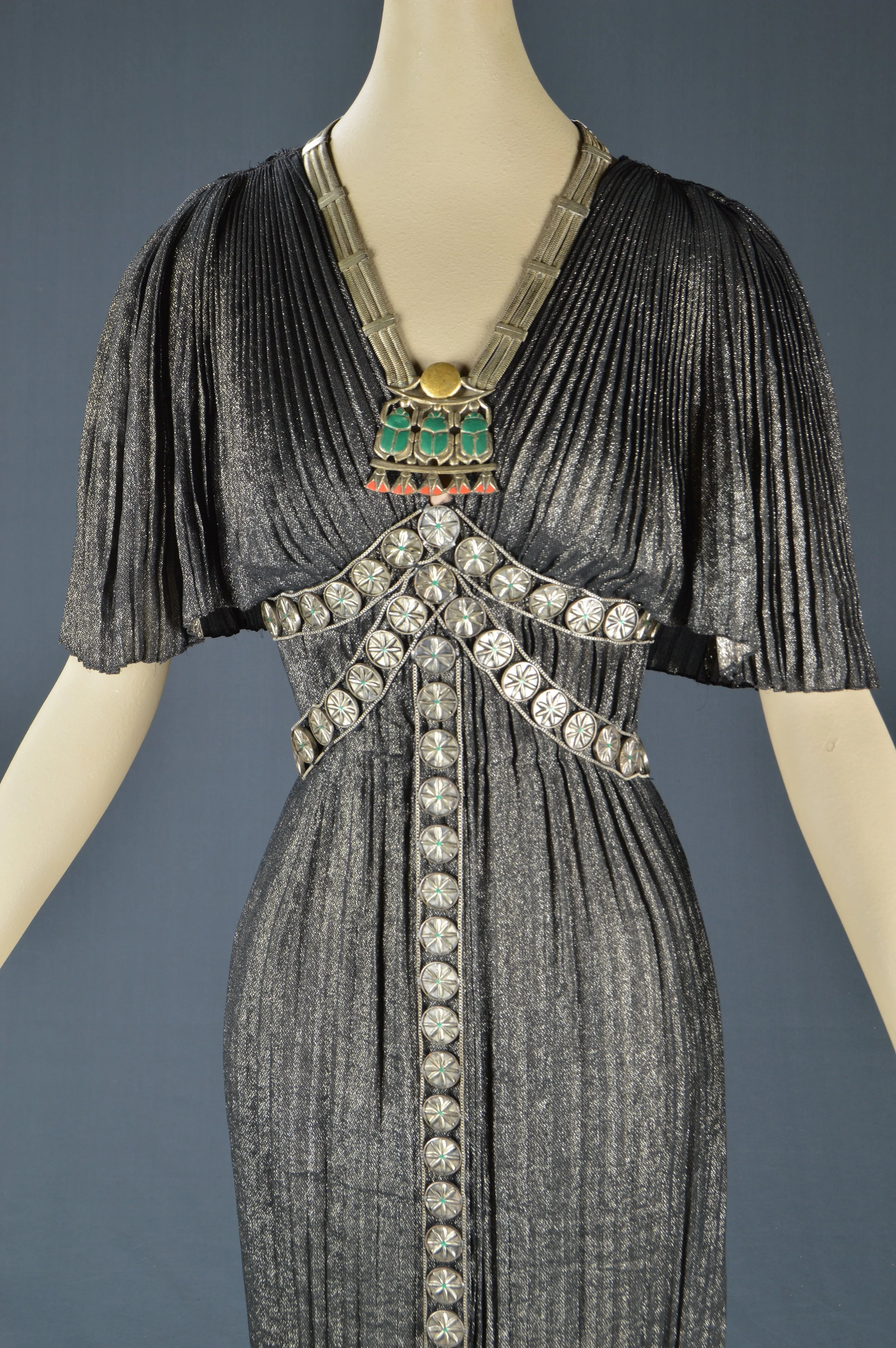
(FR): When a costume arrives in the collection today, like the recently acquired gown from Mirror Mirror, what steps do you take?
(LM): The first thing I usually do when a new costume comes into the collection is to thoroughly examine it for pests, vacuum the costume with a Hepa vacuum and examine it for any damages or repairs that I can personally do. If there are any signs of pests (such as moth damage) present, they are immediately quarantined from the rest of the costumes until I am certain there is no longer any danger of contamination. If possible, they are professionally cleaned. I inventory each piece, making note of any damage or problems, and enter the information into the collection database index. I usually sew a collection identifier into the garment and take notes of any pieces I might want to complete a design. I then make acid-free boxes specifically for each costume, and each piece will eventually be photographed.
(FR): What is the ongoing maintenance process for the collection?
(LM): In the beginning, we kept pieces wherever we could, but as the collection grew, the responsibility of taking care of it grew more difficult. I finally acquired a space totally dedicated to the storage and maintenance of the collection, and my practices started to solidify with the help of friends working in the museum field. Acquisitions used to be my largest budget, but as the memorabilia market grew and it became more expensive, I became more selective about the pieces I needed. I started paying more for care and maintenance than acquisitions. I never run out of projects. I would not say my storage area is perfect, but I certainly try to adhere to as many of the museum standards as I can personally afford.
I do monitor the humidity, air quality, and the temperature to avoid big differences in temperature spikes. Ninety-eight per cent of the costumes are boxed. The great majority are in acid-free boxes and those that are not have a layer of Tyvek, unbleached and unsized muslin to avoid acid transfer. Acid-free tissue is certainly a major expense. For the majority of the time the racked storage area is in complete darkness. I do occasionally pull out a costume for a presentation or just for my personal enjoyment, but I limit the time they are up. I do not adhere to the white glove treatment. The loss of touch sensitivity can sometimes create more problems. I’ve learned from conservators that regular handwashing during examinations or manipulations will suffice.

(FR): When pieces are selected for exhibition, what does that process look like on your end?
(LM): They are usually at the discretion of the museum, even though I do occasionally try to steer them in certain directions. Some of these exhibitions are years in advance, as the museums gather designers, funds and staff to mount them, so I need to schedule what pieces are being used and when they will be returned.
When a costume goes out for exhibition, I examine the costume and indicate on an outgoing condition report any issues or requirements the garment needs, such as measurements and underpinnings, if they are not supplied, and indicate any work that needs to be done to make it ready for exhibition. Sometimes this work is negotiated through the museum’s conservators, and sometimes I have to handle the work.
Pieces that are being shipped, especially those being shipped internationally, are packed for travel with pieces tied down to avoid shifting and clearly labelled corresponding to the outgoing condition report. Separate acid-free shelving is often created to ensure that everything is secure and not crushing another item. Since much of this is done by me, it can be time-consuming and take a day or two to pack one costume. Much of what I do and how I do it I’ve learned from other specialists, and in no way do I consider myself the expert, but I do what I can in the best way that I know how.
(FR): If each of you had to name the most historically or personally significant costume in the collection, what would it be?
(LM): Historically, of the pieces that the public would most recognise, it would probably be the Marilyn Monroe [dress] from Some Like it Hot. It's not my favourite piece, but I got a Marilyn Monroe because if you were a serious collector, you needed to have a Marilyn Monroe — and it is a great Marilyn Monroe to have. As far as my perspective goes, it would be the Greta Garbo Queen Christina gown, because that's the piece that started the collection. That was the first piece we ever bought together, and it was the piece that started us on the journey of how and why we were going to have a collection and what we hoped it would do, and the effect that would have.
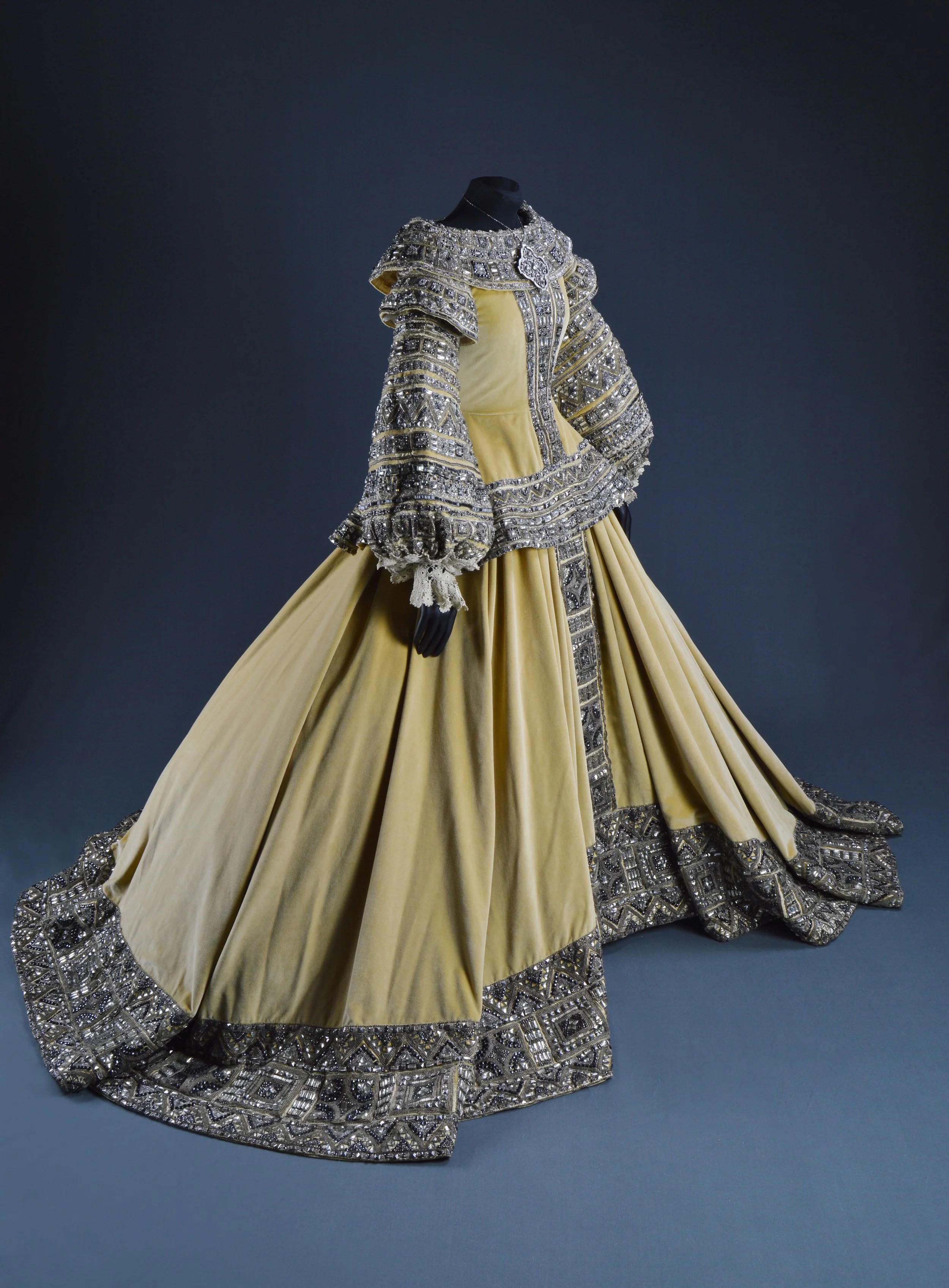
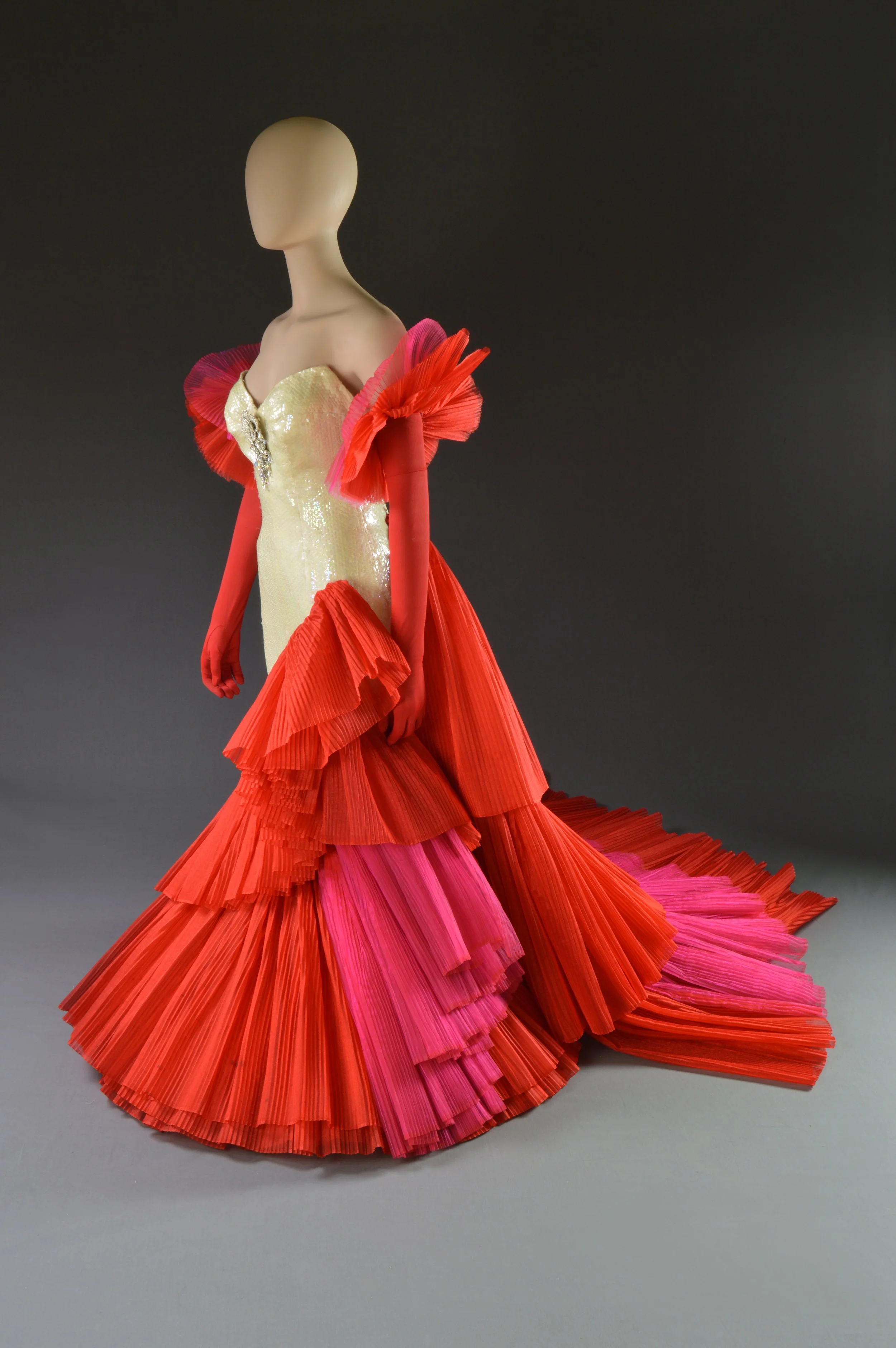
(CS): Mine are totally different. I do think that the Dietrich is really historically significant, because it was such a central feature in that 1974 Met exhibition, which is really the first major exhibition of Hollywood costumes as artefacts in a museum. It's the first time that there was a mentality for the public that these things were special. I love that Liza Minnelli gown from New York, New York. I talk about it all the time, and that's just because it's a big show number and I love it.
For me personally, it's Natalie Wood from Gypsy, because that costume is a central image and promo for the film. If you look up Gypsy, a picture of her in that dress comes up. But it’s also because I'm a burlesque costume historian. If I had known Larry when I wrote [The Costumes of Burlesque: 1866-2018], I probably would have called Larry about getting a photo of that costume into the book. I think there's a picture of her in my other book, because that film was really significant.
(LM): This goes back to the previous question, but that is also the costume that I think best shows the manipulations that a costume designer will do to create a character. I mean, everybody says Natalie Wood created Daisy, but it was Orry-Kelly who created Gypsy Rose Lee. Natalie Wood was 5’2” and probably weighed a hundred pounds at the most. This was the story of a famous burlesque performer and stripper. She had to be voluptuous. The voluptuousness is built into that dress. The breasts are a hundred per cent padded out. That is totally fake.
She had no hips, and so he put embroidery on the hip area to make it look wider. And she was so short that they put these strings of beads down the front of the dress to create a longer look. Whenever she was on stage by herself and not with other women, they would shoot it from a lower level so that she would look taller. Costumes have a lot to do with creating a character and even creating a body that might not be there in the first place.
(FR): For each of you, do you have an early memory of going to see a film that really resonated with you?
(LM): We weren't allowed to see films. I didn't see films until I probably got into high school or maybe even into college. I remember going and seeing Old Yeller. My parents took me. They said, “It's a story of a dog; how bad can that be?” At the end of the movie, not to spoil it or anything, but they killed the dog. I was in tears, and I was screaming and yelling and crying, and they said, “Okay, we're not taking you to any more movies.” So I probably didn't get to see a movie again until I saw The Sound of Music when I was in high school. My sister was going on a date, and my parents made her take me. She and her boyfriend sat in the balcony, and I sat down below by myself. That was probably the first time I had seen a film that I went, “Wow, that's a cool world they're creating.”
(CS): Aside from animated films, which were the first things where I fell in love with characters and their clothes, I think it's musicals. Annie was one of the earlier films that I remember seeing, but I think it was really Miss Hannigan's costume. There were feathers, and she could just wear a boa because she felt like it. That idea of the character wearing all the makeup and the extra jewellery and the necklaces. I think that is an early memory of a character creation and me noticing the costume, but I didn't realise costume design was a job until one of the earlier Tim Burton films. Maybe it was Edward Scissorhands, where I saw that the costume designer was Colleen Atwood, and I realised that somebody named Colleen designed the costumes. And I thought, ‘That means I could do costumes.’ It was a real moment in my life. Someone named Colleen did it, so I could maybe do it. Then noticing the costumes in that, because they're so amazing.
Read The Costumes of Hollywood: Highlighting The Collection of Motion Picture Costume Design
Read Larry’s contribution to Film Review Daily
LARRY MCQUEEN is a leading Hollywood costume historian, archivist, and consultant responsible for the authentication of film costumes and the estimation of their value. Mr. McQueen’s private collection of film costumes is one the finest, and consists of over 600 costumes worn in films and television from 1920 to present. Portions of his collection have been exhibited in museums across the globe.
COLEEN SCOTT is a costume designer, educator and historian who has worked for over 25 years in theater, opera, film, and television. Her book The Costumes of Burlesque was published by Routledge in 2019. She is a proud member of IATSE, USA 829. Coleen is tenured faculty in the Theatre Arts and Fashion Department at Santa Rosa Junior College in California heading the Costume Design, Technology and Makeup programs.
This interview has been edited for length and clarity.