
Borrowed Time

Another documentary about John Lennon.
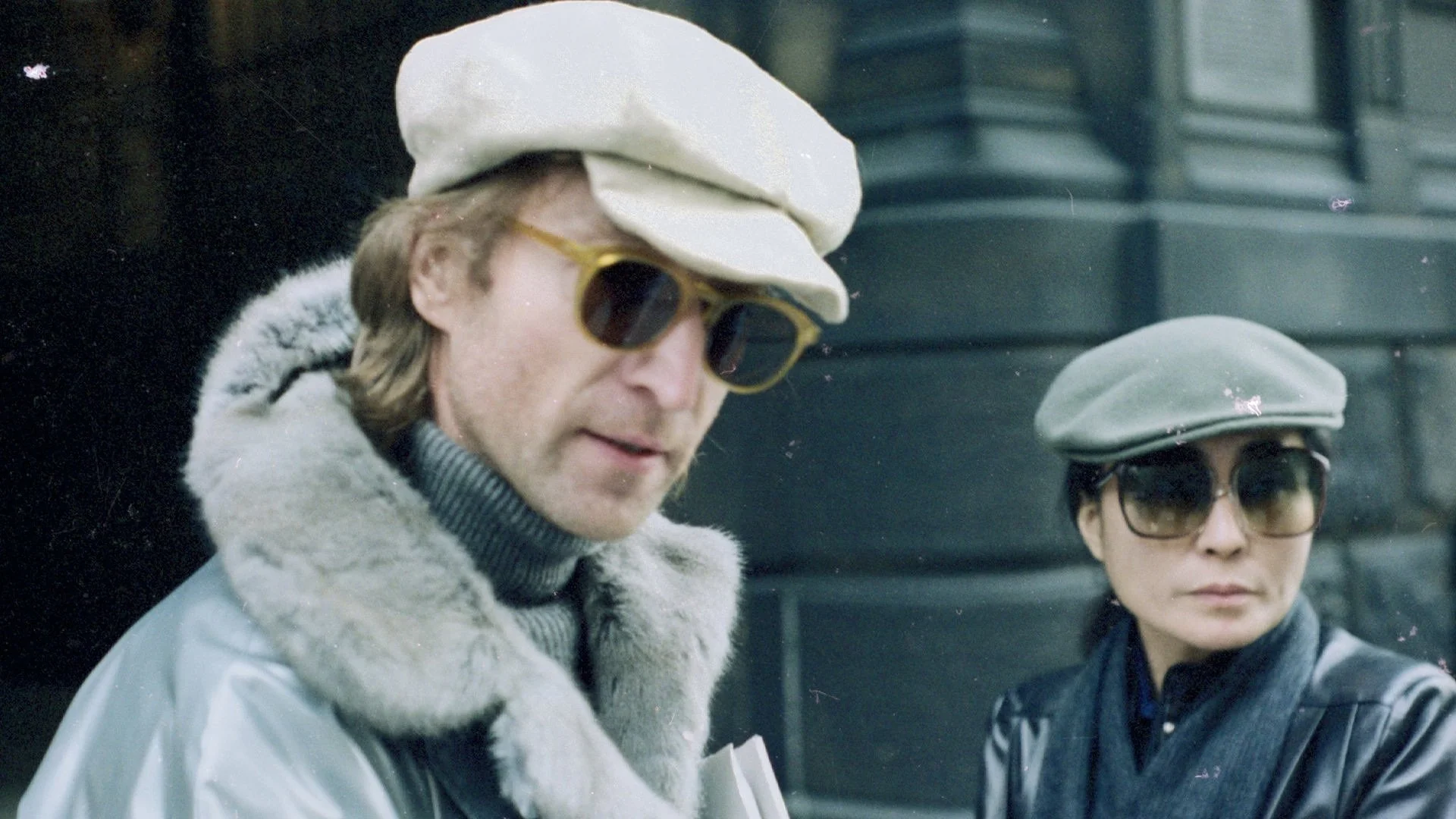
Image courtesy of Kaleidoscope Film Distribution.
John Lennon died in 1980 but all these years later we still have a spate of works whether books or films which look back on his life and times be that in a context that brings in Yoko Ono, Paul McCartney or The Beatles generally. Close on the heels of Kevin Macdonald's One to One: John & Yoko we have this documentary by Alan G. Parker and its particular focus appears to be indicated by its title. But, as it turns out, calling it Borrowed Time: Lennon's Last Decade is slightly misleading. It does indeed start off with a kind of prologue in which we learn about an adventurous round the world tour that was in preparation and which would have involved video projections but which never happened because of Lennon's demise. But thereafter Parker’s film goes back to present its material chronologically and we find that it has been running for close on forty-five minutes before John Lennon and Yoko Ono arrive in New York in 1971 ready to make their home there.
Since Parker's film lasts all of 134 minutes, it does indeed come to focus on Lennon's last decade and, while its first third looks back to Lennon's roots, to the history of the Beatles and to the impact of Yoko Ono, it does so in a way which, given the vast array of the material available, is naturally selected for its relevance to what would happen after the move to New York. Parker has opted to dispense with any commentary as such giving us instead a film in which numerous music journalists and others close to Lennon describe their own personal experiences and impressions often while acknowledging that others might see things differently.
As was to be expected, these contributions are blended with archive footage, much of it featuring John Lennon himself, and there is no doubt that this is very much a movie of talking heads. Ardent fans will doubtless make their own judgments as to any prejudices that appear to emerge as a result of the speakers chosen. Reaching us so soon after Macdonald's documentary which hones in on an early part of Lennon's last decade, one cannot but compare the two. That film undoubtedly chose to celebrate the partnership of John and Yoko and that will have pleased many. Nevertheless, it was noticeable that it avoided any reference to Lennon's affair with May Pang which is certainly part of the story here and it may be said that some (but not all) of the views expressed in Parker's film adopt a far more questioning tone over the influence that Yoko had on John Lennon.
What Borrowed Time does do is to bring together a vast array of contributors with Lennon's friend and biographer Ray Connolly prominent among them while Tariq Ali is one of the more unexpected choices. Once again Lennon comes across well in the archive material and the film includes praise for the way in which he expressed his support for activists regardless of how that might be seen. Yet he may have been something of an innocent in not being more aware of what would follow with the FBI soon opening a file on him and his phone being tapped since, with an election coming up, Nixon saw him as someone influencing young voters. As the seventies continue the film touches on problems that Lennon had with the violent record producer Phil Spector before moving on to the period when Lennon ceased to record and then made a controversial comeback with the Double Fantasy album which was originally envisaged as a solo effort but led to Yoko Ono being prominently featured too. Jon Smith provides insights into these sessions but Parker is always careful to keep things on the move to sustain the length of his film.
Where Borrowed Time does slow down to take aboard more detailed comments is in its treatment of Lennon's very last days. Andy Peebles makes his most prominent contribution here describing his interview with John Lennon which, being so close to Lennon's death, immediately became famous. Ray Connolly returns too to describe how he was about to fly to New York to carry out an interview of his own with Lennon on the very next day when he heard of the assassination. In dealing with that Parker gives space both to Robert Morgan, a witness who being nearby looking down on the street outside the Dakota building heard the gunshots, and to Alan Weiss who was a reporter who happened to be in the hospital to which John Lennon was taken and who despite the secrecy became aware of what was going on.
Others will appreciate better than I the extent to which Parker’s film does more than cover ground already familiar to fans of Lennon and The Beatles. Certainly his film avoids longueurs but for a film about a musician it is surprising to find to what extent Parker makes use of a banal background score which plays on regardless in a huge number of the filmed interviews when no music is needed. It becomes even more ridiculous when another contributor who passed by the Dakota, one Laurie Kaye, speaks of how Lennon's killer-to-be spoke to her and left her uneasy but not sufficiently for her to take any action. It's a sinister moment that she finds disturbing on looking back – is it just possible that history would have been different if she had reported her feelings? – and yet quite absurdly what she says about this is accompanied by more of that tiresomely bland background music! Parker’s film often irritates due to this misjudgment, but some viewers will not be deterred by it nor by the fact that this is essentially a long work reliant on talk. There is plenty here to take in, to discuss and to endorse or not when it comes to the views expressed and that should be enough to attract most Lennon fans.
MANSEL STIMPSON
Featuring Ray Connolly, Andy Peebles, Bob Harris, Jon Smith, Tariq Ali, Tony Bramwell, Dave Slolin, Robert Morgan, Alan J. Weiss, Henry The Horse Smith, Philip Norman, Helen Anderson, Laurie Kaye.
Dir Alan G. Parker, Pro Alexa Morris, Ph Steve Kendrick, Ed Ian Farr, Music David Palfreyman, Steve Tilling and Jo-Jo & The Teeth.
Borrowed Time The Movie-Kaleidoscope Film Distribution.
134 mins. UK. 2025. UK Rel: 2 May 2025. Cert. 12A.
