
Bowie: The Final Act

Fans of David Bowie are offered a nostalgia trip rather than a fully insightful portrait.
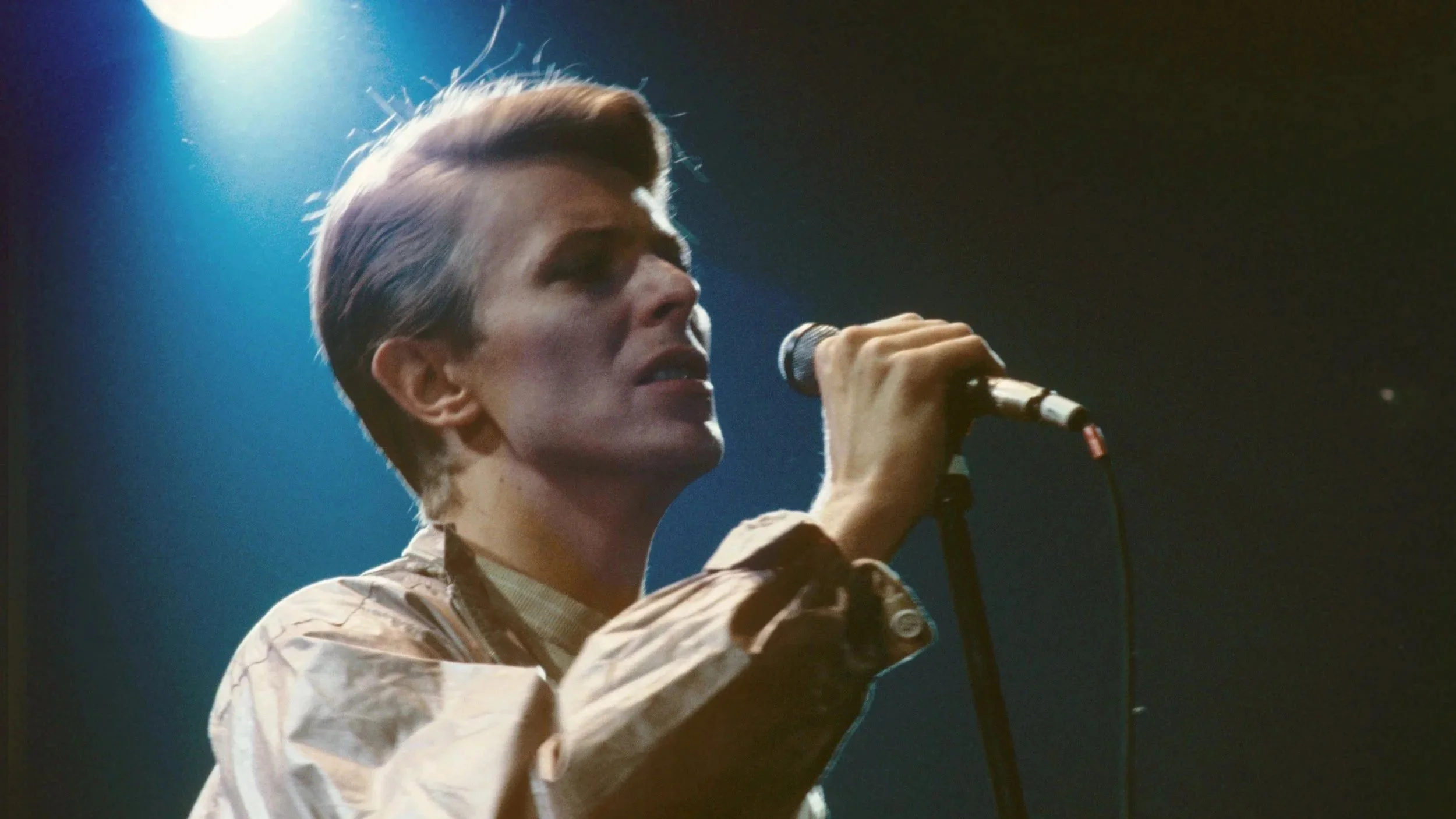
David Bowie
Image courtesy of Dogwoof Releasing.
by MANSEL STIMPSON
My own feeling is that this is a documentary that arrives under false colours. Others may interpret its title differently but it certainly led me to expect a film about David Bowie which would largely focus on his last years. It is indeed the case that Jonathan Stiasny’s study of the singer does eventually get to footage relating to the last extraordinary album, Blackstar, made when Bowie knew that cancer would soon kill him. The film not only includes contributions from people involved in the making of that recording, but we also get to see part of the remarkable video of the famous song from that album ‘Lazarus’ which, featuring Bowie himself, was released just three days before his death. All this, however, is left for the last quarter of an hour or so and Bowie: The Final Act is for the most part a straightforward look back at David Bowie's career. Provided that such a set-up appeals to you, it can be said with certainty that the right audience will enjoy this film – but I should add that by ‘the right audience’ I mean one that is imbued with nostalgia for Bowie's performances but is not one seeking great insights and is content with a work that is entirely conventional in character.
While some might wish for a different approach, Stiasny assembles his many contributors (be they friends, colleagues, music journalists or other admiring musicians) ably enough and blends them with substantial archive footage. When it comes to the songs, you mainly get relatively short extracts but lots of them. That is part of that nostalgic appeal even if spoken comments are sometimes heard simultaneously. Some of the earliest footage comes from 1983 in Sydney when Bowie was every inch a superstar and ‘Let's Dance’ was the epitome of what his fans wanted. Thereafter the film jumps to 1989 and 1990 before moving back to 1967 after which chronological order is followed.
On the film’s chosen level the only real misjudgment comes at the start when Bowie’s links with Starman and ultimately Blackstar lead to over-the-top comparisons suggesting that Bowie's adventurous nature meant that he was a musician who pushed to the very edge of possibility thus making it apt to think of him as akin to an astronaut or to somebody who became a time traveller. Accompanied by shots of outer space and referenced again more than once, this feels too exaggerated a tone even if in general the film does validate the idea that at times Bowie had the instinct of a cultural prophet and, unlike most pop stars, was somebody who really did approach his music as a genuine artist in the fullest sense of that term. But, if something of that comes across, Bowie: The Final Act does limit its focus. That may, of course, be understandable given that the running length of this piece is 95 minutes. Even so, one misses the omission of any reference to his work in cinema as an actor and his personal life is hardly touched on at all. There is, for example, one single passing reference to his son, the film director Duncan Jones, and he himself refers to his happy family life and chosen partner without the latter even being identified!
Early on in voice-over we hear David Bowie speaking of how his music is expressive of what is within himself and with the way in which he coexists with society. Then, as the film proceeds, there are various comments on how he regularly felt the need to move on into fresh territory by reinventing his stage presence and would do so regardless of whether or not such decisions might damage his commercial appeal. An extreme example of change came when he abandoned his Ziggy Stardust persona at its highest point and switched to being a band member in Tin Machine which led to the termination of his contract with EMI and such hostile comments that a review in Melody Maker reduced Bowie to tears. If Bowie’s attitude to his work put him in a category of his own, equally striking was the extent to which the appearances that he adopted as a performer echoed his own bisexuality and reflected sexual diversity before such matters became commonplace subjects of discussion.
Bowie’s early awareness of what the internet might become as expressed in a clip here is strikingly insightful and indeed it can be said that he was in many aspects way ahead of the curve. This gives David Bowie a social significance beyond his popularity as a singer and songwriter. Furthermore, his willingness to express his inner being through his work adds to his standing, his chameleon-like transformations revealing the diverse elements within him. Consequently, one is aware of what is missing from Bowie: The Final Act both in terms of deeper analysis of the man and his work and in exploring his character and the private life which fed his art. Late on in the film mention is made of how he suffered from depression and the author Hanif Kureishi who was a friend refers to how Bowie would find people with whom he would become mates in a meaningful way only to drop them subsequently. But if these matters are mentioned they are certainly not explored.
However, while to do him justice David Bowie deserves a film ready to view him in depth, it has to be acknowledged that I am asking for a work which is not what Bowie: The Final Act set out to be. I therefore reassert my view that on its own terms this is a film that will please many of Bowie’s fans only too happy to look back nostalgically. It is perhaps in keeping with that that the film’s UK cinema release on 26th December is accompanied by a transmission on British television as early as 3rd January 2026 (Channel 4 at 9.30 pm).
Featuring: Earl Slick, Goldie, Reeves Gabriels, Hanif Kureishi, Tony Visconti, Mike Garson, Dana Gillespie, Jayne Middlemiss, Gary Kemp, Jason C.Lindner, Dylan Jones, John Giddings, Chris Hadfield, Erin Tonkon, John Wilde, Matt Everitt, Rick Wakeman, Vivien Goldman.
Dir Jonathan Stiasny, Pro Dan Hall, Ph Michael Cimpher, Michael Grippo, Harvey Glen, Lan Ba Dang and Sam Creamer, Ed Neil Clarkson and Jess Indira Illingworth, Music Tom Howe and Mike Reed.
A Rogan Productions Film/Arte/BR/DR/Dogwoof/WDR/NTR/Channel 4-Dogwoof Releasing.
95 mins. UK. 2025. UK Rel: 26 December 2025. Cert. 15.
