
Cactus Pears

Rohan Parashuram Kanawade’s memorable love story set in Maharashtra is perfectly acted and reminiscent of an earlier age of Indian cinema.
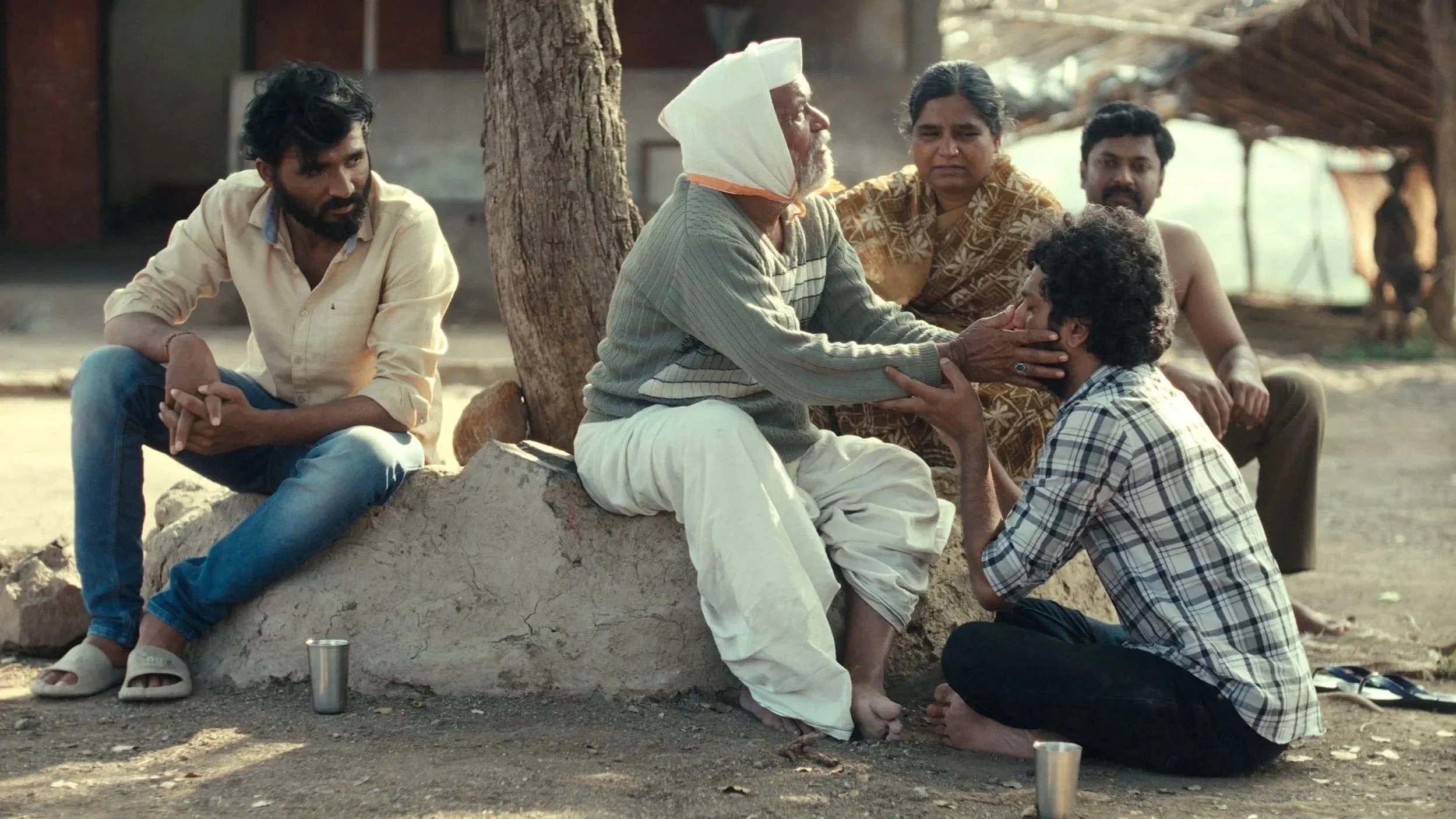
Image courtesy of Lotus Visual Productions.
by MANSEL STIMPSON
This memorable film is one of the few that I have seen which at one and the same time is highly evocative of an earlier age of cinema yet very much of today. Marking the feature debut of the Indian writer/director Rohan Parashuram Kanawade, it is in many ways reminiscent of the work of the great Satyajit Ray. Kanawade’s feeling for his characters is in line with the humane qualities that marked Ray’s work, but the comparison stems from more than that. The unshowy style of the filmmaking and the unhurried pace of the narrative reflect Ray’s own approach as does the tone which favours naturalism over melodrama. Even the way in which certain scenes end with a fade to black transports one back to the cinema of long ago.
All of this comes as something of a surprise since one might well expect that a director embarking on his first feature (it follows three shorts which were similarly written by Kanawade himself) would avoid adopting a style that could be dismissed as old-fashioned. The refusal to do that is all the more striking due to the fact that Cactus Pears is a film about two gay men and, while there have been other Indian movies with gay characters in recent years, the reticent attitude of Indian cinema towards sexual matters of any kind means that any fresh gay work emanating from that country still feels defiant and distinctly modern.
Given that the majority of new films adopt a fast pace and that gay-themed movies of an increasingly explicit nature are prevalent, it may be that the restrained approach of Cactus Pears will make it off-putting for some audiences. But, if that does prove to be the case, it would be a pity because among other qualities the film offers a wonderfully involving portrayal of the bond between two men, one being Anand (Bhushaan Manoj) and the other Balya (Suraaj Suman). It is Anand whom we meet first and it is at a tragic moment in the life of this thirty-year-old since he is seen at a hospital where his father is dying. Anand’s father had been aware of his son’s sexuality and had been quietly supportive. Although born in a village Anand had moved to Mumbai in the hope that being gay would be less problematical there, but now for the first time since leaving he returns to his birthplace. This is because his mother, Suman (Jayshri Jagtap), wants him to be there so that he can take a leading role in his father's last rites. These proceedings starting with the burning of the body on a pyre extend over ten days of mourning and to please his mother Anand agrees to stay on for the full period.
Initially however Anand had shown a certain reluctance to do this since he is aware that family members in the village as well as neighbours are likely to ask pointed questions about how soon he will get married. He had once had a brother but he had died and with his father having passed too the issue assumes a new importance in the eyes of these people. However, the one person not pressing him is his mother since she knows that Anand is gay although there has never been any open discussion of it. Indeed, the film’s persuasive portrayal of village life shows it to be a community in which there is an awareness of homosexuality and of those who might well be gay despite which the subject is deliberately avoided. But, if the attitudes of the villagers are tiresome for Anand (his mother has helped out by spreading a story that his reluctance to marry stems from his having been jilted by a girl whom he had loved), his return to the village does mean that he meets again a farmhand named Balya with whom he had been very close in his youth. Balya’s father (Ram Daund) is keen that his son should marry but we soon realise that Balya too is gay and, having stayed put in the village, has accepted that passing secret encounters are the only way available for him to express his sexuality. It is now easy for Anand and Balya to resume their friendship and Kanawade’s film persuasively and tenderly establishes the feelings that they share however tentative they are about acting on them.
At heart Cactus Pears is indeed a love story but, while viewing it from a gay angle to some extent, the film is also about Indian life past and present and about the way that in villages like this one in Western India the old ways of life still persist. Consequently, the first third of the film offers a detailed portrayal of contemporary yet old-fashioned rural life rather than seeking to just touch that in and then to proceed with the main storyline. The viewer needs to adjust to that approach but it is well worth making the effort required. For one thing the scenes of village life carry a great sense of authenticity and, even if we may not always be certain who all the locals are, no false note is struck. Nevertheless, the real heart of the piece lies in the portrayal of the two men who become lovers: even before they put their feelings into words the rapport between them is beautifully caught and the two lead actors, Manoj and Suman, are superb. So too is Jayshri Jagtap portraying the mother who knows everything but chooses to speak in words that imply understanding rather than being truly direct. The real achievement here is that Kanawade's screenplay and the performances of the two leads create one of cinema's best portrayals of a loving gay relationship. The restraint in Kanawade’s approach in Cactus Pears may limited its dramatic edge a little, but the emotional heart of the film is captured so well that it emerges as a triumph for all concerned.
Original title: Sabar Bonda.
Cast: Bhushaan Manoj, Suraaj Suman, Jayshri Jagtap, Nitin Bansode, Harish Baraskar, Ram Daund, Pratiksa Kote, Hitesh Porje, Sandhya Pawase, Vidya Joshi, Hemant Kadam, Rani Kasliwal, Avani Khatal.
Dir Rohan Parashuram Kanawade, Pro Neeraj Churi, Mohamed Khaki, Kaushik Ray, Naren Chandavarkar, Sidharth Meer, Hareesh Reddypalli and Rohan Parashuram Kanawade, Screenplay Rohan Parashuram Kanawade, Ph Vikas Urs, Pro Des Tejashree Kapadane, Ed Anadi Athaley,Costumes Sachin Lovalekar.
Lotus Visual Productions/Dark Stories/Moonweave Films-Lotus Visual Productions.
113 mins. India/UK. 2025. US Rel: 21 November 2025. UK Rel: 19 June 2026. Cert. 15.
