
Ghost in the Machine

Valerie Veatch’s exploration of the history of artificial intelligence proves highly informative if less persuasive when trying to strike a positive note.
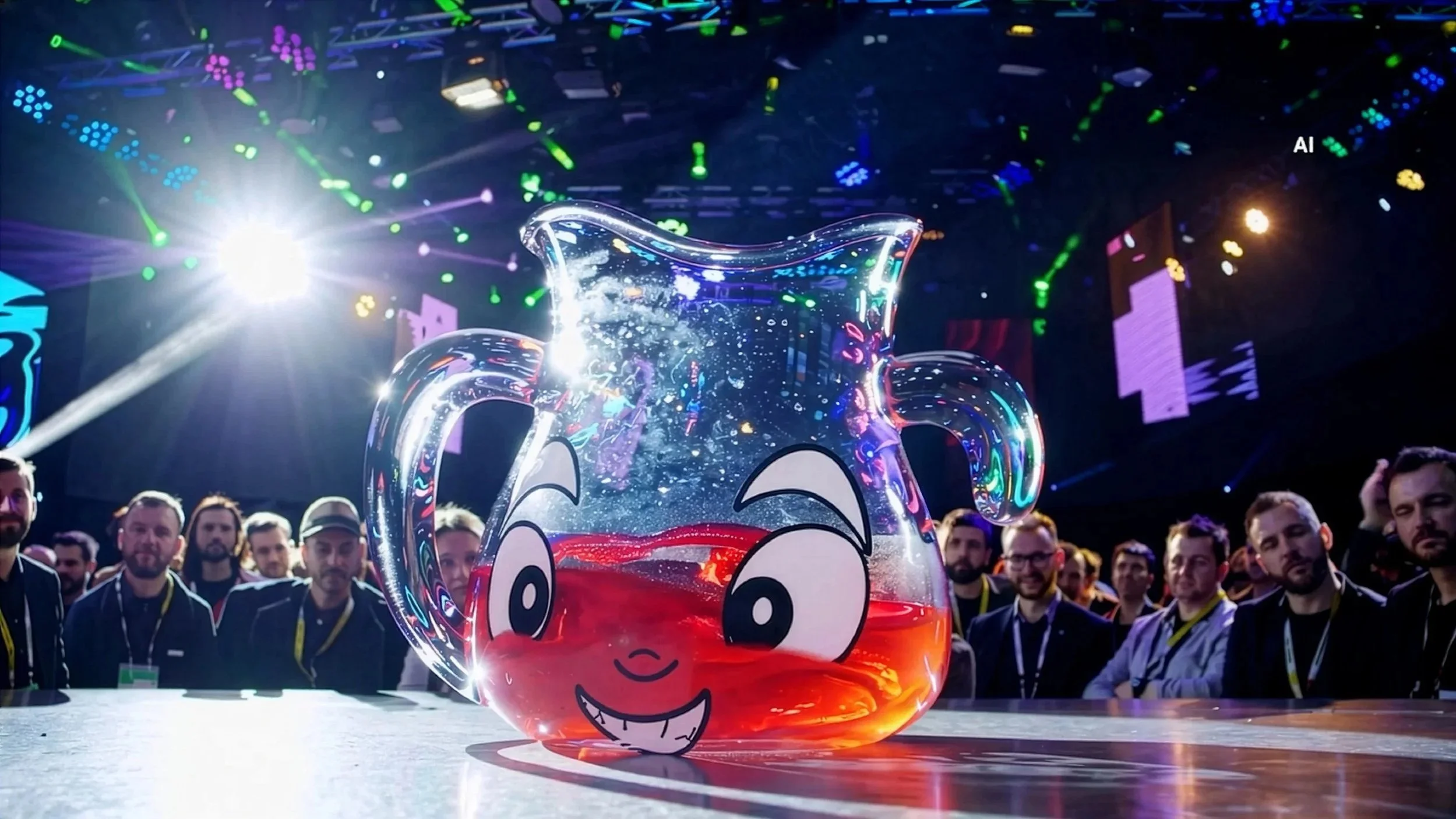
Image courtesy of Miracle/Ghost Doc.
by MANSEL STIMPSON
Tay was an artificial intelligence chatbot developed by Microsoft in Seattle and then shut down within sixteen hours of its launch when it was found to be responding to users of Twitter with offensive messages that were patently racist and sexist. Seattle also happens to be the place where the American filmmaker Valerie Veatch was born and she has chosen to begin her film Ghost in the Machine with an evocation of this occurrence. It is the starting point for a film which offers a thoroughgoing look at artificial intelligence and that it begins with that event from 2016 is a sign that Veatch is deeply critical of where today's high-tech world is heading. Her aim is not to consider the risks and the benefits inherent in the development of AI and to balance the one against the other. Instead, she sets out to examine the roots from which AI has grown and to argue the case for it being inherently dangerous through the power it gives to the tech bosses themselves.
The episode concerning Tay is part of a prologue which is then followed by six distinct chapters which offer comment from a wide range of experts whose fields make their views significant. They include computer scientists, cultural theorists, philosophers, historians and sociologists and in the early part of the film the comments made are very much linked to past history and not least to that concerning eugenics. This takes us back to the 1890s and to the ideas of Francis Galton whose studies of human intelligence were pioneering but led him to advocate that human progress would and should be aided by encouraging those with desirable traits to reproduce while discouraging those considered undesirable. This theory led to racist notions that categorised certain people as inferior and in effect promoted the belief that human progress could be achieved by way of genocide. Galton would be an influence on others such as Charles Spearman who came out with his own ideas about intelligence testing and all this would contribute in the 1920s to racist laws being enacted in America enforcing sterilisation of those deemed unfit. No wonder that when Hitler came to power he saw this is an admirable policy to follow.
This history is discussed in the film’s first chapter and remains distinctly relevant to what follows since it underlines how the beliefs of specific individuals can become embedded in statistics and data that are taken on board in algorithms that lead to what artificial intelligence finds appropriate. A later chapter in the film is concerned with more recent developments in the world of high-tech. It distinguishes between on the one hand AGI (Artificial General Intelligence) which could soon come close to equaling what a human can do – and faster as well – and ASI. The latter (Artificial Super Intelligence) is the long-term aim by which AI will find its own way to becoming superior to what humankind can do. But, if that is the route we are on, the notion of what constitutes superiority is dangerously reliant on the data that has been fed in earlier, a situation which could well echo what happened with Galton and Spearman in that it could incorporate the particular views and prejudices of those who are CEOs in the field of AI.
That part of the film looking at AI’s historical origins includes references to intelligence devices during the Second World War and in the decades that followed (there are glimpses of Alan Turing and of the futuristic writers Arthur C. Clarke and Isaac Asimov). After that a third chapter, ‘Silicon Dreams’, deals with William Shockley's role in the emergence in the 1950s of what would grow into Silicon Valley (Shockley was another believer in eugenics). In time it would become readily apparent that this field was one that would be dominated by adventure capitalists making it a male world which would have no time for women or indeed for the traditional rules of society. If there was a brief period in the 1990s when the ready availability of computers suggested that the tech age was one deeply beneficial to ordinary people, all too soon it would lead to AI hype becoming omnipresent and to wealthy entrepreneurs creating rival set-ups (thus we have the creation of companies such as DeepMind in 2010, Anthropic in 2020 and xAI in 2023). With Trump as president, America would see the major figures in the tech world becoming drawn into the political sphere (Trump would embrace them as geniuses) and in addition there would be close links with the military as the forces became increasingly reliant on their technology. By now data centres were being built on a vast scale at the expense of the fact that their use of energy and water was enormous and that local inhabitants could be detrimentally affected. Indeed, Veatch’s film takes a brief side turn to include a section about the way in which establishments have been created in Kenya to take advantage of cheap labour there in a way that echoes the exploitation found in colonialism.
This range of material makes for a very informative film. It is, however, one that offers no respite for the viewer since there is no variety in the pacing of it and with so many contributors – some speaking briefly but others recurring – one has to keep up one’s concentration throughout. Given the lack of any pauses when we can take a breath, the films does seem longer than it is, but it is undoubtedly worth the demands that it makes on your attention. There are one or two minor quibbles that arise. Since it is apparent which of the images that we see arereal and which not, constant indications in the top right-hand corner of the screen telling us what is not AI as well as what is seem quite unnecessary. Furthermore, to echo words spoken in archive footage in order to make them sound yet more sinister by repeating them in a descending pitch just feels silly. At the very close there is a short and belated attempt to reassure us. This is done by having a number of the contributors tell us that we can and should resist and that it's not too late. This would be more convincing if the case for the downside had not been so strongly made already. But it is as a warning that Ghost in the Machine exists and it is an effective one.
Featuring Emily M. Bender, Abeba Birhane, Jonathan Flowers, Becca Lewis, Paris Marx, Richard Mathenge, Daniel McQuillan, Milagros Miceli, Mophat Okinyi, Angela Saini, Tiera Tanksley
Dir Valerie Veatch, Pro Valerie Veatch, Screenplay Valerie Veatch, Ph tbc, Ed Valerie Veatch, Music Morgan Doctor.
Independent Lens/Ford Foundation Just Films-Miracle/Ghost Doc.
96 mins. USA. 2026. UK Rel: 5 June 2026. Cert. 12A.
