
Going to the Dogs

Greg Cruttwell’s balanced, comprehensive documentary examines the world of greyhound racing in the UK.
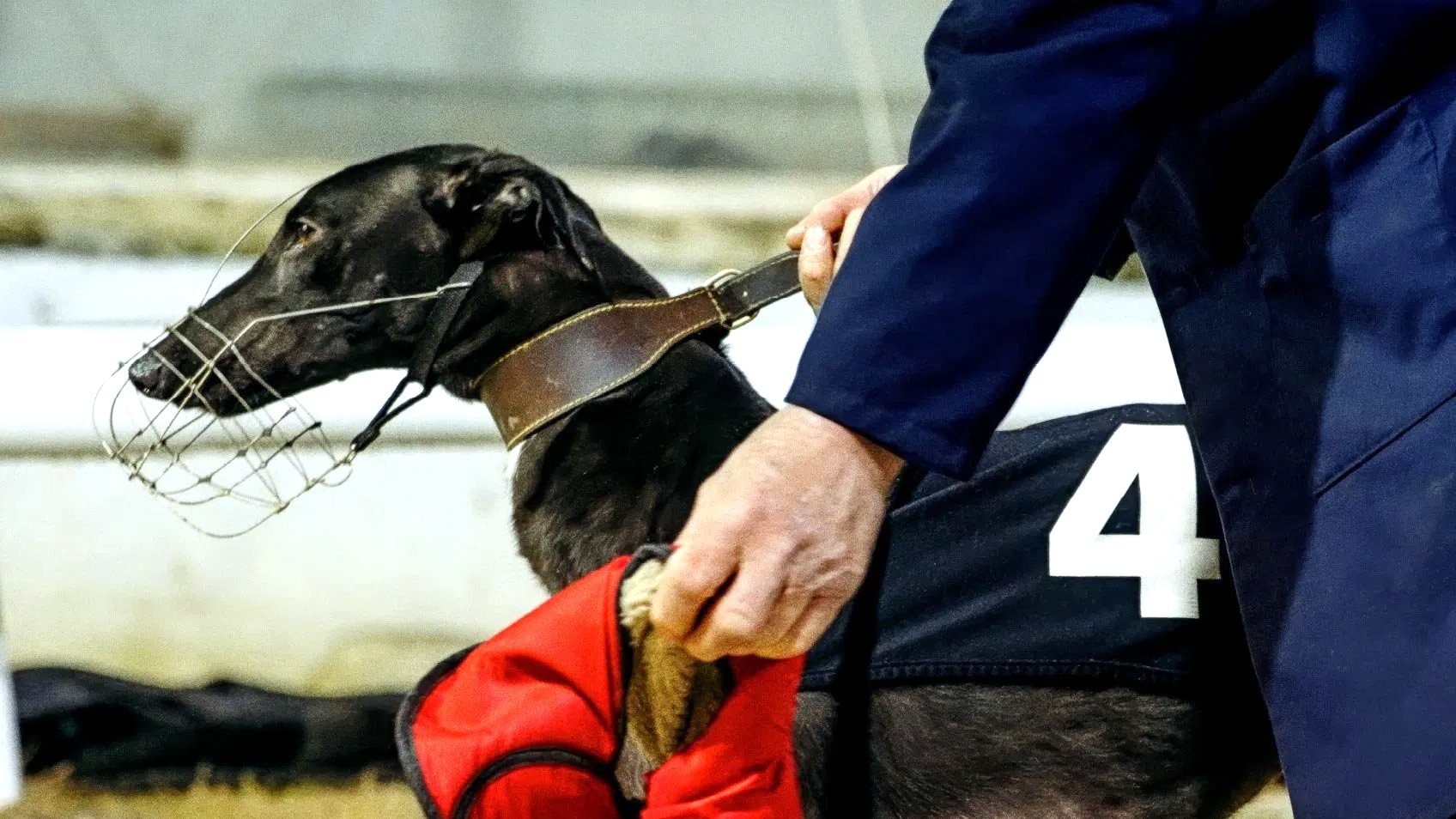
Image courtesy of Tull Stories.
Formerly known as an actor, Greg Cruttwell has in recent years concentrated on directing and Going to the Dogs is in somewhat similar mode to his 2022 documentary feature In The Middle. Although no lover of sport myself, I found that piece an engaging movie which had definite novelty value in looking at football through the eyes of referees. Other films by Cruttwell have a sporting background too so that is clearly a sphere that fascinates him and, in line with that, the implication in the title of this latest work of his is fully justified: this is indeed a film about greyhound racing. However, it is a mark of Cruttwell's talent that both Going to the Dogs and In The Middle despite their appeal to a specialised audience have qualities that make them attractive to viewers unexcited by the sports featured in them.
One particular gift that Cruttwell has is to find interviewees who effortlessly communicate their own enthusiasm. This latest piece starts out with a Scottish couple, Rob and Liz McNair, who have been married for forty-five years and train greyhounds. Rob declares that the high you get if one of your dogs wins is more potent than anything a drug might give you and that is so even if winning is often a dream rather than an actuality (not least when it comes to that big annual event the Greyhound Derby held in recent years at Towcester racecourse). The ensuing comments from other trainers bring home the fact that looking after greyhounds in this way is a job that takes you over 24/7 with limited chances of making any big profit. In addition to hearing from trainers we also meet various owners, vets, bookmakers, promoters and an osteopath and it becomes very clear that the people involved have a positive love for their animals. Quite apart from breeding them to discover which ones will grow up to have the ability and the natural instincts to become racers, greyhounds are also recommended as ideal pets.
A statement at the close of the film confirms that in the UK in the 1940s there were seventy-seven tracks in operation while today the number licensed has dropped to twenty. By putting this in context Going to the Dogs is among other things a slice of British social history. Dating back almost one hundred years now, greyhound racing was once particularly popular among miners who treated it as a community event. Arguably it is a working-class sport. Indeed, the closure of mines may well have contributed to the decline of this sport. Similarly in more recent times the impact of Covid and the increased tendency to view media reportage of races rather than to attend the actual events have been factors contributing to the fall in attendances at those tracks that remain. One of the contributors here, Kevin Boothby, has dared to go against the trend by opening up fresh stadiums.
One aspect here that differentiates this new piece from In The Middle is the appealing presence of the greyhounds themselves. That is a response unlikely to be shared by those who support bodies that deplore the fact that greyhounds are used in this way. The second half of Going to the Dogs fully faces up to this divergence of opinion by giving space to those who protest the sport of greyhound racing even if in the last ten years or so more protective rules and regulations have been put in place. Despite assurances from Mark Bird, the managing director of the Greyhound Board of Great Britain, it is clear that representatives from ‘Animal Rising’, Claudia Penna Rogers and Nathan McGovern, will continue to question the extent to which the racing amounts to animal exploitation. We hear too from Rita Jones on behalf of ‘Caged’ and we see a bus bearing the slogan “Greyhound Racing Kills: Pets Not Bets”.
The film allows both sides to have their say and it seems likely that many people who have already taken a side on this issue will unhesitatingly stick to their guns interpreting statistics in ways that suit them. Thus it is that some protesters speak of greyhounds often being put down once past participation in racing but, in contrast to that, we have footage in which a rehomer, Jodie Payne, gives a strong impression of the continuing concern that exists. In the later stages of the film the 2023 Greyhound Derby is featured as a climactic event and here perhaps the film will speak more to racing lovers than to others, but for the rest Going to the Dogs covers sufficient aspects to fully maintain interest throughout. The flow of the film and the effective variety found in the ground that it covers makes this technically a more accomplished piece than In The Middle while the personalities contributing are at least as engaging as before.
Given the set attitudes both for and against greyhound racing one would not expect Going to the Dogs to be a film that would bring those with opposing views closer together. However, there is a very well-judged closing scene that one does not foresee and it rounds off a film which is comprehensive in its scope and in the way it puts its subject in its social and historical context.
MANSEL STIMPSON
Featuring Rob McNair, Liz McNair, Kevin Hutton, Donna Witchalls, David Titterton, Rosie Tungatt, Chris Hamblin, Richard Dunn, Robert Dunn, Shaun Reynolds, Kevin Boothby, Claudia Penna Rojas, Nathan McGovern, Rita Jones, Jodie Payne, Mark Bird, Martin Chapman, Keith Hewitt, Leo Calcutt, Gail May.
Dir Greg Cruttwell, Pro Greg Cruttwell, Screenplay Greg Cruttwell, Ph Peter J.Hayes, Nathan Webber and Michael J. Travers, Ed Peter J.Hayes, Music Northern Flowerhouse.
Park The Bus-Tull Stories.
95 mins. UK. 2024. UK Rel: 7 November 2025. Cert. 15.
