
Hidden Master: The Legacy of George Platt Lynes

Sam Shahid’s documentary on the photographer George Platt Lynes sets out to distinguish art from pornography.
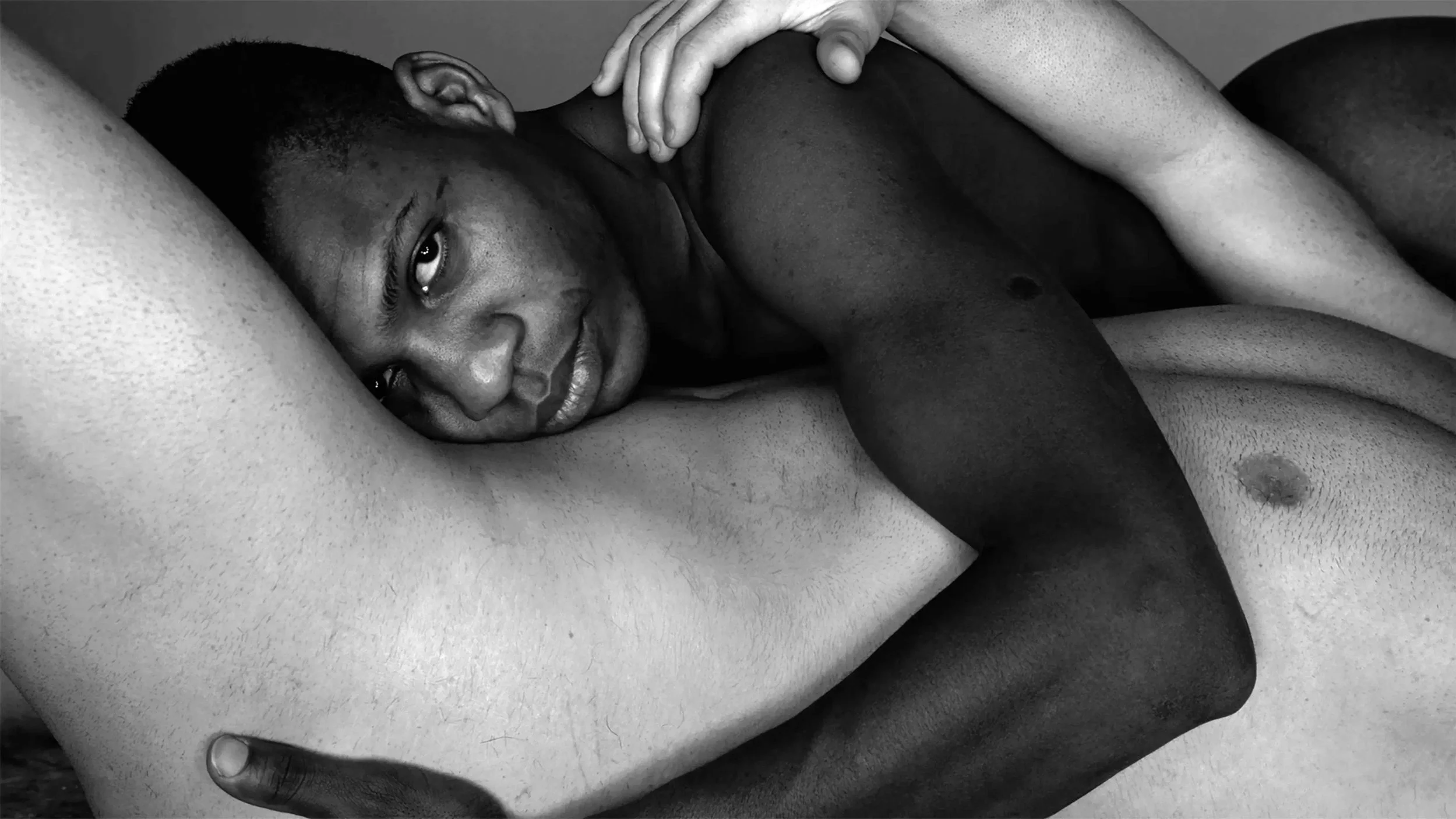
Image courtesy of Peccadillo Pictures.
This film has clearly been a labour of love for its director Sam Shahid since he has devoted ten years to bringing it together. His aim throughout was to restore the reputation of the photographer George Platt Lynes who was born in New Jersey in 1907, went to Paris at the age of eighteen and moved in that city’s artistic circles before becoming a notable figure himself in 1933 having taken a picture of Gertrude Stein which appeared on the cover of Time magazine. Despite taking further trips to France, it was in New York that he settled and quickly acquired widespread acclaim as a fashion photographer. It was that part of his work that made his name although he himself believed that the best of his art lay in the pictures that he took of male nudes, a sphere that had special meaning for him because he was gay and lived his life accordingly. In the event both sides of his photographic work contributed to him receiving less than his due recognition: the fame he found in the thirties and forties faded when, like fashion itself, fashion photography took on a new trend and style and his nude studies were so explicit that the laws of those days meant that they could not be made public.
While making a case for the importance of Lynes based on both the quality of his work and on the fact that as a gay artist he was a significant progenitor of such figures as Robert Mapplethorpe and Andy Warhol, Shahid's film is also a bio-pic of a remarkable man who sadly would die of cancer at the age of just forty-eight. It appears that he was never in the closet and for some years openly lived with the notable gay couple Monroe Wheeler and Glenway Wescott whose lifelong relationship was nevertheless an open one allowing for each to have other lovers, an arrangement which when Lynes appeared led to a three-way intimacy that lasted for years. We hear too of later relationships including one with a lover killed in the war in 1942 after which Lynes took up with the dead man's brother until the latter left him to marry a woman.
The portrait of Lynes that emerges is many-sided. An exceedingly handsome man, he made many friendships and exercised immense charm, but when it came to his eye for beautiful people he could be considered a physical snob. He was self-centered, regularly lived beyond his means (he became bankrupt several times) and even his friends acknowledged that he could be devilish. But the gay circles in which he moved marked him out as a man ahead of his time in refusing to hide away and conceal his sexuality. He emerges here as a memorably complex character when remembered by many people who knew him among them his artistic executor Bernard Perlin who died in 2014 and his nephew George Platt Lynes II. Other such figures include the photographer Duane Michals, the film director Bruce Weber and Christopher Isherwood's partner Don Bachardy, but we hear too from a range of younger curators, critics, art historians and writers who appreciate his art.
In what is a packed and fast-moving film (just occasionally too much so as when montages show pictures of celebrities taken by Lynes and don't give us time to study them), the life story is not skimped but the art is given pride of place. Lynes was a self-taught photographer yet the eye that he brought to his fashion work remains as striking as ever. Nevertheless, the male nudes are the central feature and the fact that Hidden Master has an ‘18’ certificate may encourage some viewers to seek out the film in the expectation that it will offer pornographic imagery. But in fact, Lynes disapproved of pornography and his nudes, however explicit, display a gay sensibility allied to an artistic visual sophistication which is something quite distinct from what one finds in commercial pornography.
In view of the time taken to bring this film to completion, it may well be that the revival of interest in the work of George Platt Lynes, which it seeks to encourage, is already under way. Indeed, the last few minutes of the film refer to the increasing availability of his work now and to interest in exhibiting it. In particular, the nude images which once had to be kept private are now largely available through the Kinsey Institute. Alfred Kinsey himself died in 1956 but his research into homosexuality had led to him knowing Lynes and to ensure the survival of these images Lynes gave them to his foundation in 1954 (and that at a time when even transporting such material to the facility had to be done secretly because it was itself illegal!). Intriguingly, while Lynes hoped that these images would one day be allowed to be seen, one special box was marked to be kept private and just what it contains is still a subject of speculation. But for the rest the art of George Platt Lynes can now be seen and, aided by this film, we can assess it for ourselves. His talent is apparent but the man himself is not so easily pinned down. Even so, for sheer style and bravado he had what it takes. That is well illustrated by his behaviour when hospitalised for cancer: determined to attend an opera performance just one more time he went AWOL and then went back. Within days of doing that George Platt Lynes was dead.
MANSEL STIMPSON
Featuring Jarrett Earnest, Jensen Yow, Bernard Perlin, Allen Ellenzweig, Mary Panzer, Bruce Weber, Rebecca Fasman, Steven Haas, Don Bachardy, Duane Michals, James Smalls, James Crump, Nick Mauss, George Platt Lynes II, Philip Gefter, Billy O’Connor, Vincent Cianni, John Stevenson, Vince Aletti.
Dir Sam Shahid, Pro Sam Shahid, Matthew Kraus, John MacConnell and Nando de Carvalho, Screenplay Sam Shahid, Matthew Kraus and John MacConnell, Ph Matthew Kraus, Ed Conor McBride, Music Sarah Lynch.
Antinous Films/Precious Few Productions-Peccadillo Pictures.
96 mins. USA. 2023. US Rel: 31 May 2024. UK Rel: 11 July 2025. Cert. 18.
