

The Oscar-winning documentarian Asif Kapadia now turns his attention to the eponymous Scottish footballer and manager.
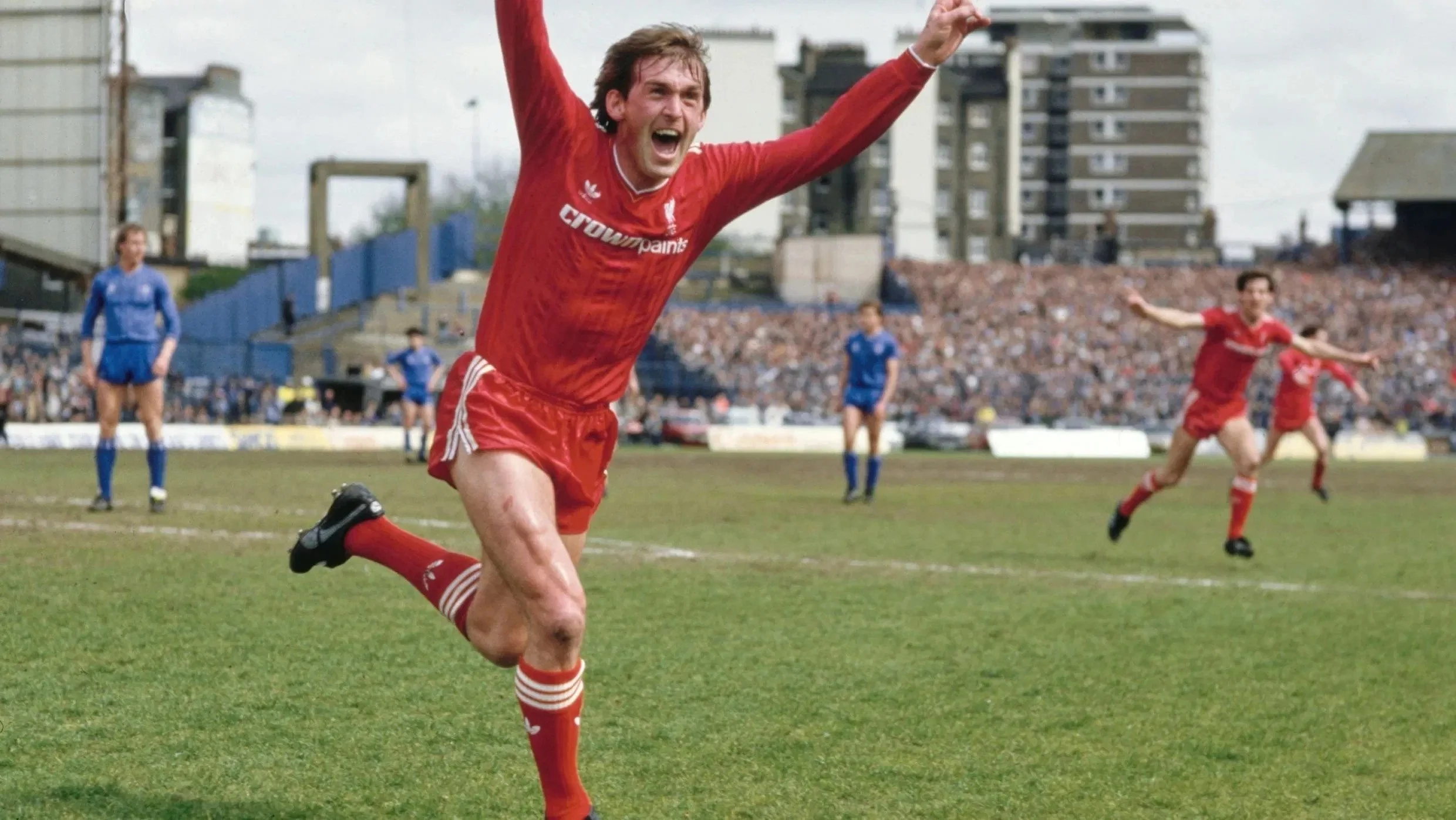
Image courtesy of Amazon Prime/Altitude Films.
The footballer Kenny Dalglish born in Glasgow but forever associated with Liverpool is the subject of the latest documentary feature by Asif Kapadia. Although his first film was the outstanding drama The Warrior made in 2001, the huge success of Senna (2011) has led to Kapadia being first and foremost associated with documentaries. In that sphere he has forged his own signature style by favouring the exclusive use of archive footage and recognising that it in no way lessens the impact when, instead of being seen, the contributors to biographic works of this kind are simply heard on the soundtrack.
It is undoubtedly to Kapadia’s credit that having created this successful formula he has refused to confine himself to this one mode. Although his 2015 biopic about Amy Winehouse and his 2019 study Diego Maradona confirmed that the style used in Senna was well worth repeating, he has recently ventured into the world of ballet in a work presented in wholly cinematic terms. That was 2022's Creature and, while what was originally a stage work was brilliantly rethought in movie terms, the fact that it was a modern ballet and one difficult for the viewer to interpret limited the film’s appeal. Almost equally imaginative yet far more clear-cut was 2073 which appeared two years later and blended a futuristic storyline with documentary footage to create a warning about the state of the world that already existed in 2024. It was admirably played by Samantha Morton but its passionate message was so bleak that the film was seriously undervalued and it seems to have been a commercial failure.
The fate of these two artistic endeavours has for the moment understandably led Kapadia back to the formula used in his most acclaimed works. Although Amy confirmed that the mode worked just as well away from the field of sport, Kapadia has now returned to films about sporting figures. First, there was Federer: Twelve Final Days made with Joe Sabia but which on release in the UK did not get into cinemas and which I did not see. That work was different in that it focused on the last matches in Roger Federer's tennis career but Kenny Dalglish is fully in line with its notable predecessors since it is a bio-pic encompassing its subject’s history from his birth in 1951 to his decision to step down from Liverpool F.C. in 1991. Later events are covered but only in written statements at the film’s close. However, it is Kenny Dalglish himself, now 74, who provides the key voice-over in this telling of his story.
An imaginative opening scene evokes the appeal of football by recalling the British comic strip Roy of the Rovers which was centred on the game and simultaneously sets up the link with Liverpool by having The Beatles on the soundtrack performing ‘I Wanna Hold Your Hand’. Kapadia had previously opted in both Senna and Diego Maradona to study great sportsman who were complex and controversial but this time around he was making a film centred on the joy of football for both players and fans and doing so through the story of an outstanding footballer whom he had first admired in the days when he himself was growing up in London. Indeed, to call this film a labour of love would not be wide of the mark. Appropriately Dalglish’s story unfolds here in chronological order starting with his school days and early memories of his father taking him to watch a Rangers match.
What followed was a steady progression as the sport became central to his life after he left school at the age of fifteen. He would play for Glasgow United and that would then lead to him being signed up by Celtic in 1967 and ten years later he would replace Kevin Keegan and become a key player for Liverpool F.C. which he would later manage as well. Comments on his career are heard from fellow players such as Graeme Souness and Alan Hansen and from writers and journalists including Simon Hughes, Steph Jones and Henry Winter. On a more personal note, we hear too from Dalglish's wife, Marina, whom he had married way back in 1974 (we learn that due to his commitments on the field the time off given to him was such that he had a one-day honeymoon!). Many other relevant figures are featured in the archive footage including Liverpool managers Bill Shankly and Bob Paisley and the great goal scorer Ian Rush and in passing Paul McCartney is also seen expressing his admiration for Dalglish. Even so the main voice heard remains that of Kenny Dalglish and it is central to his character that his comments should confirm that he is a man proud of Liverpool and someone who on looking back on his career stresses that it is winning that counts and not who scored the goal.
I should acknowledge that, whereas Senna and Diego Maradona were films about lives so filled with drama that you did not have to be a sports lover to enjoy them, Kenny Dalglish is somewhat less wide in its appeal. That does not mean that it is less well made and Kapadia is well served by his editor Matteo Bini and by his frequent composer Antonio Pinto. It is simply the case that Dalglish’s story is one in which extra drama beyond the pitch is not felt until the film reaches its second half. By the time that Dalglish doubles his duties by becoming both manager and player pressures on him do mount but more significantly Liverpool F.C. were caught up in two tragic events, first in 1985 and then in 1988. The former was when Liverpool faced Juventus in the European World Cup in Brussels and violent behaviour by the fans resulted in 39 deaths. The latter was the fatal crowd crush when Liverpool were playing at Sheffield’s Hillsborough Stadium. That was worse not only because 97 died but because it was not until 2016 that an inquest jury absolved Liverpool supporters who had been held to blame on the front page of the Sun newspaper despite the real cause being the gross negligence of the police and ambulance services. In reporting on this Kenny Dalglish takes on wider social issues but remains faithful to its focus on Dalglish himself since as we learn in the film’s closing statements he and Marina were both awarded the freedom of Liverpool in 2016 for the unwavering support that they gave to the Hillsborough families. Indeed, the film might well have added a reference to the knighthood bestowed by Prince Charles as he then was on Kenny Dalglish in 2018. In a memorable and particularly apt phrase it was given to him for his services to football, charity and the city of Liverpool.
MANSEL STIMPSON
Featuring the voices of Kenny Dalglish, Marina Dalglish, Graeme Souness, Alan Hansen, Simon Hughes, Cathy Long, Henry Winter, Steph Jones, Eric Hooton, Peter Hooton, Phil Scraton, Jegsy Dodd.
Dir Asif Kapadia, Pro Asif Kapadia, Ben Mawson and Chris Clark, Ed Matteo Bini, Music Antonio Pinto.
Tap 23/Lafcadia/Redrum Films/Calculus Media-Amazon Prime/Altitude Films.
104 mins. UK. 2025. UK Rel: 31 October 2025 for one day only in cinemas; 4 November 2025 on Prime Video. Cert. 12A.