
Oslo Stories Trilogy: Love

In the second part of Dag Johan Haugerud's distinguished trilogy, juxtaposed attitudes to love and sex echo the style of Eric Rohmer.
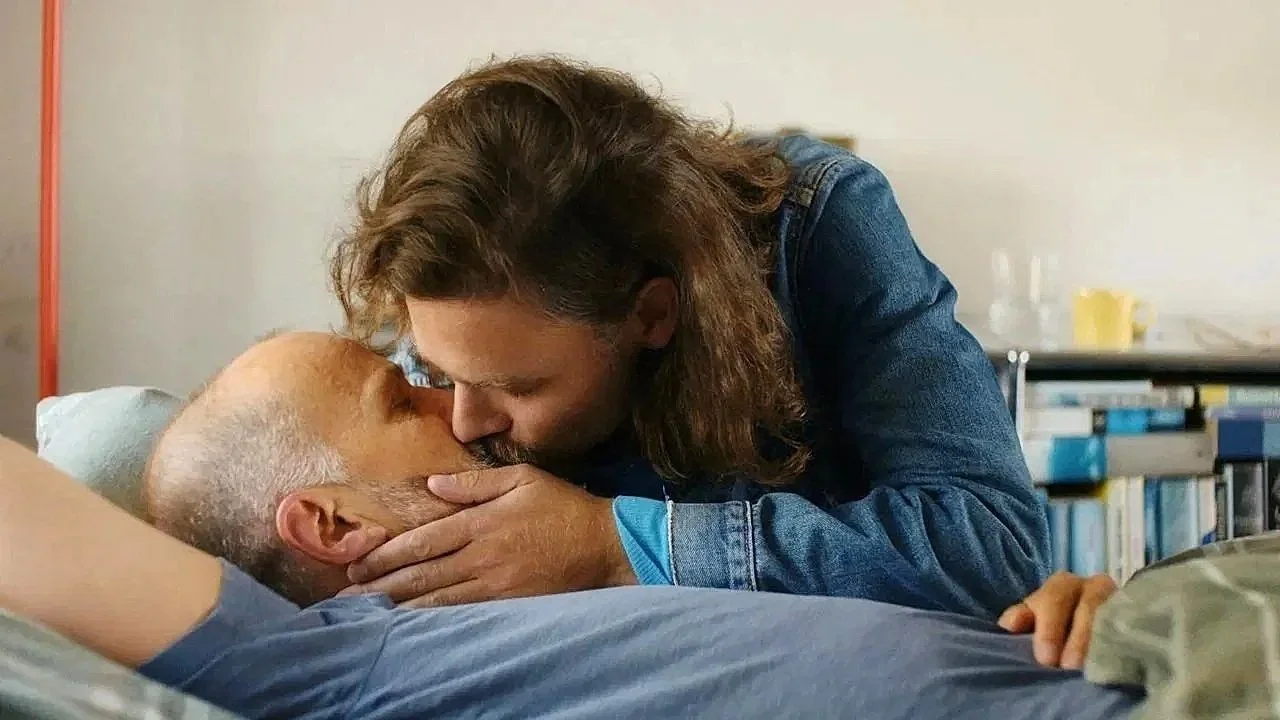
Image courtesy of Modern Films.
This is the second of the films by Dag Johan Haugerud which are being promoted as the Oslo Stories Trilogy although each one stands alone perfectly well. Earlier this month saw the UK release of Dreams and now comes Love. Both films are well worth a look although in the case of Dreams I did indicate that its last half hour was less effective than what had preceded it. Love also falters in its last stages but less significantly so and I feel that this is the better film of the two being a work which I can certainly recommend since its shortcomings are relatively minor.
Haugerud is both the writer and director of these pieces so it is not at all surprising that Love proves to have key characteristics which it shares with Dreams. In each case we have a work which respects words and gives talk a significant role, a striking feature since so much cinema today is built on action. Nor is Haugerud a showy director, but his work is properly cinematic for all that since he works with talented actors and ensures that our eyes are drawn to them. The only time that one wonders if the talk is too prominent is in the opening segment of Dreams when for plot reasons what we see is what is being described by a central character in a constant flow of words heard in voice-over.
But, despite the similarities, Love has a very different feel to it and the works of the great French director Eric Rohmer are evoked (the shared importance of talk and the ensemble nature of the piece). In Dreams we had a story centred on a strong single plot line concerning a teenage girl, her family and the teacher on whom she develops an intense crush. But, in total contrast to that, Love is a work which features a range of characters who may at times meet and interconnect but each of whom has in effect his or her own individual story. Here we meet Marianne (Andrea Bræin Hovig), an oncologist working in a hospital where she is assisted by a male nurse named Tor (Tayo Cittadella Jacobsen) who is openly gay. Marianne has a best friend named Heidi (Marte Engebrigtsen) who is a municipal worker involved in planning the best format for an upcoming city celebration in Oslo. Ole (Thomas Gullestad) has two marriages behind him and in Heidi’s eyes might be a potential husband for Marianne who is unmarried. His ex-wife, Solveig (Marian Saastad Ottesen) is still in evidence with their young daughters seeing both parents. Bjørn (Lars Jacob Holm) is a psychologist who comes to the hospital for surgery as he faces up to prostate cancer and attracts the attention of Tor. The remaining significant character is Snekkeren (Morten Svartveit) who despite being a married man has a sexual encounter with Marianne.
The interplay between these characters never seems forced since the hospital setting is one that brings a number of them together and it also happens that the ferry to Nesodden is a natural spot for other encounters to occur (Tor lives there and uses the ferry as a good place for gay pick-ups while Marianne has to take the ferry to visit Ole). All of these characters come convincingly to life (the cast is uniformly impressive), there is a notably well-judged music score by Peder Kjellsby and, as on all three films in the trilogy, there is fine work by the photographer Cecilie Semec. But the most interesting aspect of Love (and the most individual too) is the realisation that what Haugerud is giving us is not just a number of integrated tales but an invitation to contrast the range of responses to love and sex that emerge here. This is the true topic of the film and is presented in a way that is entirely non-judgemental as it portrays life in today's world where contacts are often made on Tinder or Grindr. Tor is a gay man who opts for one-night stands in preference to commitment but is entirely satisfied with that. Heidi although eager to embrace a woke outlook chooses to be sexually unadventurous and conservative (this is the one role presented with a touch of ironic humour, a tone that finds much greater expression in Dreams). Bjørn being an older gay man has witnessed the impact of Aids and has chosen to turn away from sex, a situation to which is now added his impotence following prostate surgery. Ole undeterred by his failed marriages is ready to embrace that state again, but Marianne, who might be ready to marry the right man, is also aware of the attraction that a passing sexual encounter could have.
In portraying these various sexual attitudes Love is intent on stressing how individuals are shaped by their particular experience and backgrounds (Ole, for example, is so passionate about his works as a geologist that it is central to who he is). Consequently, Love takes a very adult view of sex refusing to believe that what is right for one person must be right for another. But, without making further comment, it does show how Snekkeren is made uneasy by choosing to satisfy his other sexual urges through pickups despite genuinely loving his wife and the relationship that grows between Tor and Bjørn suggests that the uncommitted Tor has found a bond which despite lacking full sexual expression could be thought of as love.
Slightly longer than Dreams, Love lasts for two hours and, while one may come to feel that the pacing of it is a shade too uniform, it is only the last quarter of an hour that is lacking in impact. Here we find Ole’s ex-wife Solveig reappearing but without having anything important to contribute. Furthermore, with talk of the Oslo celebrations having come up at intervals throughout (the film takes place in the course of one month, August) Haugerud seems to have decided that the actual event should be seen as a kind of grand finale to his film even extending it behind the end credits. For a film so individual to conclude on this note is oddly conventional and feels inappropriate too. But these shortcomings do not prevent Love from being decidedly worthwhile, its undoubted qualities being of a kind all too rare in cinema today.
Original title: Kjærlighet.
MANSEL STIMPSON
Cast: Andrea Bræin Hovig, Tayo Cittadella Jacobsen, Marte Engebrigtsen, Lars Jacob Holm, Thomas Gullestad, Marian Saastad Ottesen, Morten Svartveit, Khalid Mahamoud, Paal Herman Ims, Anna Berg.
Dir Dag Johan Haugerud, Pro Yngve Sæther and Hege Hauff Hvattum, Screenplay Dag Johan Haugerud, Ph Cecilie Semec, Pro Des Tuva Hølmebakk, Ed Jens Christian Fodstad, Music Peter Kjellsby, Costumes Ida Toft.
Motlys/Viaplay Group/Novemberfilm-Modern Films.
119 mins. Norway. 2024. US Rel: 16 May 2025. UK Rel: 15 August 2025. Cert. 15.
