
Remake

The documentarian Ross McElwee explores memory and loss in his fine memorial to his late son.
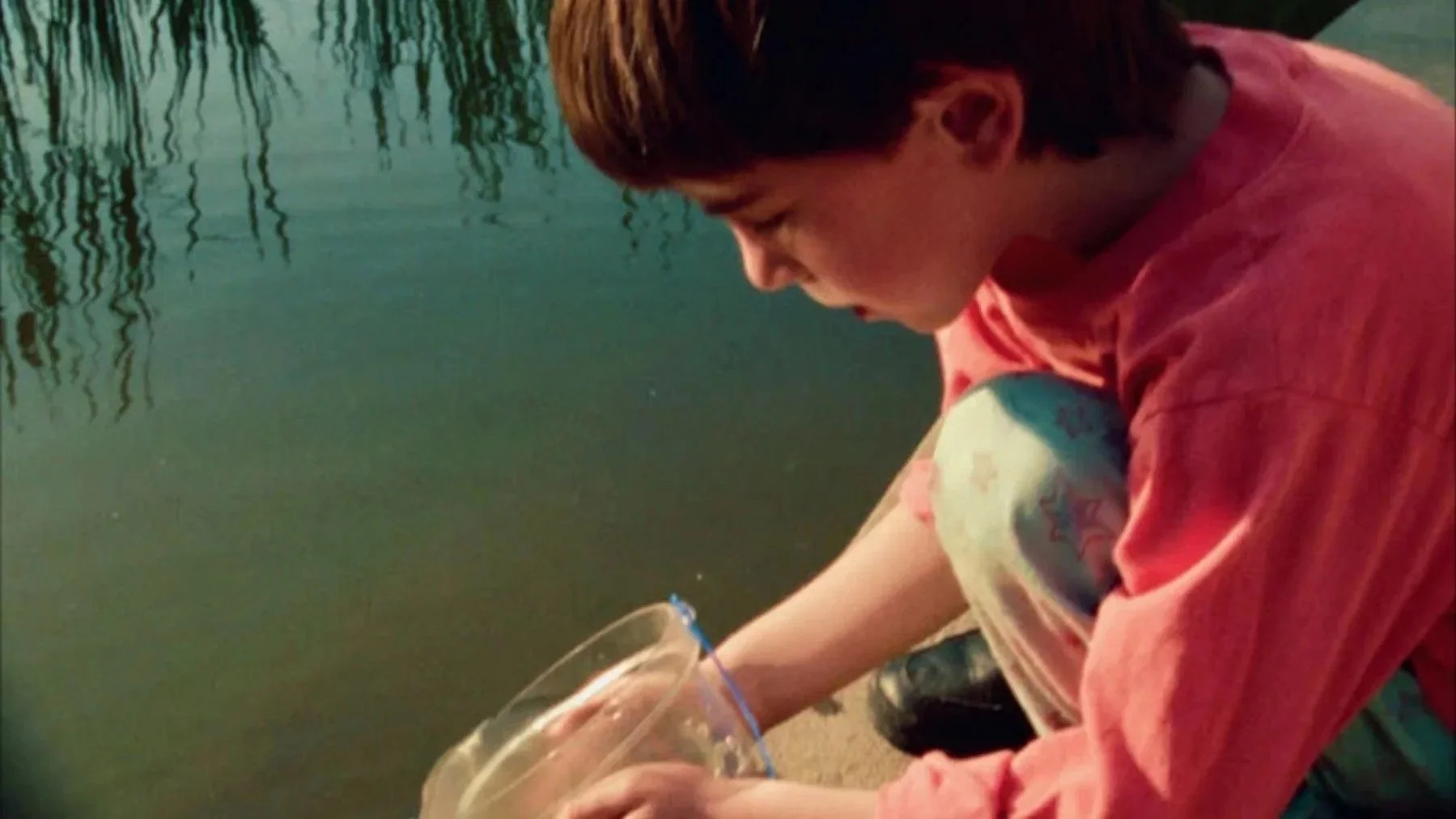
Adrian McElwee
Image courtesy of Metfilm Distribution.
by MANSEL STIMPSON
Best known for his long 1985 feature Sherman's March, Ross McElwee is certainly an established documentarian but he is very little known in the UK and viewing his new film Remake marked my own first experience of his work even though he has reached seventy-nine years of age. What I found out about him confirmed that his output has been of a very individual kind and that, regardless of any wider concerns expressed in them, his documentaries have regularly drawn on his own life and that of his family. That is indeed apparent from viewing Remake because it incorporates not only home movies but a wide number of clips taken from his previous work in which family members are seen. That element is absolutely central in this latest piece, his first film since 2011, and inevitably so since Remake is concerned with his son Adrian whose death in 2016 at the age of twenty-seven marked the greatest loss in his father's life.
Few films are as personal to the filmmaker as this one, yet Ross McElwee’s own experience as expressed here carries a broader resonance. Two things are at the heart of Remake, namely the relationship between a father and his growing son and the impact of a close loss that then haunts the memory. Both are highly relatable and what is expressed here regarding this death in the family is not confined in its relevance to the passing of a son or of somebody who tragically dies when still young. What is indeed unique to Ross McElwee is the fact that, when looking back on Adrian's life seven years after his death, he had so much film in which his son featured, something which Ross describes as being both a treasure and a black hole. Many people may have home movies of this kind, but the fact that Ross McElwee put his family into his documentaries made his case special. It is striking that when Ross looks back and picks out his happiest times he refers to a golden period of family life and of filming, a phrase which conflates the two.
Throughout Remake we have the filmmaker as narrator and we do see him from time to time, but it is Adrian who is the key figure in the images with his father mainly behind the camera. We see too Adrian's adopted sister, Maria, and her mother, Marilyn, who was Ross's first wife (we only half see his second, Hyun Kyung Sim, since she declines the suggestion that he should show her face). All of these family members appear since their history together is part of Adrian’s story which is told in some detail but not always in chronological order. That’s because the images of him come up in a way that reflects how the memories keep coming back to Ross often returning to the boy’s childhood years.
Because of the nature of the film some events, even important ones, are put to one side. In particular the divorce of Ross and Marilyn comes up rather suddenly and without much detail although we have already learnt that Marilyn had come to dislike being filmed so much. To what extent McElwee’s obsessive filming of his family may have been harmful to them is not clear, but it certainly seems to have been positive in Adrian's case since as a young man he became fascinated by filming and took up a camera himself (some of his own work is incorporated in Remake). The issues that arose with Adrian appear to have been the by no means unfamiliar ones of a young adult away from home being influenced by the company he was keeping and making youthful misjudgments over drugs and alcohol. While the separation and subsequent divorce of his parents may have had an unfortunate effect on him, for Ross the question would become to what extent he should have been more aware or more ready to intervene after a drug overdose had given notice of what might develop. That the break-up with Marilyn was affecting Ross and that he himself had a health crisis leading to a triple bypass heart operation make it easy to understand the extent to which he had personal preoccupations at this time. In the event, although Adrian's death would come at an unexpected moment following a relapse and a seeming recovery, it had by then become apparent that Adrian was one of the many victims of the opioid crisis in America and it was fentanyl that finally killed him.
Ross McElwee undoubtedly holds the viewer throughout his film even though it lasts for almost two hours. For all the intense feeling behind it Remake never falls into sentimentality. Furthermore, if it functions first and foremost as a film about a father and son relationship made poignant by loss, a key scene in it occurs when Adrian has asked his father to film him and we hear and see Adrian describing his experience with drugs in a way that is a stark warning as to where this road may lead.
But, despite this focus, other elements in McElwee's life play a part in this film too. They include the drawn-out attempts initiated by director Steve Carr to set up a fresh version of McElwee's film Sherman's March featuring actors. These episodes bring a lighter and somewhat comic tone to parts of the film and end rather splendidly with a new treatment drawing on the 1985 feature emerging successfully and in a most unexpected form. One of those who had been in the original film was a teacher known to Ross, Charleen Swansea, who earlier still had appeared in a short film of his too. She is seen here as an elderly woman but now suffering from dementia and unable to remember being filmed all those years ago. In this instance the material adds to the sense of time passing and of loss and indeed the closing credits state that Remake is "In memory of Adrian McElwee and Charleen Swansea". What we have here is a film in which the personal is so closely linked to common human experiences that it creates a work which is meaningful regardless of any lack of previous knowledge of Ross McElwee and his films. Furthermore, although the point is not made in the film, it is fascinating to recognise that it is in fact Adrian who has enabled his father to return to filmmaking after a gap of fourteen years. That could almost be seen as a kind of blessing from the dead.
Featuring: Ross McElwee, Adrian McElwee, Charleen Swansea.
Dir Ross McElwee, Pro Mark Meatto and Ross McElwee, Screenplay Ross McElwee, Ph Ross McElwee and Adam McElwee, Ed Ross McElwee and Joe Bini.
Giant Squid/Impact Partners-Metfilm Distribution.
114 mins. USA. 2025. US Rel: 10 July 2026. UK Rel: 25 September 2026. Cert. 15.
