
Sense and Sensibility

Jane Austen’s first novel is brought to the screen in a superlative version that captures the material with nuance, humour and intelligence.
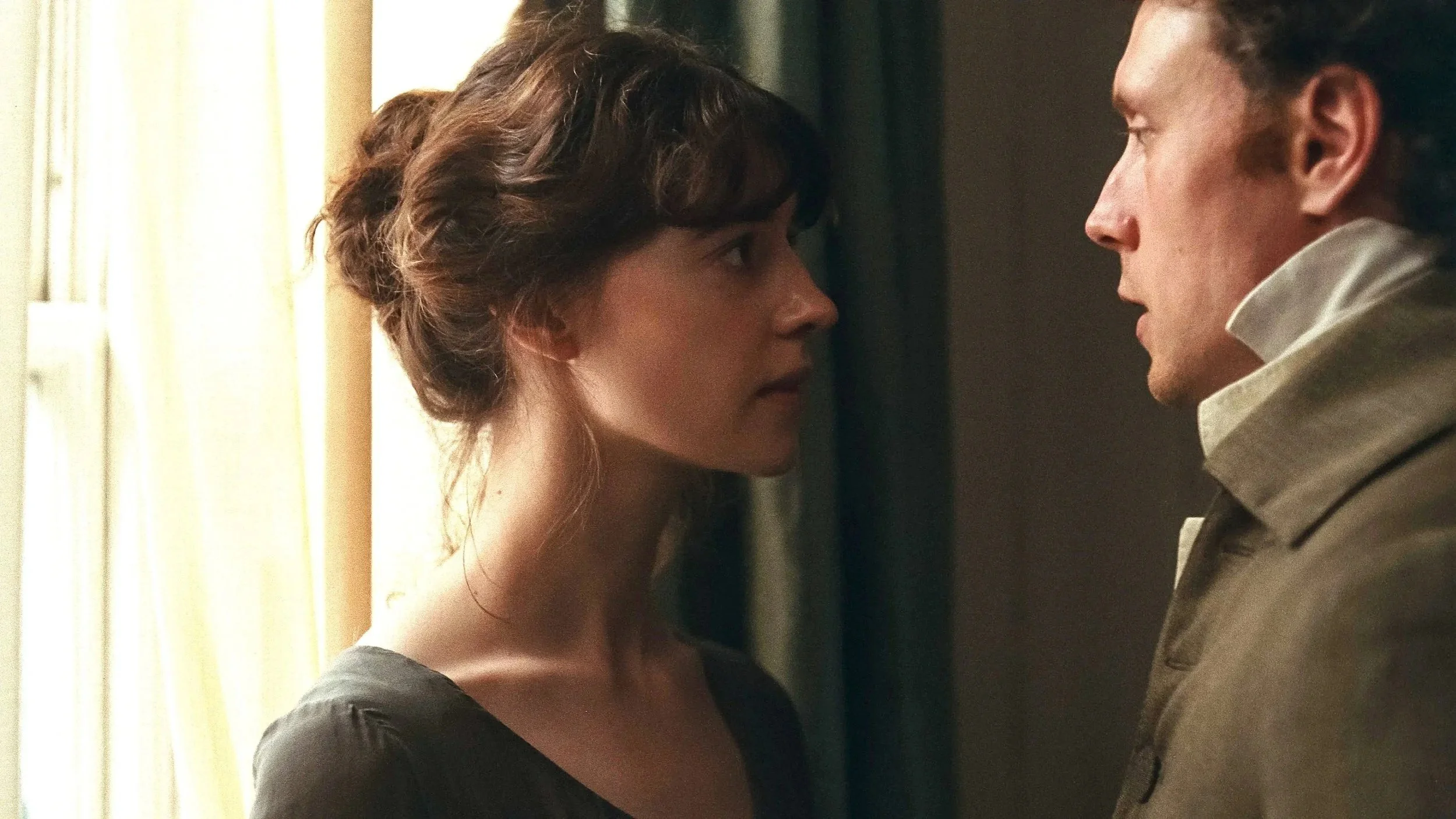
Unspoken affections: Daisy Edgar-Jones and George MacKay.
Image courtesy of Universal Pictures.
by JAMES CAMERON-WILSON
Jane Austen is the brand that just keeps on giving. And as with many established products, there have been numerous attempts to tweak it, modernise it and sex it up. But the fact remains that Austen knew how to spin a good yarn, albeit cloaked in the social mores of her time. Her first published novel, Sense and Sensibility (1811), has been adapted multiple times, for television, radio, in Tamil and Hindi, and even into manga and a stage musical. Most famously, Emma Thompson won an Oscar in 1996 for her big-screen edition directed by Ang Lee and starring herself, Kate Winslet, Alan Rickman and Hugh Grant. While garlanded with accolades, it was not a perfect adaptation and rather lost a head of steam in the final act. But not so with this version.
The English director Georgia Oakley (Blue Jean) has taken the material and, working from Diana Reid’s scintillating screenplay, has delivered a more-or-less straightforward romance, utilising 35mm film to create a period piece that feels authentic to the visual aesthetic of its time. Furthermore, Oakley has honoured the buttoned-up emotions of the original narrative, in which social decorum impedes the navigations of the heart, leading to misunderstandings and devastated affections.
Several Austen films have focused on the humour, others on the sheer romantic thrust of the material, but Oakley and Reid have managed to steer a course between the two, culminating in an authentic tsunami of emotion as two freshly impoverished sisters, Elinor and Marianne Dashwood, find their respective beaus out of heart’s reach. Daisy Edgar-Jones has been building a head of steam since she broke out in Sally Rooney's Normal People for the BBC, but here she reaches a whole new level, capturing the intelligence and passion of the iniquitously thwarted Elinor, while Esmé Creed-Miles is astonishingly good as the more flighty and histrionic Marianne. Esmé’s mother Samantha Morton is already getting Oscar buzz for her turn as Circe in The Odyssey and if there’s any justice in Hollywood, Esmé should be attending the same red carpets. But then everybody is pitch-perfect here, from George MacKay’s noble, warm and painfully conflicted Edward Ferrars, Bodhi Rae Breathnach as the youngest Dashwood sister Margaret and Chloe Pirrie as the weather-obsessed Lady Middleton, while Fiona Shaw merrily chews the décor with continuous peals of laughter.
This is gold standard Jane Austen in which everybody pulls their weight, from the cinematographer Arnaud Potier, production designer Francesca Di Mottola, sound designer James H. Mather and composer Roger Goula, combining their talents to concoct a masterpiece of period cinema. It’s hard to know who to praise the most, although Diana Reid’s exquisitely manicured dialogue is a thing of beauty, expertly piloting the minefield of manners and money. There may be no room for romantic fulfilment in the face of societal propriety, but the giant subtleties of Reid’s screenplay is guaranteed to bring forth a guttural wail from the viewer’s breast, all the more so as her characters are so stifled by their nobility.
Cast: Daisy Edgar-Jones, Esmé Creed-Miles, Caitríona Balfe, George MacKay, Fiona Shaw, Bodhi Rae Breathnach, Frank Dillane, Herbert Nordrum, Stacy Martin, Tom Brooke, Turlough Convery, Chloe Pirrie, Eliot Sumner, Bethany Slater, Ceara Coveney, Sophie McGibbon.
Dir Georgia Oakley, Pro Tim Bevan, Eric Fellner, India Flint and Jo Wallett, Screenplay Diana Reid, Ph Arnaud Potier, Pro Des Francesca Di Mottola, Ed Izabella Curry, Music Roger Goula, Costumes Grace Snell, Sound James H. Mather, Dialect coach Neil Swain.
Working Title Films/November Pictures/Kiddo Films-Universal Pictures.
132 mins. UK/USA. 2026. UK Rel: 25 September 2026. US Rel: 16 October 2026. Cert. U.