
The Chronology of Water

Kristen Stewart makes her directorial debut with a stylised reading of Lidia Yuknavitch’s memoir of sexual abuse and salvation.
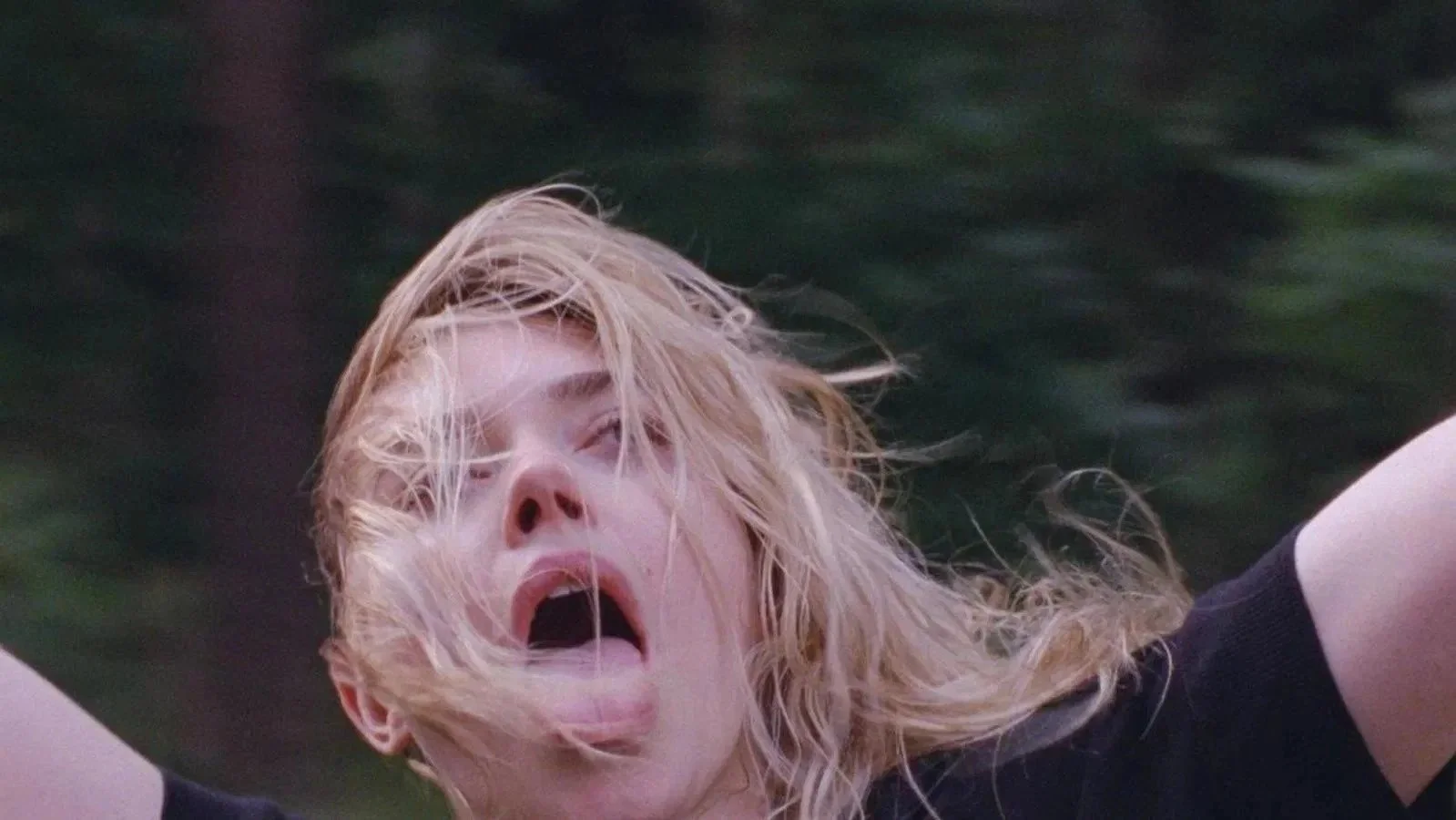
Imogen Poots
Image courtesy of BFI Distribution.
by MANSEL STIMPSON
The Chronology of Water marks the feature debut of Kristen Stewart as both writer and director. It is a remarkably brave venture since it has been undertaken in a way that makes no concessions whatever to popular appeal. But, given the trajectory of Stewart's acting career, we ought not really be surprised. Following the huge popular acclaim that Stewart garnered when starring with Robert Pattinson in the films comprising The Twilight Saga, most actresses in such a situation would have sought to sustain their mainstream appeal. But Stewart has preferred to be truly adventurous. That was illustrated by her coming to Europe to make two films with Olivier Assayas (2014’s Clouds of Sils Maria and 2016’s Personal Shopper) and by the fact that she has also appeared in films by the likes of Kelly Reinhardt (Certain Women, 2016,) Pablo Larraín (Spencer, 2021) and David Cronenberg (Crimes of the Future, 2022). In addition, she joined up with newer talents such as Rose Glass (Love Lies Bleeding, 2024) while her willingness to embrace controversial material was revealed in 2018’s Lizzie, a drama bringing together lesbianism and murder and based on the notorious real-life killer Lizzie Borden.
With that history in mind, it is not really so unexpected to find Stewart daring to bring to the screen Lidia Yuknavitch’s memoir The Chronology of Water despite her previous experience in writing and directing being so limited (she contributed to a single episode in a TV series and worked on a few shorts and music videos). Many would regard her chosen material as challenging in itself since Yuknavitch’s personal story is one which, despite leading ultimately to a happy marriage to Andy Mingo, was remarkably bleak and troubled. Early on it involved being sexually abused by her father (which was also the fate of her older sister Claudia). Her difficult childhood in San Francisco looked set to lead to a successful career in sport (she won a swimming scholarship to Austin Community College in Texas) but the strains she was experiencing in her life resulted in her seeking reliance on drugs and alcohol which put an end to that possibility.
Yuknavitch is now sixty-two but the film concentrates on the earlier part of her life. As well as being affected by the trauma resulting from her father's behaviour and the failure of her mother, an alcoholic, to do anything to help her, she went through the difficult process of seeking to find herself. This involved recognising her bisexuality and coming to terms with what worked for her in a relationship. The film shows how a gentle boyfriend, Phillip, would prove too passive for her and her subsequent experimentation with rougher sex even led her into a BDSM encounter. Further anguish came when she had a child that was still born thus adding to what weighed her down. Nevertheless, she would eventually enter into a good relationship with Andy Mingo and in coming to terms with herself she achieved success as a writer. The film portrays the helpful influence on her writing of Ken Kesey when she along with others in his class participated in creating with him the novel Caverns which appeared in 1989. The memoir on which this film is based appeared in 2011 and Yuknavitch is now established both as a novelist and as a teacher.
Despite Lidia Yuknavitch’s life taking this upward turn the history at the heart of The Chronology of Water is for the most part tough and disturbing and one feels the weight of that given that Stewart's film lasts for over two hours. That may deter some viewers who would prefer an easier watch but arguably a yet bigger challenge lies in the style which Stewart has adopted to tell the tale. The film is in five sections and overall it does admittedly enable one to grasp how Lidia Yuknavitch’s life developed. Nevertheless, with Lidia’s reflections heard on the soundtrack The Chronology of Water is presented in a stylised way suggestive of flashes of memory that play out in the mind in a fragmented or even symbolical manner. Scenes are often short and frequently feature intercutting that cuts across normal narrative procedures. When Sorry, Baby appeared in 2025 it was regarded as adventurous due to being a tale about the long-term impact of being raped which was told out of chronological order. That fine film is worth mentioning here if only in order to stress that, even though both works share the decision not to depict rape directly, these two productions are not alike in character. Sorry, Baby for all its offbeat construction could be recommended as a work of mainstream cinema whereas the extreme stylisation of The Chronology of Water brings it close to what can be regarded as avant-garde cinema.
To go that far stylistically runs the risk of losing an audience and The Chronology of Water will not be for everyone. Nevertheless, those prepared to accept it on its own terms will find a number of factors that work very much in its favour. It certainly helps that the film has an exceedingly able supporting cast: Thora Birch plays Lidia’s sister, Michael Epp her father, Earl Cave is Phillip, Charlie Carrick appears as Andy Mingo and there is an effective segment when the film relaxes with an evocation of the writing sessions with Ken Kesey, a role neatly taken by Jim Belushi. But what is vital to the film is the intense commitment that Imogen Poots brings to her portrayal of Lidia herself: she anchors the film. On top of that Stewart directs with authority and, having decided on the style that she feels appropriate, she sustains it consistently throughout. Other notable qualities include the photography by Corey C. Waters and the imaginative music score provided by Paris Hurley.
The Chronology of Water functions in a manner that for me does have its limitations. When after forty-five minutes or so it included a scene between the two sisters which lasted rather longer and adopted a more traditional tone I found that it drew me in far more satisfyingly than did the film’s predominantly avant-garde mode. Nevertheless, Stewart has had the courage to do it her way and Poots is an ideal companion in her venture. Some viewers will respond far more approvingly than others, but the film that has emerged is skilled and clearly represents what Kristen Stewart wanted.
Cast: Imogen Poots, Thora Birch, Jim Belushi, Tom Sturridge, Earl Cave, Charlie Carrick, Susannah Flood, Michael Epp, Kim Gordon, Anna Wittowsky, Esmé Creed-Miles, Marlena Sniega, Eleanor Hahn, Esme Allen.
Dir Kristen Stewart, Pro Michael Pruss, Rebecca Feuer, Charles Gillibert, Yulia Zayceva, Max Pavlov, Svetlana Punto, Maggie McLean, Kristen Stewart, Dylan Meyer and Andy Mingo, Screenplay Kristen Stewart, from the memoir by Lidia Yuknavitch, Ph Corey C. Waters, Pro Des Jen Dunlap, Ed Olivia Neergaard-Holm, Music Paris Hurley, Costumes Liene Dobraja.
Scott Free Productions/Forma Pro Films/CG Cinéma/Nevermind Productions/Fremantle/Curious Gremlin/Lorem Ipsum Entertainment/Scala Films-BFI Distribution.
128 mins. USA/France/Latvia. 2025. US Rel: 9 January 2026. UK Rel: 6 February 2026. Cert. 18.
