
The Last Spy

Katharina Otto-Bernstein’s fascinating documentary looks at the life of the 100-year-old Cold War veteran Peter Sichel.
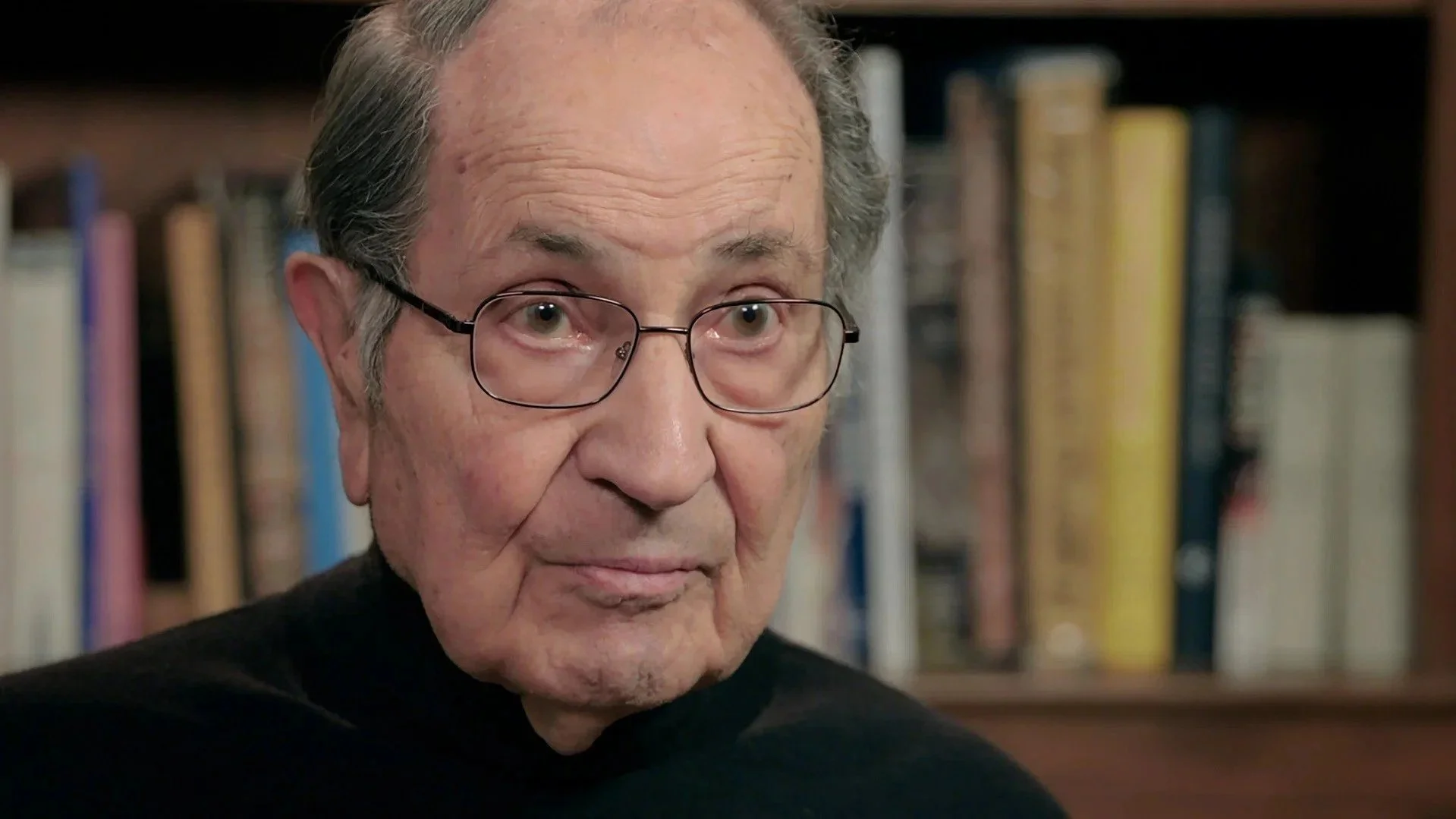
Image courtesy of Dogwoof Releasing.
by MANSEL STIMPSON
This is a film which offered a platform to the late Peter Sichel who died in February 2025 at the age of 102. He was already 100 years old when the documentarian Katharina Otto-Bernstein interviewed him for her film and it is self-evident that he was very keen to talk on camera about his life. Sichel had been born in Mainz, Germany in 1922 into a family that did well in the wine business and his own later years found him following in that tradition with notable success (the popularity of Blue Nun being part of that). But what Sichel was keen to record concerned his earlier days.
The film is divided into five chapters and the first of these is concerned with his childhood and background. It covers the story of how this Jewish family moved to France in 1938 subsequently suffering internment there but nevertheless being able to reach New York where they had relatives in 1941. In chapter 2 ‘The Making of a Spy’ the film moves on to tell of Sichel’s role in the OSS (Office of Strategic Services) and then in the CIA when, in a seamless change, the former OSS took on this new identity in 1947. Sichel was an increasingly central figure in this world. Indeed, he was given a medal for outstanding service when he resigned in 1960. Why he took that step and his justification for doing so is at the heart of his testament as now presented on film. It was something that he agreed to do after an attempt to write about his life was subjected to redactions. On screen he can speak directly and uncensored: “I’m seeing the facts and here they are”.
Otto-Bernstein’s film is not a highly cinematic work but it is nevertheless compelling due to the fact that what Peter Sichel has to tell us is so fascinating. Although unseen, the filmmaker is present to ask him questions but Sichel is in any case a fluent speaker undimmed by age. Intercut at intervals are comments from family members, namely his second wife Sylvia (also now deceased) and his daughters Bettina and Stella. A number of others appear too. They include the historians Peter Grose and Stephen Kinzer and authors such as Scott Anderson and Adam LeBor as well as the famous Carl Bernstein, all of whom add their observations. This footage shot for the film is blended with archive newsreel and with other images that illustrate what we are being told. When dealing with Sichel’s wartime work for the OSS the film makes use of a few clips from the 1951 film Decision Before Dawn which is apt enough since it was based on an actual operation which he ran. This source is duly acknowledged, but elsewhere unidentified material stands in well enough. Indeed, Otto-Bernstein is generally adept at bringing together these various elements together, but there is one brief segment telling of a betrayal by a woman spy in Berlin and here the events are clearly enacted but without any source for it being declared. This just feels false but it is a rare misjudgment in a well-assembled film.
The film may be said to get down to business when it reaches that second chapter since it is here that we learn of the German-speaking Peter Sichel being recruited by the OSS. Even so, the introductory chapter dealing with the family background and their eventual escape from Europe is in itself an engrossing story and it is particularly revealing to learn that once the Sichels arrived in New York they became aware of antisemitism in the city. Manhattan’s Upper East Side contained the headquarters of the German American Bund and was referred to as Nazi Town. Working for the OSS and then the CIA led to Peter Sichel having huge respect for the intelligence they provided and even greater dismay over those in authority who then chose to ignore or reject it. When commenting on the Second World War he doesn't hesitate to criticise General Patton in this respect. The third chapter then follows and starts with the immediate post-war period. It largely focuses on Berlin, the Cold War and the famous airlift of the late 1940s.
Sichel and other contributors question American policies and attitudes even more strongly in the fourth chapter entitled ‘A New World Order'. This part of the film concentrates on the 1950s with Eisenhower as president and it emphasises the importance then of the Dulles brothers, Allen and John Foster. This was the time of the buildup of the Red Scare central to the McCarthy era which led to hatred and fear of communism becoming a key influence on American policy. What is most striking about this part of the film is the way in which many countries that became places of conflict, among them Albania, Iran, Guatemala and Indonesia, were transformed by America choosing to interfere and take sides. Its marked hostility to nations emerging as socialist or just wanting to stay neutral was promoted as a necessary stand to prevent the further encroachment of communism. When it comes to the situation in Guatemala in 1954, the film finds Erick Arbenz describing how his grandfather, its democratically elected president, was branded a communist by John Foster Dulles and brought down by the CIA. Later on, Kartika Soekarno describes how her father, Indonesia’s first president, lost the support of the Eisenhower administration due to his non-alignment stance leading to the CIA supporting uprisings against him.
The film’s final chapter leads up to Peter Sichel resigning from the CIA because he felt that the wrong thing was being done all too often and at too deadly a cost. Before reaching that point, he had already come to be regarded as too critical in his views and was accused of failing to be a patriotic American. This led to the FBI investigating him but, after he was cleared, he was then sent to Hong Kong as the CIA’s station chief there. That was in 1956 and it was his subsequent concerns over those events in Indonesia and over other misjudgments as he saw it (the CIA sending freedom fighters into China was one of them) which ultimately led to his decision to step down. Some may of course question his views and, since what we have here is his own testimony and justification, what he says could be dismissed as self-serving. Nevertheless, this direct account feels heartfelt and usefully covers a period of history which may well be unfamiliar to many now. Furthermore, it registers loud and clear as a fascinating foreshadowing of the attitude of the Trump administration when it comes to the way in which America foreign policy has in recent times involved using force for its own purposes while claiming to act so as to create a better and safer world. The Last Spy is historically fascinating, but all the more so because it also speaks to our own times.
Cast: Peter Sichel, Stella Sichel, Bettina Sichel, Sylvia Sichel, Stephen Kinzer, Adam LeBor, Carl Bernstein, Scott Anderson, John Hadden, Peter Grose, Kartika Soekarno, Erick Arbenz.
Dir Katharina Otto-Bernstein, Pro Oleg Dubson, Sabine Schenk, Katarina Otto-Bernstein and Kathrin Lohmann, Screenplay Katharina Otto-Bernstein, Ph James Carmen, Ed Matthew Cohn, Music David Benjamin Steinberg.
Film Manufacturers Inc./KJ Entertainment/Schenk Productions-Dogwoof Releasing.
106 mins. USA/Germany. 2025. UK Rel: 24 April 2026. Cert. 15.
