These Violent Delights

Romeo and Juliet is the basis of Scottish Ballet’s highly ambitious endeavour to develop the art of on-screen dance.
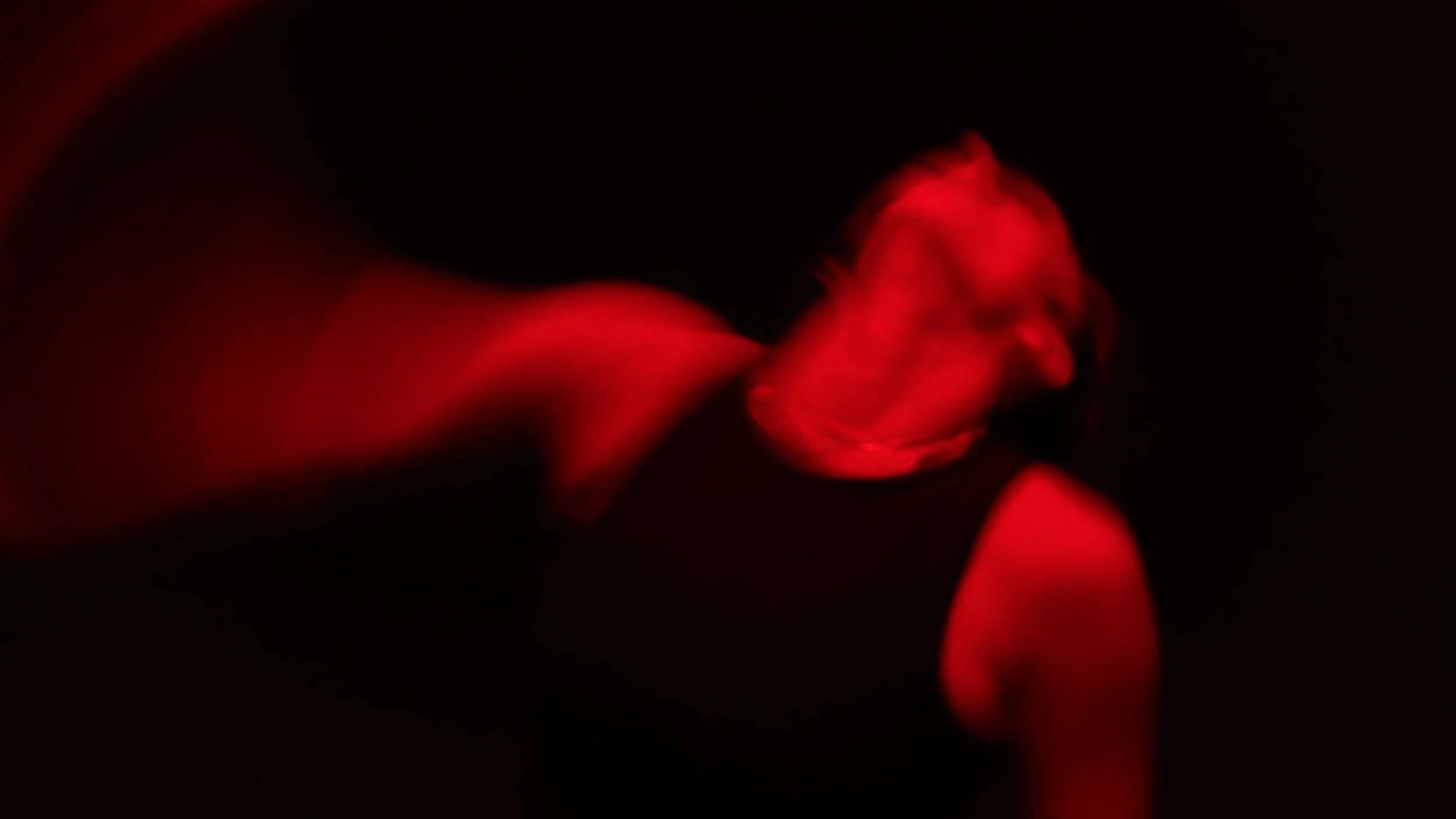
Image courtesy of Tull Stories.
by MANSEL STIMPSON
Despite my interest in opera and my enthusiasm for classical music in general, I have never been greatly drawn to ballet and it really needs somebody well-versed in that art form to give an authoritative review of this film. But, even so, I can say with certainty that this Scottish Ballet presentation directed by Christopher Hampton and Oscar Sansom is a memorably bold attempt to create a ballet that is wholly cinematic in its concept. This venture is so wholehearted that I feel that it would be wrong to give this film any rating lower than four stars even if some aspects of the piece did not fully work for me. Even some ballet fans may be less than totally won over, but what is attempted here is so striking that anybody interested in modern ballet should certainly see These Violent Delights and assess it for themselves.
Hampson and Sansom describe their work as one that is based on Shakespeare's Romeo and Juliet but they are not afraid to take liberties. That is illustrated both by the fact that this retelling of the play is reduced to a length of seventy minutes and that one of the most famous episodes in it, the balcony scene, is omitted entirely. But then everything about this film is decidedly adventurous including the choreography of the piece by no less than six people (see the credits below). The dictionary describes choreography as a sequence of steps and movements in dance and ,while that is most usually done for a stage performance, it is an art that can be applied in cinema too as Gene Kelly for one has illustrated. In that context one finds the sense of movement acquiring an extra aspect through the editing of images which in itself adds to the flow at the heart of the choreography. That element is often taken to new heights in These Violent Delights so it could not be more appropriate that the film’s editor is one of its directors, Oscar Sansom.
When it comes to modern dance on film, we have already had one outstanding example and that was Asif Kapadia’s Creature (2022). That work was even more exploratory than this one in that the soundtrack itself was handled in ways that added to the sense of it being a unique experience that enveloped the viewer. However, while both films were crafted so that inserted close-up shots and camera movement have a significant role in creating a uniquely cinematic dance experience, the contribution that editing can make is arguably even more central here. Kapadia’s film although rethought for cinema did derive from a work that had previously been staged by English National Ballet but These Violent Delights was from the very start designed for cinema and it is impossible to imagine it in any other medium.
Despite the praise that I lavished on the techniques that Kapadia brought to filming Creature, I had to add that I thought it quite likely that its audience might well find it very difficult to understand the story that it was seeking to tell (it was said to have been influenced by the novel Frankenstein and by the stage play Woyzeck but it played out in a stylised modernistic setting). In contrast to that, audiences for These Violent Delights are likely to be aware in advance that they are seeing a fresh take on Romeo and Juliet and that is indeed a lifeline to understanding the story that unfolds here. Such is the fame of Shakespeare's play that virtually everybody knows that Romeo and Juliet are young lovers belonging to rival families, the Montagues and the Capulets, and that the feud is so strong that their story will end in tragedy and death. Yet, in spite of that familiarity with the original, this treatment is often less than easy to follow partly indeed because of one’s need to adjust to the changes that have been made to it.
These Violent Delights is presented as ‘Juliet’s Dance on the Edge of Eternity’ and as such it begins at the end and presents the tale as something akin to memories of what had happened recalled by Juliet as she dies. Unusually for a ballet work, even one for the cinema, it contains a few spoken words but for the most part the viewer has to grasp what unfolds from what he or she remembers of the play and from what is apparent just by seeing the on-screen figures. Apart from Romeo and Juliet themselves, it is clear here that Lord and Lady Capulet are Juliet's parents and that they see Paris as a suitable husband for her. However, when it comes to such additional figures as Mercutio, Tybalt and Benvolio it can be difficult to know who each one is and what their relationships to one another are. Those able to recall the play may not remember that there is an apothecary in it who sells poison to Romeo, but they will doubtless recall the significant role played by the priest Friar Laurence. However, at this point These Violent Delights opts for decidedly modern variants.
Initially, although the Capulet mansion is a well-established building with elegant rooms and paintings on the walls, the film does not feel set in any specific period. But when it switches to an urban setting it becomes contemporary and The Apothecary becomes the name of a gay nightclub where Shakespeare's Father Laurence becomes Sister Laurence and is the star turn in the club's drag show cabaret telling us in a camp song that he is bad. Despite the gay setting both Juliet and Romeo are attendees and the film finds them dancing together in what, enhanced by stage lighting effects, is the film’s most romantic scene.
Throughout the film the decision to treat the story from Juliet's viewpoint stresses the constraints on her and the need that she has to break free if she is to make her own life. It's an approach which may add to the work’s appeal to today's younger viewers. However, the degree of stylisation involved, including at one stage the use of a fisheye lens, ultimately leads to passages that are edited together in a way that becomes altogether too tricksy for my taste since I feel that it weakens the emotional impact. Such incidentals as David Liddell's photography and the ably judged music score by John Lemke add to the film’s appeal. Yet ultimately it is the clever experimentation with ways of presenting dance in inherently cinematic terms that makes These Violent Delights special: as I have indicated it would not surprise me if some viewers should feel that certain aspects of the film work much better than others, but any such reservations are far outweighed by the many passages which should truly excite all lovers of dance.
Cast: Kayla-Maree Tarantolo, Ishan Mahabir-Stokes, Christopher Avril, Andrea Azzari, Marge Hendrick, Yuri Marques, James Garrington, Anna Williams, Bruno Micchiardi, Grace Horler, Rishan Benjamin, Harvey Littlefield, Darren Panton, Roseanna Leney.
Dir Christopher Hampson and Oscar Sansom, Pro Beth Allan and Tony Currie, Screenplay Christopher Hampson and Oscar Sansom based on Shakespeare’s `Romeo and Juliet’, Ph David Liddell, Pro Des Sami Fendall, Ed Oscar Sansom, Music John Lemke, Choreography Julia Cheng, Morgann Runacre-Temple, Sophie Laplane, Myles Thatcher, Nicholas Shoesmith and Andrea Azzari, Costumes Sami Fendall.
Scottish Ballet/Forest of Black-Tull Stories.
70 mins. UK. 2026. UK Rel: 21 October 2026. Cert. 15.