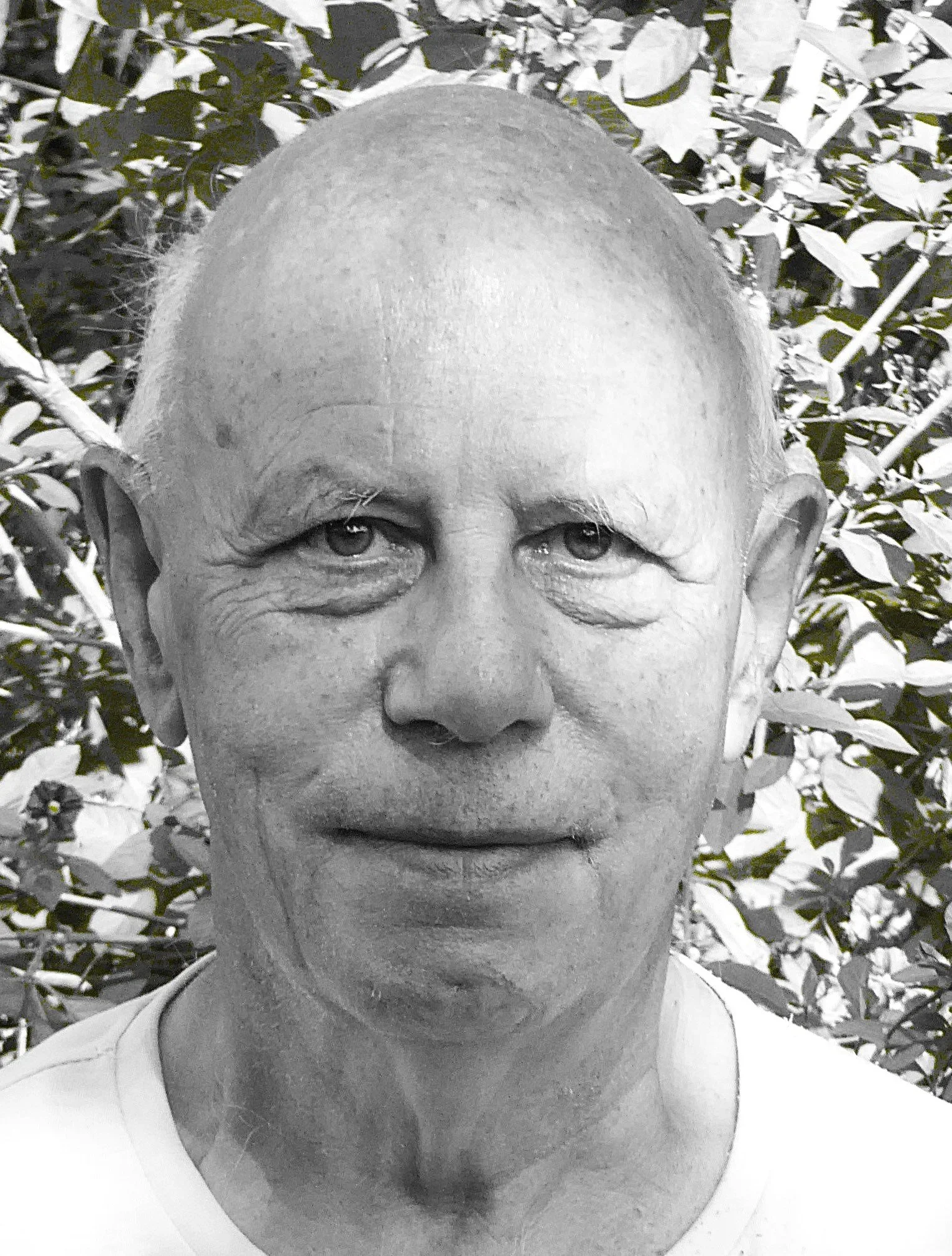
Tony Foster: Painting at the Edge

David C. Schendel’s unwieldy ragbag of a documentary looks at the English artist and environmentalist Tony Foster.
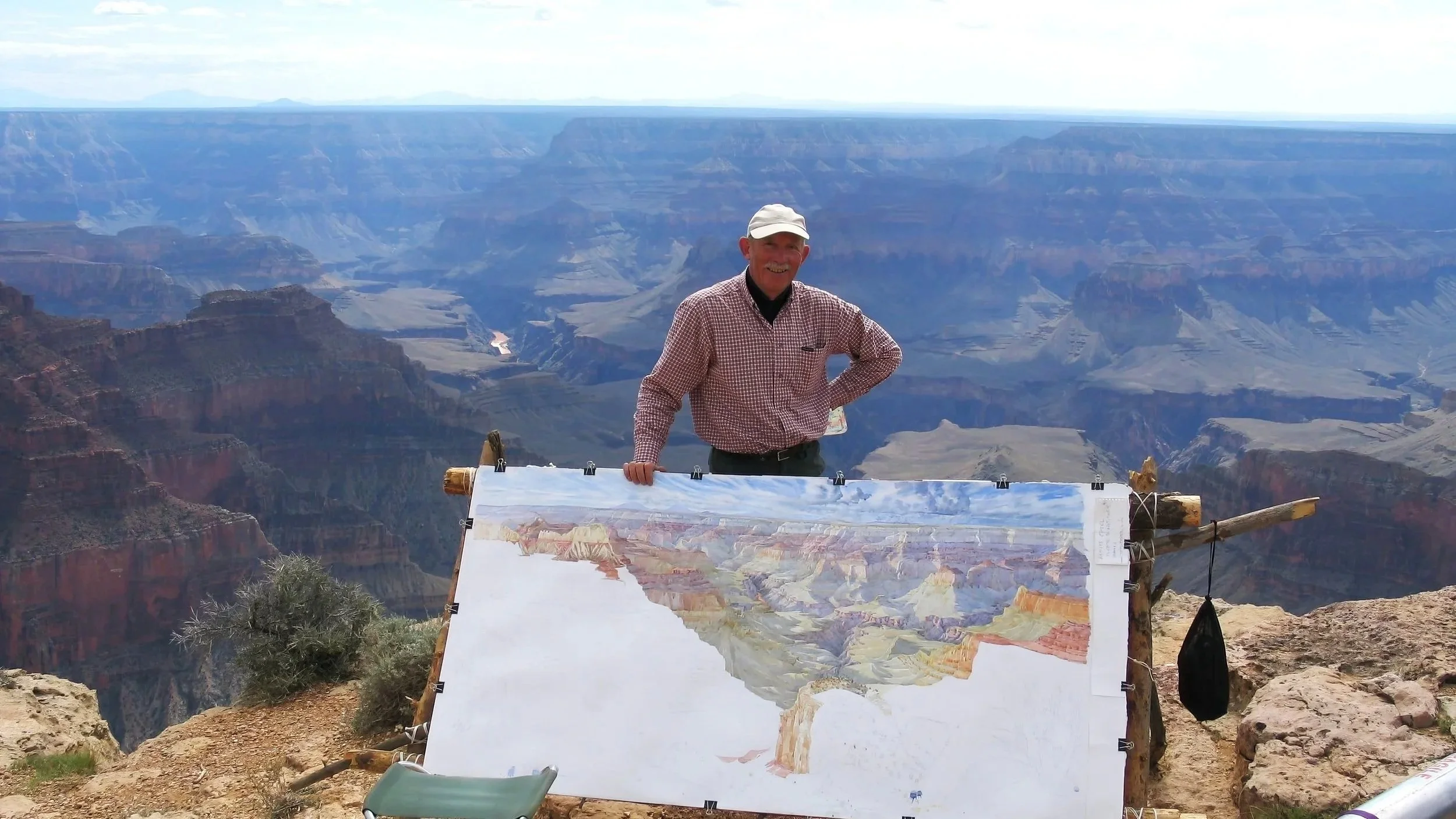
Grand design: Tony Foster
Photo courtesy of Schendel Films.
The title for this film was well chosen. It makes it clear that it is all about Tony Foster, indicates for those like myself unaware of his work that he is a painter and hints at the unusual character of what he does. Foster, a British watercolourist, does indeed function at the edge in that he travels to wilderness areas to paint on the spot what he sees there. In capturing the grandeur of nature in this way he never works from photographs, celebrates areas where man does not dominate and seeks to express the impact that these places have on him. Accuracy of detail yields pride of place to capturing the response that the locations call forth in him and he records all this with an astute sense of landscapes being at threat from climate change.
Considered as a subject for a documentary film the potential here is obvious. Foster himself now aged seventy-nine is on hand as a central presence and as a commentator too and the film is able to bring together two popular elements often found in documentaries but rarely in a single film: great landscape shots ranging from American rivers to Everest and an artist looking back over his life and work. On paper then Tony Foster: Painting at the Edge looks all set for success, but unfortunately it is the work of David C. Schendel and on the evidence of what we see in this film I am left with the impression that he has no idea whatever about how material needs to be shaped to ensure that it flows well, readily engages the viewer and makes its points in a considered and appropriate order. However, it is only fair to add that he has won three awards at film festivals for earlier films of his which I have not seen so other people may well have a very different view of his talent.
This Tony Foster film was made between 2019 and 2023 and its title appears about six minutes in. Some credits do appear earlier but this segment is in essence an introduction. It begins for no obvious reason in Nepal in 2005 with images relating to what is described as being Painting Journey No. 12. Thereafter we do go back for mention of Journey No. 1 after which brief details come up listing those that followed (about seventeen in all). But this information is rushed, feels too fast for relevant paintings by Foster to truly register and is interrupted by intercut shots of anonymous people making brief comments about the artist. In my eyes it is a jumbled, ill-judged start even though it includes some voice-over comments by Foster himself. One simply hopes that once past the title the film will settle down and proceed in a more orderly and informative pattern. But it doesn’t.
Foster's main enterprise during the time when the film was being shot was one related to Wyoming's Green River and involved following its length down to its concourse with the Colorado river in Utah. But past endeavours are also recalled through later comparatively recent footage such as that in which the elderly Foster reunites with the Thoreau scholar, J Parker Huber who has since died (as have some others seen here). At least the contributors seen are now named whether appearing as friends, family members or figures from the art world. But that doesn’t prevent them from sometimes re-entering the picture in voice-over thus again rendering their identity unclear.
This film does at least offer some fine location photography including scenes shot in the Grand Canyon, but it jumps around distractingly between one place and another and between past and present. At one moment we are witnessing another reunion, this time with Chris Mazzola a friend who shared in a Colorado River trip, and the next we are being told of how Foster helped in the building of two schools for village children in Honduras. Various ideas are aired – that Foster is an explorer-artist, that he is a storyteller, that his work is essentially meditative – but these suggestions really call for more detailed comment and the film’s inconsequential mode becomes a central characteristic. Foster's wife, Ann, and his brother, Steve, are amongst those who provide a view of his private life but it is more touched in than filled out. Foster himself is forthcoming about being a self-taught artist who only committed himself full-time to art when he was thirty-five. However, the film is some forty minutes in before it references his childhood and it says little about the period when he was in London and homeless, admittedly something that he prefers not to discuss. It appears that in Palo Alto, California there is a Foster Museum which is devoted to his works but when relatively early on we see its artistic director, Kristin Poole, no comments are made about how it came to be created and it is only very much later that we get to hear from its founder Jane Woodward. Even then she offers less than one would like to know.
When we get to the last third of this film, it seems that at long last it will find something that it can follow through without digression. Here the focus is on the last planned series of paintings relating to the Green River, an eight-day canoe trip undertaken with a deadline in the form of an exhibition due to open in seven months. We follow the trip day by day with stress on the hazard of storms causing hold-ups despite which the accompanying music on the soundtrack could hardly be more placid! Then, just as we reach Day 5, the sequence is interrupted by footage from one week earlier and before we know it we are back with Everest and Nepal in 2006. Next, we find Foster, a decidedly idiosyncratic character whose love of tea breaks is developed as a standing joke, bursting into a familiar song, the Flanders and Swann item about the Hippopotamus containing the words ‘Mud, mud, glorious mud’. And only after that do we get to the final days on the Green River.
Even after 96 minutes one feels that there has been less deep analysis of Foster's pictures than one would wish (they are referred to as being like chapters in a book and most unusually he places additional so-called diary images underneath many of his larger pictures; further elaboration would have been welcome here). The UK release of this film is timed to fit in with a London exhibition of Foster's work under the title “Exploring Time” at the Royal Watercolour Society, but the chance to clarify what is contained in that exhibition is not taken even though the event is mentioned in the closing moments. Nevertheless, there is time after that to incorporate another joke about having a cup of tea.
MANSEL STIMPSON
Featuring Tony Foster, Ann Foster, Steve Foster, April Marjoram, James Ballinger, Clarence Stilwell, Peggy Brace, Bill Brace, Sarah Brace, J.Parker Huber, Michael Engl, Annie Vanderbilt, Bill Vanderbilt, Chris Mazzola,Matt Halkes, Jane Woodward, Kristin Poole.
Dir David C. Schendel, Pro David C. Schendel and Joe Pavlo, Screenplay David C. Schendel, Ph Samuel Crossley, Joe Pavlo and David C. Schendel, Ed Francisco X. Rivera and David C. Schendel, Music Moritz Hans Laub.
Schendel Films/Pterosuar-Schendel Films.
96 mins. USA/UK. 2025. UK Rel: 14 November 2025. No Cert.