Deathstalker

A touch of 80s magic is reborn in director Steven Kostanski’s valiant effort.
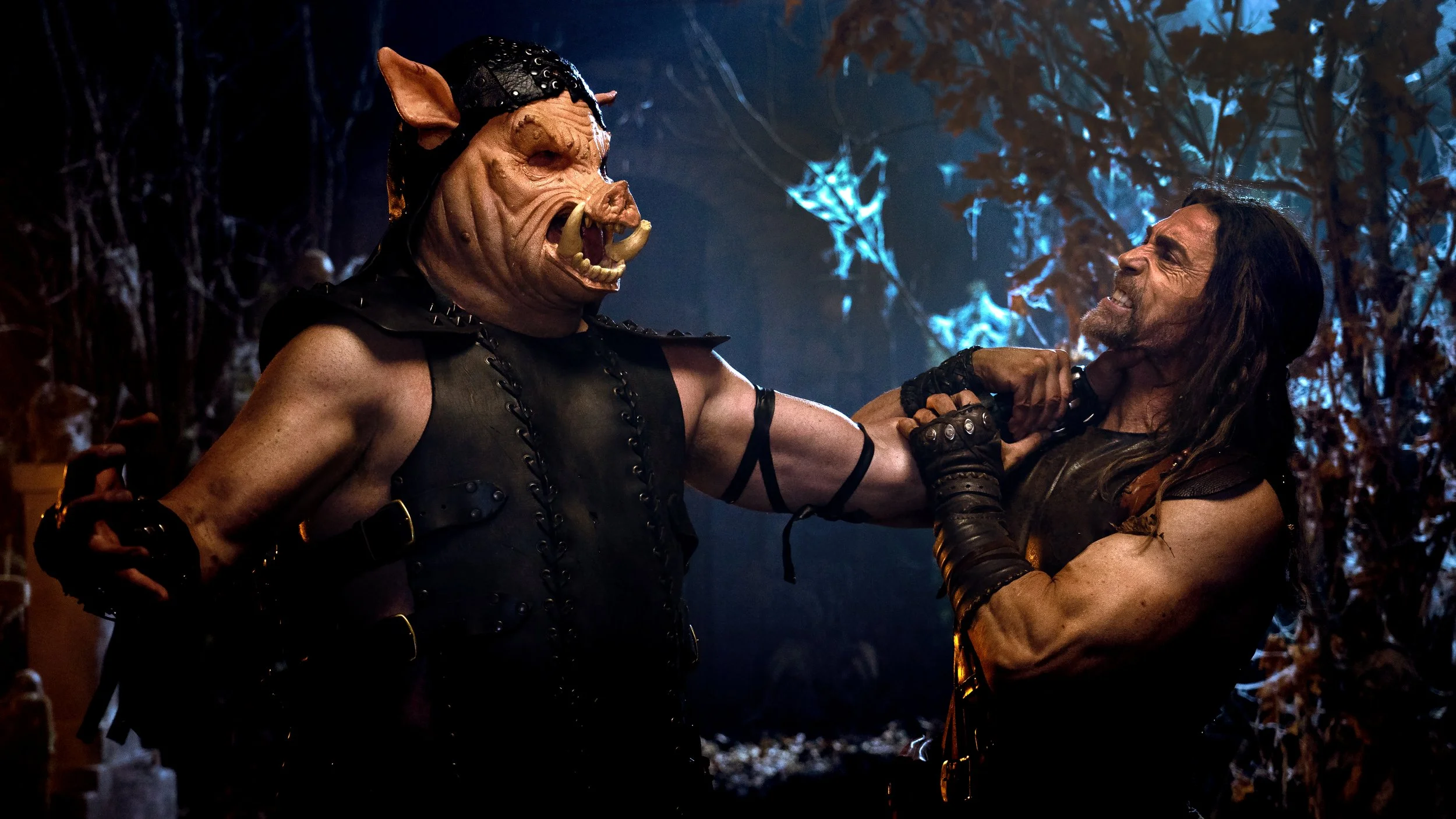
Hog wild: Daniel Bernhardt and Pig-Face (Jon Ambrose)
Image courtesy of Shout! Studios/Radial Entertainment.
Following the success of 1982’s Conan the Barbarian, sword and sorcery boomed on the big screen. The massive box-office triumph of Star Wars five years prior encouraged studios to greenlight fantasy projects, while the introduction of silicone prosthetics alongside emerging techniques for special effects suddenly made stories that previously seemed unfilmable possible. Powered by the impressive physique of newcomer Arnold Schwarzenegger, Conan is credited with launching sword and sorcery for a new age. In literature, the genre’s origins are rooted in mythology, Homer’s Odyssey, and specifically, 1930s authors like Robert E. Howard and Edgar Rice Burroughs, who forged Conan and Tarzan, respectively. During the fantasy golden age of the 1980s, similar titles like The Beastmaster, The Sword and the Sorcerer, and Sorceress closely followed in Conan’s footsteps. Deathstalker arrived in 1983 as an international co-production of Argentina and the United States, the first in a series of four macho adventures produced by the B-movie maverick, Roger ‘King of Cult’ Corman.
Directed by James Sbardellati (though credited as John Watson), Deathstalker starred former George Tech football player Rick Hill as the title character. Largely a cash grab on the heels of Conan’s success, the gamble paid off at the box office and continued paying dividends as Deathstalker became a staple during the fledgling days of cable television and home video rentals. Though it carries the unfortunate legacy of scenes depicting non-consensual sex, the journey to an age of machismo and magic produced some impressive fantasy flourishes. Commercial success encouraged Corman to produce nine more films in Argentina during the decade, including Barbarian Queen (with Deathstalker lead Lana Clarkson) and the inevitable Deathstalker II. Subtitled Duel of the Titans, the sequel arrived in 1987 with a self-aware humour that fully owned its low-budget background and elevated the cult content to high camp. A cheeky John Terlesky replaced Rick Hill in the title role, with former Penthouse Pet of the Month Monique Gabrielle as his plucky sidekick. The addition of an unexpectedly iconic score from Chuck Cirino (written over five nights) resulted in a high point for the Deathstalker series, which went on to release two further entries—Deathstalker and the Warriors from Hell (1988) and the direct-to-VHS Deathstalker IV: Match of Titans (1991). The trailer of the latter made quite the claim, naming Deathstalker as “the number one best-selling fantasy adventure series of all time.”
The sword and sorcery genre is overdue for a revival. It hasn’t seen much action at the multiplex in recent years, with 2023’s Dungeons & Dragons: Honour Among Thieves the only real example. A first step in the right direction is director Steven Kostanski’s imaginative reboot, Deathstalker. Along with genre film company Berserker Gang, co-founded by musician Saul Hudson (aka Guns N' Roses guitarist Slash), Kostanski brought his take on the character to life with an assist from a Kickstarter campaign, where backers pledged over $95,000. Veteran action star Daniel Bernhardt takes up the sword in the titular role, making this the most mature version of the character to appear on screen. In a time where men lived and died by the sword, the Kingdom of Abraxeon is under siege by a mysterious horde of warriors called the Dreadites, ushering whispers that the ancient sorcerer Nekromemnon has returned. Having revoked all allegiances, Deathstalker (Bernhardt) now makes his way in the world by plundering spoils from battles he didn’t fight. When he steals from the wrong corpse and finds himself tethered to an enchanted amulet, a parade of assassins begins tracking him down. With the assistance of the witch Toralva (Tanya Saari), Deathstalker sets out on a quest to reverse the curse and encounters a lot more than he bargained for.
Filled with practical fantasy creatures, mythological monsters, and plenty of goopy, creepy crawlies, it’s a dream project for any make-up or special effects artist. The practical effects are certainly praiseworthy, as is the overall production design. Gone is the trashy romance aspect of the story and the frequent nudity, though the plucky sidekick remains in the form of Brisbayne (Christina Orjalo). Patton Oswalt lends his voice to the wizard Doodad, who is physically portrayed by Laurie Field. Always wildly inventive, some of the choices work much better than others. There are badass fight scenes that make the most of Bernhardt’s background and a full on Harryhausen tribute with stop-animation foes is a highlight. Composer Bear McCreary brings the Deathstalker II theme back as a thumping rock anthem, thanks to help from Chuck Cirino and executive producer Slash. It’s an apt love letter to Deathstalker and 80s sword and sorcery, though Kostanski eventually moves from homage to something more akin to pure spoof by the end. There’s a tangible, tacky charm to Deathstalker’s 80s outings that can’t quite be replicated, though Kostanski comes close at times. While the idea of bringing back a cult classic is appealing, revisiting the campy source material seems a more rewarding quest.
CHAD KENNERK
Cast: Daniel Bernhardt, Patton Oswalt, Christina Orjalo, Paul Lazenby, Nina Bergman, Nicholas Rice, Laurie Field, Jon Ambrose, Tanya Saari.
Dir Steven Kostanski, Pro Avi Federgreen, James Fler, Andrew Thomas Hunt, Pasha Patriki, Michael Paszt, Screenplay Steven Kostanski, Ph Andrew Appelle, Ed Robert Hyland, Music Blitz//Berlin, Costumes Chelsea Graham, Sound Tom Murray, Special Effects Mike Hamilton, Make-Up Erin Sweeney.
Hangar 18 Media/Berserkergang Films-Shout! Studios.
103 mins. Canada/USA. 2025. US Rel: 10 October 2025. Cert. R (US).