Valley of the Shadow of Death

The foundations of faith are challenged in Jeffrey Lam Sen and Antonio Tam’s first feature, set in Hong Kong.
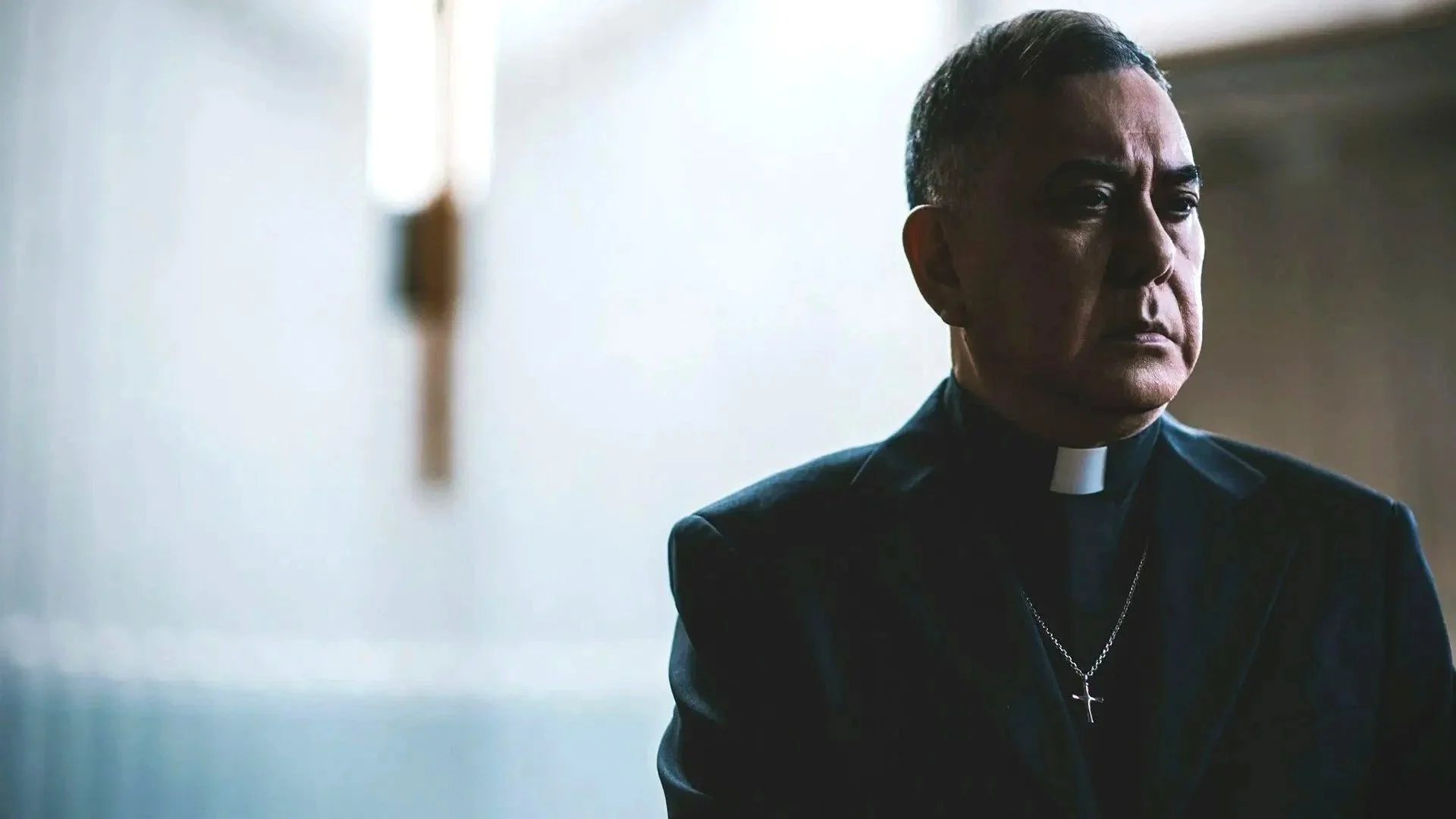
Anthony Perry Wong
Photo courtesy of Munro Film Services.
This feature film is the work of Jeffrey Lam Sen who was born in 1995 and of Antonio Tam who is three years younger and it has been promoted as the work of Hong Kong's newest and youngest directing duo. On paper their film, which Tam scripted, sounds interesting and all the more so because it deals with themes that one would not expect to be treated by many filmmakers today and especially not by youngsters making their feature debut. The central character is a pastor (Anthony Perry Wong) and this is a drama in which religion and Christian principles play a key role. Read up on the film and you will quickly learn that it is concerned with the situation that arises when Lok (George Au), now aged twenty and homeless after a spell in prison, is given shelter by the Church of Faith and Love where the pastor is in charge. But, although the young man seems to be feeling guilt and is looking to religion for redemption, Pastor Leung is shocked to recognise him as the youth who had three years earlier raped his daughter Ching (Sheena Chan). That had been followed by her suicide. Now in the course of one of his sermons the pastor speaks of God hating the sin but not the sinner and he quotes the bible’s assertion that forgiveness is a Christian prerequisite. Nevertheless, while concealing his real feelings (this in contrast to his wife (Louisa So) who is openly unforgiving of Lok), he finds his desire for revenge challenging the teachings of his religion.
Valley of the Shadow of Death is a contemporary tale so normally it would not invoke a comparison with a work set in the 14th century. Nevertheless, if one knows the Ingmar Bergman classic The Virgin Spring (1960) it is impossible not to be reminded of it. That tale was based on a folk song about a landowner who is ready to take revenge on goatherds who had raped and killed his daughter and who subsequently happen to seek shelter in his home. But one doesn't have to turn to that comparison to be aware of how this new work falls short of distinction of any kind. Its failure to achieve any power is epitomised by the fact that, despite featuring an original score, the most significant music to be heard here is a Schubert piano work, the ‘Fantasy in F’ (D 940). It's a lovely piece, but if one wanted to pick out music totally inappropriate for a stern drama of emotional conflict this would fit the bill perfectly.
But in point of fact hardly anything about Valley of the Shadow of Death works. If you have read the plot description in advance, you will be able to decipher what is happening, but the screenplay fails to tell the tale in a clear and gripping way. It may establish the main characters ably enough but it confuses by offering what proves to be a flashback of Ching with her mother only later referring to her suicide three years earlier and delaying any mention of her having been raped until the film is already a third of the way through. Early on the pastor seems to recognise Lok instantly but Lok doesn't apparently know that this man is the father of his former schoolmate. Nor when it becomes clear that Lok was bullied at school do we learn what caused it (that he liked to make drawings seems an inadequate reason). When a passing reference is made to his time in prison, we do not know with what he was charged (if it had been for the rape then he would surely have known the identity of the pastor) and indeed Ching’s suicide is never directly linked with the rape. The actual incident is kept off screen so, while Lok is in general viewed sympathetically, we cannot tell just how seriously he was to blame (he describes the rape as not having been intended).
Late in the day through yet another series of suddenly inserted flashbacks the relationship between Ching and Lok is viewed from a strikingly different perspective. This feels rather contrived since it abruptly takes us away from the conflict that the pastor is undergoing and which had seemed central to the film. When that theme is taken up again the fact that Lok is all set to be baptised makes for a climactic scene, but it is one that turns decidedly melodramatic. That is at odds with the earlier tone of the film but, even when the conflict between human emotions and the ideals of Christian ethics are central and issues of suffering, sin and forgiveness seem crucial, the dialogue and characterisation lack real weight and depth. Again, memories of Ingmar Bergman's work emphasise how shallow this is. At one stage a sudden extra element (hardly strong enough to merit being called a sub-plot) brings in a new character (Summer Chan). This appears to be set up simply for the pastor to be challenged over whether or not he believes in the right to have an abortion.
For someone known as a pop singer, George Au makes a passable stab at the role of the repentant Lok and Louisa So takes her chances as the pastor's wife, but with this screenplay Anthony Perry Wong as Pastor Leung is a presence without real depth – but then nobody could be a match for Gunnar Björnstrand as the pastor in crisis in Ingmar Bergman's Winter Light (1963). However, the fact is that to carry the viewer with it and to get the best out of the storyline this film needed to be drastically reshaped and even then one senses that the screenplay required a more experienced hand and a clearer viewpoint to do anything like adequate justice to the complex themes embedded in the story.
MANSEL STIMPSON
Cast: George Au, Anthony Perry Wong, Sheena Chan, Louisa So, Summer Chan, Timothy Tsz Hin Choi, Wing Mo, Cho Ying Fat, Cheung Yan Amber, Kwok Hon Chu, Jeffrey Lam Sen.
Dir Jeffrey Lam Sen and Antonio Tam, Pro Jacqueline Liu, Screenplay Antonio Tam, Ph Wong Shek Keung Leo, Pro Des Ida Mak Tsz Kwan, Ed J. Him Lee, Music Yusuke Hatano, Costumes Lam Yu Ting.
First Film Limited Production/Federation of Hong Kong Filmmakers-Munro Film Services.
84 mins. Hong Kong. 2024. UK Rel: 14 November 2025. Cert. 15.