

Laika produces its most grown-up stop-motion animated fantasy to date, with lashings of magic but not so much emotional heft.
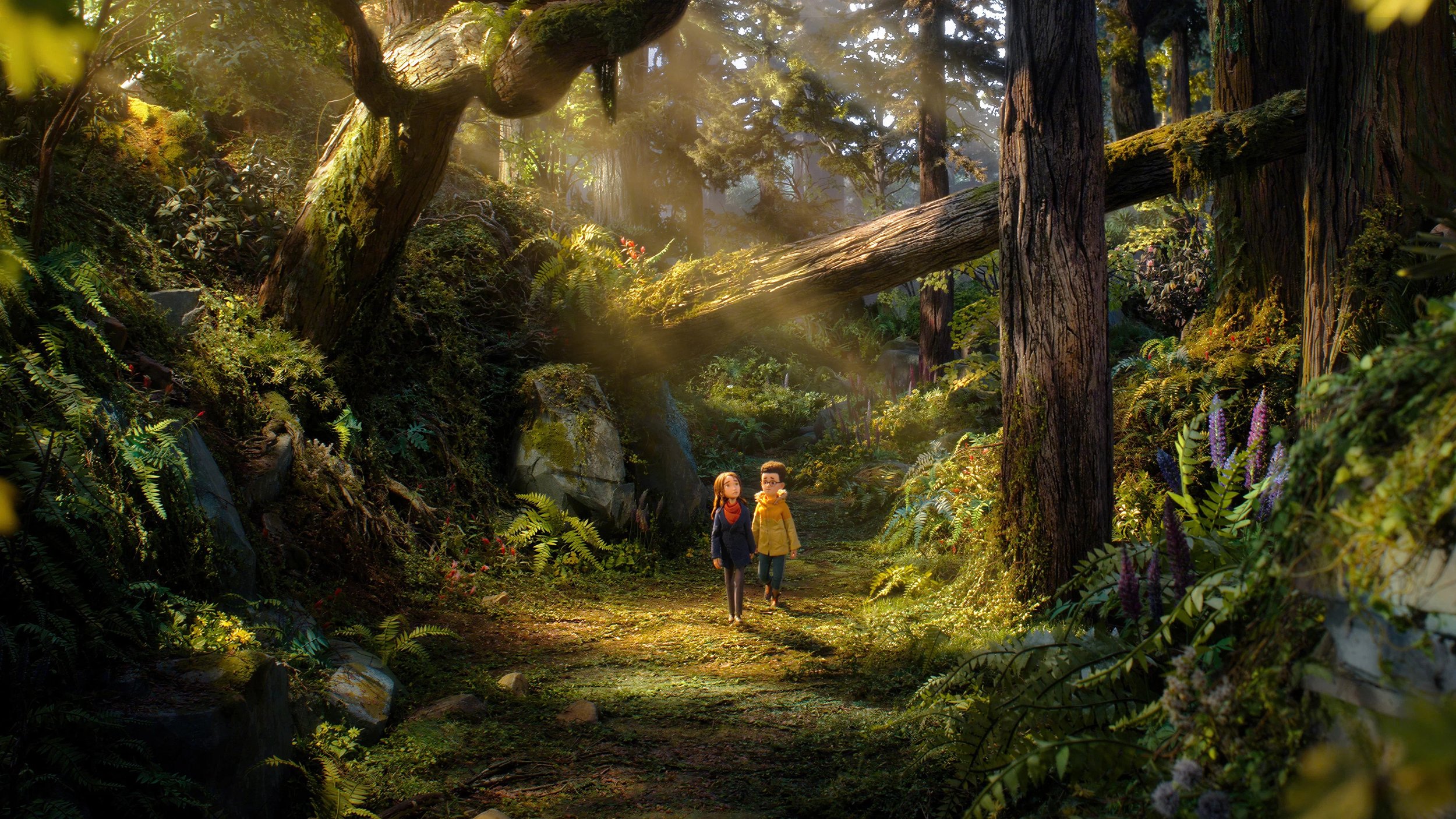
Verdant victory: Prue and Curtis
Photo courtesy of Black Bear Pictures.
by JAMES CAMERON-WILSON
It seems there is no stopping stop-motion animation. The painstaking process of moving each figure twelves times for every second of screen time is an expensive and mammoth undertaking. The stop-motion animation studio Laika, which started off with the hypnotic but relatively modest Coraline (2009), has now gone full Lord of the Rings. Its sixth feature includes flocks of murderous crows, armies of assorted creatures, blizzards of arrows and a decapitated head. How do you stop-motion animate a flying head?
Besides its sheer scale, chutzpah and pictorial richness, Wildwood is to be applauded for honouring its local roots. The story, adapted from the book by Colin Meloy, is actually based in Portland, Oregon, the city that houses the headquarters of Laika itself. And pressing against the borders of the metropolis are the very woods of the title, dubbed ‘The Impassable Wilderness’ in Meloy’s novel. It is here that the baby brother of our heroine Prue is taken, having been plucked from a playground slide by a flock of crows (a “murder of crows”, Prue’s classmate Curtis corrects her). And so Prue and Curtis venture forth, beyond the city limits and into an enchanted realm beyond their wildest imaginings.
The opening sequence alone, featuring Prue cycling through the streets of Portland trailing her baby brother Mac in a wheeled cart, is simply astonishing in its blend of artistry and technology. That scene, with its myriad sets and thoroughfares, would have bankrupted a smaller studio. And that’s before we even get into the Wildwood, a forest policed by a regiment of bloodthirsty coyotes in military uniform. There’s also an evil queen – or Dowager Governess, voiced by Carey Mulligan – who has mastered the dark arts and is bent on human sacrifice. However, she hadn’t reckoned on the fearlessness and resourcefulness of Mac’s older sister, Prue McKeel…
There is much to enjoy here: the incidental humour, the colourful dialogue, the painterly splendour and the visual depth of the mise-en-scène. Everything is top-notch, from the sound effects to Dario Marianelli’s sweeping score and pretty much everything in-between. The vocal characterisations are also in a realm of their own, with a feisty turn from Peyton Elizabeth Lee as Prue, some muscular gravitas courtesy of Mahershala Ali as the Bandit King and a delightful rendition of a rat called Septimus from Awkwafina, giving Steve Buscemi’s Templeton in Charlotte’s Web (2006) a run for his money.
The film is also incredibly dark, with a surprisingly high body count for this kind of material. Indeed, few fairy tales come as daunting and bloody as this, but its sentiment is in the right place, extolling the virtues of family and the sovereignty of the natural world. As Prue concedes, “there is no happy-ever-after,” to which her father (Jake Johnson) replies, “no, but there is happy-right-now.” Which is Meloy’s way of saying “carpe diem”.
Voices of Carey Mulligan, Peyton Elizabeth Lee, Jacob Tremblay, Richard E. Grant, Awkwafina, Amandla Stenberg, Tom Waits, Charlie Day, Blythe Danner, Arthur Knight, Maya Erskine, Jake Johnson, Rob Delaney, Tantoo Cardinal, Jemaine Clement, Marc Evan Jackson, Len Cariou, Ólafur Darri Ólafsson, Angela Bassett, Mahershala Ali.
Dir Travis Knight, Pro Travis Knight and Sam Wilson, Screenplay Chris Butler, from the novel by Colin Meloy and Carson Ellis, Ph Caleb Deschanel, Pro Des Nelson Lowry, Ed Christopher Murrie, Music Dario Marianelli, Costumes Deborah Cook.
Laika-Black Bear Pictures.
130 mins. USA. 2026. UK and US Rel: 23 October 2026. Cert. 12A.