Forging a New Frontier: Director Richard Gray Talks ‘The Unholy Trinity’
Courtesy of Roadside Attractions.
by CHAD KENNERK
When director Richard Gray set out to make his first Western, he didn’t just scout a location — he built one. Nestled north of Yellowstone National Park in Montana’s rugged Paradise Valley, Yellowstone Film Ranch is a Western backlot styled after a late-1800s gold rush town, set against the striking backdrop of Emigrant Peak. Like the Old West backlots of the studio era, such as Arizona’s Old Tucson and Colorado’s former Buckskin Joe, Yellowstone Film Ranch was built to bring authenticity to stories of the American West.
Gray emerged as a runner-up in Project Greenlight Australia — the Aussie instalment of Ben Affleck and Matt Damon’s popular documentary series — and built a steady career helming thrillers like Mine Games and Sugar Mountain. An episode of Anthony Bourdain’s No Reservations, featuring the windswept charm of Livingston, Montana, eventually pointed him toward a new frontier. While scouting locations for his 2018 film Broken Ghost, Gray arrived in Montana and met Carter Boehm, a real estate developer and former White House technician with a family history in film. The pair teamed up for Broken Ghost and again for Robert the Bruce, an unofficial sequel to Braveheart. They soon began dreaming about telling stories of the American West — and creating a permanent home for them.
In the 90s, Robert Redford filmed A River Runs Through It and The Horse Whisperer in the Livingston area, so while Montana is no stranger to filmmaking, it was ready for a revival. After falling in love with the snowy majesty of Paradise Valley while filming Robert the Bruce, Gray and Boehm joined forces with Chico Hot Springs owner Colin Davis to lobby for a production tax incentive aimed at revitalising the state’s film industry. That vision became a reality with the passing of Montana’s Media Act, which offered game-changing tax credits for productions that hire local crews. With a vision for a new kind of cinematic frontier and the opportunity to shoot authentic Westerns, Yellowstone Film Ranch was completed in 2020. The facility’s inaugural production became Gray’s Murder at Yellowstone City, and subsequent productions have included The Old Way, starring Nicolas Cage, and Gray’s most ambitious film to date, The Unholy Trinity.
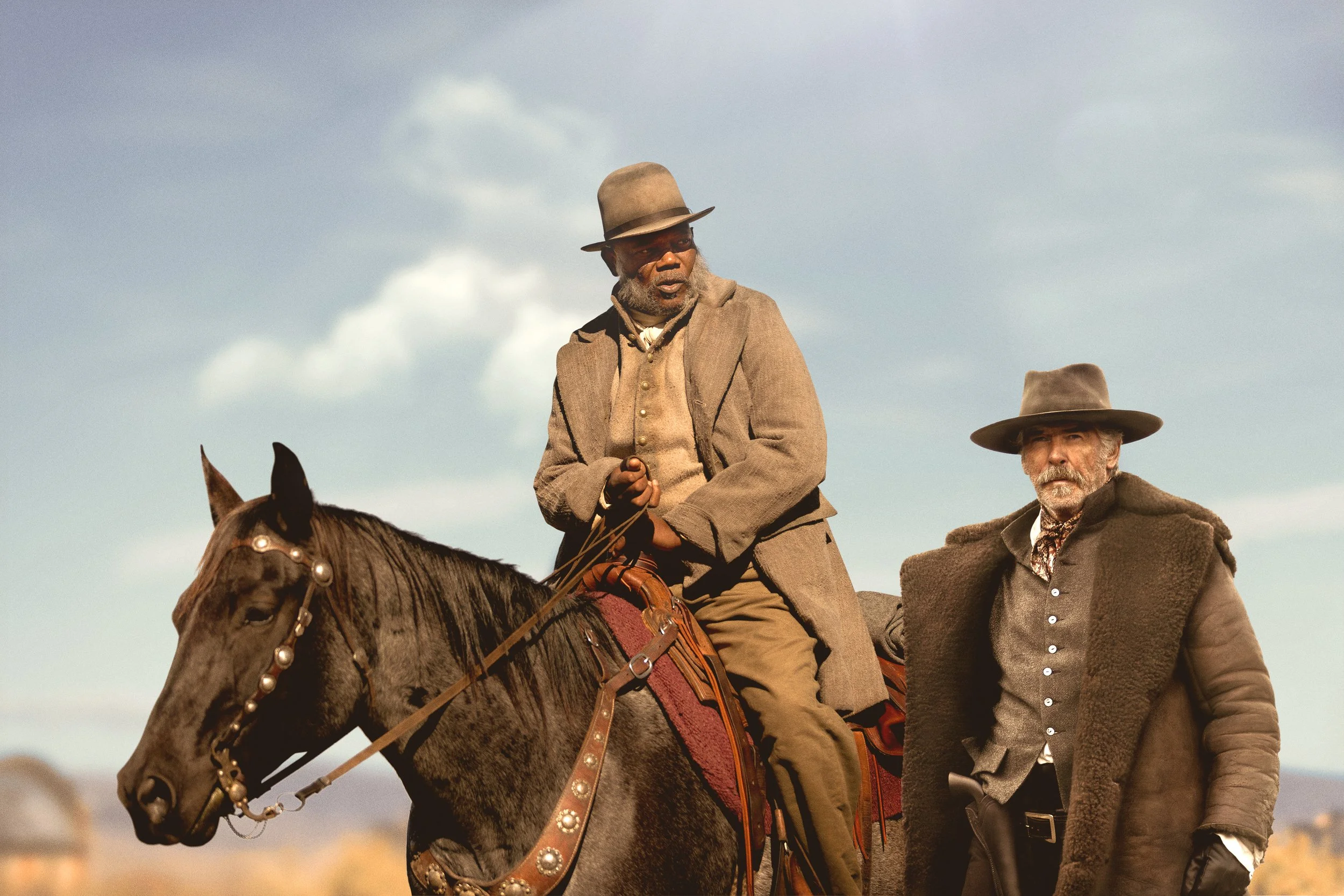
A tale of revenge, buried secrets and lost gold, The Unholy Trinity stars Brandon Lessard, Samuel L. Jackson, and Pierce Brosnan in a love letter to the genre. Set in 1870s Montana and rooted in gritty character work, the film was shot during the 2023 actors’ strike with SAG-AFTRA’s blessing. As The Unholy Trinity arrives in theatres from Roadside Attractions, the Australian-born director spoke with Film Review about building a Western legacy from the ground up and why Montana might just be the next great frontier in independent American filmmaking.
In conversation with director/producer Richard Gray.
Film Review (FR): Westerns offer their own set of location challenges. You solved that by creating your own backlot with Yellowstone Film Ranch.
Richard Gray (RG): As you do [laughs.] Yeah, I’m very lucky I had a business partner that wanted to make Westerns, and that's what I live for. He said, “Why don't we build our own Western town?” I said, “That sounds like a great idea.” His name is Carter Boehm, and he's a producer on this film. He produces all my films with me, and he's an amazing man.
(FR): We don’t see enough Westerns on the big screen. It’s a genre that seems to ebb and flow but hasn’t really recaptured its golden age heights of the 50s.
(RG): No, it's kind of cyclical with Westerns; you see them come and go. Taylor Sheridan has done a great job for the genre, even if they're not traditional Westerns. That's been exciting. When I was growing up, my dad would play me Westerns, starting with the more humour based ones, but then we got into darker stuff when he played me Once Upon a Time in the West or Shane. I was 11 when Unforgiven came out. I was way too young for that, but that's what kind of got me going. When I was at film school, Deadwood came out on TV, and that really pushed me in the right direction.
(FR): You've worked with some incredible actors, but Samuel L. Jackson and Pierce Brosnan are among the legends. What was it like working with them — and filming action sequences with Bond?
(RG): Yeah, with this cast I certainly needed to put my big-boy pants on. It's great when you're talking to Pierce or Sam about a scene, and you've got your ideas, but usually their ideas are better. They'll take your ideas and try to do something with them. The action was a big part of this movie. I still have Goldeneye on Nintendo 64, talking about James Bond. Pierce is such a gentleman. He brought his family; both of his sons are in the movie. He'd never been to Montana. He is such a gentleman and one of the better actors I've ever worked with. Samuel brought his whole team as well, and we were so lucky to get them both at the same time. That's what we were waiting for. There's just an aura around those guys that's hard to properly explain when you're dealing with legends of cinema. It was just really exciting.

(FR): It was lovely to see Q'orianka Kilcher in the mix as well, playing this strong, grounded female character. You always ensure that supporting characters are fleshed out, which makes a Western feel lived in and the town feel like a real place.
(RG): That's lovely for you to say. I was taught, if they're going to say a line, then there better be somewhere to go. Here, I was working with Veronica Ferres, Q'orianka Kilcher, David Arquette, Tim Daly… We really concentrated on the American story in this one, and that's why there are so many accents, because of where we were all from at the time. Post-Civil War is fascinating; that's why we've got Irish, Scottish, German, and obviously African American and Native American. We tried to tell an American story about what it was like post-Civil War — do it in an entertaining way, but still have characters with enough depth. We tried not to have good guys and bad guys, because I think the lines were so blurred, particularly back then. That was the main attraction of the screenplay.
(FR): You don't have someone in a white hat and someone in a black hat. They’re just human beings with driving forces — wants and needs they're trying to fulfil.
(RG): Sam might be portrayed as a bad guy, but it's after being a slave. He's coming to get what was stolen from him. He really changed the character to make it so much better and in a way that he could achieve what his character is trying to achieve, without it being black and white or cliche.
(FR): You’ve worked with Ethan Peck before, and it’s great to see him in a Western, harkening back to his grandfather Gregory Peck’s Westerns like The Gunfighter, The Bravados and How the West Was Won.
(RG): I love Ethan Peck, and I can't wait to see what he's going to do next. He's so talented. Gregory Peck worked with Samuel L. Jackson in the theatre. Sam remembers being a reader for him or doing a reading with him. He was doing the scene with Ethan and didn't know that Ethan was Gregory Peck's grandson. When he found out, it led to some awesome conversations. Ethan carries a lot of Gregory's voice and obviously his good looks, but Ethan getting to do a film with Sam was a huge highlight for him. It's such a memorable scene that they have together.

(FR): Music has historically been an important component of the Western. What was that opportunity like to work with Marco and Tristan Beltrami on the score?
(RG): Pierce Brosnan asked me, “Do you have a composer for the movie?” And I said, “No, we're still trying to find the right sound.” Pierce goes, “What about Marco Beltrami?” I said, “Oh my God, that would be amazing.” 3:10 to Yuma, Ford v Ferrari, A Quiet Place, The Shallows — these are genre movies that I adore. Pierce’s and Marco's kids went to school together, and so he hooked me up with Marco and Tristan, which was just phenomenal. Marco is such a gentleman, just like Pierce. He did such a great, original job. I think the music plays a huge part in this film, as it does in all films, but particularly in Westerns. We recorded it at his studio. It was one of the better experiences I've had with music in my career.
(FR): What can you share about your creative relationship with your wife, Michele, who is also a producer on the film. How do you build a balance in working on projects together?
(RG): Michele and I went to acting school together in Melbourne, Australia. I was very bad. She was pretty good. We've known each other forever, since I was 18 years old. On a set, the chemistry comes from us in a very similar way; you both just kind of understand each other. She produces films and runs the Yellowstone Film Ranch with me and Carter in Montana. Even as a producer, she's running around doing every job on set, from the smallest to the highest, from being a runner to financing. I think producers don't always get a lot of credit — particularly in independent films — for how much they do. It helps to know somebody, because when the breakdowns and tension come, and when you get those days that are hardcore, it helps to have a great person in your court. It's a hard undertaking to be a producer in Montana, because it's all exterior. Even when we're interior, it's exterior.

(FR): Growing up in Australia, how did working at movie theatres influence you?
(RG): I worked at the cinemas a lot. I worked at Hoyts, Nova and a major arthouse cinema in Melbourne, Australia. We just got to watch movies. The best thing about those days was that you could get free tickets. On a Wednesday night — because films come out in Australia on a Wednesday or Thursday night — the projectionist would be lacing the film up for the first time, and you got to come and see the clean print as they were adjusting the aspect ratio or the sound. It was just the best time. I also went to a film school that was still shooting on film, so I was lucky enough to learn that way.
(FR): What led you to build a Western legacy in the mountains of Montana?
(RG): My grandfather was in the US Army. I never got to meet him, but he's from a place not too far from here, where I live in Montana. I feel like that's why I'm drawn here, versus the beaches in Australia. I just feel really comfortable in the mountains. The amount of American stories that can be told from that time period, post-Civil War, is super exciting. That's what we're going to continue to do.
(FR): Sky's the limit.
(RG): Yeah, up here it is. Big Sky, right?
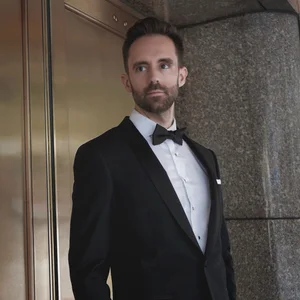
RICHARD GRAY is an Australian film director and producer based in the U.S., working across multiple genres such as historical drama and westerns. He is best known for The Unholy Trinity, starring Pierce Brosnan and Samuel L. Jackson; Sugar Mountain, starring Jason Momoa and Cary Elwes; and Murder At Yellowstone City, starring Richard Dreyfus, Gabriel Byrne, and Anna Camp. He is a co-founder of The Yellowstone Film Ranch, a western town film backlot in Paradise Valley, MT, where his next feature, The Lovely and Dangerous Lucy Cavanagh, will be shot.