From ‘Barbie’ to ‘Anna Karenina’ │ The Academy Museum
All images courtesy the Academy Museum of Motion Pictures.
by CHAD KENNERK
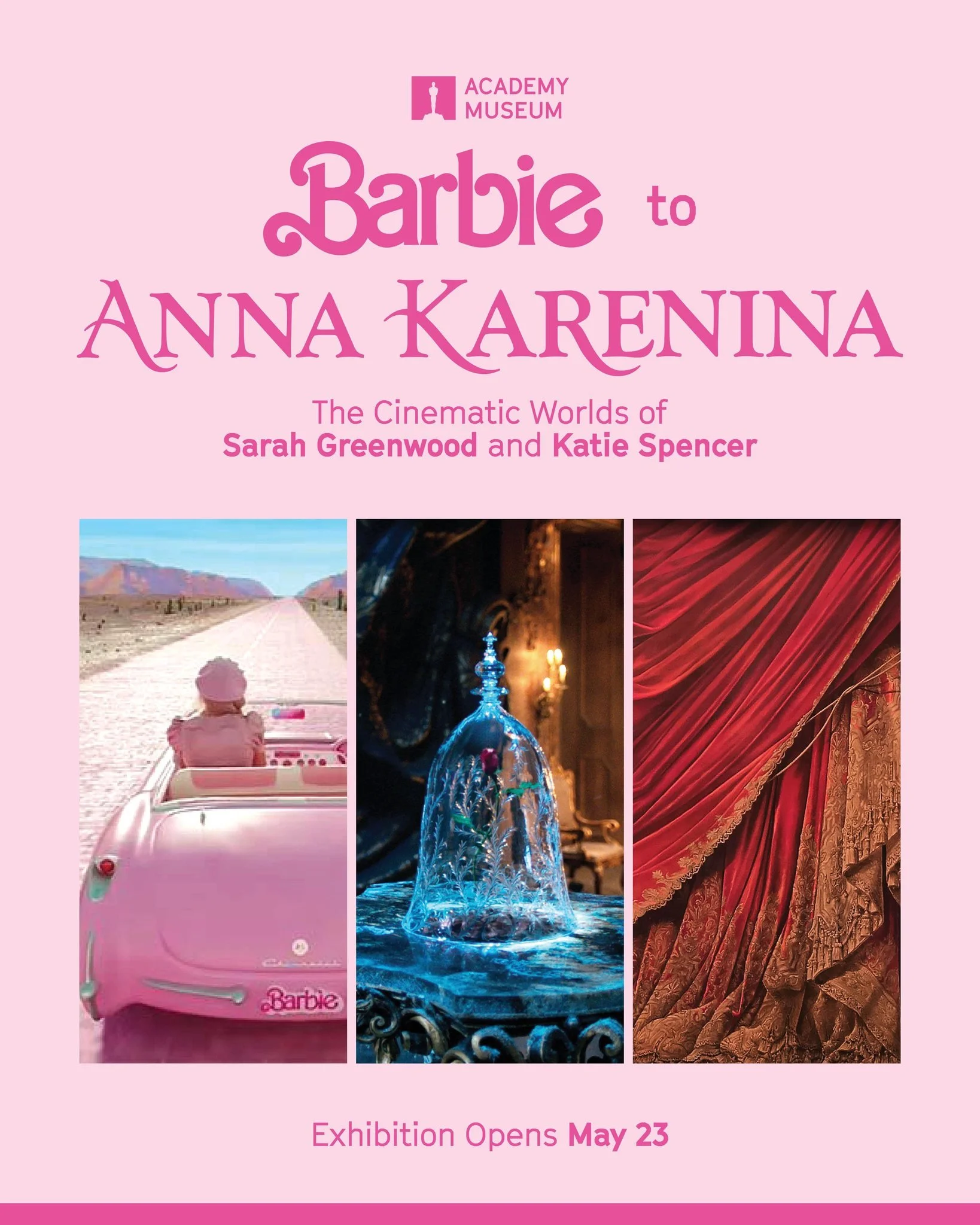
From Barbie’s dazzling pink dreamhouse to the theatrical splendour of Anna Karenina, production designer Sarah Greenwood and set decorator Katie Spencer have built some of the most celebrated sets and memorable worlds in modern cinema. Their long-standing collaboration with director Joe Wright includes films such as Pride & Prejudice, Atonement and Darkest Hour. With an impressive collection of seven Academy Award nominations, the duo have brought their unique finesse to a wide-ranging filmography, from period dramas to fairy tales. Their collaborative work shapes the visual language of each project, blending intricate detail with imaginative storytelling.
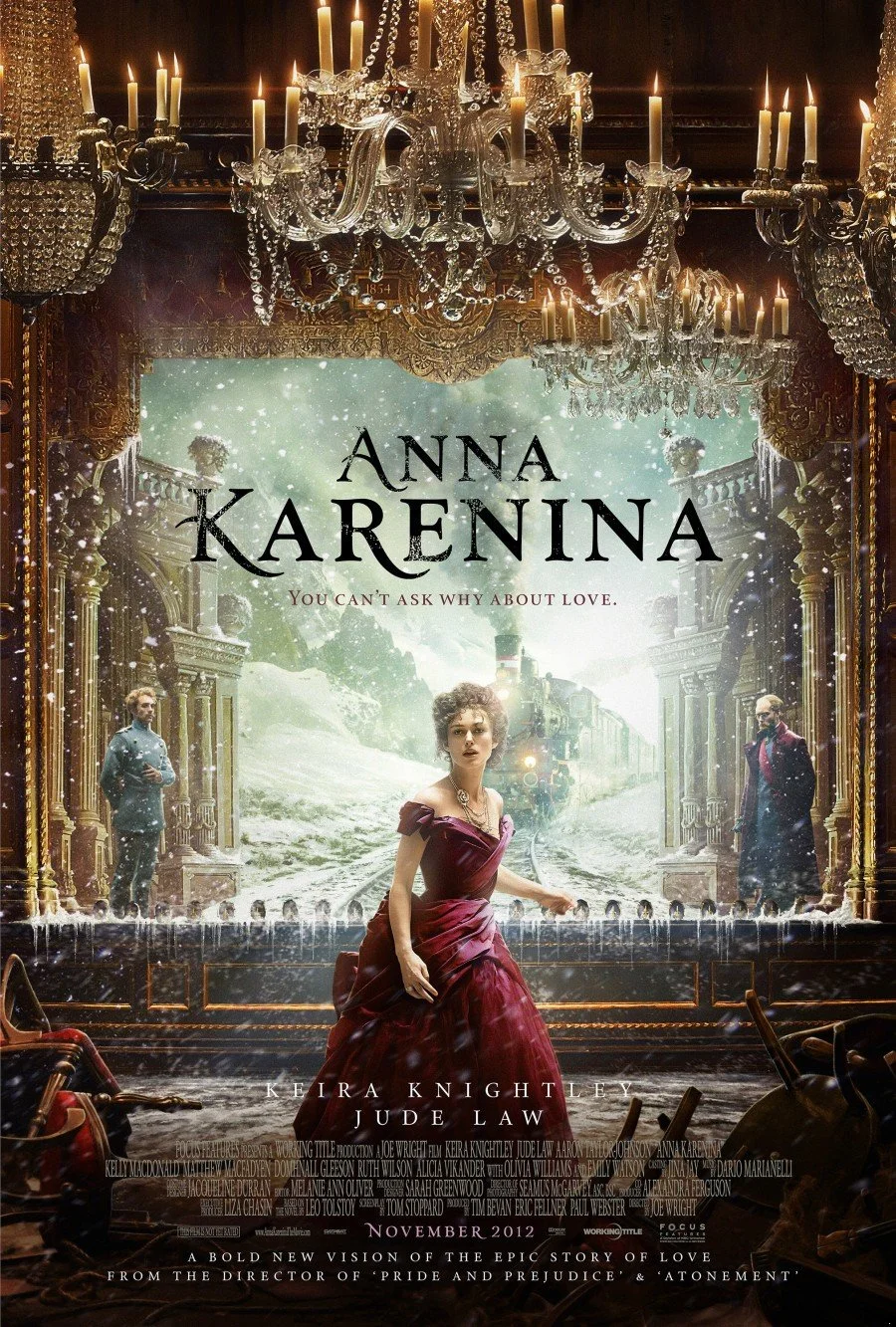
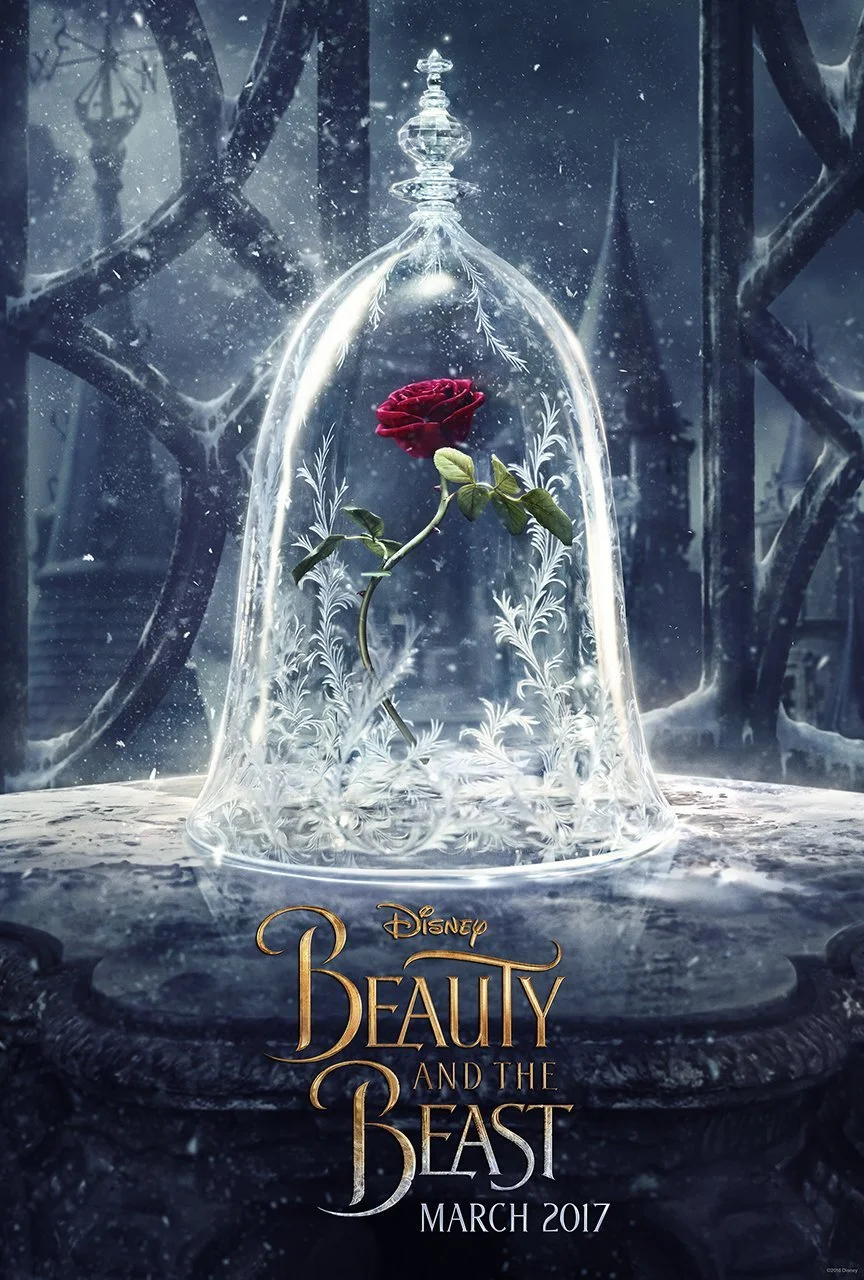
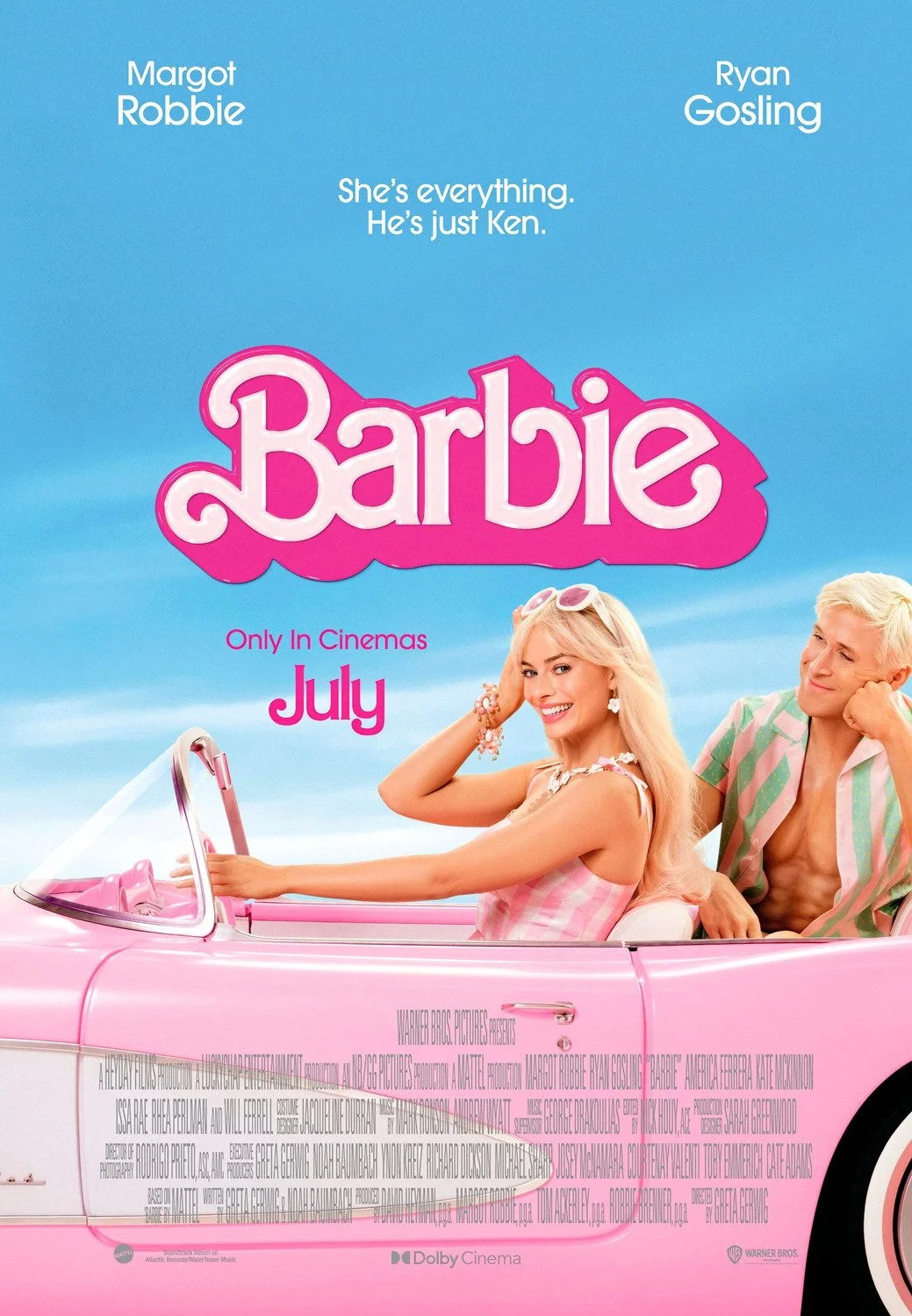
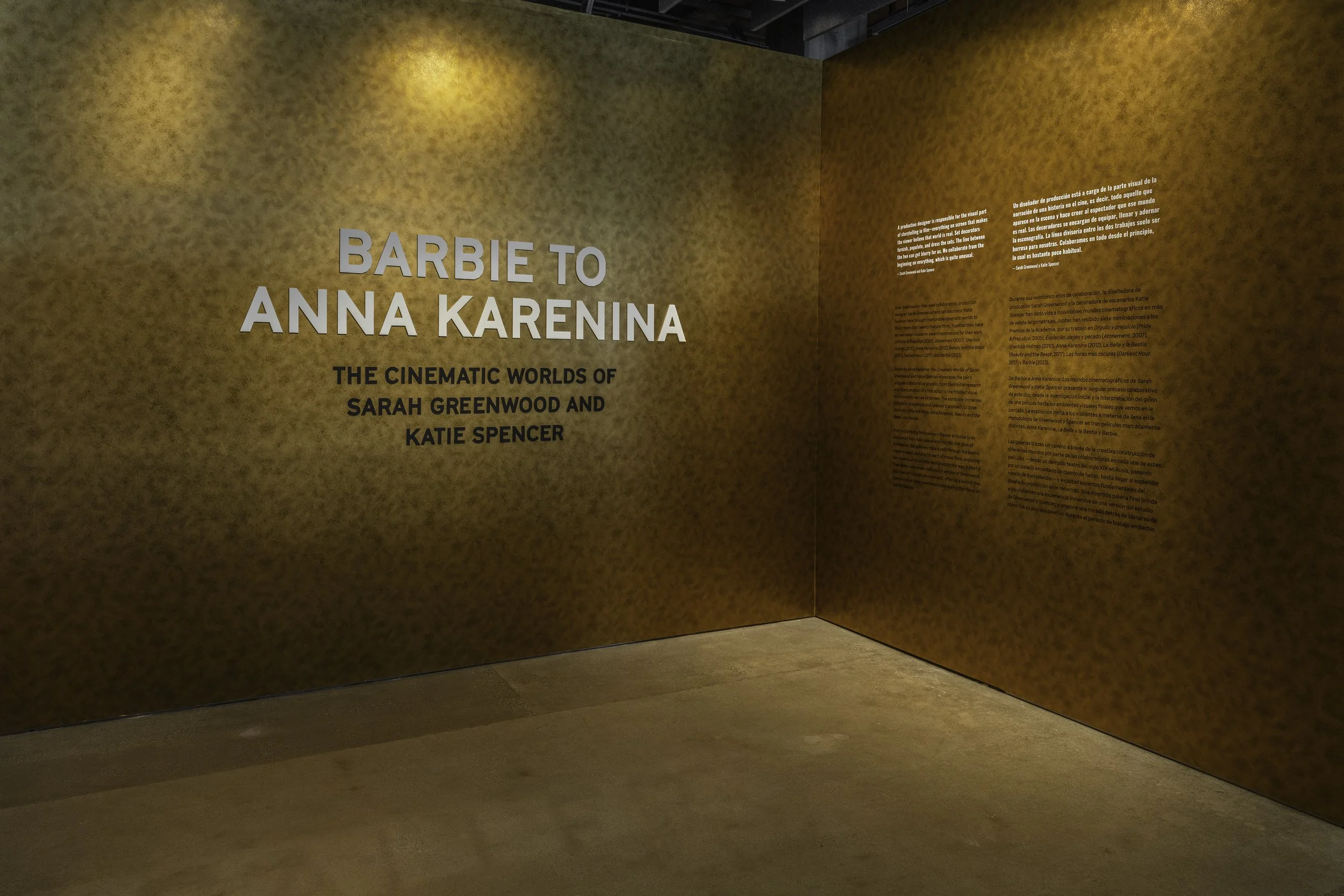
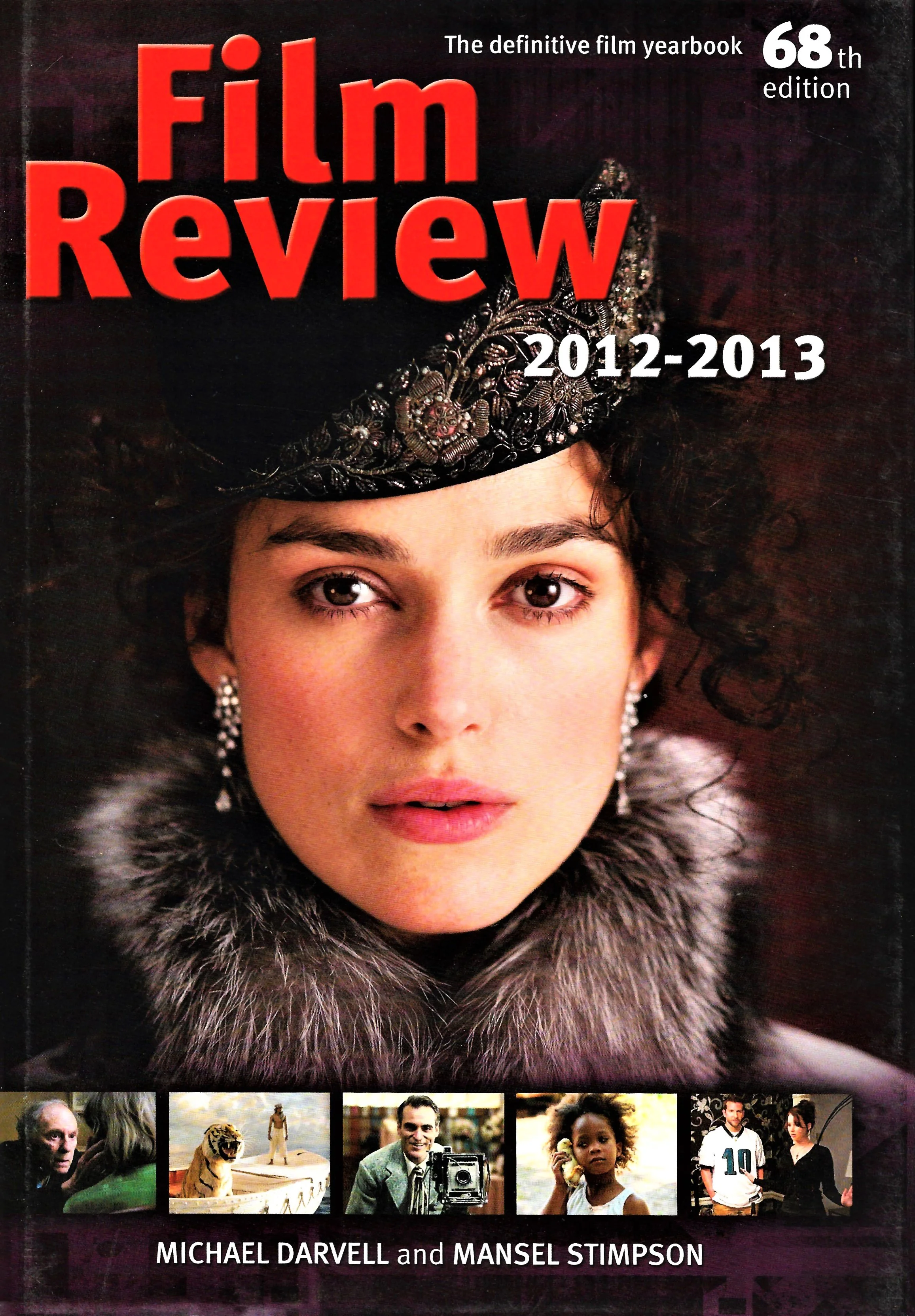
The Academy Museum of Motion Pictures’ exhibition, Barbie to Anna Karenina: The Cinematic Worlds of Sarah Greenwood and Katie Spencer, offers a rare, immersive look into their creative process, showcasing their journey from Pride & Prejudice to Barbie. Curated by Michelle Puetz, the exhibit takes visitors into the creative process behind Greenwood and Spencer’s transformative designs, focusing on three key films: an inspired Anna Karenina, 2017’s live-action Beauty and the Beast, and the vibrant, eye-popping Barbie. Featuring original props, concept art, sketches and set pieces — some never before seen by the public — the exhibition explores how the duo brings characters, time periods and wondrous worlds to life.
Museum guests have the chance to explore detailed models, rare sketches and screen-used props that illuminate how Greenwood and Spencer work hand-in-hand with directors to craft environments that feel as real as the characters inhabiting them. With insights from both artists, the exhibit provides a fascinating look at how production design shapes not just the look of a film but its emotional core. Academy Museum curator Michelle Puetz joins Film Review to share her exhibition journey, discussing the impact of Greenwood and Spencer’s designs on the broader world of film and how the exhibit helps audiences appreciate artistry on screen and behind the scenes.
In conversation with Academy Museum of Motion Pictures Curator Michelle Puetz.
Film Review (FR): How did the concept for this exhibit originate and take shape?
Michelle Puetz (MP): It's been in development for over three years. I think from the very beginning, from the museum's opening days, there was a general sense of wanting to do an exhibition that focused on production design. Through lots of meetings with Academy governors and members of the Academy working in the production design branch, Sarah and Katie kept coming up again and again. There were so many people advocating for them to be a point of focus that the exhibition really started to take shape around those early conversations. It was really through Jan Pascale, who's a fantastic set decorator.
I was super excited about the exhibition, in part because I'm a fan of so many of the films that Sarah and Katie have worked on, but really because they represent the best of the best of their craft. They work on so many different and distinctly identifiable films. They have all of the films that they've made with Joe Wright that tend to be more period pieces, very textured and romantic. At the time [we began working on this exhibit], they were working on Barbie. It hadn't come out yet. They had finished shooting, and I think they were still doing pick-ups.
From a curatorial perspective, with the contrast of all of these different kinds of films that they’ve made, it was very clear that there would be an interesting story to tell through the films themselves but also through their unique way of working with one another. They have this very non-hierarchical, incredibly collaborative partnership. So much of what we're interested in at the Academy Museum is thinking about exhibitions that highlight individuals and films but also highlight ways of working, hopefully to inspire our visitors — especially younger visitors — to think about the potential for careers in the film industry.
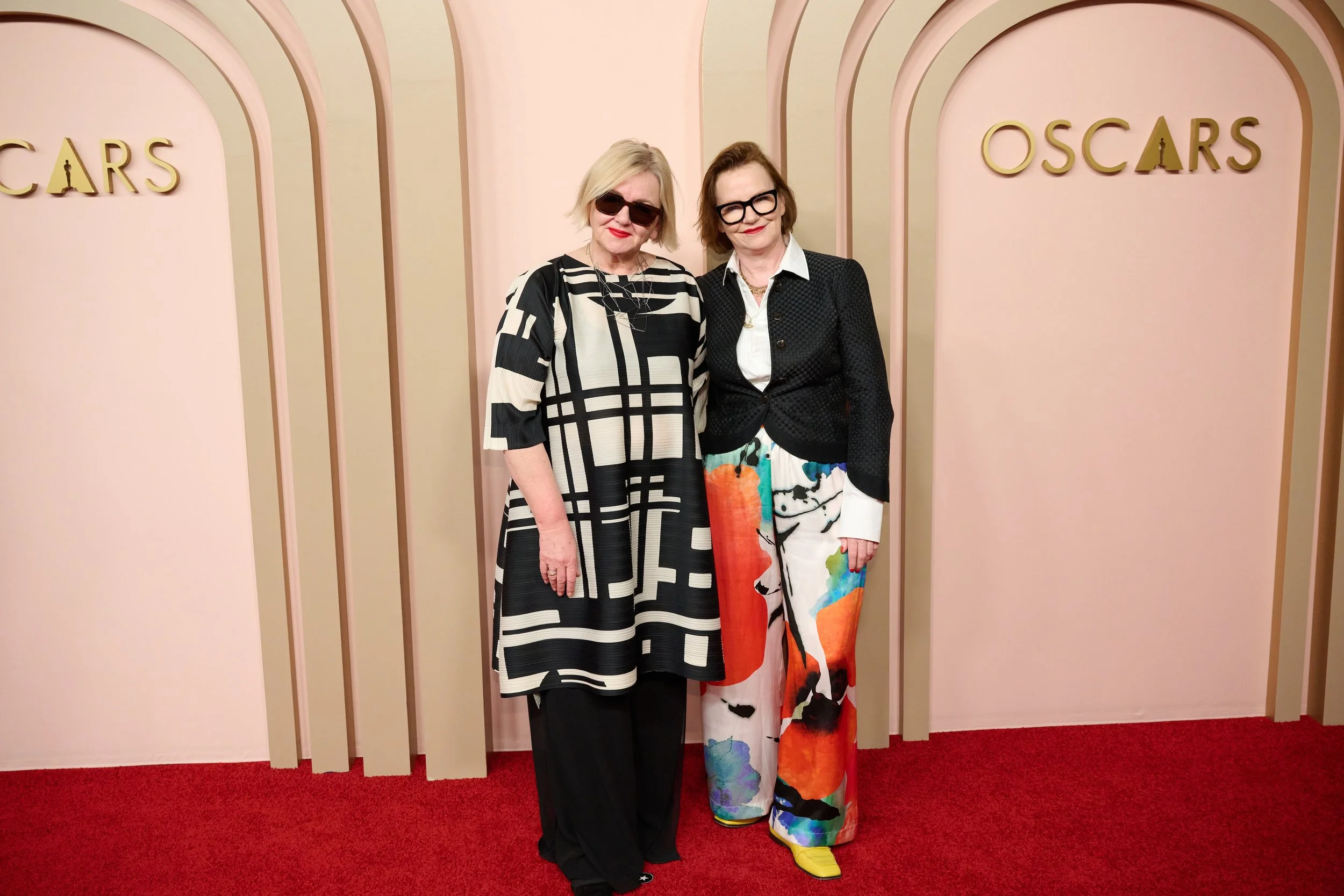
It's almost like Sarah and Katie are sisters. They kind of finish each other's sentences. They have this deep knowledge of one another. I think you can see this deeply collaborative spirit in their films. I thought there was a really interesting story to tell there about how you work with other people and how you build teams of experts. So much of what production designers do is bring together a team of people who are experts in their respective fields, whether that's set construction or illustration for concepts.
(FR): How did that collaboration between Sarah and Katie extend into putting the exhibit together? How much input did they have with you in that process?
(MP): The first thing people assume when working with production designers is that they probably have lots of thoughts about how the space looks and feels and what it's like to move through these galleries. I think immediately, from the beginning of meeting them, I knew that it would be a collaborative relationship between them and myself, as the person who's building the story through objects and through space. They were super involved. In a way, that's somewhat typical of the way we work with artists.
I met with them three different times over the course of the last two and a half years. They also came to Los Angeles for a little over a week for what we call a design charrette, which is an intensive exhibition design planning meeting. A lot of the content decisions were mine, such as figuring out which films to select, but it was over the course of these long, sustained conversations and regular meetings with them that we started to hone down what the story was that we wanted to tell in the exhibition. I also had to figure out where I could find objects — which studios had things and which things would come from lenders.
One of the things that was clear to me from the beginning was that they're women who have built this career out of relationships and out of collaborations with people that continue and sustain from year to year. They've made so many great films, so figuring out which films to focus on was the first really challenging thing. This isn't written into the exhibition didactics or anything formal, but they're all stories of women who are on journeys of transformation. Anna Karenina, Beauty and the Beast, and Barbie are the three films that we highlight in the exhibition. That, to me, was a really interesting metaphor for the two of them working over the last 25 to 30 years together.
They were very involved in things like paint decisions and the colour of the rooms. Object placement and things like that were more my purview, but we absolutely invited them and wanted them to be a part of conversations about lighting and about colour — which is something that they're really known for — and about how we would incorporate their voice into the exhibition. One of the things that I really like, is that we've included quotes from them in each of the exhibition sections.
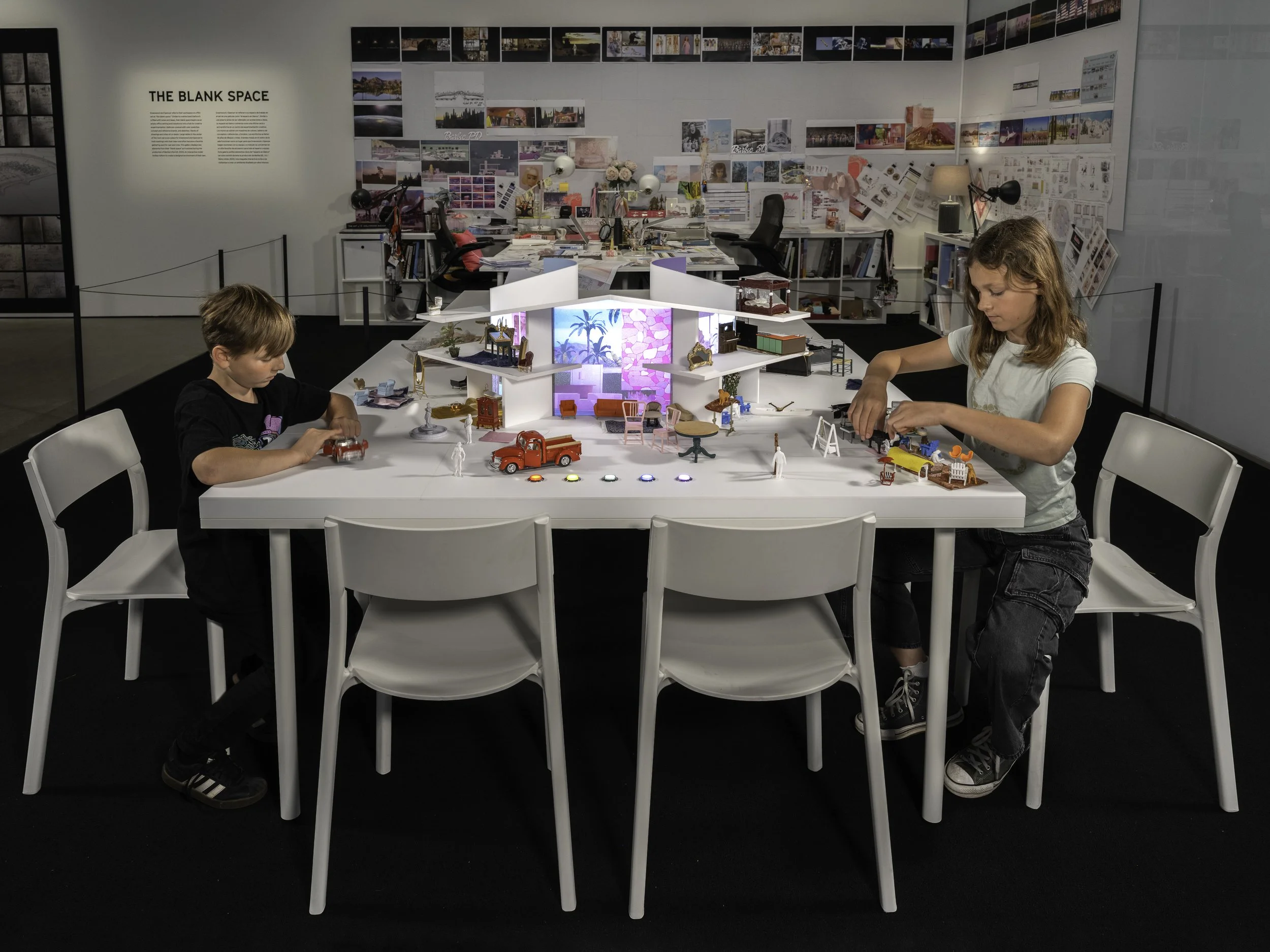
The final part of the exhibition, The Blank Space, was entirely their creation. I think from the very beginning, that was the one thing that they really felt strongly about, that it was important to show their workspace. As a curator, I wasn't really sure what it would look like. It took a long time for me to sort of catch up to where they were. It was important to them because they've said over and over again that you start from nothing. You start from the experiences that you have, the research you've done. You don't end up with this beautiful finished product because you started with something perfect. They said, “We really want to show our process and how messy and hands-on it is. We want to show the way that we work, that we start with building up this kind of research library of images that are references. We use those to develop concepts; those then get turned into production drawings that then get turned into actual props, objects and spaces.”
That final section was really important to them. I think it is incredibly impactful for visitors because we've recreated their desks. As Sarah and Katie would say, it's almost as though they stepped out and went out to lunch. You can see original materials that were actually on their desks when they were making Barbie. That sort of spills over into this interactive space that we then built out for visitors to think about what it means to be inspired. Where do you pull together the kind of things that influence the film that you end up making? It shows how to work in a more tactile way. It's not the first time, but I think it's a new way for the museum to work with artists: inviting them to be a part of the installation process. They dressed their desk area as though it was a set, moving things around and placing objects. They shipped all this material from London that they had saved from Barbie. Seeing that process, as a kind of behind-the-scenes in how they work, was just incredible.
(FR): It becomes an interactive element, where guests are actually stepping into their roles and getting to explore. Can you talk about incorporating that and what is available for guests to do in those interactive spaces?
(MP): Sarah and Katie shared thousands of images with me: personal documentation of their work on sets and documentation of their workspaces over the years. One of the things that really stood out to me is that they always have their desks facing each other, and then they have this long white table in the middle of the room. On that table, Sarah said, “Every day, depending on what we're working on, it can have concept boards with reference images, it can have physical models, and it can have all of these different kinds of textural elements that we're talking through, like pieces of fabric or a maquette of a prop.” The room that they're in, this blank space, starts out as a sort of empty, bland, grey space that they then fill up with all of these things that are incredibly visual and warm and colourful. Sarah said, “You know, always around that table, people will gather.”
During Barbie, Greta [Gerwig] would come in and have lunch there. It becomes sort of a safe space, a gathering space for people to come together. People like being in that room because it's full of inspiration. In terms of the exhibition design, we couldn't have people physically interact with their desk because it includes all of this original material that we're borrowing from them, so we came up with the idea to have a desk that replicates that experience for visitors. On it, we have this interactive experience inspired by their work with physical models. They work with white card models and coloured card models. We ended up making the white model, which is actually also how we work as curators and exhibition designers. We work with physical models, as well as 3D rendering tools to place objects and think about spatial relationships.
We had this idea — what if we made a model? What if we have small things that people can dress the model with? Then we thought, what if we make environments that visitors can flip through — these sort of digital representations of environments that are abstract representations of key films that they've worked on. We ended up collaborating with one of their very frequent collaborators, an incredibly talented illustrator named Ava Kunst, who's worked with them since Anna Karenina in 2012. Ava used her concept drawings from Anna Karenina, Beauty and the Beast, Hanna, and Barbie to create these digital illustrations that visitors can select by choosing one of five buttons to create a kind of visual environment in this model. We have small, dollhouse-scale furniture and objects that visitors can place and play with to see how objects interact with one another inside of a visually driven environment.
Also on the table, we have two iPads that have this selection of images covering ten of Sarah and Katie's films over the years. We honed down thousands of images documenting their process and their work. You can see concept and reference images that they work with, including drawings, behind-the-scenes photography and some really fun stuff representing the other films that we weren't able to include in the larger sections of the exhibition.
(FR): Speaking of objects and furniture, what are some of the original props and production materials that guests will see in the exhibit?
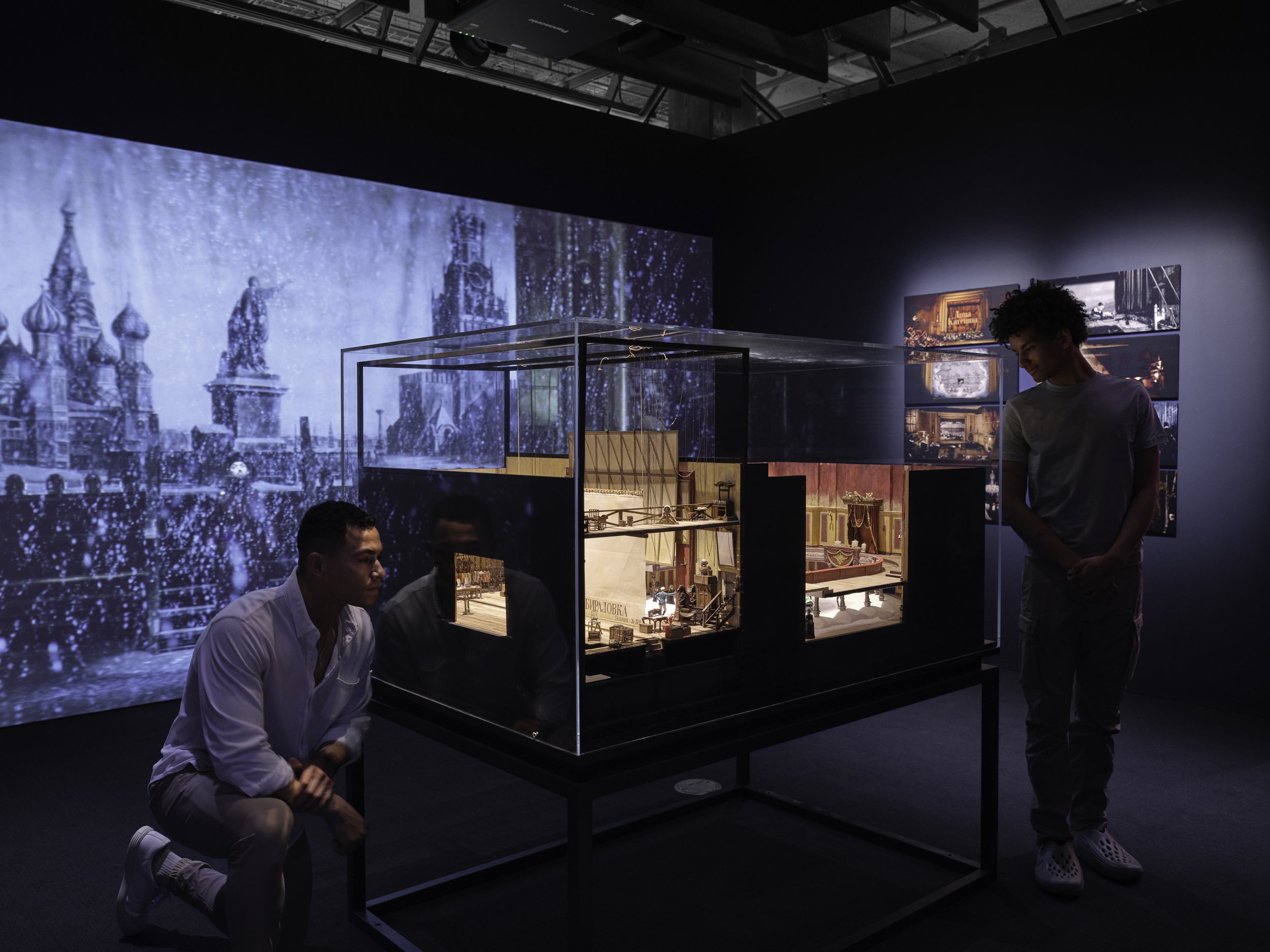
(MP): All the objects are original, save for one, and that's the first that visitors encounter. It's a recreation of a model that Sarah and Katie used in the planning of Anna Karenina. They worked with their model-maker, a woman named Catherine Morgan, to recreate that model because it didn't exist anymore. It wasn't something that was made to last, like so many of the props and things that we work with at the museum. These are things that don't have a long life. They aren't meant to be preserved, necessarily. So it’s a beautiful way to kick off the exhibition, because it shows Sarah and Katie's process and how they work with physical models.
It's also just an incredibly beautiful, detailed object that shows the theatre space that they built inside Shepperton Studios to make Anna Karenina. It’s contextualised with a video montage from the film and behind-the-scenes documentation, such as a time lapse of that space transforming over time, as well as the story of Anna Karenina and how they made it. Working within restrictions to make something that's incredibly creative and experimental.
(FR): During pre-production, director Joe Wright had an epiphany, and they had something like 12 weeks to create the derelict theatre space.
(MP): They scouted in Russia, and they shot a couple of scenes. The sequences with Levin are shot in Russia, but they had planned to shoot it, Sarah says, “in a kind of standard way.” Due to some budget constraints, they had to radically pivot and it ends up being this incredibly creative, beautiful film unlike anything you've seen before.
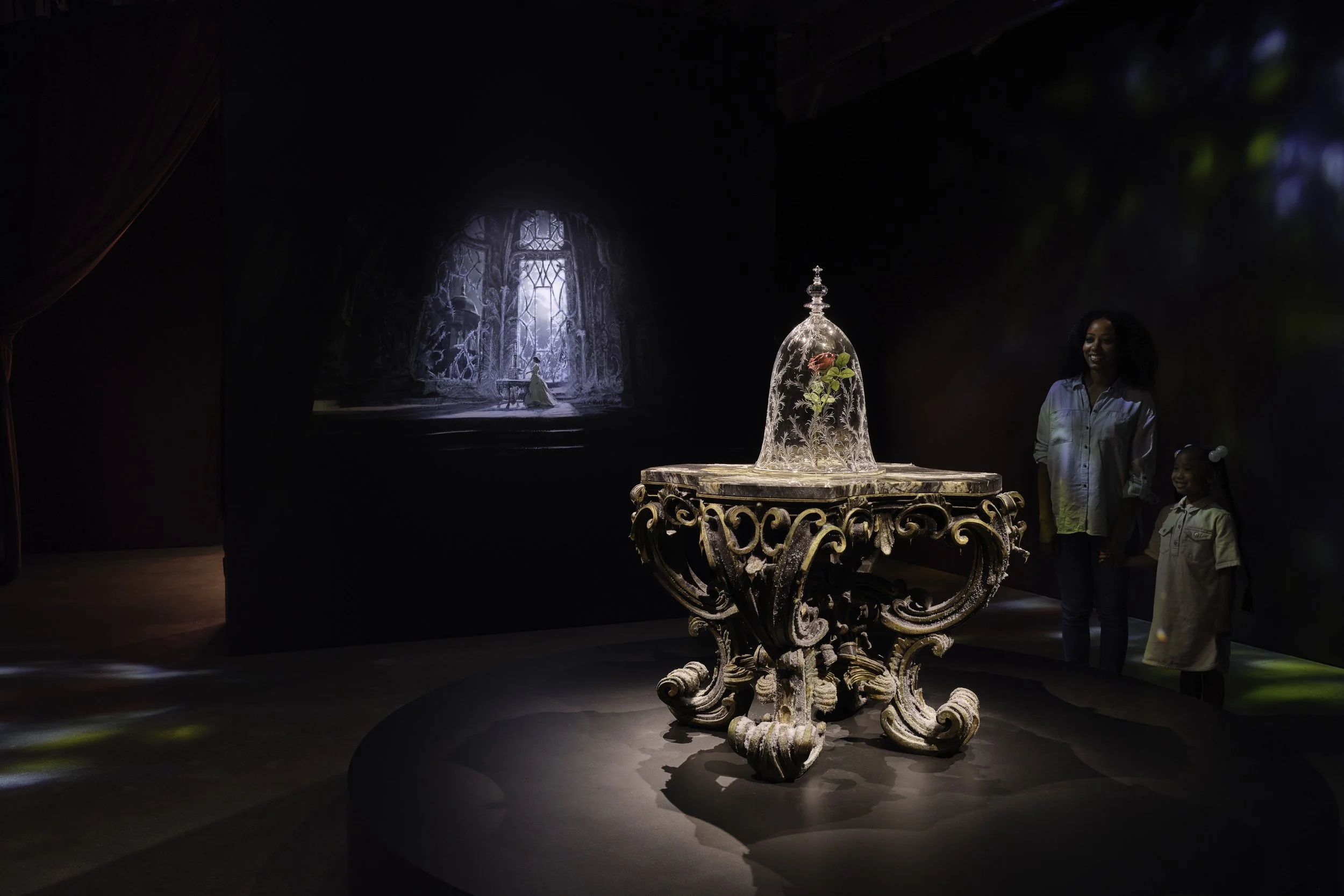
Other object highlights are definitely the rose and the bell jar from Beauty and the Beast, which we've contextualised in this space that has lighting that Sarah and Katie were quite involved with, creating an atmosphere and a mood through an iconic object from a film. In Beauty and the Beast, they worked with animators to design the characters. In particular, Cogsworth, Lumière, and then Plumette, Cadenza (the harpsichord) and Froufrou, the little dog that was transformed into a harpsichord bench. All of those characters and their development were super important to Sarah and Katie. It's very unusual for production designers and set decorators to create characters that are then animated in a film. They were brought on from the very beginning and worked incredibly closely with the animation team. Being able to see those original models, I think, is pretty astounding. They're incredibly beautiful, detailed objects. Sarah said that [director] Bill Condon's ask to Katie was, “I want them to feel like you could just walk into an antique shop and pick them up off the shelf.”
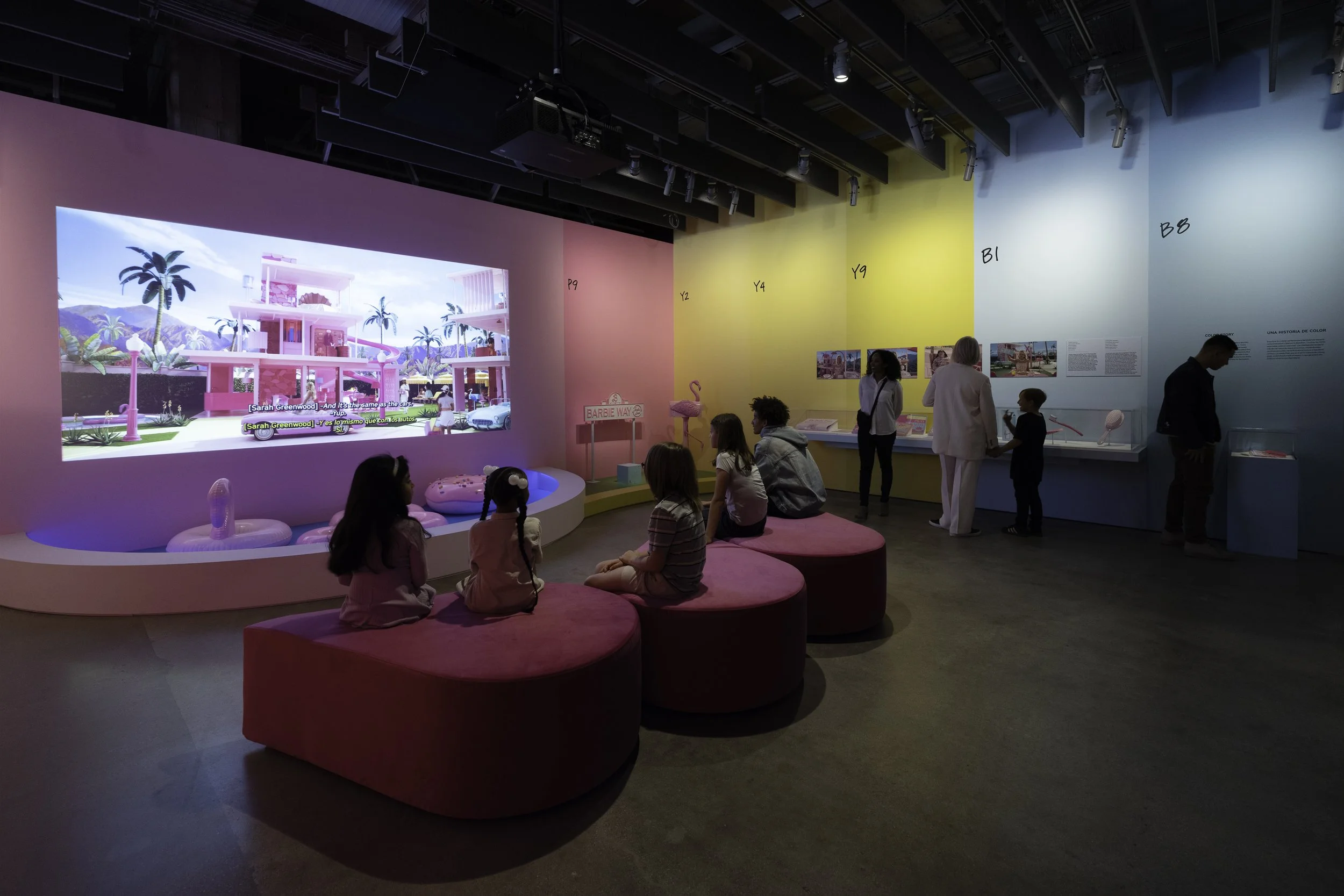
Then in the Barbie section, we have some key props, things that are very recognisable, like her oversized hairbrush and toothbrush. The books, which are some of my favourites, because they're just really fun and playful.
(FR): What are some of the clever covers on the books from Barbie?
(MP): There’s the beach magazine, Barbie's Best Day. Then there are these books with puns and plays on words. The best one is Barbie Karenina, which I thought, ‘Oh, we absolutely need to include that; maybe it should be the title of the exhibition…’ Another one of my favourite pieces is Weird Barbie’s 3D heist map model. It's got these references to Los Angeles in it and really fun, playful things. They worked with a model-maker named Jack Cave on that piece, and it's just beautiful.
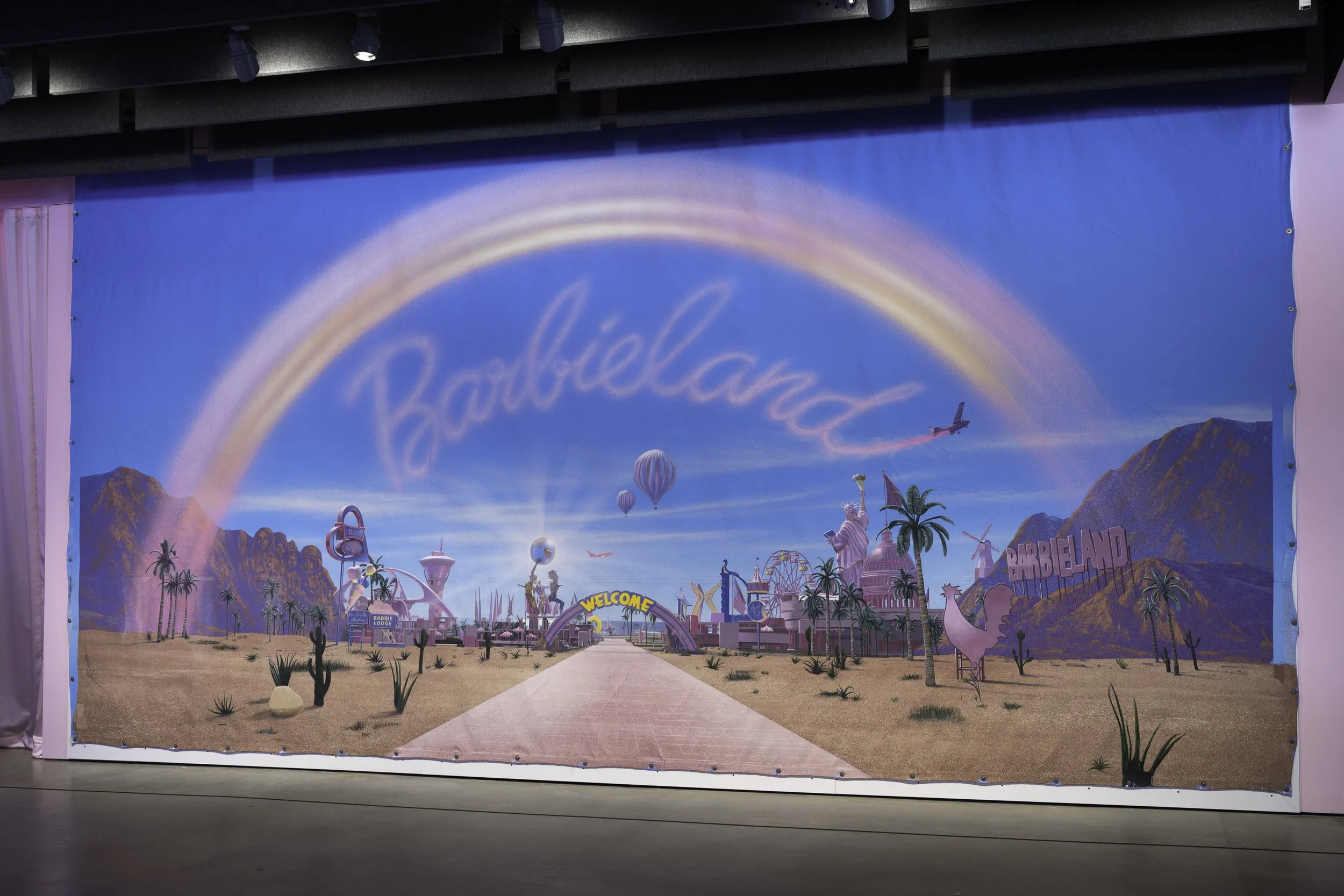
One of the really special parts of the exhibition is the first room that you walk into in the Barbie section, which has miniatures originally used to shoot visual effects extension shots for the beach sequences and then some of the road sequences in Barbieland. Then there is the Barbieland backdrop painting, which is just stunning. When you have this space where the miniatures from Barbie create almost a miniature version of Barbieland, you can really see the tactile way in which Sarah and Katie work. So many things in that film were physical builds and were shot in-camera on set. That was a part of the fun and the playfulness of making it like a toy. For visitors, that is a really fun, special moment: to come around the corner and see that.
(FR): What did you learn about their process and work through the exhibit?
(MP): It absolutely has to be the way in which they value the importance of collaboration: getting together multiple voices and not being intimidated by that. It's a part of the way in which they work. I think what's so special about them is that they've collaborated with people for almost as long as they've worked together. So they’ve built this incredible connection of really talented artisans and craftspeople. The bell jar in the Beauty and the Beast section is made out of Swarovski crystal; the finial is, and because of the delicacy of its shape, they knew exactly what they wanted to have engraved on it, that it should be this ice design, but they couldn't find someone who could etch it. It was something that people were intimidated or scared to do because the crystal is so fragile. They found someone who was like the last person in the UK who could engrave on this kind of material. He also happened to work as an extra on EastEnders.
Through their energy, their spirit and this incredible passion that they exude, they really pull together people who are incredibly talented and experts in what they do. They build this community, almost like a family of craftspeople. One of the things that was really important to them was to have their collaborators thanked. The timeline that you see at the end of the exhibition before you leave has the names of these frequent collaborators running along the bottom, and the design is such that they form this ground that the films then emerge from. I think it's that grounding and those relationships that they build that make them so unique and interesting.
(FR): Was there anything really surprising that came out in the research and putting this together?
(MP): I think so many people don't know what production designers do. Sarah says it’s visually everything you see on the screen. But how does that start, and where do you begin? One of the things that surprised me is how important images and references are to them. They work with thousands and thousands of images and then narrow them down slowly to a set of images that then become reference points for the initial pitch that they make to the director regarding how certain spaces look.
We created an interactive piece that bridges the gap between Barbie and The Blank Space section, which sees oversized concept boards that include reference images from Barbie. They’re recreations of the original concept boards that Sarah and Katie had, so there are things that represent the beach or Weird Barbie’s space, or everyone's favourite, Kendom. Another great object, I have to say, is the Mojo Dojo Casa House toy, which is a total favourite. It’s super fun to see all these tiny little protein jars and things.
(FR): The event that you had celebrating the world included a talk with Sarah and Katie, as well as a screening of Barbie. What was that moment like, as well as sharing this exhibit with audiences?
(MP): It's just been amazing to have them here. They were here for the opening of the exhibition, and we had a conversation about their work on Barbie. We showed a slideshow behind us of images documenting their process: where they begin, behind-the-scenes photography.
One of the things that they've famously said about Barbie is that they shot it in the UK, which was grey and cold. People would come into these sets and immediately light up because it was so fun, and so bright and it was so pink. You couldn't be in that space and not be happy. It really shows you the power of how the environments that they create can impact performance.
That's something that's under-represented and understated in thinking about the importance of production design and what it means to be an actor working in a physical environment. That's one of the things that I think was a real revelation to me, which came through that weekend. We had a lot of fun with some of the interactive elements too, like the Barbie car.
(FR): Did you grow up going to the movies? What are some of your foundational movie memories?
(MP): I saw 2001: A Space Odyssey with my father in an old movie palace in Dallas, which is where I was living when I was younger. The opening of Barbie has a very special kind of resonance for me. I have foundational memories of seeing films and have always been a fan since I was a kid. One of the earliest films I remember seeing was Jaws — I'm very excited about our upcoming exhibition. Jaws is also a real inspiration for Sarah and Katie. Sarah is a huge fan of Jaws, and it's in some of the concept boards for Barbie. That’s a little hidden Easter egg.
Barbie to Anna Karenina: The Cinematic Worlds of Sarah Greenwood and Katie Spencer is open from 23 May, 2025 – 25 Oct, 2026. To learn more and book tickets, visit: www.academymuseum.org
Shop The Academy Museum Store’s curated gift collection celebrating ‘Barbie to Anna Karenina’.
MICHELLE PUETZ is a curator, historian, archivist and educator focused on the intersections of cinema, contemporary art, sound, performance and technology. She is an Exhibitions Curator at the Academy Museum of Motion Pictures where she is working to develop exhibitions and programmes that contextualise and challenge dominant narratives around cinema.
THE ACADEMY MUSEUM OF MOITION PICTURES is the largest museum in the United States devoted to the arts, sciences, and artists of moviemaking. The museum advances the understanding, celebration, and preservation of cinema through inclusive and accessible exhibitions, screenings, programmes, initiatives, and collections. Designed by Pritzker Prize–winning architect Renzo Piano, the museum's campus contains the restored and revitalised historic Saban Building—formerly known as the May Company building (1939)—and a soaring spherical addition. Together, these buildings contain 50,000 square feet of exhibition spaces, two state-of-the-art theatres, the Shirley Temple Education Studio, and beautiful public spaces that are free and open to the public. These include the Walt Disney Company Piazza and the Sidney Poitier Grand Lobby, which houses the Spielberg Family Gallery, Academy Museum Store, and Fanny’s restaurant and café. The Academy Museum exhibition galleries are open six days a week, from 10am to 6pm, and are closed on Tuesdays.